
I Love Franchising, But…

An open conversation about profitability, pressure, and the future of responsible franchising.

During the past two years of my forty-plus years in and around franchising, I have felt a shift that is difficult to dismiss. Franchising has always carried a natural tension between promise and reality, but rarely has that tension felt this persistent, this widespread, or this quietly unsettling. What I am seeing now is not a single broken link in the chain, nor a few isolated business failures that can be rationalized away as “operators who did not execute.” What I am seeing is a growing sense that the balance the model relies upon is being tested in ways the industry has not fully reconciled, and perhaps has not fully wanted to.

That context is what made this past week’s news so resonant. A 100+ unit franchisee of Popeyes filing for bankruptcy protection is not, by itself, a verdict on a brand or on franchising as a whole. But placed alongside what has unfolded over the last two years, it feels less like an anomaly and more like another marker in an emerging pattern. Distress has surfaced across systems of every size and stage. Large multi-unit operators with sophisticated infrastructure. Smaller franchisees who followed the playbook precisely. Legacy brands and emerging concepts alike. The stories are not identical, but the undertone is familiar: the economics have become harder, the margin for error thinner, and the path to stability less certain than the model has historically implied.

And then there are the quieter developments that rarely make headlines. Franchisors closing corporate locations. Emerging franchise systems quietly disappearing when capital tightens, when development pipelines stall, or when early optimism meets the reality of operations. What often goes unspoken is what happens to franchisees in those moments. They do not disappear when a brand contracts or fails. They remain attached to leases, loans, equipment, staffing obligations, personal guarantees, and in many cases, personal identity. When a franchise system falters, it does not simply “fail.” It leaves people behind.

The instinctive reaction in franchising, especially among those who have built careers on the model, is to search for blame and then defend the model against that blame. To point at inflation, labor volatility, the cost of goods, supply chain disruptions, third-party delivery, interest rates, changing consumer behavior, rising real estate costs, and increased regulatory and compliance burdens. All of those forces are real. But the industry has always faced headwinds. The deeper question is why those headwinds now feel capable of breaking operators at scale, including those who are experienced, well-capitalized, and once considered “the best of the best.”

Because franchising, stripped to its essentials, is an economic arrangement. When unit-level economics no longer work consistently, everything else becomes secondary. Support, marketing, culture, brand strength, operational excellence, each matters, but all of them ultimately feed a single outcome: profitability. Not theoretical profitability. Not “on paper.” Not “once the next three stores open.” Real profitability that can withstand shocks, absorb reinvestment, pay down debt, and provide a return worthy of the risk.

Yes, there are profitable franchisors and profitable franchisees. Some are thriving. Some are scaling responsibly. Some are generating exceptional returns. Those examples deserve recognition and study. But they also risk masking the more uncomfortable truth: a significant portion of franchising appears to be living in a state of fragility. Units that are technically open but financially strained. Owners deferring reinvestment because the math no longer supports it. Operators compensating for margin compression with longer hours, reduced staffing, or personal sacrifice. Businesses continuing not because the model is healthy, but because exiting feels worse than enduring.

The question that rarely gets asked publicly is how large that middle has become. Not the winners. Not the failures. The wide swath of franchising that is barely holding together. How many franchisees are one unexpected expense away from serious trouble? How many are “profitable” only if the owner works sixty or seventy hours a week, effectively subsidizing the business with labor the P&L does not reflect? How many have stopped paying themselves appropriately just to keep the doors open? How many are staying in the game because they have too much personally guaranteed debt to walk away?

Now ask the next question, the one franchising tends to avoid: if a material portion of franchisees are living like that, what does it say about the health of the model, not in its best-case form, but in its average form?

Because franchising is not judged by its outliers. It is judged by its median. The “middle” is the industry. If the middle is strained, the industry is strained.

That brings me to another question that feels uncomfortable, but necessary to ask. At what point are there simply too many franchise brands? There are now more than 4,000 franchise concepts competing for the same franchisees, the same territories, the same real estate, the same labor pool, and the same consumer attention. Entire segments feel crowded to the point of indistinguishability, brands differentiated more by marketing language than by true strategic advantage. We see the same categories proliferate: chicken, burgers, pizza, coffee, smoothies, cleaning, restoration, lawn care, senior care, fitness, pet services, tutoring, and countless others. Many are good concepts. Some are exceptional. But the marketplace can only support so many “good” concepts before the fight becomes less about excellence and more about survival.

This is not an anti-capitalism argument. I believe in capitalism and the American Dream deeply. Markets should decide. Entrepreneurs should be free to build. Innovation deserves room to breathe. But believing in capitalism does not mean ignoring the consequences of oversaturation. Oversaturation has a way of turning opportunity into a zero-sum contest where only the strongest balance sheets win, while the average operator gets squeezed.

So the question is not whether there are too many brands in the abstract. The question is this: have we normalized launching franchise systems without fully stress-testing unit economics under real-world conditions? And are we honest about what “success” looks like for the average franchisee in a crowded segment?

If a concept requires best-in-class execution just to be marginally profitable, is it truly franchiseable? Or is it simply scalable for a small percentage of operators and a narrow set of markets?

If a franchisor’s growth story depends on adding units faster than the system can support them, does that create strength or does it hide weakness until it is too late?

If a franchisee’s path to “success” increasingly depends on becoming a multi-unit operator to gain purchasing leverage and overhead absorption, what does that mean for the single-unit owner, the one franchising has historically positioned as the heartbeat of the model?

Another subtle but telling signal has surfaced in recent conversations. I have heard more about the possibility of five-year franchise agreement terms, a shift away from the ten-year agreements that have long been standard. On the surface, this may be framed as flexibility. But it is hard not to wonder what is really driving it. I almost feel like there is worry about franchisees making it ten years. If the industry is shortening terms because it is unsure about long-term viability at the unit level, what does that say? Is it a prudent modernization, or is it an admission, however quiet, that the road ahead feels less predictable?

And if franchise terms shrink, what happens to long-term thinking? Does it encourage reinvestment and brand stewardship, or does it subtly incentivize short-term optimization? Does a five-year term make it easier for franchisees to exit, or does it make it harder for them to build wealth because they are constantly in renewal mode? Does it change how lenders view the risk? Does it alter the relationship between franchisor and franchisee in ways we have not yet fully considered?

Now let’s zoom out further. The balance that once defined franchising feels increasingly misaligned in multiple directions:

The balance between franchisor revenue structures and franchisee margins… When royalties, marketing funds, technology fees, and required vendor costs rise while unit economics tighten, where does the pressure go? It goes to the franchisee.

The balance between “support” as a promise and “support” as an experience… What does support mean today when operations have become more complex, labor is more volatile, and technology is no longer optional? Are franchisors adequately resourced to deliver meaningful support at scale, or is support increasingly a marketing statement rather than a lived reality?

The balance between development momentum and operational readiness… Is the industry rewarding franchisors for selling franchises or for building profitable franchisees? When the scoreboard is unit count, does that create blind spots around unit performance?

The balance between brand standards and local market realities… As costs rise, franchisees look for flexibility. As brand competition intensifies, franchisors look for consistency. Where is the line between protecting a brand and suffocating a franchisee’s ability to adapt?

None of these questions are intended to indict franchising. They are intended to protect it. Because if franchising does not engage in honest self-examination, external forces will. Regulators. Media. Plaintiffs’ attorneys. Consumer advocates. That is not fearmongering. It is how industries get reshaped when they fail to address internal fractures before those fractures become public.

So let’s ask the questions that might actually matter most right now.

What is the franchisor’s responsibility in ensuring unit economics remain viable, not just at the start, but over time as costs and markets change?

How often should franchisors revisit and recalibrate their economic model, especially in segments where margins are structurally thin?

Should franchise systems be required, ethically, if not legally, to present prospective franchisees with a more stress-tested picture of potential outcomes, including scenarios where costs rise faster than revenue?

What is a fair measure of success for a franchisee today? Is it net income? Cash flow? Return on invested capital? Owner wage plus profit? And how many franchisees in a given system are truly hitting that measure?

How do we define “responsible franchising” in 2026? Is it slower growth? More selective franchisee recruitment? Different fee structures? Greater franchisor skin in the game? More investment in support? Some combination of all of the above?

And perhaps the hardest question: if a system’s economics cannot support an average operator in an average market, does the industry have the courage to say that model needs to change, even if it disrupts the way franchising has traditionally generated growth?

I do not believe franchising is broken. I do believe it is at an inflection point. Franchising has survived many cycles, but survival has never been accidental. It has required adjustment, restraint, and sometimes reinvention. Tweaks address symptoms. Structural shifts address causes. Avoiding that work risks allowing the story of franchising to be written by bankruptcy filings, closures, and disillusionment rather than by opportunity and partnership.

This is intentionally an open conversation, not a verdict. I want to hear from franchisors wrestling with these realities internally, from franchisees who are thriving and from those who are struggling but still believe in the model, and from lenders, suppliers, advisors, and operators who see the pressure points from different angles.

If asking whether there are too many brands, too many look-alike concepts, or too many systems chasing the same segments sparks deeper thinking and conversation, then so be it. Not because I want fewer entrepreneurs. Not because I want less competition. But because I want franchising to remain one of the most credible and powerful vehicles for the American Dream, not a model that quietly drifts toward imbalance until a reputational crisis forces change.

From what I have seen during the past two years, the question is not whether the industry will change. It will. The real question is whether that change will be deliberate, transparent, and collaborative, or reactive and forced under scrutiny. The conversation is not a distraction from the work. It may be the work.


About the Author

Paul Segreto brings over forty years of real-world experience in franchising, restaurants, and small business growth. Recognized as one of the Top 100 Global Franchise and Small Business Influencers, Paul is the driving voice behind Acceler8Success Café, a daily content platform that inspires and informs thousands of entrepreneurs nationwide. A passionate advocate for ethical leadership and sustainable growth, Paul has dedicated his career to helping founders, franchise executives, and entrepreneurial families achieve clarity, balance, and lasting success through purpose-driven action.


About Acceler8Success America

Acceler8Success America is a comprehensive business advisory and coaching platform dedicated to helping entrepreneurs, small business owners, and franchise professionals achieve The American Dream Accelerated.

Through a combination of strategic consulting, results-focused coaching, and empowering content, Acceler8Success America provides the tools, insights, and guidance needed to start, grow, and scale successfully in today’s fast-paced world.

With deep expertise in entrepreneurship, franchising, restaurants, and small business development, Acceler8Success America bridges experience and innovation, supporting current and aspiring entrepreneurs as they build sustainable businesses and lasting legacies across America.

Learn more at Acceler8SuccessAmerica.com

Social Media and the Modern Restaurant: Visibility, Trust, and Survival

Social media is no longer a “nice to have” for restaurants. It is part of the business itself. Whether a restaurant is independently owned or part of a franchise system, social media now plays a direct role in visibility, credibility, traffic, and long-term relevance. For many guests, it is the first interaction with the brand, long before they see the front door, read a menu, or taste the food.

For independent restaurants, social media often serves as the great equalizer. A single location can compete for attention alongside national brands by telling its story authentically and consistently. Behind-the-scenes photos, daily specials, limited-time offers, community involvement, staff spotlights, and even imperfect moments help humanize the business. Guests don’t just follow independent restaurants for promotions; they follow them to feel connected. That connection turns into repeat visits, word-of-mouth referrals, and loyalty that no discount alone could ever create.

As Jennifer Lawson, owner of Bee the Buzz Digital, often puts it, “Restaurants don’t win on social media by trying to look like everyone else. They win by showing who they really are, consistently and confidently.” That authenticity is often what separates a forgettable feed from one that actually drives foot traffic.

For franchise brands, social media plays a dual role. At the brand level, it reinforces identity, positioning, and trust. It communicates what the brand stands for, what it promises, and what guests should expect everywhere they go. At the local level, social media becomes a traffic driver and relationship builder for each franchise location. When done right, brand-level and local-level efforts work together rather than compete, creating consistency without sacrificing local personality.

One of the most overlooked aspects of social media is how closely it mirrors how people actually choose where to eat. Guests scroll before they decide. They check photos, recent posts, comments, reviews, and how responsive a restaurant appears. An inactive feed, inconsistent messaging, or outdated content can quietly signal neglect, instability, or indifference, even if the dining room is busy. In many cases, a dismal or ineffective social media presence does more damage than having none at all, because it creates doubt at the exact moment a guest is deciding where to spend their money.

A weak social media presence can also undermine trust. Missed comments, unanswered questions, unresolved complaints, or months of silence suggest that the restaurant is not paying attention. For franchise brands, inconsistency across locations can dilute the brand, confuse guests, and frustrate franchisees who are doing things right. Poor-quality photos, off-brand messaging, or unprofessional posts can unintentionally lower perceived food quality, service standards, and overall value.

Lawson frequently emphasizes this risk, noting that “Social media doesn’t just show what a restaurant wants people to see. It shows what they ignore. And customers notice neglect faster than they notice clever content.” In a competitive restaurant landscape, those small signals add up quickly.

There is also an internal cost. Restaurants with ineffective social media often struggle more with hiring and retention. Potential team members see little energy, culture, or pride reflected online and move on. In a labor-challenged industry, that missed opportunity can be significant. Social media, when neglected, becomes a silent barrier not just to customers, but to talent.

By contrast, an effective social media presence delivers compounding benefits. It keeps the restaurant top of mind, even when guests are not actively planning to dine out. It reinforces familiarity, which reduces friction when someone is deciding where to eat. Guests are more likely to choose a restaurant that feels familiar, current, and engaged over one that feels distant or outdated.

An effective presence also strengthens credibility. Regular posting, timely responses, and consistent storytelling signal professionalism and care. For franchise systems, this builds confidence among franchisees and prospects alike, demonstrating that the brand understands modern marketing and supports growth beyond the four walls. At the local level, it empowers franchise locations to feel connected to their communities while staying aligned with the brand.

Social media also becomes a powerful amplifier for moments that already matter. New menu items, promotions, seasonal offerings, community events, catering opportunities, and even everyday wins gain extended life beyond the dining room. Instead of being seen by only the guests who happen to walk in that day, those moments are shared, remembered, and revisited.

Perhaps most importantly, an effective social media strategy creates resilience. When challenges arise, whether operational disruptions, economic shifts, or competitive pressure, restaurants with strong digital relationships have a voice and an audience. They can communicate, adapt, and maintain trust rather than scrambling to be heard.

In today’s restaurant environment, social media is not about chasing trends or viral moments. It is about presence, consistency, and connection. A neglected or poorly managed social media presence quietly erodes confidence and opportunity. A thoughtful, authentic, and active presence builds visibility, trust, loyalty, and long-term value. The difference between the two is not cosmetic. It can directly influence whether a restaurant is chosen, remembered, and supported in an increasingly crowded marketplace.


About the Author

Paul Segreto brings over forty years of real-world experience in franchising, restaurants, and small business growth. Recognized as one of the Top 100 Global Franchise and Small Business Influencers, Paul is the driving voice behind Acceler8Success Café, a daily content platform that inspires and informs thousands of entrepreneurs nationwide. A passionate advocate for ethical leadership and sustainable growth, Paul has dedicated his career to helping founders, franchise executives, and entrepreneurial families achieve clarity, balance, and lasting success through purpose-driven action.


About Acceler8Success America

Acceler8Success America is a comprehensive business advisory and coaching platform dedicated to helping entrepreneurs, small business owners, and franchise professionals achieve The American Dream Accelerated.

Through a combination of strategic consulting, results-focused coaching, and empowering content, Acceler8Success America provides the tools, insights, and guidance needed to start, grow, and scale successfully in today’s fast-paced world.

With deep expertise in entrepreneurship, franchising, restaurants, and small business development, Acceler8Success America bridges experience and innovation, supporting current and aspiring entrepreneurs as they build sustainable businesses and lasting legacies across America.

Learn more at Acceler8SuccessAmerica.com
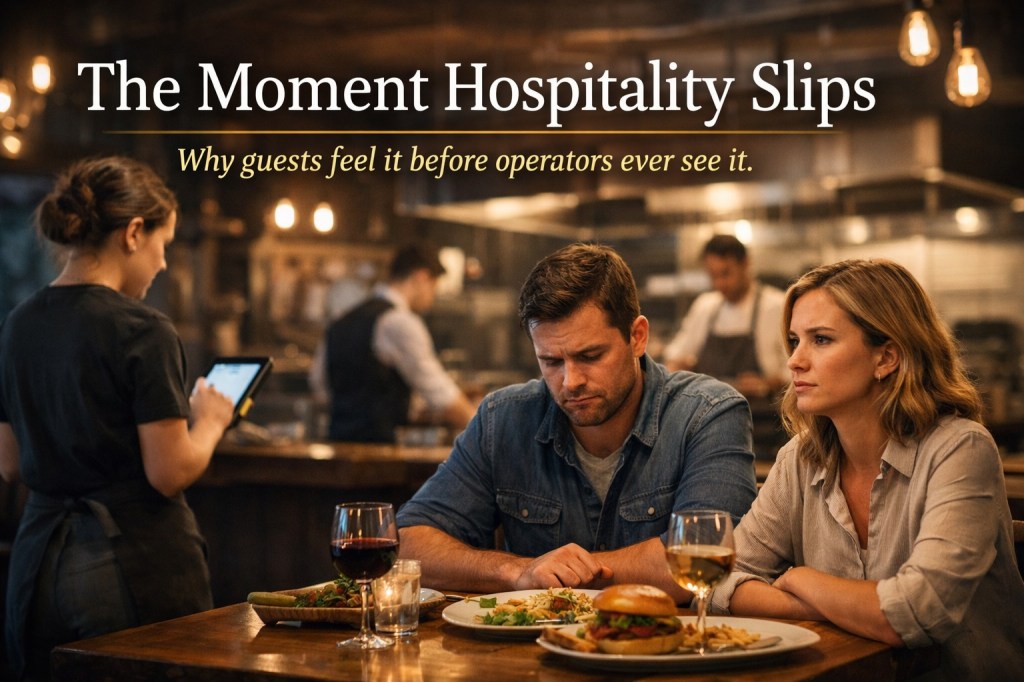
When Restaurants Stop Serving People and Start Managing Transactions

When restaurants lose sight of hospitality, they don’t usually notice it all at once. It rarely happens because someone wakes up and decides guests no longer matter. It happens quietly, through small decisions that feel practical in the moment. Speed replaces warmth. Efficiency replaces eye contact. Policies replace judgment. Over time, the restaurant still serves food, but it stops serving people.

Hospitality is not the same as service. Service is transactional. Hospitality is relational. Service is about delivering what was ordered. Hospitality is about how a guest feels before, during, and after the meal. When hospitality fades, restaurants often convince themselves they are improving operations. They tighten scripts. They shorten conversations. They push staff to turn tables faster. They reduce flexibility in the name of consistency. The result is a place that may run smoothly on paper but feels cold in practice.

Guests notice immediately, even if they can’t articulate why. They sense when a greeting feels rehearsed instead of genuine. They feel when a server is rushing past them rather than welcoming them. They notice when a problem is met with policy instead of empathy. Food quality may remain strong, pricing may be competitive, and marketing may be clever, yet something feels off. The experience becomes forgettable at best and frustrating at worst.

For staff, the loss of hospitality is just as damaging. When employees are trained to execute tasks rather than care for guests, their work becomes mechanical. Pride erodes. Engagement drops. Team members stop thinking like hosts and start thinking like rule enforcers. Turnover rises because people rarely stay long in environments where they are discouraged from being human. A restaurant without hospitality often becomes a restaurant constantly hiring.

Leadership plays a central role in this shift. When owners and managers focus exclusively on food cost, labor percentages, ticket times, and reviews, hospitality becomes an afterthought. Metrics matter, but when they become the mission, they crowd out the very behavior that drives long-term loyalty. Hospitality cannot be delegated to a training video or a line in a handbook. It must be modeled, reinforced, and protected, especially during busy or stressful moments.

Technology can accelerate the problem when misused. Tablets, kiosks, QR codes, and apps can improve efficiency, but they can also create distance. When technology replaces interaction instead of supporting it, guests feel like obstacles in a process rather than welcomed participants in an experience. Convenience without connection is not hospitality. It is automation.

Over time, restaurants that lose sight of hospitality begin to rely heavily on discounts, promotions, and advertising to compensate for declining loyalty. They chase new customers because they fail to keep existing ones. The brand becomes louder while the experience becomes quieter. The restaurant survives, but it no longer inspires. It becomes interchangeable with dozens of others offering similar food at similar prices.

The most successful restaurants understand that hospitality is not soft or optional. It is a strategic advantage. It is what turns first-time guests into regulars and regulars into advocates. It is what allows a restaurant to recover from mistakes with grace rather than damage. Hospitality creates forgiveness, trust, and emotional connection, none of which can be purchased through marketing.

When restaurants rediscover hospitality, the change is immediate and powerful. Guests feel seen again. Staff feel empowered again. The room feels alive. Hospitality does not slow a restaurant down. Done right, it gives meaning to everything else happening inside the four walls. Food feeds the body, but hospitality feeds the relationship. When that relationship is lost, the restaurant may still operate, but it stops truly serving.


About the Author

Paul Segreto brings over forty years of real-world experience in franchising, restaurants, and small business growth. Recognized as one of the Top 100 Global Franchise and Small Business Influencers, Paul is the driving voice behind Acceler8Success Café, a daily content platform that inspires and informs thousands of entrepreneurs nationwide. A passionate advocate for ethical leadership and sustainable growth, Paul has dedicated his career to helping founders, franchise executives, and entrepreneurial families achieve clarity, balance, and lasting success through purpose-driven action.


About Acceler8Success America

Acceler8Success America is a comprehensive business advisory and coaching platform dedicated to helping entrepreneurs, small business owners, and franchise professionals achieve The American Dream Accelerated.

Through a combination of strategic consulting, results-focused coaching, and empowering content, Acceler8Success America provides the tools, insights, and guidance needed to start, grow, and scale successfully in today’s fast-paced world.

With deep expertise in entrepreneurship, franchising, restaurants, and small business development, Acceler8Success America bridges experience and innovation, supporting current and aspiring entrepreneurs as they build sustainable businesses and lasting legacies across America.

Learn more at Acceler8SuccessAmerica.com
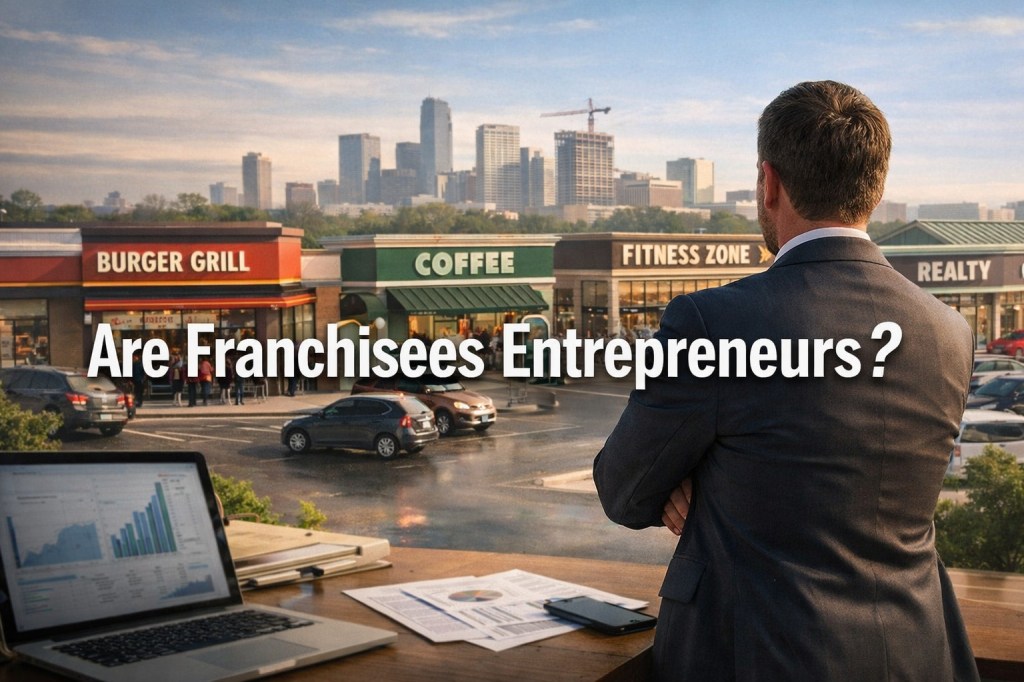
The Entrepreneurial Transition Inside Franchising

Are franchisees entrepreneurs? If you look only at the black-and-white definitions, the answer feels deceptively simple. A franchisee is a business owner licensed to operate a proven brand, paying fees in exchange for systems, trademarks, and support. An entrepreneur, by definition, creates something new, assumes most of the risk, and enjoys most of the reward. On paper, one appears structured and guided, the other inventive and self-directed. Yet those definitions miss the gray space where real-world ownership lives, especially as a franchisee grows beyond a single location.

At the entry level, a first-time franchisee often looks more like a disciplined operator than a classic entrepreneur. The model is established, the playbook is written, and the expectations are clear. Risk still exists, but it is partially mitigated by brand recognition, operating systems, and collective learning. Vision, at this stage, is often borrowed rather than invented. The goal is execution, not reinvention. Success depends on following systems, hiring well, managing cash flow, and delivering consistency. In that moment, calling the franchisee an entrepreneur may feel like a stretch to some purists.

But that perspective freezes the franchisee at day one and ignores what happens next.

The moment a franchisee begins thinking beyond survival and into growth, the equation changes. Opening a second location introduces new layers of risk that are no longer shared equally with the franchisor. Capital exposure increases. Management complexity expands. The franchisee is no longer simply running a store; they are building an organization. Decisions about people, culture, leadership structure, real estate, and market prioritization become theirs to own. The safety net of “just follow the system” starts to thin.

With each additional location, the franchisee’s role shifts further away from operator and closer to architect. Vision is no longer limited to executing a model; it becomes about designing a portfolio. Strategy enters the conversation. Questions around scale, timing, financing, and long-term exit begin to matter more than daily transactions. At this point, risk is no longer confined to a single unit’s performance. One bad decision can affect an entire multi-unit enterprise.

The entrepreneurial mindset becomes even more pronounced when a franchisee expands across multiple brands. Now the individual is not just scaling within a framework but selecting frameworks themselves. Evaluating concepts, assessing markets, diversifying revenue streams, and balancing brand-specific risks requires the same instincts as launching a new venture. While the brands themselves may not be original creations, the ecosystem being built absolutely is. The entrepreneur is not inventing the product, but they are inventing the business behind the products.

This is where the gray area provides the clearest answer. Entrepreneurship is not solely about creating something from scratch. It is about ownership of outcomes, tolerance for uncertainty, and the ability to allocate resources toward future opportunity. A multi-unit, multi-brand franchisee carries most of the risk tied to growth decisions and enjoys most of the upside if those decisions succeed. That balance of risk and reward aligns far more closely with entrepreneurship than with simple business operation.

There is also a psychological transition that occurs. Early-stage franchisees often think in terms of compliance and performance. Entrepreneurial franchisees think in terms of leverage and possibility. They ask different questions. How do I build a leadership team that can scale without me? How do I create enterprise value beyond cash flow? How do I turn locations into assets rather than jobs? These are not operator questions. They are entrepreneurial ones.

So are franchisees entrepreneurs? Not automatically. Not on day one simply by signing a franchise agreement. But many become entrepreneurs through growth, complexity, and intentional risk-taking. The transition from single-unit operator to multi-unit owner, and from single-brand participant to portfolio builder, strengthens and ultimately demands an entrepreneurial mindset.

In that sense, franchising can be less a shortcut around entrepreneurship and more a pathway into it. For those who choose to stay small and operational, the franchisee role may remain primarily that of a business owner. For those who expand, diversify, and build something larger than themselves, the line fades quickly. At that point, the question answers itself.


About the Author

Paul Segreto brings over forty years of real-world experience in franchising, restaurants, and small business growth. Recognized as one of the Top 100 Global Franchise and Small Business Influencers, Paul is the driving voice behind Acceler8Success Café, a daily content platform that inspires and informs thousands of entrepreneurs nationwide. A passionate advocate for ethical leadership and sustainable growth, Paul has dedicated his career to helping founders, franchise executives, and entrepreneurial families achieve clarity, balance, and lasting success through purpose-driven action.


About Acceler8Success America

Acceler8Success America is a comprehensive business advisory and coaching platform dedicated to helping entrepreneurs, small business owners, and franchise professionals achieve The American Dream Accelerated.

Through a combination of strategic consulting, results-focused coaching, and empowering content, Acceler8Success America provides the tools, insights, and guidance needed to start, grow, and scale successfully in today’s fast-paced world.

With deep expertise in entrepreneurship, franchising, restaurants, and small business development, Acceler8Success America bridges experience and innovation, supporting current and aspiring entrepreneurs as they build sustainable businesses and lasting legacies across America.

Learn more at Acceler8SuccessAmerica.com
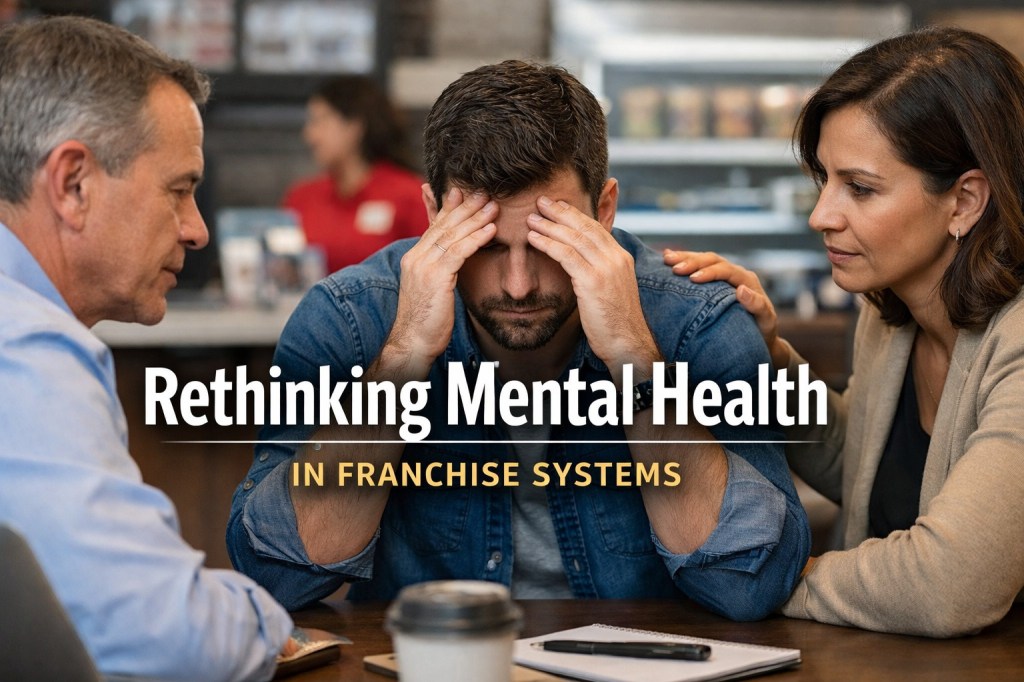
What Happens When Franchisee Mental Health Is Treated as “Not Our Problem”

Mental health is no longer a peripheral issue in franchising. It sits at the intersection of brand performance, franchisee sustainability, and the long-term health of the system itself. Franchisors often pride themselves on culture, community, and being “one big family,” yet mental health remains an uncomfortable topic… acknowledged quietly, if at all. The reality is unavoidable: a struggling franchisee does not operate in isolation. Emotional distress, burnout, anxiety, or depression can ripple through operations, employee morale, customer experience, and ultimately brand reputation. The question is no longer whether franchisors should care, but how far their responsibility reasonably extends.

Franchisees live in a unique pressure chamber. They shoulder personal financial risk, long hours, staffing challenges, compliance obligations, customer expectations, and the emotional weight of being both owner and operator. Unlike corporate executives, many franchisees do not have layers of support beneath them. When they struggle mentally, the symptoms often surface operationally—missed standards, poor communication, irritability with staff, inconsistent execution, withdrawal from the system, or resistance to guidance. These are frequently treated as performance or compliance issues when, in reality, they may be warning signs of something deeper.

From a purely business standpoint, ignoring mental health is risky. A franchisee in distress can destabilize a unit, create employee turnover, generate customer complaints, and damage the brand image in a local market. Their stress can spread to neighboring franchisees through peer groups, advisory councils, and informal conversations, quietly eroding confidence in the system. From a human standpoint, the issue is even more profound. Many franchisors speak about franchisees as partners and family members. If that language is more than marketing, it carries ethical weight. Families do not look away when one member is clearly struggling.

That said, franchisors are not therapists, doctors, or counselors. There are legal, practical, and ethical boundaries that must be respected. The goal is not to diagnose or treat mental health conditions, nor to intrude into franchisees’ private lives. The appropriate role is awareness, preparedness, and compassionate response. Franchisors should ask themselves whether their systems are designed only to enforce standards or also to support the people responsible for executing them. Is the culture one where franchisees feel safe admitting they are overwhelmed, or one where vulnerability is seen as weakness and failure?

Operations support teams sit on the front line of this issue. They interact with franchisees regularly and are often the first to notice changes in behavior, tone, or engagement. Yet most are trained exclusively on metrics, standards, and corrective action, not on recognizing human distress. Thoughtful training can change this without crossing professional boundaries. Support teams should be educated to recognize common red flags such as sudden disengagement, uncharacteristic hostility, persistent fatigue, missed deadlines, emotional volatility, or expressions of hopelessness. Just as importantly, they should be trained on what not to do—avoid assumptions, diagnoses, or judgment, and never position themselves as mental health experts.

Clear guidelines matter. Teams should know when and how to escalate concerns internally, who within the organization is responsible for sensitive conversations, and what resources can be offered. This might include access to confidential counseling resources, peer support groups, crisis hotlines, or third-party employee assistance programs that extend to franchisees. Even simply normalizing conversations around stress and mental health in system meetings can reduce stigma. The message should be consistent: seeking support is a sign of responsibility, not failure.

There is also a leadership question franchisors must confront. Does the system’s structure unintentionally contribute to burnout? Are expectations realistic, communication clear, and support accessible? Are franchisees given space to breathe, or are they perpetually reacting to initiatives, mandates, and compliance pressures without regard to human capacity? Mental health awareness is not only about intervention; it is about prevention. Strong onboarding, realistic ramp-up periods, clear financial expectations, and honest conversations about the emotional demands of ownership all play a role.

Ultimately, franchisors must wrestle with difficult questions. If a franchisee is visibly struggling, is it responsible leadership to treat it solely as a performance problem? At what point does protecting the brand require protecting the person behind the unit? Can a system truly claim to be “family” if it only engages when numbers are strong and distances itself when someone is faltering? Conversely, how does a franchisor balance compassion with accountability without creating dependency or legal exposure?

Mental health in franchise systems is not a soft issue. It is a leadership issue, a risk management issue, and a culture issue. The strongest brands of the future will not be those that ignore human strain in pursuit of short-term compliance, but those that understand sustainable performance is inseparable from the well-being of the people who carry the brand into their communities every day. The real question is not how much franchisors should concern themselves with franchisees’ mental health, but whether they can afford not to.


About the Author

Paul Segreto brings over forty years of real-world experience in franchising, restaurants, and small business growth. Recognized as one of the Top 100 Global Franchise and Small Business Influencers, Paul is the driving voice behind Acceler8Success Café, a daily content platform that inspires and informs thousands of entrepreneurs nationwide. A passionate advocate for ethical leadership and sustainable growth, Paul has dedicated his career to helping founders, franchise executives, and entrepreneurial families achieve clarity, balance, and lasting success through purpose-driven action.


About Acceler8Success America

Acceler8Success America is a comprehensive business advisory and coaching platform dedicated to helping entrepreneurs, small business owners, and franchise professionals achieve The American Dream Accelerated.

Through a combination of strategic consulting, results-focused coaching, and empowering content, Acceler8Success America provides the tools, insights, and guidance needed to start, grow, and scale successfully in today’s fast-paced world.

With deep expertise in entrepreneurship, franchising, restaurants, and small business development, Acceler8Success America bridges experience and innovation, supporting current and aspiring entrepreneurs as they build sustainable businesses and lasting legacies across America.

Learn more at Acceler8SuccessAmerica.com

When Restaurants Fight Back: Are Online Review Retaliations Hurting More Than Helping?

I’ve been reading a lot lately about the growing frustration restaurant operators feel toward online reviews and the sense that customer posting on review platforms may be getting out of hand. I understand where that frustration comes from. Reviews today can feel less like feedback and more like public judgment, delivered instantly, permanently, and often without context. Still, my mindset remains unchanged. Restaurants should be proactive in driving the best reviews possible rather than becoming reactive to the worst ones. I recently wrote about the value of each tenth of a point in Google Reviews and how those fractional increases materially affect trust, traffic, and revenue. Against that reality, the emerging conversation around how restaurants should respond, or even retaliate, against poor reviews deserves deeper scrutiny.

The idea of retaliation is emotionally understandable. Operators invest their money, their time, and often their identity into their restaurants. A single harsh review can feel personal, unfair, or even malicious, especially when it ignores circumstances, exaggerates facts, or misrepresents what actually happened. The instinct to push back is human. The risk is that once retaliation becomes a posture rather than an exception, it shifts the restaurant’s focus away from hospitality and toward ego. At that moment, the audience is no longer the unhappy guest. It is every future guest who reads the exchange and quietly evaluates whether this is a business that handles pressure with professionalism or defensiveness.

If retaliation is even considered a strategy, it must be narrowly defined and rarely used. A calm, factual response that corrects misinformation or explains policy is not true retaliation. It is brand stewardship. There is a meaningful difference between protecting the truth and trying to win an argument in public. Once responses cross into sarcasm, condescension, or moral superiority, the restaurant has already lost, regardless of whether the original review was fair. Online, perception becomes reality, and perception favors composure over confrontation every time.

The deciding factor in whether to respond firmly should never be how offensive the review feels. It should be whether the review introduces inaccuracies that, if left unaddressed, could mislead future guests. Silence can sometimes imply agreement, but not every negative review deserves oxygen. Responding emotionally to every complaint trains customers to believe the restaurant is combative rather than confident. The strongest brands respond selectively, deliberately, and with restraint.

The larger danger emerges when retaliation evolves from an occasional response into a prevailing mindset. At that point, reviews stop being viewed as potential signals and start being dismissed as noise. Operators begin to frame criticism as proof that customers are unreasonable, impossible to satisfy, or simply wrong. This mindset subtly undermines accountability. Teams absorb the message that feedback is something to fight rather than something to learn from. Over time, that attitude dulls the urgency to improve systems, consistency, and execution.

There is an even more troubling dimension to this way of thinking. A retaliatory posture can become a convenient excuse for improper or even nonexistent training. If operators convince themselves that bad reviews are primarily the result of overly sensitive customers or a broken review culture, it becomes easier to rationalize why investment in training is unnecessary. In some cases, this logic is taken a step further and framed as a cost-saving measure. If guests are going to complain anyway, why spend time and money on onboarding, service standards, leadership development, or reinforcement? As absurd as that sounds, it is a rationale that surfaces more often than many operators would like to admit.

This thinking is dangerous precisely because it can feel pragmatic in the short term. Training budgets get trimmed. Standards become loosely defined. Accountability softens. Meanwhile, leadership reassures itself that the problem exists outside the restaurant, not within it. The irony is that these decisions almost always produce the very outcomes operators claim are unfair. Inconsistent service, poor recovery, and disengaged staff generate more negative experiences, which then generate more negative reviews. Retaliation becomes the visible reaction, while the root cause remains unaddressed.

Hospitality has always been a people business, and people do not perform well in a vacuum. They need clarity, structure, coaching, and reinforcement. Choosing retaliation over training is not strength. It is surrender disguised as toughness. It signals a shift from ownership to defensiveness, from leadership to justification. No review response strategy, no matter how clever or aggressive, can compensate for weak preparation on the front lines.

There is also a philosophical line that should concern every operator. When the internal narrative becomes “we can’t please everyone, so why try,” something fundamental has already been lost. Guests do not expect perfection. They expect effort, care, and respect. Even unfair reviews often illuminate friction points that leadership may not see from inside the operation. Dismissing all criticism as unreasonable risks missing opportunities to improve the guest experience in ways that matter.

A proactive review strategy changes the entire dynamic. When a restaurant consistently delivers positively memorable experiences, encourages satisfied guests to share those experiences, and responds thoughtfully when things fall short, the occasional unfair review loses its power. Volume and consistency dilute outliers. In that environment, a firm response to a truly inaccurate review feels credible rather than defensive because it is supported by a broader pattern of positive feedback.

Reviews are not going away, and customers are not becoming quieter. The real decision for restaurant operators is whether reviews are treated as an adversary to battle or a reality to manage with discipline. Retaliation, if it exists at all, should be rare, deliberate, and rooted in protecting truth rather than pride. The real work remains unchanged. Build a culture that values the guest experience. Train teams to handle pressure and recover when things go wrong. Design systems that reduce inconsistency before it reaches the guest. When those fundamentals are in place, responses to reviews become less about damage control and more about reinforcing who you are.

The question is not whether customers sometimes go too far. They do. The more important question is whether restaurants allow those moments to pull them away from the principles that earn trust in the first place.


About the Author

Paul Segreto brings over forty years of real-world experience in franchising, restaurants, and small business growth. Recognized as one of the Top 100 Global Franchise and Small Business Influencers, Paul is the driving voice behind Acceler8Success Café, a daily content platform that inspires and informs thousands of entrepreneurs nationwide. A passionate advocate for ethical leadership and sustainable growth, Paul has dedicated his career to helping founders, franchise executives, and entrepreneurial families achieve clarity, balance, and lasting success through purpose-driven action.


About Acceler8Success America

Acceler8Success America is a comprehensive business advisory and coaching platform dedicated to helping entrepreneurs, small business owners, and franchise professionals achieve The American Dream Accelerated.

Through a combination of strategic consulting, results-focused coaching, and empowering content, Acceler8Success America provides the tools, insights, and guidance needed to start, grow, and scale successfully in today’s fast-paced world.

With deep expertise in entrepreneurship, franchising, restaurants, and small business development, Acceler8Success America bridges experience and innovation, supporting current and aspiring entrepreneurs as they build sustainable businesses and lasting legacies across America.

Learn more at Acceler8SuccessAmerica.com
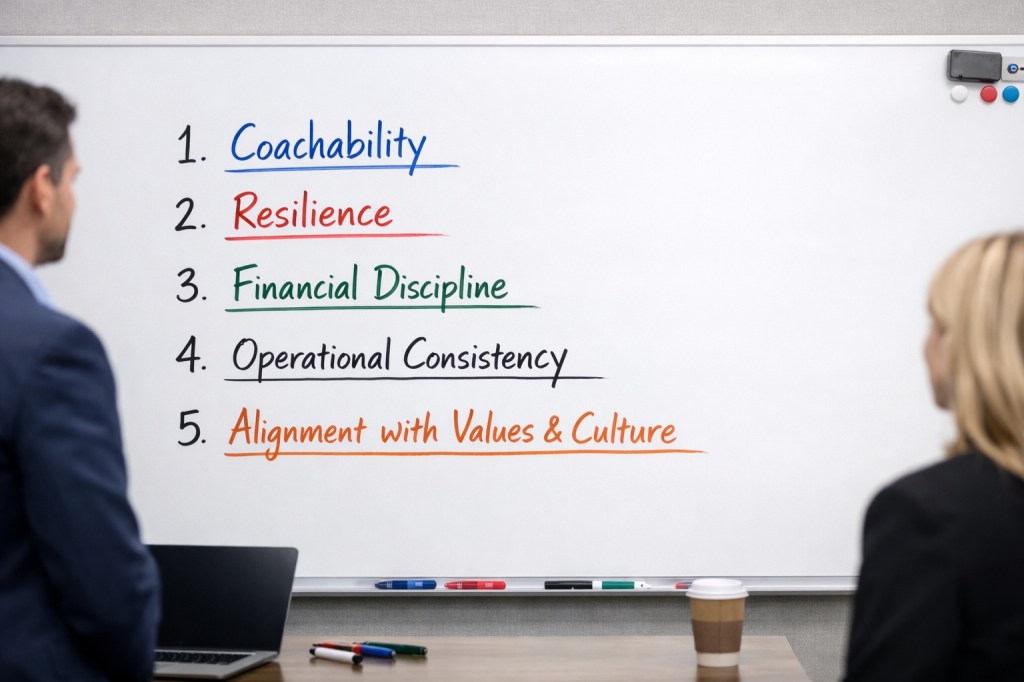
Choosing the Right Franchisee: Five Traits That Protect and Grow Your Brand

Franchise systems are often described as proven business models, but the most seasoned franchisors understand that the model itself is only half the equation. The other half is the individual who is granted the right to operate under the brand. Every new franchisee is not just opening a business; they are assuming custody of a reputation that may have taken decades to build. That reality elevates franchisee selection from a transactional process to a strategic responsibility with long-term consequences for the entire system.

The first trait franchisors should consistently seek is coachability. Franchising is built on the premise that there is a defined way to do things, yet many candidates enter the process believing their experience alone will carry them. Coachable franchisees demonstrate humility, curiosity, and a willingness to follow systems even when their instincts suggest otherwise. They understand that brand standards are not constraints, but safeguards. A franchisor must ask: is this candidate truly open to guidance, or are they simply nodding in agreement to get through the approval process? And when the honeymoon period ends, will they still be receptive to feedback that challenges their assumptions?

Resilience is the second indispensable trait. Every franchise system, regardless of maturity, encounters disruption. Labor shortages, supply chain issues, economic downturns, and local market challenges are not hypothetical; they are inevitable. Resilient franchisees do not internalize setbacks as personal failures, nor do they externalize blame. They remain engaged, solutions-oriented, and accountable. Franchisors should ask themselves whether a candidate has demonstrated perseverance in past ventures or whether they have a pattern of exiting when conditions become uncomfortable. How will this individual respond when the business underperforms projections for several consecutive months?

Financial discipline is the third core trait and one that is frequently misunderstood. Capital alone does not equate to financial maturity. Disciplined franchisees respect unit economics, manage cash flow conservatively, and understand the long game of reinvestment. They resist the temptation to overextend, underpay, or compromise quality to chase short-term relief. Franchisors should consider whether a candidate views the franchise as a system to be stewarded or a personal ATM to be optimized for immediate returns. What decisions will this franchisee make when faced with the choice between preserving cash and protecting the brand experience?

Operational consistency follows closely behind. Franchising depends on reliability, not brilliance. Customers choose franchise brands because they know what to expect, and that expectation must be met repeatedly across locations and markets. Franchisees who value consistency train diligently, measure performance, and respect procedures even when no one is watching. Franchisors must ask whether a candidate appreciates the discipline required to execute a system day after day, or whether they are prone to improvisation that may feel innovative but ultimately dilutes the brand. How much variation is too much, and who bears the cost when consistency erodes?

Alignment with brand values and culture rounds out the top five traits. Culture is not a poster on the wall; it is reflected in daily decisions, employee treatment, customer interactions, and community engagement. Franchisees who align with the brand’s values strengthen trust across the network and become informal leaders within the system. Those who do not may technically comply while quietly undermining the spirit of the brand. Franchisors should ask whether this candidate represents the brand they want replicated dozens or hundreds of times. If every franchisee behaved the same way, would the brand be stronger or weaker?

For franchisees aspiring to multi-unit ownership, these traits become even more consequential, but additional qualities emerge. Strategic thinking is essential, as multi-unit operators must understand how decisions scale and how systems perform across multiple locations. Leadership replaces individual effort as the primary driver of results, requiring the ability to recruit, develop, and retain capable managers. Delegation becomes a necessity rather than a preference. Franchisors should ask whether a candidate can transition from operator to leader without losing control or clarity. Is this individual prepared to build infrastructure, or are they simply accumulating units without a scalable plan?

When a promising candidate is missing one or two traits, franchisors face a critical judgment call. Not every deficiency should result in rejection, but none should be ignored. Coachability can sometimes be developed through structured onboarding and mentoring. Financial discipline can be reinforced with education, reporting, and accountability. What matters is whether the candidate acknowledges the gap and demonstrates a genuine commitment to growth. Franchisors must ask whether they are prepared to invest the time and resources required to close that gap, and whether the system is equipped to support that development.

Unaddressed gaps, however, can become systemic risks. A franchisee who lacks resilience may disengage during challenging periods, increasing the burden on support teams and creating instability within the network. A financially undisciplined operator may fall out of compliance, strain relationships with vendors, or compromise brand standards in ways that affect neighboring franchisees. Over time, these issues can erode trust, create internal friction, and weaken the brand’s market perception. Franchisors should ask themselves whether tolerating a misalignment today creates a larger problem tomorrow.

The most effective franchisors approach franchisee selection and development with clarity and courage. They define the traits that matter most, assess them honestly, and address gaps proactively. They recognize that saying no to the wrong candidate is often an act of stewardship, not exclusion. Perhaps the most important question franchisors can ask is this: are we building a network of owners who can grow with the brand, protect it during adversity, and represent it with pride, or are we simply filling territories and hoping the system absorbs the risk?

Franchising succeeds not when every unit opens, but when every unit contributes positively to the whole. The traits franchisors prioritize today will shape the culture, performance, and resilience of the brand for years to come.


About the Author

Paul Segreto brings over forty years of real-world experience in franchising, restaurants, and small business growth. Recognized as one of the Top 100 Global Franchise and Small Business Influencers, Paul is the driving voice behind Acceler8Success Café, a daily content platform that inspires and informs thousands of entrepreneurs nationwide. A passionate advocate for ethical leadership and sustainable growth, Paul has dedicated his career to helping founders, franchise executives, and entrepreneurial families achieve clarity, balance, and lasting success through purpose-driven action.


About Acceler8Success America

Acceler8Success America is a comprehensive business advisory and coaching platform dedicated to helping entrepreneurs, small business owners, and franchise professionals achieve The American Dream Accelerated.

Through a combination of strategic consulting, results-focused coaching, and empowering content, Acceler8Success America provides the tools, insights, and guidance needed to start, grow, and scale successfully in today’s fast-paced world.

With deep expertise in entrepreneurship, franchising, restaurants, and small business development, Acceler8Success America bridges experience and innovation, supporting current and aspiring entrepreneurs as they build sustainable businesses and lasting legacies across America.

Learn more at Acceler8SuccessAmerica.com

20 Reasons Not to Franchise Your Business (Until You’re Ready… Or Not!)

Franchising is often viewed as the ultimate badge of success for business owners. The idea of expanding rapidly with someone else’s capital while gaining brand recognition and market share is understandably attractive. But the truth is, franchising is not a shortcut to growth, nor is it a guaranteed path to fortune. In fact, for many business owners, it can become a burden financially, emotionally, and operationally if pursued prematurely or for the wrong reasons.

Before you take the leap into franchising, it’s essential to understand why you shouldn’t. These aren’t roadblocks meant to discourage ambition but rather reality checks that, when addressed, will either affirm your business is ready to scale or save you from a costly and painful detour. Below are 20 reasons why you should not attempt to franchise your business, at least not yet.

20 Reasons Why You Should Not Franchise Your Business

  1. Your Business Isn’t Profitable Enough
    If you aren’t consistently generating strong profits, there’s no business model to replicate, let alone sell to others.
  2. You Don’t Have Documented Systems
    Without clearly defined and repeatable operational procedures, your business can’t be taught, and franchising is, at its core, a teaching model.
  3. You Are the Business
    If your business relies heavily on your personal involvement, personality, or expertise, it’s not yet ready to be duplicated.
  4. You Don’t Understand Franchising
    Franchising isn’t just growth, it’s legal, operational, marketing, and support infrastructure with very specific responsibilities to franchisees.
  5. You’re Desperate for Capital
    Franchising should never be a Band-Aid for cash flow problems. You’re selling a business model, not just collecting franchise fees.
  6. Your Brand Isn’t Established
    Weak branding makes it hard to market and differentiate your franchise from others, leading to confusion or poor consumer reception.
  7. You Can’t Support Franchisees
    Without the infrastructure to provide training, marketing assistance, and ongoing support, your franchisees will struggle, and so will your brand.
  8. You Don’t Like Managing People
    Franchising involves managing relationships, solving disputes, and leading by influence, not command. If this doesn’t appeal to you, think twice.
  9. You’re Not Ready for Legal Compliance
    Franchise laws are strict, vary by state, and require specialized legal documentation and ongoing disclosures… a major commitment.
  10. You Don’t Have a Unique Selling Proposition
    If your concept isn’t truly different or better, why would someone invest their future into your business instead of starting their own?
  11. You Can’t Let Go
    Franchising requires letting others run your concept their way within your system. Micromanagement doesn’t scale.
  12. Your Current Location Isn’t Strong Enough
    If your flagship store isn’t a well-oiled machine with strong customer reviews and a loyal base, it won’t serve as a convincing model.
  13. You Haven’t Tested in Multiple Markets
    A business that works in one neighborhood may not work in another. Proving adaptability across markets is crucial.
  14. You Lack Marketing & Sales Strategy
    You’ll need a strategy to attract franchisees, sell territories, and market the brand and that takes time, talent, and money.
  15. You Underestimate the Cost
    Franchising costs more than most anticipate. From legal fees to training manuals, marketing, and franchisee support, it adds up fast.
  16. You’re Not Ready to Train Others
    Can you break down every role, process, and nuance into an understandable training program that others can replicate?
  17. You Don’t Have a Clear Vision
    Without a long-term roadmap for growth, brand standards, and expansion, you’ll struggle to lead a network of franchisees effectively.
  18. You Think Franchising Means Less Work
    The reality: franchising is more work, more responsibility, and less control, especially at the beginning.
  19. You Haven’t Considered Alternative Growth Models
    Franchising isn’t the only way to grow. Corporate-owned expansion might be more suitable.
  20. You’re Not Emotionally Ready
    Franchisees will challenge you, markets will shift, and expectations will rise. You must be resilient, strategic, and adaptable.

After the Reality Check: Rethink, Refocus, Rebuild

If several of these reasons resonated with you, that’s not a signal to give up, it’s a wake-up call to double down on strengthening your existing business. Use this pause to refine your systems, train your team, define your brand, test your concept in other locations, and build the infrastructure that can eventually support multiple units, franchised or not.

Going through this process may prove to be one of the best decisions you’ll ever make. Even if you ultimately decide not to franchise, your business will be stronger, more efficient, and better positioned to scale. You may discover that developing company-owned locations is a better fit. Or, after building a rock-solid foundation and developing the right support systems, you might find franchising to be the logical next step… one you’re finally ready for.

Either way, you win because a well-built business is always the best growth strategy.


About the Author

Paul Segreto brings over forty years of real-world experience in franchising, restaurants, and small business growth. Recognized as one of the Top 100 Global Franchise and Small Business Influencers, Paul is the driving voice behind Acceler8Success Café, a daily content platform that inspires and informs thousands of entrepreneurs nationwide. A passionate advocate for ethical leadership and sustainable growth, Paul has dedicated his career to helping founders, franchise executives, and entrepreneurial families achieve clarity, balance, and lasting success through purpose-driven action.


About Acceler8Success America

Acceler8Success America is a comprehensive business advisory and coaching platform dedicated to helping entrepreneurs, small business owners, and franchise professionals achieve The American Dream Accelerated.

Through a combination of strategic consulting, results-focused coaching, and empowering content, Acceler8Success America provides the tools, insights, and guidance needed to start, grow, and scale successfully in today’s fast-paced world.

With deep expertise in entrepreneurship, franchising, restaurants, and small business development, Acceler8Success America bridges experience and innovation, supporting current and aspiring entrepreneurs as they build sustainable businesses and lasting legacies across America.

Learn more at Acceler8SuccessAmerica.com
From Founder’s Vision to Franchise Reality: Why Great Brands Go Back to Basics

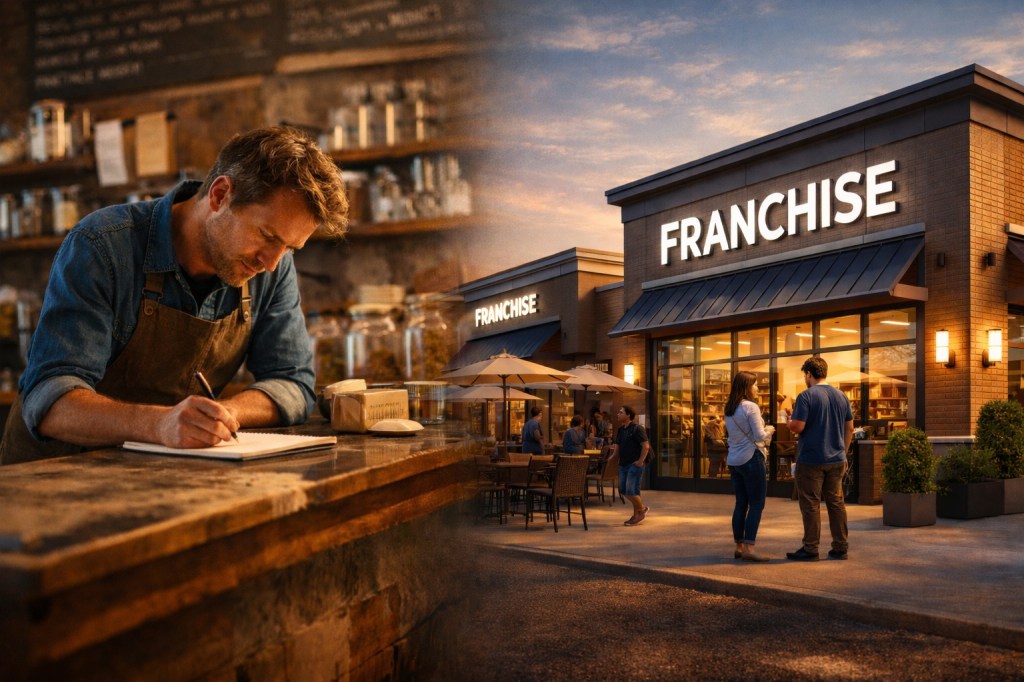
There was a moment, long before disclosure documents, franchise sales funnels, conferences, and awards, when a founder looked at a thriving business and asked a simple but consequential question: how can this grow without losing its soul? Franchising was rarely the first answer. It emerged after proof of concept, after customers validated the offering, after systems were tested under pressure, and after the founder recognized a ceiling that could not be broken alone. Franchising began as a solution to scale impact, extend a brand’s reach, and create opportunity for others to succeed through a proven model.

Getting back to basics requires revisiting that original intent. Franchising at its core is not a sales strategy. It is a relationship-based growth model built on shared risk, shared responsibility, and shared upside. The franchisor contributes the brand, the systems, the training, and the ongoing leadership. The franchisee contributes capital, execution, local market knowledge, and daily operational discipline. One without the other does not work. The strength of the system is determined not by how fast it grows, but by how well the relationship functions when growth becomes difficult.

The franchise relationship was never meant to be passive. It was designed to be active, accountable, and dynamic. Franchisors lead, protect, and evolve the brand. Franchisees operate, represent, and deliver on the brand promise every day in their communities. Trust is not implied by the agreement. It is earned through consistency, transparency, communication, and follow-through. When either side forgets this, the system begins to drift from purpose to transaction.

The mindset required for successful franchising is demanding and often underestimated. Founders must transition from operator to leader of leaders. Control gives way to influence. Ego gives way to stewardship. Decisions must be made with the long-term health of the system in mind, not short-term revenue or convenience. Franchisees must embrace the discipline of following systems while still thinking like owners. Independence exists within structure, not outside of it. The commitment on both sides is ongoing, not front-loaded, and it deepens as the brand grows.

“Be in business for yourself, not by yourself” is one of the most quoted lines in franchising, yet one of the most misunderstood. It does not mean abdication of responsibility. It does not mean guaranteed success. It means support exists, guidance is available, and lessons are shared so mistakes do not have to be repeated alone. The moment a franchisee expects the franchisor to run their business for them, or a franchisor expects franchisees to perform without engagement, the phrase loses its meaning.

“We are family” is another familiar refrain. In its best form, it reflects mutual respect, honest dialogue, and a willingness to work through challenges together. In its worst form, it becomes a slogan used to soften hard conversations or excuse poor performance. Real family holds each other accountable. Real family tells the truth even when it is uncomfortable. Real family understands that loyalty is built through actions, not words.

Founders would benefit from asking themselves why franchising was chosen in the first place. Was it to scale responsibly or to accelerate revenue? Was it to create opportunity for others or to offload operational burden? Was the infrastructure built to support franchisees at the level promised, or did growth outpace leadership capacity? Franchisees should ask equally difficult questions. Did you fully understand the role you were stepping into? Are you operating the business as designed or selectively following systems? Are you contributing to the health of the brand or merely extracting from it?

Getting back to basics is not about nostalgia. It is about clarity. It is about reaffirming the purpose of the franchise model and recommitting to the relationship that sustains it. It is about remembering that franchising works best when both sides see themselves as partners in something larger than a single unit or a single quarter.

The call to action is simple and demanding. Pause the noise. Revisit the original promise of the brand. Re-examine how the franchise relationship is being honored today. Initiate honest conversations with franchisees and leadership teams. Invest in communication, training, and alignment before investing in expansion. Measure success not only by unit count, but by trust, consistency, and shared belief in the future.

Franchising did not begin as a shortcut. It began as a commitment. The brands that endure are the ones willing to return to that commitment again and again.


About the Author

Paul Segreto brings over forty years of real-world experience in franchising, restaurants, and small business growth. Recognized as one of the Top 100 Global Franchise and Small Business Influencers, Paul is the driving voice behind Acceler8Success Café, a daily content platform that inspires and informs thousands of entrepreneurs nationwide. A passionate advocate for ethical leadership and sustainable growth, Paul has dedicated his career to helping founders, franchise executives, and entrepreneurial families achieve clarity, balance, and lasting success through purpose-driven action.


About Acceler8Success America

Acceler8Success America is a comprehensive business advisory and coaching platform dedicated to helping entrepreneurs, small business owners, and franchise professionals achieve The American Dream Accelerated.

Through a combination of strategic consulting, results-focused coaching, and empowering content, Acceler8Success America provides the tools, insights, and guidance needed to start, grow, and scale successfully in today’s fast-paced world.

With deep expertise in entrepreneurship, franchising, restaurants, and small business development, Acceler8Success America bridges experience and innovation, supporting current and aspiring entrepreneurs as they build sustainable businesses and lasting legacies across America.

Learn more at Acceler8SuccessAmerica.com
Designing Strategic Focus for the Modern Franchisor

There are moments in the life of a franchise brand when incremental improvement is no longer enough. When dashboards, weekly calls, leadership huddles, and well-intended off-sites all begin to feel like motion without momentum. When decisions are technically sound but strategically thin. When alignment is assumed rather than tested. At that point, what senior leadership needs most is not another initiative, not another consultant in the room, and certainly not another “team-building” exercise disguised as strategy. What is needed is deliberate separation from the business in order to finally think about the business.

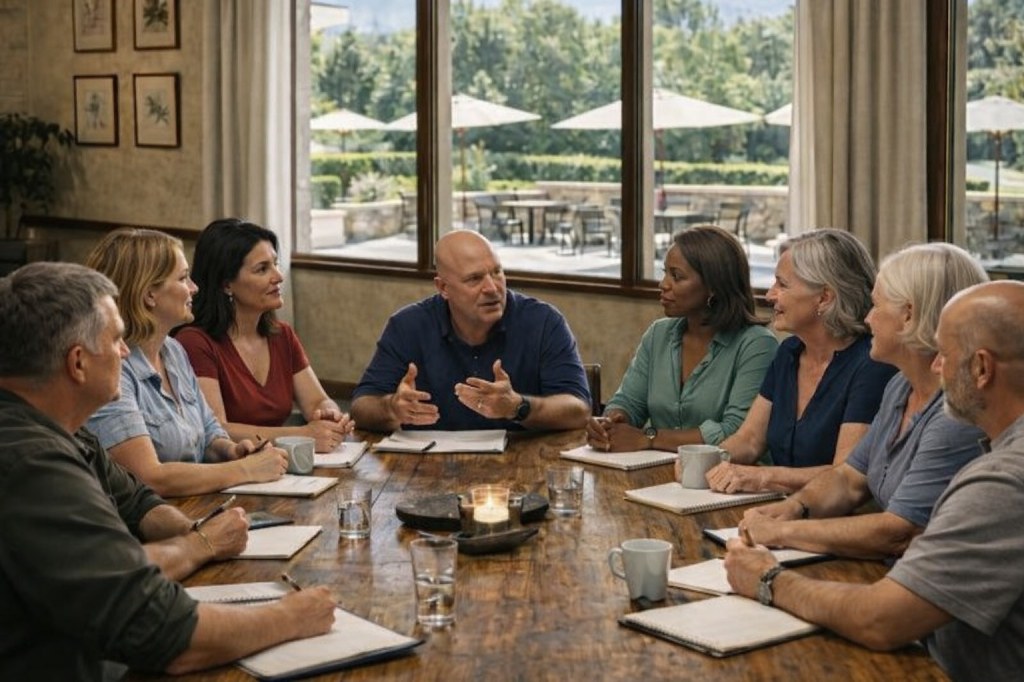
A properly designed two- to three-day leadership retreat is not a reward, not a perk, and not a morale exercise. It is a working session in the purest sense of the word. Its purpose is quiet, uninterrupted, disciplined strategic thinking. Under no circumstances should there be calls to or from the office. No “quick check-ins.” No texts framed as emergencies that somehow resolve themselves once answered. No one half-present while mentally managing daily operations. The moment the office is allowed into the room, the retreat loses its power. Strategy does not survive constant interruption.

The environment matters more than most leaders realize. Ideally, this retreat takes place at a destination where cars are unnecessary. A walkable setting, a resort or remote location where the group arrives together and stays together. This is not incidental; it is structural. When people can leave freely, they do. When distractions are nearby, they find their way in. When leaders retreat to separate hotels, bars, or side conversations, alignment fractures before it is ever built. Physical proximity reinforces psychological commitment. If the leadership team is serious about acting as one, it must first be together as one.

This requires intentional togetherness throughout the entire retreat. Meals are shared without exception. Breakfast, lunch, and dinner are all part of the working environment. There is no lingering at the bar after dinner, no splitting off into smaller groups, and no one-on-one conversations between two or three leaders outside the presence of the full team. This is not about control; it is about integrity of process. Alignment built in fragments is not alignment at all. This retreat is about collective truth, not selective consensus.

What this environment is meant to create is the modern equivalent of the old advertising agency war room. When the stakes were high and the ideas mattered, teams locked themselves in, covered walls with thinking, challenged each other relentlessly, discarded what did not hold up, and emerged with clarity forged through friction. Franchisors face stakes that are arguably higher. You are stewarding a brand, a system, and the livelihoods of franchisees who depend on your clarity, discipline, and consistency. Polite agreement is not enough. Intellectual honesty is required.

An often-overlooked component of these retreats is perspective gathered from outside the room, particularly from franchisees. Insight gathered in advance from franchise owners should be brought into the conversation not as an agenda item and not as a referendum on leadership performance, but as context. As texture. As a reality check. These insights are not meant to steer the meeting or dominate it; they exist to ground leadership thinking in the lived experience of the system. What franchisees are feeling, where they are confused, what they are frustrated by, and where they see opportunity provides invaluable perspective that senior leadership cannot generate in isolation. Ignoring that voice weakens strategy; acknowledging it sharpens it.

For this retreat to work, full transparency must be the standard, not the aspiration. There must be explicit permission to disagree, challenge assumptions, and surface uncomfortable truths without fear of being labeled negative, disloyal, or disruptive. If leadership cannot argue productively behind closed doors, conflict will eventually leak into the system in far more damaging ways. This room must be a place where reality is spoken plainly and where silence is treated as a failure of responsibility, not professionalism.

Preparation is non-negotiable. Every participant must arrive ready to lead a portion of the conversation, not with polished presentations designed to defend territory, but with thoughtful frameworks and hard questions. The agenda should be divided into essential categories that define the health of the franchise system. Brand culture deserves more than aspirational language; it requires an honest assessment of what behaviors are rewarded, what behaviors are tolerated, and whether internal conduct matches external promises. Day-to-day operations must be examined for systemic friction, not surface-level inefficiencies. Where does complexity creep in unnecessarily? Where are standards unclear or inconsistently enforced?

Franchise relationships demand particularly candid examination. Are franchisees truly heard, or merely acknowledged? Where has trust eroded, and why? What issues are repeatedly escalated without resolution? Franchise development should be scrutinized beyond pipeline metrics. Are growth decisions aligned with long-term brand health, or are short-term targets quietly driving compromise? What markets, profiles, or deal structures should be paused or eliminated entirely?

The absence of a facilitator is intentional. This is not a workshop; it is a leadership obligation. When an external voice manages the conversation, leaders often unconsciously outsource accountability for the hardest moments. In this setting, the leadership team must self-regulate. It must sit in discomfort long enough to move past defensiveness and into insight. The tension that arises is not a problem to solve; it is evidence that real work is happening.

Equally important is what happens between sessions. Long days spent together reveal how leaders think, listen, react, and recalibrate. Conversations that continue over dinner are not breaks from the work; they are extensions of it. Trust is built not through exercises but through shared intensity, mutual respect, and the experience of staying present when it would be easier to disengage.

The retreat does not end with ideas. It ends with decisions. The group must leave with a clear, agreed-upon plan to move forward, complete with priorities, ownership, timelines, and accountability. Ambiguity is not strategic flexibility; it is deferred conflict. Every leader should leave knowing exactly what they are responsible for and how progress will be measured.

That accountability must continue. Thereafter, the leadership team should commit to meeting once a month for an extended office session dedicated to reviewing progress, challenging assumptions, and editing the plan as reality evolves. Not status updates. Not operational reviews. Strategic recalibration. The retreat sets the direction; disciplined follow-up sustains it.

The real question for franchisors and senior leadership teams is not whether they can afford to step away for two or three days. It is whether they can afford to continue without doing so. When was the last time your leadership team thought deeply instead of reacting quickly? What conversations are being postponed because there never seems to be space for them? What truths are being managed around rather than confronted directly? And if everything were truly on the table, what would need to be said that has not yet been voiced?

Strategic clarity is rarely accidental. It is earned through presence, discipline, and collective courage. It is built in rooms where honesty outweighs comfort, where togetherness is intentional, and where leadership commits to acting as one long after the retreat ends.


About the Author

Paul Segreto brings over forty years of real-world experience in franchising, restaurants, and small business growth. Recognized as one of the Top 100 Global Franchise and Small Business Influencers, Paul is the driving voice behind Acceler8Success Café, a daily content platform that inspires and informs thousands of entrepreneurs nationwide. A passionate advocate for ethical leadership and sustainable growth, Paul has dedicated his career to helping founders, franchise executives, and entrepreneurial families achieve clarity, balance, and lasting success through purpose-driven action.


About Acceler8Success America

Acceler8Success America is a comprehensive business advisory and coaching platform dedicated to helping entrepreneurs, small business owners, and franchise professionals achieve The American Dream Accelerated.

Through a combination of strategic consulting, results-focused coaching, and empowering content, Acceler8Success America provides the tools, insights, and guidance needed to start, grow, and scale successfully in today’s fast-paced world.

With deep expertise in entrepreneurship, franchising, restaurants, and small business development, Acceler8Success America bridges experience and innovation, supporting current and aspiring entrepreneurs as they build sustainable businesses and lasting legacies across America.

Learn more at Acceler8SuccessAmerica.com