Proactive Change for Restaurant Success: The Crucial Steps in Managing Trends and Transitions

In the dynamic landscape of the restaurant industry, trends wax and wane, consumer preferences evolve, and unforeseen challenges emerge. Year over year decreases in revenue and profitability can be alarming, but the message is clear: change is inevitable. Rather than accepting and reacting to these shifts, the key to success lies in proactively addressing and embracing change head-on. Here’s how restaurant operators can not only adapt to change but thrive amidst it.

Recognizing the Need for Change

To borrow a phrase, “shit happens.” Roadblocks, obstacles, challenges—these are par for the course in the world of food and service. However, these are not just mere disruptions; they are signals. Ignoring negative trends and assuming they will correct themselves is a grave mistake. These are indicators prompting the need for change.

“You can’t just keep doing what works one time, everything around you is changing. To succeed, stay out in front of change.” – Sam Walton

The Logistics of Change Management

1. Situational Analysis: Begin by conducting a thorough analysis of your current situation. Understand your financials, customer feedback, and market trends.

2. Set Clear Objectives: Determine what you want to achieve. Whether it’s improving profitability, enhancing customer experience, or expanding your customer base, having clear goals will guide your change initiatives.

3. Develop a Strategy: Create a roadmap for change. This might involve rebranding, introducing new menu items, or shifting operational methods.

4. Communicate and Train: Everyone in the business, from the kitchen staff to the front-of-house team, must be informed and trained on the new changes.

Achieving Buy-In Across the Business

Change can be unsettling, and resistance is a natural response. Achieving buy-in from your staff is crucial because they’re on the front lines, executing your vision. Involve them in the decision-making process, listen to their feedback, and ensure they understand the reasons behind the changes. A team that believes in the change is far more effective in implementing it.

Customer Buy-In: The Real Challenge

Your customers have grown accustomed to a certain experience, and changes might disorient them. However, change can be presented as an improvement. Here’s how:

  • Transparent Communication: Let them know about the forthcoming changes, the reasons behind them, and the benefits they stand to gain.
  • Offer Samples: If it’s a menu change, offer samples of the new dishes. Get feedback and adjust based on it.
  • Promotions and Offers: Introduce special offers to entice customers to try the new offerings or experience the rebranded environment.

Thinking Outside the Four Walls

Adapting to change may also mean exploring revenue opportunities beyond the traditional confines of your restaurant:

  • Delivery and Takeout: If you haven’t yet, invest in a delivery system or partner with established platforms.
  • Pop-Up Events: Host special events or pop-ups in different locations to generate buzz and attract a new audience.
  • Merchandising: Selling branded merchandise or packaged versions of your specialty sauces or dishes can be a new revenue stream.

Generating Excitement

Change should not only be about mitigation but also about excitement:

  • Engage on Social Media: Share behind-the-scenes looks at the changes, run contests, and engage with followers.
  • Host Reopening or Relaunch Events: If the changes are substantial, a grand reopening can create a buzz and attract both regulars and new customers.

Contemplating Change

When contemplating changes, especially significant shifts, operators should deeply consider the following questions:

Is this change aligned with our core brand values and identity?

Rationale: Any change, whether in the menu, branding, or operations, should still reflect the core values and identity of the restaurant. Drifting too far from these foundational principles can risk alienating loyal customers and muddling the brand’s identity in the market.

How will [any] change impact our staff, and what training or support will they need to adapt successfully?

Rationale: Your staff are the frontline ambassadors of any change you implement. Their ability to understand, embrace, and effectively communicate or execute the change can significantly influence its success or failure.

Have we established clear metrics and evaluation methods to assess the effectiveness of this change?

Rationale: Without measurable outcomes, it’s challenging to determine if a change is beneficial or detrimental. By setting clear metrics (e.g., increased sales, customer satisfaction scores, or reduced wait times), you can objectively evaluate the change’s impact and make further adjustments if necessary.

It is not the strongest or the most intelligent who will survive but those who can best manage change. –  Charles Darwin

In conclusion, while change can be daunting, it’s an opportunity for growth, innovation, and reinvigoration. By proactively addressing change, involving your team, and putting the customer at the center of your strategy, your restaurant can not only navigate the tumultuous waters of the industry but sail forth into a brighter, more prosperous future.

From the Author, Paul Segreto, CEO & Founder, Acceler8Success Group

The future may be a bit bumpy for some, more so for others. Knowing who to turn to and when to turn to for guidance and help is important. Having resources at your disposal is also important.

So, if you hit a wall, for whatever reason, please feel free to reach out to me for assistance or even if you just need to talk and bounce around a few thoughts. Please do not hesitate.

You can reach me on LinkedIn, by email to Paul@Acceler8Success.com, and by phone or text at (832) 797-9851.

Make it a great day. Make it happen. Make it count!

The Delicate Balance: Entrepreneurship, Optimism, and Denial

Denial is often seen as a defense mechanism, a way for the mind to shield itself from hard truths. For entrepreneurs, it can be a double-edged sword. On one hand, a certain level of denial or optimism is necessary to venture into the unknown and take risks. But when taken to the extreme, this denial can become a stifling force, preventing necessary change and adaptation.

The Comfort of Denial

The world of entrepreneurship is rife with uncertainties. Starting a venture, be it a small business or a tech startup, involves navigating uncharted waters. This is where denial can play a protective role. By momentarily denying the overwhelming odds of failure, entrepreneurs can muster the courage to keep moving forward.

However, as any venture grows, it’s vital to adapt, shift strategies, and evolve. Entrepreneurs who remain trapped in their initial vision, refusing to see the signs that change is necessary, are in a state of denial. They get comfortable with small wins, and when larger challenges surface, they resort to pouring more resources (the metaphorical water) into a flawed model (the cracked cup).

The Cost of Staying in Denial

Staying in denial can have serious repercussions. It’s not just about the financial strain; it’s also about the toll it takes on one’s mental well-being. Entrepreneurs who refuse to face reality might resort to self-sabotage, including procrastination or even addiction, as a way to cope.

This pattern of denial can be compared to an old car that’s breaking down. Instead of acknowledging that it’s time for a new vehicle or a significant overhaul, the owner might just keep pouring money into minor repairs. But no matter how much is spent on maintenance, the underlying problem remains.

Breaking the Cycle of Denial

For entrepreneurs to break free from this cycle, introspection is crucial. By asking themselves hard questions and seeking external feedback, they can get a clearer picture of where they stand. Embracing reality, even if it’s not the one they hoped for, is the first step towards true progress.

Questions for Reflection

  1. How can entrepreneurs differentiate between healthy optimism and dangerous denial?
  2. What signs should an entrepreneur look for to recognize they might be in denial about their venture’s direction or viability?
  3. How can entrepreneurs create a support system that helps them confront and navigate the realities of their business?

While denial might offer temporary comfort, it’s essential for entrepreneurs to recognize when they’re stuck in this mindset. By acknowledging reality and being open to change, they pave the way for genuine growth and success.

From the Author, Paul Segreto, CEO & Founder, Acceler8Success Group

If you’d like to discuss your entrepreneurial experiences, challenges, or aspirations, or if you need guidance or coaching concerning your small business, restaurant, or franchise, please don’t hesitate to contact me. You can send an email to me at paul@acceler8success.com or you may reach me by text or phone at (832) 797–9851. I look forward to helping you.

Make it a great day. Make it happen. Make it count!

The Rising Costs of Eating Out: Impacts and Implications for the Restaurant Industry

If the gap between grocery and restaurant prices continues to widen, it suggests that the cost of eating out is becoming significantly more expensive compared to cooking at home. This differential can arise due to a multitude of factors, such as increased labor costs, real estate prices, regulatory compliance, and supply chain issues for restaurants.

When assessing the widening gap between grocery and restaurant prices and its potential ramifications on the restaurant industry, here are three key questions to consider:

  1. What are the primary drivers of the cost increase in the restaurant industry compared to grocery stores?This question helps isolate the main factors contributing to the price disparity. Understanding whether it’s primarily due to labor costs, real estate, supply chain issues, regulatory compliance, or other factors can guide solutions and strategies for the industry.
  2. How are consumer behaviors and preferences evolving in response to these price changes, and what does it indicate about future dining trends?By observing consumer behaviors, the industry can gauge how sustainable current pricing models are. It would also provide insights into whether people are looking for experiences, convenience, or price value, guiding restaurants in tailoring their offerings.
  3. What innovations or adaptations can restaurants implement to either reduce operational costs or add value to the dining experience, justifying the price difference?This encourages forward-thinking and proactive adaptations. Instead of merely reacting to the price gap, restaurants can explore ways to reposition themselves, whether through technology, service diversification, or enhancing the overall dining experience.

Here are the potential ramifications and effects on restaurants in both the short and long term:

Short-Term Effects

  1. Decline in Customer Traffic: If consumers perceive that they are getting less value for their money at restaurants, many may choose to dine out less frequently.
  2. Shift to Promotions & Discounts: To attract price-sensitive consumers, restaurants may launch special offers, discounts, and promotions. This can erode profit margins but might be necessary to drive traffic.
  3. Menu Changes: Restaurants might start revising their menus to offer dishes made from less expensive ingredients or reduce portion sizes to maintain profitability.
  4. Operational Adjustments: Cost-saving measures, like reducing staff or hours of operation, might be implemented to offset higher costs.
  5. Increase in Takeout & Delivery: If the perceived value comes from the food rather than the dine-in experience, restaurants might see a spike in delivery or takeout orders, as people opt to eat restaurant food at home.
  6. Closure of Marginal Establishments: Restaurants operating on thin margins might struggle to stay profitable and could close.

Long-Term Effects

  1. Shift in Dining Culture: The frequency of dining out might reduce, with people viewing it more as a luxury or an occasional treat rather than a routine.
  2. Rise of Meal Kits and Ready-to-Eat Options: Grocery stores might capitalize on this trend by offering restaurant-quality meal kits or ready-to-eat options at a lower cost than dining out.
  3. Innovation in Efficiency: Restaurants might invest in technology or operational innovations to reduce costs. For instance, automated ordering systems, kitchen robotics, or streamlined supply chains.
  4. Consolidation in the Industry: Larger chains with better economies of scale might buy out smaller, struggling restaurants. This can lead to reduced variety in dining options.
  5. Diversification of Services: Restaurants might diversify into other areas like catering, online cooking classes, selling branded merchandise, or even offering their own line of grocery products.
  6. Emphasis on Experience: To differentiate from home cooking and justify higher prices, restaurants might place a greater emphasis on the overall dining experience – ambiance, entertainment, unique culinary experiences, etc.
  7. Sustainability and Local Sourcing: As global supply chain disruptions can add to costs, there might be a push towards local sourcing, which can also act as a selling point to customers.
  8. Potential Regulatory Interventions: If many local eateries go out of business, there might be calls for governmental support or interventions to protect the industry.

In conclusion, the widening gap between grocery and restaurant prices can significantly reshape the restaurant industry. While challenges are evident, it can also push for innovation and adaptability, driving restaurants to offer unique value propositions to their customers.

From the Author, Paul Segreto, CEO & Founder, Acceler8Success Group

The future may be a bit bumpy for some, more so for others. Knowing who to turn to and when to turn to for guidance and help is important. Having resources at your disposal is also important.

So, if you hit a wall, for whatever reason, please feel free to reach out to me for assistance or even if you just need to talk and bounce around a few thoughts. Please do not hesitate.

You can reach me on LinkedIn, by email to Paul@Acceler8Success.com, and by phone or text at (832) 797-9851.

Make it a great day. Make it happen. Make it count!

Exploring Multi-Unit Franchise Ownership: Opportunities and Considerations

Engaging in multi-unit franchise ownership is a promising strategy for accumulating wealth and crafting a profitable business array. This entails overseeing and running several franchised outlets under a single brand in different locations. Among the highlights of this model is the chance to own the real estate where these businesses are located. The points below offer a comprehensive insight into multi-unit franchise ownership, including its advantages, return potential, owning different brands, centralized development, legacy planning, and the transition to a mega-franchisee role.

Diversified Risk and Cost Efficiency

When you own several franchise units, you can distribute the business risk. If one unit underperforms, earnings from others can cushion the impact. There’s also a financial benefit in collective purchasing and marketing, reducing operational expenses. For instance, bulk buying for multiple fast-food units can lead to significant savings.

Property Ownership and Passive Income

Being the property owner where your business operates can be financially rewarding. Beyond the profits from business operations, there’s potential rental income. This ownership gives more control over the business environment and can boost the total value of your investment as properties often appreciate.

Potential Returns and Growth

The possibility of significant ROI in multi-unit franchising is enticing. The sale of each unit, depending on its brand and location, can be lucrative. Reinvesting such proceeds can lead to increased wealth. Moreover, a diversified franchise portfolio offers numerous avenues for enhanced profitability.

Creating a Legacy through Franchising

This model not only ensures business success but can also serve as a foundation for future generations. It’s an avenue for succession planning, ensuring that heirs have a profitable enterprise. Property ownership further secures passive revenue streams for descendants, ensuring their financial stability.

Harnessing Opportunities through Centralized Development

Owning diverse franchises and consolidating them in prime locations, such as shopping strips, can be strategically advantageous. Shared resources across brands can minimize overheads. Plus, a centralized presence can enhance brand visibility and customer convenience, fostering growth.

The Realm of Mega-Franchisees

While multi-unit franchising is a recognized success formula, some entrepreneurs elevate this model, owning a vast number of outlets across diverse brands – they’re termed “mega-franchisees.” These titans often have formidable managerial structures and excel in location scouting and network expansion.

With a considerable number of franchises, mega-franchisees can broker better deals. This scale allows for increased savings in franchising costs and bulk purchases. Diversifying across brands also offers a protective buffer against industry-specific downturns. However, managing such an expansive network demands unparalleled organizational skills, adaptability, and efficient communication.

Questions to Consider:

  1. Is multi-unit franchising suitable for all entrepreneurs, or does it require a specific skill set or experience level?
  2. How can potential franchise owners evaluate which brands or industries are most viable for multi-unit ownership?
  3. What strategies can mega-franchisees employ to maintain consistent quality and brand standards across their vast networks?

In Summary

Multi-unit franchising is an avenue rife with opportunities: risk management, cost efficiency, potential passive income, impressive ROI, and more. While integrating different brands and central development brings more benefits, transitioning to a mega-franchisee offers unmatched potential. However, this scale comes with its set of challenges, necessitating adept management and adaptability.

Multi-Unit Franchising – As an Expansion Strategy

From the Author, Paul Segreto, CEO & Founder, Acceler8Success Group

The Acceler8Success Group team focuses on helping current and aspiring entrepreneurs achieve their entrepreneurial goals through franchise ownership. For information and assistance in exploring restaurant franchise opportunities, including multi-unit and multi-brand development, please reach out to me today. You may do so via a LinkedIn message, by email to Paul@Acceler8Success.com, or by phone or text at (832) 797-9851.

Make it a great day. Make it happen. Make it count!

Targeting Gen Z and Young Millennials: The Future of Restaurant Demographics

Understanding and catering to the preferences and needs of emerging demographics is paramount, especially in the ever-evolving landscape of the restaurant industry. Among these demographics, Gen Z and young millennials stand out as powerful forces shaping the future of dining.

Who Are They?

Gen Z, born roughly between 1997 and 2012, and young millennials, those born between the early 1980s and mid-1990s, are tech-savvy, socially aware, and more diverse than any previous generation. They’re coming of age and entering their prime spending years, which means their impact on various industries, especially the restaurant sector, is growing.

The Digital Natives

Having grown up in a digital world, both these groups prioritize convenience and immediacy. Online reservations, digital menus, and contactless payment methods appeal to their inherent tech inclinations. For restaurants, integrating technology is not just an add-on; it’s a necessity to attract this audience.

Experience Over Everything

While they value convenience, they also seek unique experiences. Pop-up restaurants, themed nights, or interactive dining experiences resonate with Gen Z and young millennials. They are looking for more than just a meal – they want a story to tell.

Ethical Consumption

Sustainability and ethical practices play a massive role in their consumption choices. Farm-to-table, sustainable seafood, and cruelty-free options aren’t just buzzwords for them; they are prerequisites. They also show a preference for local businesses and artisanal offerings, favoring authenticity over big brands.

Diverse Tastes

The global palate of Gen Z and young millennials is diverse. They’re more willing to try international cuisines, fusion foods, and novel gastronomic experiences. Their preference for authenticity means they’re often looking for traditional dishes from various cultures.

Influence Beyond Their Years

While they may seem young, their influence stretches beyond their own demographic. They’re setting trends and influencing older generations, including their parents. It’s not uncommon for a Gen Z individual to introduce a Gen X or Baby Boomer parent to a new restaurant or food trend.

Three Pivotal Questions

  1. How can restaurants further integrate technology to enhance the dining experience for Gen Z and young millennials?
  2. In what ways can the restaurant industry champion sustainability while meeting the diverse palate of these demographics?
  3. How can restaurants foster authentic experiences that resonate with these generations while still appealing to older patrons?

As the restaurant industry continues to adapt to changing tastes and trends, understanding the preferences of Gen Z and young millennials becomes increasingly crucial. Their blend of tech-savviness, ethical consciousness, and diverse tastes presents both challenges and opportunities for restaurateurs.

From the Author, Paul Segreto, CEO & Founder, Acceler8Success Group

The future may be a bit bumpy for some, more so for others. Knowing who to turn to and when to turn to for guidance and help is important. Having resources at your disposal is also important.

So, if you hit a wall, for whatever reason, please feel free to reach out to me for assistance or even if you just need to talk and bounce around a few thoughts. Please do not hesitate.

You can reach me on LinkedIn, by email to Paul@Acceler8Success.com, and by phone or text at (832) 797-9851.

Make it a great day. Make it happen. Make it count!

Transitioning from Founder to Visionary: Incorporating CEOs and Advisory Boards

In the world of startups and small to medium-sized businesses, the typical assumption is that the entrepreneur or founder wears the hat of the CEO. However, as businesses evolve, it’s not uncommon for a distinct CEO to be appointed, with the founder taking a backseat, and for an advisory board to be introduced. This new dynamic can be potent if managed correctly but requires clear delineations of roles and responsibilities.

Distinct Roles: Entrepreneur/Founder vs. CEO

When a business reaches a certain size or complexity, the founder may choose to appoint a CEO to lead the day-to-day operations. The reasons can vary, from the founder’s lack of expertise in scaling businesses to wanting to focus on innovation rather than operations.

  • Entrepreneur/Founder: In cases where they aren’t involved in daily operations, founders often transition to roles where they can concentrate on long-term vision, product development, or external relations. They may adopt titles like “Chief Visionary Officer” or simply “Founder” to indicate their shift in focus.
  • CEO: The CEO becomes responsible for executing the founder’s vision, managing daily operations, leading the executive team, and ensuring the company’s financial performance.

“To me, a leader is a visionary that energizes others. This definition of leadership has two key dimensions: a) creating the vision of the future, and b) inspiring others to make the vision a reality.” – Vince Lombardi

The Role of an Advisory Board

An advisory board is typically a group of experienced individuals who provide non-binding strategic advice to the management. Their primary function is to offer insights, support, and objectivity. An effective advisory board:

  • Serves as a sounding board for both the CEO and the founder.
  • Provides expertise in areas where the current leadership might lack experience.
  • Assists in networking and opening doors to potential clients, partners, or investors.

Ensuring Harmony and Effectiveness in Leadership

For this organizational structure to work harmoniously, several practices need to be in place:

  • Clear Communication: Regular communication between the founder and the CEO ensures that both are aligned in terms of company direction and objectives.
  • Defined Boundaries: While the founder has a strong emotional connection to the business, they must respect the CEO’s decisions in daily operations. Establishing clear roles and responsibilities can prevent potential conflicts.
  • Build Trust: This is crucial. The founder must trust the CEO’s capability to run the business, and the CEO must respect the founder’s vision and insights.
  • Transparency with the Team: It’s essential for employees to understand the distinct roles of the founder and CEO. This clarity prevents confusion and potential loyalty conflicts.

Navigating Personal Relationships

A founder often has longstanding relationships with key members of the organization. To ensure the CEO can effectively lead:

  • Establish Professionalism: While the founder might have personal ties, it’s essential to cultivate a culture where decisions are based on business needs and not personal relationships.
  • Onboarding Process: Ensure the CEO is adequately introduced and onboarded, helping them forge their own relationships within the organization.

Questions to Consider:

  1. How can the founder provide support to the CEO without overshadowing or undermining their authority?
  2. What mechanisms can be put in place to resolve potential conflicts between the founder’s vision and the CEO’s operational decisions?
  3. How frequently should the founder, CEO, and advisory board meet to ensure alignment and address concerns?

In conclusion, while introducing a CEO to an organization founded and grown by an entrepreneur can introduce complexities, with the right structures and understanding in place, it can also propel the company to new heights. It’s all about ensuring roles are defined, trust is built, and open communication channels are maintained.

From the Author, Paul Segreto, CEO & Founder, Acceler8Success Group

If you’d like to discuss your entrepreneurial experiences, challenges, or aspirations, or if you need guidance or coaching concerning your small business, restaurant, or franchise, please don’t hesitate to contact me. You may send an email to me at paul@acceler8success.com or you may reach me by text or phone at (832) 797–9851. I look forward to helping you.

Make it a great day. Make it happen. Make it count!

Entrepreneurs and Weekends: A Quest for Balance

When you type “entrepreneurs and weekends” into the Google search bar, you’re instantly met with a deluge of articles, blogs, and opinions. The sheer volume can be overwhelming, and after sifting through several pieces, one quickly realizes the debate about entrepreneurs and their weekend habits is as vibrant as ever.

Two Sides of the Entrepreneurial Coin

On one side, you have entrepreneurs who immerse themselves in their work with no days off. Their passion and drive compel them to work every single day, weekends included. They believe in relentless hustle and the constant pursuit of their business dreams.

On the flip side, there’s a growing movement emphasizing work-life balance. Proponents of this philosophy argue that regular rest, including weekends, is essential to sustain long-term productivity and prevent burnout. Both camps boast successful figures, which begs several questions:

  • Which approach is more sustainable in the long run?
  • Can an entrepreneur’s success be attributed to their weekend work habits?
  • Are there other factors at play that contribute more significantly to their achievements?

A Changing Landscape

The traditional five-day workweek is rapidly evolving. While the notion of a 4-day workweek may have seemed radical a decade ago, it’s gaining traction in many sectors. For entrepreneurs who might find the idea of not working on weekends challenging, the rise of remote work offers a compromise. The flexibility allows them to adapt their schedules, eliminating the hours lost in daily commuting and optimizing productivity.

Defining ‘Business Activities’

When we ponder whether entrepreneurs can truly disconnect during the weekend, we must first establish what “business activities” mean. Beyond the evident tasks like strategizing, analyzing data, and planning, business activities extend to introspective actions. Brainstorming, reflecting on past decisions, visualizing the future, and even perusing business literature could be considered work.

So, the deeper questions become:

  • Can an entrepreneur ever stop thinking about their business?
  • Is it feasible to switch off completely and recharge, only to return full-throttle on Monday?

The Yin and Yang of Entrepreneurship

Entrepreneurship doesn’t have to be a game of extremes. Striving for a harmonious balance between work and personal life can be the key to longevity and fulfillment. Adopting a ‘Yin and Yang’ approach means letting work and personal life complement each other rather than clashing.

Central to achieving this balance is the art of delegation. By building a trustworthy team and fostering a positive organizational culture, entrepreneurs can confidently step back when needed, knowing their business is in capable hands.

In Pursuit of Authentic Balance

In essence, entrepreneurs must find a rhythm that resonates with them personally. There’s no one-size-fits-all, and the ideal balance might fluctuate based on individual needs and business cycles. They shouldn’t be swayed by prevailing norms or the latest trending article.

It’s essential to remember that at its core, entrepreneurship is a journey. If that journey consistently feels draining or unfulfilling, it might be an indication to reassess and recalibrate. After all, true success isn’t just about profit margins but also about personal well-being and happiness.

From the Author, Paul Segreto, CEO & Founder, Acceler8Success Group

If you’d like to talk about your entrepreneurial experiences, challenges, or aspirations, or if you need guidance or coaching concerning your small business, restaurant, or franchise, please don’t hesitate to contact me. You may send an email to me at paul@acceler8success.com or you may reach me by text or phone at (832) 797–9851. I look forward to helping you!

Make it a great day. Make it happen. Make it count!

Embracing Setbacks: The Entrepreneurial Way Forward

When we meticulously plan and invest effort into a project, it’s disheartening when we don’t reach the desired outcome. Such shortcomings can lead to multifaceted challenges—financial setbacks, tarnished reputation, strained relationships, and a dampened team morale, to name a few. What’s worse, these challenges can seep into our personal lives, impacting our familial bonds, health, and overall mental and emotional well-being. Often, individuals exacerbate these situations through denial, reminiscent of the proverbial ostrich sticking its head in the sand.

However, when we choose the ostrich approach, we leave ourselves exposed to potential ridicule and exploitation. Others may mock or gossip, while a handful might exploit our vulnerability. This self-imposed vulnerability doesn’t stem from our initial mistake or oversight, but from our unwillingness to confront the situation, learn from it, and persevere. This very resilience and adaptability are hallmarks of successful entrepreneurs.

Entrepreneurship isn’t a smooth ride—it’s a roller coaster of highs and lows. While it’s often glamorized as a beacon of success, the inevitable setbacks and failures that shape this journey are frequently overlooked. Every entrepreneur, at some stage, grapples with failures and the looming fear of them. This fear, if unchecked, can become incapacitating, deterring one from taking necessary risks or pursuing innovative ideas.

Recall the words of Thomas Edison, “Many of life’s failures are people who did not realize how close they were to success when they gave up.”

Failure, though daunting, often carries invaluable lessons for growth. Numerous success stories have their roots in initial setbacks. Take Steve Jobs, for instance. The visionary behind Apple was once ousted from his own brainchild. Yet, his subsequent venture, NeXT, opened doors for his triumphant return to Apple, leading to revolutionary products like the iPod, iPhone, and iPad.

Similarly, J.K. Rowling, the genius behind the Harry Potter saga, faced multiple rejections. Critics deemed her work too lengthy, too grim, and unsuitable for children. Undeterred, Rowling’s persistence culminated in the creation of a literary phenomenon.

However, it’s crucial to realize that while failure can be a stepping stone, it isn’t always a guarantee of eventual triumph. Sometimes, recognizing when to change course or adapt is the key.

Basketball legend Michael Jordan wisely observed, “I can accept failure. Everyone fails at something. But I can’t accept not trying.”

When faced with setbacks or while navigating the complexities of entrepreneurship, here are several introspective questions one can ask:

  1. What triggered this setback? Identifying the cause helps in understanding and rectifying issues.
  2. What lessons can I extract from this experience? Every setback offers a learning curve.
  3. Did I take unnecessary risks, or was I too cautious? Balancing risk is vital in entrepreneurship.
  4. What resources or skills am I lacking that could’ve changed the outcome? This highlights areas of improvement or the need for collaborations.
  5. How do I feel about this situation, and why? Emotional intelligence is essential for personal growth and resilience.
  6. How have similar challenges been tackled by others in the industry? Learning from peers can offer novel solutions.
  7. Am I aligned with my core values and mission? Staying true to one’s purpose often dictates success.
  8. How can I better prepare for such challenges in the future? Forward-thinking helps in prevention.
  9. Is this setback a sign that I need to pivot or make significant changes? Sometimes a change in direction is required for growth.
  10. Who can I turn to for guidance or support right now? Building and acknowledging a support system is crucial.
  11. How does this failure align with the larger picture of my entrepreneurial journey? Keeping an eye on the grand scheme can put setbacks into perspective.
  12. Am I taking care of my mental and physical well-being amidst these challenges? Personal well-being is the foundation of professional success.
  13. Have I celebrated my smaller wins, or am I only focused on major milestones? Recognizing minor achievements can boost morale.
  14. Is my fear of failure greater than my desire to succeed? Confronting fears is integral for progress.
  15. Do I need to reassess my business strategy or goals based on this experience? Regularly evaluating strategies ensures they remain relevant and effective.

Engaging with these questions can provide clarity, inspire growth, and help entrepreneurs reorient themselves after setbacks.

For entrepreneurs navigating the maze of success and failure, acceptance is the first step. Recognize that setbacks aren’t a measure of one’s worth but a chance to evolve. Embracing risks, despite the inherent potential for failure, is essential. Furthermore, building a network of mentors and peers can provide guidance, lending strength during turbulent times.

In essence, while failure is an inherent part of the entrepreneurial voyage, it needn’t be a dreaded adversary. By viewing failure as an educational tool and harnessing determination, adaptability, and audacity, entrepreneurs can transform setbacks into the foundation of their success.

From the Author, Paul Segreto, CEO & Founder, Acceler8Success Group

If you’d like to talk about your entrepreneurial experiences, challenges, or aspirations, or if you need guidance or coaching concerning your small business, restaurant, or franchise, please don’t hesitate to contact me. You may send an email to me at paul@acceler8success.com or you may reach me by text or phone at (832) 797–9851. I look forward to helping you!

Make it a great day. Make it happen. Make it count!

Adapting to Economic Uncertainties: A Guide for Restaurants

Navigating the unpredictable economic climate as a restaurant can be daunting. However, several fundamental strategies can pave the way to success. Consider these pointers:

  • Enhance Customer Experience: Beyond mouth-watering dishes, it’s paramount to prioritize a stellar customer experience. This includes outstanding service, a pristine ambiance, personalized touches, and decor that feels welcoming.
  • Cultivate a Positive Culture: A constructive work environment is crucial for employee retention and optimum performance. Encourage a sense of teamwork, respect, and a collective drive for excellence.
  • Empower Your Team: Let your staff feel valued by encouraging them to take responsibility and be a part of decision-making processes. This can elevate job satisfaction and overall efficiency.
  • Connect with the Community: Building strong community ties can foster loyal patronage and amplify word-of-mouth promotions. Engage in local events, support charitable causes, and participate in community festivities.
  • Prioritize Food Quality: Ultimately, exceptional food brings customers back. Invest in top-tier ingredients and continually upskill your culinary team.

These tactics can offer a robust foundation during unpredictable economic periods. Yet, it’s vital to remain agile, adjusting strategies as needed.

Reflecting on ‘The New Normal’

A few years back, sudden lockdowns mandated drastic changes in restaurant operations. Almost instantaneously, sales dropped as dining spaces closed, challenging restaurateurs to innovate or face potential closure.

During this phase, I penned an article titled The New Normal. Drawing from extensive consultations with struggling restaurants, this piece, which garnered attention across industry publications, detailed a proactive plan for restaurant revival.

Fast-forward to now, many restaurants are again grappling with challenges. Revisiting this strategy, we’ve seen it benefit several of our clients. Interestingly, many ponder why they didn’t uphold these effective practices consistently.

As operations normalized, many reverted to their traditional procedures, sidelining the newfound strategies. Yet, one particular client persisted with the changes, enjoying revenues surpassing pre-pandemic figures and a thriving staff culture. Notably, they transformed from minimal takeout sales to a robust 16% coming from takeout and deliveries.

This restaurateur highlighted new patrons, previously only delivery customers, now dining in, signifying the importance of adaptability. Reverting solely to old methods, without blending new insights, is akin to fitting a square peg in a round hole. The essence lies in staying current, adapting to the prevailing times.

View it from a fresh lens. If you were launching your restaurant now, how would you structure costs, menu pricing, or menu items? Could your menu be leaner or feature more profit-driven dishes?

These questions are vital, demanding honest reflection. The key is to remain adaptive, frequently recalibrating as required.

Upon reviewing ‘The New Normal’, I believe the 25 recommendations provided remain relevant today. The list highlights the growing significance of take-out, delivery, catering, and community involvement as key drivers for both survival and growth!

One more word of advice: Don’t pick and choose. Implement as many of the recommendations as possible… ASAP!

  1. Reevaluate your menu. Look to highlight items that travel and heat up well and those that look and taste as good upon delivery as they do when served in-store.
  2. Include reheating instructions with all orders.
  3. Create value-added specials for families, like a dinner for four specials with an appetizer, salad, entrée, and dessert.
  4. Add bottled soda to your drink offerings for delivery and take-out.
  5. Stock your restaurant with proper take-out and delivery packaging, including utensils, napkins, and condiments. Do not skimp on bags and boxes.
  6. Create a Thank You item (or items) for customers who support you during the slowest weeks, such as a low-amount gift card for a future take-out/delivery order, a higher-amount gift card for to be used for dining in the restaurant, a hand-written note expressing thanks for their business, or small freebies. Be creative, but remember, a little goes a long way!
  7. Include a business card from the owner or general manager with a note outlining steps customers can take if they are not satisfied. If, and when contacted, act promptly and courteously.
  8. Pay special attention to order taking and checking to ensure accuracy.
  9. Ask about special food preparation requirements.
  10. Add a personal touch by letting customers know the name of the person taking their order.
  11. Phone calls must be answered as promptly as possible and in a professional manner.
  12. Pay attention to how menu items are placed in containers to ensure they look attractive when customers receive them.
  13. Include extra containers of sauces and dressings. When reheated, certain menu items tend to dry out, and customers appreciate the extra items.
  14. Be sure to track all orders and hold delivery drivers accountable.
  15. Follow up with customers after they receive their order — later that day or at the latest, the next morning.
  16. A good rule of thumb for managing expectations is to under-promise and overdeliver.
  17. Include with each delivery a list of future specials and of course, the take-out and delivery menu.
  18. Utilize the restaurant’s loyalty program to communicate with and market to your database of loyal customers.
  19. Create a simple frequent patron program. For example, every fourth order receives $10 off or a 10-percent discount.
  20. Build order tickets by offering a multi-meal discount. For example, place a second or third order at the same time and receive 5 percent or 10 percent off, respectively.
  21. Offer an additional entrée with orders over a certain amount. For example, spend $50 and receive an order of spaghetti & meatballs at no additional charge.
  22. Market on social media with pictures of menu items and specials. Quality of the images matters!
  23. Market on social media with videos of the owner showing cleanliness of the kitchen, food preparation or just offering a personal message of care and thanks. Make it personal!
  24. Document all processes and methods regarding take-out and delivery to incorporate into restaurant operations to enhance business when restaurant is open for dine-in customers.
  25. Communicate, communicate, communicate with staff on changes and progress. Celebrate small wins!

As you consider different strategies to ensure the vitality and success of your restaurant, I also suggest thinking through the following questions:

How has the changing economic landscape reshaped the core values and mission of your restaurant, and how can you ensure the continuous evolution of the customer experience to meet emerging demands?

When faced with challenges, do you find your restaurant more inclined to revert to traditional practices or integrate new strategies with the old? What are the long-term implications of these choices?

With the understanding that economic uncertainties are cyclical and ever-evolving, what proactive measures can you implement to future-proof your restaurant, ensuring its adaptability and resilience in the face of unexpected challenges?

From the Author, Paul Segreto, CEO & Founder, Acceler8Success Group

The future may be a bit bumpy for some, more so for others. Knowing who to turn to and when to turn to for guidance and help is important. Having resources at your disposal is also important.

So, if you hit a wall, for whatever reason, please feel free to reach out to me for assistance or even if you just need to talk and bounce around a few thoughts. Please do not hesitate.

You can reach me on LinkedIn, by email to Paul@Acceler8Success.com, and by phone or text at (832) 797-9851.

Make it a great day. Make it happen. Make it count!

The New Frontier: Expanding Restaurant Franchises in Unconventional Spaces

For many years, American diners have flocked to franchise restaurants, lured by their consistency and convenience. Historically, these franchises have spread their wings by inaugurating new outlets in shopping strips and separate edifices. But an intriguing avenue is emerging — non-traditional venues. This piece delves into how franchise eateries can venture into locations like airports, academic institutions, sporting arenas, business hubs, mobile dining zones, and virtual kitchens, presenting new ways to thrive.

1. Airports: A Jet-Setter’s Dining Spot

Airports are teeming with activity, hosting millions of on-the-go travelers annually. These passengers, often pressed for time, seek swift meal solutions. This bustling environment can be a goldmine for franchise restaurants, especially those with quick-serve menus. The 24/7 nature of some airport outlets also offers continuous revenue streams.

2. Academic Institutions: Catering to the Campus Crowd

Densely populated urban colleges and universities house students craving a slice of home through familiar eateries. For franchise brands, this translates into vast potential, especially if their offerings resonate with the student palate like pizzas or casual fast-food.

3. Sporting Arenas: Game Time Grub

With a sea of fans pouring into stadiums and event complexes, franchises have the chance to captivate an enthusiastic crowd. Quick-serve options can be a hit here, ensuring fans don’t miss a moment of the action.

4. Business Hubs: Serving the 9-to-5 Crowd

Often nestled in dining desert zones, corporate parks present a ripe opportunity. Setting up express outlets can lead to consistent patronage from employees and minimal competition, ensuring steady revenue.

5. Mobile Dining Zones: The Rise of the Urban Eateries

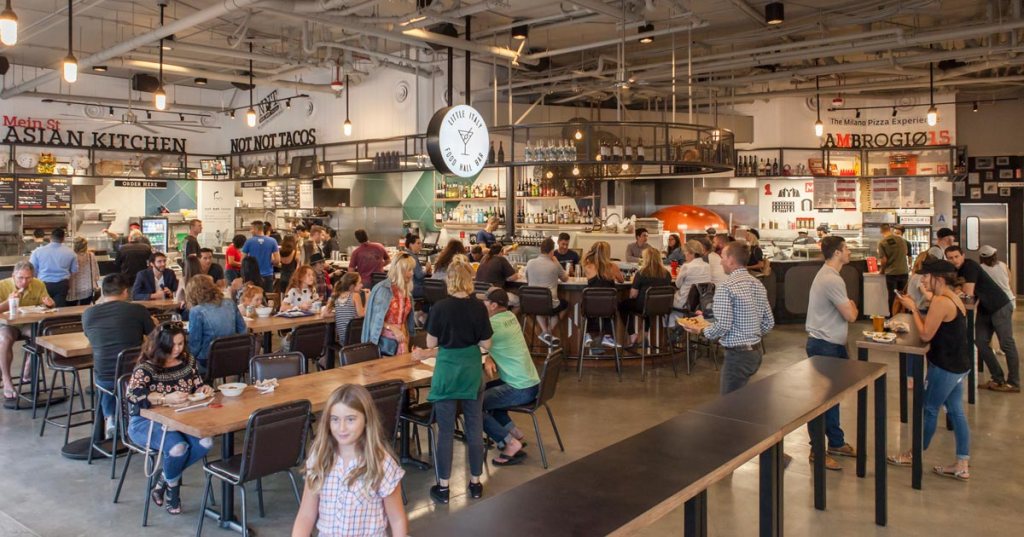
Urbanites are gravitating towards food truck parks and food halls. These dynamic spaces can be lucrative for franchise brands, with trucks acting as an affordable entry point and food halls promising consistent footfalls.

6. Temporary Eateries: Pop-Ups and Moving Kitchens

Franchises are increasingly capitalizing on pop-ups and mobile kitchens. Ideal for high-footfall locales like malls or festivals, these setups can boost brand visibility without the usual brick-and-mortar expenses.

7. The Digital Dine-In: Ghost and Virtual Kitchens

Ghost and virtual kitchens are reshaping the dining industry. Operating mainly online, they give franchises a chance to serve orders without managing a typical restaurant space – a cost-effective way to test and expand.

Benefits of Going Non-Traditional

Venturing into these unconventional spaces can open doors to fresh customer segments, reduce operational overheads, and enhance brand visibility. Especially for franchises operating multiple units or brands, such diversified portfolios can mitigate risks and yield revenues from varied sources.

Potential Pitfalls in Unconventional Terrains

However, these opportunities come with their set of challenges. Space constraints, potential competition, and the need for specific tools or trained staff can pose hurdles. For instance, an airport or stadium outlet might need distinct equipment, or a food truck might require specialized staffing.

When contemplating expansion into non-traditional venues for franchise restaurant brands, here are three pertinent questions to consider:

  1. How well does the chosen non-traditional venue align with the brand’s target demographic and cuisine offering? Is there adequate market research to suggest that the brand will be well-received in these unconventional spaces?
  2. How will the franchise need to adjust its operations, from staffing to menu offerings, to cater to the unique demands of these venues? Does the brand have the flexibility and resources to adapt effectively?
  3. Beyond the initial novelty factor, will these non-traditional venues offer sustainable revenue streams for the franchise in the long run? What strategies can be employed to ensure consistent customer engagement and brand loyalty in these settings?

In Conclusion

For franchise restaurant brands, non-traditional venues beckon as a promising avenue for expansion. While they offer cost-effective, high-visibility opportunities, they also come with their unique set of challenges. Yet, for franchises eager to expand their horizons, these venues can pave the way for a diversified and prosperous future.

From the Author, Paul Segreto, CEO & Founder, Acceler8Success Group

The Acceler8Success Group team focuses on helping current and aspiring entrepreneurs achieve their entrepreneurial goals through franchise ownership. For information and assistance in exploring restaurant franchise opportunities, including multi-unit and multi-brand development, please reach out to me today. You may do so via a LinkedIn message, by email to Paul@Acceler8Success.com, or by phone or text at (832) 797-9851.

Make it a great day. Make it happen. Make it count!