Tag: brand-messaging

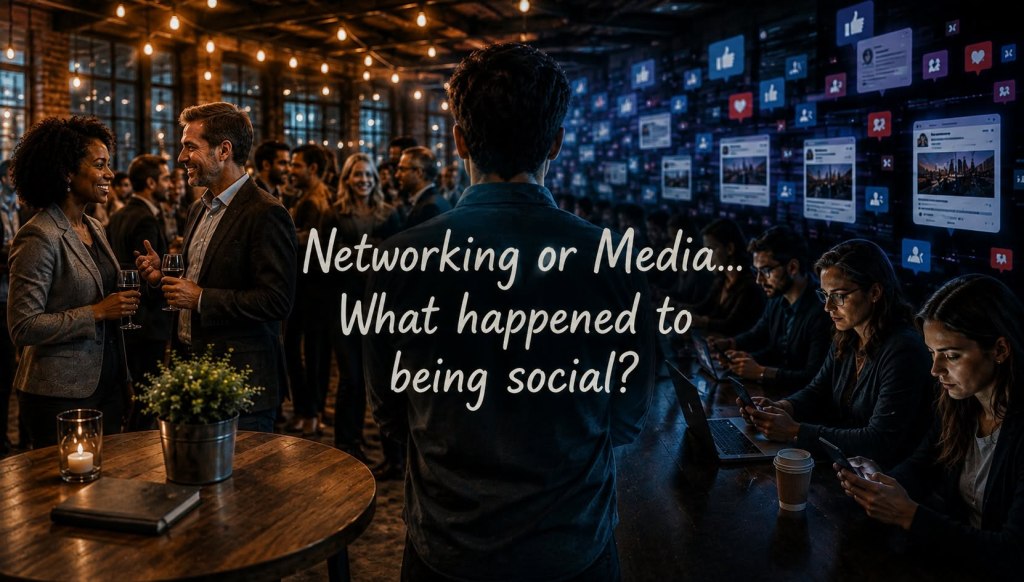
The World’s Biggest Cocktail Party… and Nobody Is Networking

Social platforms connected billions of people, yet brands increasingly use them to broadcast. The resurgence of community may finally change that.

There was a time when we didn’t talk nearly as much about social media. We talked about social networking. The distinction may sound insignificant today, perhaps even like a matter of terminology, but I believe it represents one of the most consequential changes in how businesses, brands and individuals have come to use the internet. Social networking was originally about connecting people. We joined networks, participated in groups, introduced ourselves, commented on discussions, exchanged ideas and found people with common interests. Quite often, those online connections eventually moved into telephone conversations, meetings, business relationships and even friendships. The technology was certainly important, but the technology wasn’t the point. The people were.

Somewhere along the way, networking became media, and media changed the objective. Instead of asking who we might meet, we began asking how many people we could reach. Conversations became impressions. Relationships became followers. Participation became engagement rates. Communities became audiences. Listening increasingly gave way to posting. We became fascinated with views, likes, shares, followers, algorithms and eventually virality. Businesses that had initially entered social networks to connect with people gradually learned to behave more like publishing companies, and individuals increasingly began thinking of themselves as personal brands with audiences to cultivate. It was an extraordinary transformation, and in many respects an enormously beneficial one. But after nearly two decades, it may be worth asking whether something valuable was lost along the way.

I remember the excitement surrounding social networking in 2009 and 2010, when I was spending considerable time writing, speaking and working with franchise organizations about what was then still a relatively new business phenomenon. What fascinated me wasn’t simply the ability to distribute information inexpensively or reach prospective customers and franchise candidates. It was the possibility of connecting people who otherwise might never meet. I thought of the emerging online world much like an enormous virtual cocktail party. You could walk into a room filled with people from different cities, industries and backgrounds and begin conversations that geography, time and circumstance previously might have prevented.

Think about how we traditionally behave at a cocktail party, networking event or business reception. Most of us wouldn’t walk through the door, climb onto a chair and immediately begin shouting about our company, our services, our accomplishments and whatever we’re selling. We would look around the room. We might recognize someone and say hello. We would introduce ourselves to someone new. We’d listen to conversations before joining them. We’d ask questions. Someone might introduce us to another person because we shared an interest or could possibly help one another. We might exchange business cards and agree to continue the conversation later. Some conversations would lead nowhere. Others could unexpectedly lead to customers, partnerships, friendships, investments or opportunities that neither person anticipated when walking into the room. That was networking, and social networking promised to replicate much of that human behavior on an unprecedented scale.

That thinking was reflected in work I was doing at the time. A 2010 presentation for Virtual Franchise Events described online environments that included lounges, conference halls, roundtables and opportunities for one-on-one interaction and “interactive social gatherings.” The idea wasn’t simply to reproduce a trade show on a computer screen. The larger promise was that technology could create places where people gathered, interacted and developed relationships even when they couldn’t occupy the same physical room. Around the same period, in writing about social media and franchise development, I emphasized the need to move beyond simply distributing information and toward personal interaction. The interaction, I argued, should be subtle and guiding rather than an aggressive sales effort. The objective wasn’t merely to capture someone’s attention. It was to begin developing a relationship.

Looking back from 2026, the contrast is striking. We have built social platforms infinitely more powerful than anything we imagined then. Smartphones have placed sophisticated publishing studios in virtually everyone’s pocket. Video can reach millions of people within hours. Entrepreneurs can build recognizable personal brands without traditional media. Restaurants can show thousands of customers tonight’s special before dinner. Franchise brands can communicate across entire systems almost instantaneously. Small businesses can reach customers around the world. Executives can speak directly to employees, customers and investors without waiting for a newspaper, television station or trade publication to give them access. The democratization of media has been extraordinary, and there is no reasonable argument for turning back the clock on those capabilities.

But there is a reasonable argument for asking what we have done with them.

Open almost any social platform today and everyone seems to be talking. Companies are publishing. Entrepreneurs are publishing. Influencers are publishing. Consultants are publishing. Politicians are publishing. Employees are publishing. Customers are publishing. Artificial intelligence is now helping all of us publish even more. Content calendars are filled weeks in advance. Videos are optimized for attention. Headlines are designed for clicks. Posts are evaluated by impressions, engagement and reach. Algorithms are studied, praised when they favor us and blamed when they don’t. Businesses invest enormous amounts of time determining what they should post next.

Perhaps the more revealing question is how much actual networking is taking place.

How many businesses intentionally introduce people within their networks to one another? How many brands participate meaningfully in conversations that aren’t taking place beneath their own posts? How many executives spend time listening to customers rather than studying reports about customers? How often does a thoughtful comment receive a thoughtful response rather than a quick “Thanks for sharing”? How many organizations know how many genuine business relationships were created through their social presence last year? How many even attempt to measure such a thing?

We may have created the largest cocktail party in human history and somehow ended up with everyone standing on chairs shouting announcements at one another.

That’s the irony of where social networking has taken us. We have never been more connected technologically, yet much of what takes place on social platforms increasingly resembles broadcasting rather than networking. The platforms are called social, but the behavior frequently looks remarkably similar to traditional media, except now everyone owns a microphone. Brands build audiences. Individuals build followings. Companies distribute messages. The tools changed dramatically, but in many cases we recreated the one-to-many communication model that social networking originally appeared capable of disrupting.

This doesn’t mean social media has failed. Far from it. Social media has become one of the most powerful communication, marketing and information systems ever created. For brands in particular, the benefits have been enormous. Businesses can tell their stories directly, respond to crises quickly, demonstrate expertise, humanize leadership, showcase customers and employees, recruit talent, generate leads and reach audiences that would have required enormous advertising budgets a generation ago. An entrepreneur operating from a home office can command an audience that once required ownership of a television station or newspaper. That is remarkable progress.

The question is whether reach and relationship must be mutually exclusive. I don’t believe they are. In fact, I believe brands that recognize the difference may be approaching one of the most significant opportunities of the next several years.

We’re already seeing renewed interest in community. Businesses are developing private groups, membership communities, customer networks, founder communities, professional groups and niche environments organized around shared interests. Entrepreneurs are discovering that several hundred highly engaged people can sometimes be more valuable than tens of thousands of passive followers. Brands are increasingly recognizing that customers don’t merely want to consume messages; many want to participate, contribute, share experiences and interact with people who have something in common with them. In some respects, what is being promoted today as the future of community-led business looks remarkably similar to what social networking was supposed to accomplish in the first place.

The danger, of course, is that marketing has a habit of turning every human behavior into a tactic. If “community” simply becomes the next marketing buzzword, we will repeat the same cycle. Companies will establish community strategies, community KPIs and community funnels. Managers will be instructed to increase community engagement by a certain percentage each quarter. People will be pushed through communities toward transactions, and before long “community” will become little more than another word for audience. That would miss the point entirely.

A genuine community isn’t simply a group of people listening to the organization that assembled them. People within a community communicate with one another. They exchange ideas, help each other, challenge each other, recommend resources, make introductions and develop relationships independent of the brand at the center. The organization may provide the room, but it doesn’t need to dominate every conversation taking place inside it. In fact, one of the clearest signs that a community has become valuable may be when meaningful conversations continue even when the organization isn’t participating.

This presents an interesting strategic question for brands. What would happen if companies began thinking about social networking again rather than simply social media? Instead of beginning every morning by asking what they should post, what if they asked who they should talk with? Instead of concentrating primarily on increasing followers, what if they focused on creating relationships? Instead of evaluating success almost exclusively through views and impressions, what if they considered how many meaningful conversations were started? Instead of always trying to move people into a funnel, what if they concentrated on becoming valuable enough that people voluntarily remained connected?

The opportunity becomes even greater when a brand stops thinking only about its relationship with individual customers and begins thinking about relationships among the people surrounding the brand. A restaurant doesn’t have to limit its social presence to photographs of food, promotions and announcements. It can help create conversations within the neighborhoods it serves. A franchise organization doesn’t have to use social platforms solely to promote its franchise opportunity. It can create environments where franchisees, prospective entrepreneurs, suppliers, employees and business owners exchange knowledge and experiences. A professional services firm doesn’t need to demonstrate expertise through an endless stream of thought leadership while everyone else politely watches. It can become a catalyst for introducing people who should know one another.

There is a profound difference between building an audience around your brand and building a network around a shared interest. The first makes the company the center of attention. The second makes the company valuable because it helps create connections. One asks people to watch. The other gives people reasons to participate.

There is also a practical business argument for reconsidering this distinction. Brands that build their entire social strategy around reach increasingly depend upon platforms they don’t control. An algorithm changes and organic reach disappears. Advertising costs increase. A platform falls out of favor. A new one emerges. Suddenly, a company can discover that years spent accumulating followers didn’t necessarily translate into years spent building relationships. The audience belonged, at least in part, to the platform all along.

Relationships behave differently. When someone knows you, trusts you, subscribes to your communications, participates in your community, attends your events, introduces others to you and engages with people within your network, that relationship can transcend any particular social platform. Facebook may facilitate the introduction. LinkedIn may start the conversation. Instagram may create awareness. An email newsletter, virtual event, private group or face-to-face meeting may deepen the relationship. The technology changes, but the human connection survives. Perhaps that was one of the most important principles embedded in the original idea of social networking: the platform was never supposed to become the relationship. It was supposed to facilitate one.

That idea may become even more important as artificial intelligence accelerates content creation. We are rapidly entering a world in which almost every organization can produce competent articles, social posts, images, videos, presentations and marketing messages at extraordinary speed and relatively little cost. The amount of content competing for attention will continue increasing. If everyone can produce more media, media itself becomes less scarce. When something becomes less scarce, its ability to differentiate tends to decline.

Human connection, however, may move in the opposite direction.

Trust is difficult to automate. Genuine conversation is difficult to scale. Relationships take time. Community requires participation. Introductions require judgment. Listening requires patience. Helping someone without immediately calculating the return isn’t easily captured on a marketing dashboard. In a world overflowing with automatically generated content, those distinctly human behaviors may become more valuable rather than less.

Perhaps that is why the renewed interest in community deserves more attention than simply treating it as another marketing trend. Maybe we’re witnessing the beginning of a correction. After years of building enormous audiences and sophisticated publishing machines, perhaps businesses and individuals are beginning to recognize that reach without relationship has limitations. Having 100,000 followers isn’t necessarily the same as knowing 100,000 people. Being seen by millions isn’t the same as being trusted by hundreds. Engagement isn’t necessarily connection, and attention isn’t automatically community.

I don’t believe the answer is abandoning social media. That would ignore everything valuable it has created. Instead, perhaps the opportunity is to reclaim the social part of social media. Use media to initiate conversations rather than treating the publication itself as the objective. Allow conversations to develop into relationships. Allow relationships to create communities. And allow those communities to produce opportunities that advertising, algorithms and content calendars cannot manufacture on their own.

Nearly seventeen years after those early conversations about social networking, I find it fascinating that we’re again talking so much about community, belonging, authenticity, conversation and human connection. Maybe we’ve come full circle. Maybe people are growing tired of being audiences, followers, prospects, targets and data points. Maybe they want to participate again. Maybe they want to be part of something instead of simply being marketed to by something.

If social networking originally resembled a virtual cocktail party, perhaps somewhere along the way we became so focused on building bigger stages, brighter lights and louder microphones that we forgot about the people standing in the room. We became extraordinarily good at attracting attention while gradually becoming less intentional about what happened after we received it.

Perhaps it’s time for brands to step down from the stage and walk back into the room. Introduce people. Listen to conversations. Ask questions. Participate in discussions that aren’t about themselves. Help people connect with one another. Create reasons for people to return even when nothing is being sold. Use technology for what once made social networking seem so revolutionary: bringing people together who otherwise might never have met.

So maybe the question isn’t whether social media has been good or bad for brands. Clearly, it has created extraordinary opportunities. The more interesting question is whether we’ve taken one of the greatest networking technologies ever created and gradually turned it into another broadcasting system.

And if we have, perhaps the next great innovation in social media won’t be technological at all.

Maybe it will simply be remembering how to network again.

What do you think? Have we gained more than we’ve lost in the evolution from social networking to social media? Is today’s movement toward community simply the next marketing strategy, or is it evidence that people and brands are searching for something we left behind? And perhaps most importantly, when you log onto a social platform today, are you there to network… or are you there to broadcast?

Maybe the answer to that question says more about the future of social media than any algorithm ever could.
The 30-Second Brand Test: Could Your Team Explain Your Brand?

Walk into almost any franchise, restaurant, or independent business and start the conversation with:

“Please, tell me about your brand.”

Not what products you sell.
Not what services you offer.
Not your slogan.
Not your menu.

Tell me about your brand.

In many cases, the answer becomes uncertain, overly complicated, inconsistent, or completely different depending on who you ask.

That’s a problem.

Because if the people inside your organization cannot clearly articulate who you are in 30 seconds, how can customers, clients, suppliers, bankers, vendors, investors, or future employees truly understand what your business stands for?

Every person in an organization should be able to explain the brand quickly, clearly, and confidently.

Not memorized like a robotic script.
Not sounding like a corporate commercial.

But with genuine understanding and belief.

That 30-second explanation is more than a pitch.
It’s culture in motion.

A strong brand explanation creates alignment throughout an organization. It creates consistency in communication, decision-making, customer experience, hiring, leadership, and growth. Most importantly, it helps people understand the bigger purpose behind what they do every day.

Think about the different perspectives inside a business.

A franchisor may describe the brand as a proven system designed to help entrepreneurs succeed while delivering consistency to customers across multiple markets.

A franchisee may describe the same brand as an opportunity to build equity, support their family, create jobs, and become part of something larger than themselves.

A restaurant operator may explain the brand through hospitality, food quality, community connection, and operational discipline.

A manager may focus on leadership, culture, teamwork, and creating memorable customer experiences.

An employee may simply say:
“We genuinely care about people and work hard to make every guest feel welcome.”

Different perspectives.
Same brand.

That’s the goal.

The strongest organizations are not built because everyone says the exact same words. They are built because everyone understands the same mission, values, identity, and purpose.

That understanding becomes visible everywhere.

Customers feel it.
Clients recognize it.
Suppliers respect it.
Bankers gain confidence in it.
Future employees are attracted to it.
Communities connect with it.

And perhaps most importantly, internal culture becomes stronger because people stop feeling like they are simply performing tasks and start feeling like they are contributing to something meaningful.

This becomes especially important in franchising and hospitality where customer experience is everything.

A franchise system may spend millions on marketing, branding, operations manuals, and technology. Yet one confused or disconnected employee interaction can weaken the entire customer perception of the brand.

Why?

Because brands are not built by logos alone.
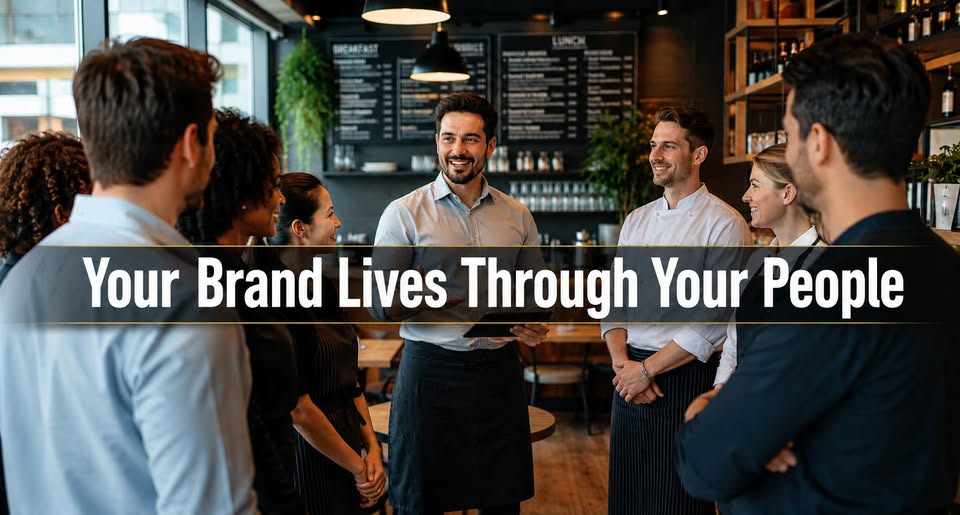
Brands are built by people.

Every conversation matters.
Every interaction matters.
Every explanation matters.

That includes conversations outside the business as well.

Imagine a banker asking a franchisee:
“So tell me about your business.”

Imagine a supplier asking a restaurant manager:
“What makes your company different?”

Imagine a customer asking an employee:
“What are you guys really about here?”

Those moments matter far more than many organizations realize.

The businesses that grow strongest over time are often the ones where clarity exists throughout the organization, not just at the executive level.

The beauty of a strong 30-second brand explanation is that it creates simplicity.

And simplicity creates confidence.

When people clearly understand the brand, they communicate more effectively.
They represent the organization better.
They become more engaged.
They make stronger decisions.
They carry themselves differently.

That confidence spreads externally as well.

Customers feel reassured.
Partners feel aligned.
Communities feel connected.

This is one of the earliest and most important foundations of culture building.

Not forced culture.
Not motivational posters on walls.
Not corporate buzzwords.

Real culture.

Culture built through understanding.
Culture built through clarity.
Culture built through shared purpose.

If your organization struggles to articulate its identity in 30 seconds, it may be time to step back and redefine how the brand is communicated internally.

Because if your people cannot explain who you are, chances are the market may not fully understand either.

The good news is this can be developed, refined, strengthened, and taught throughout an organization.

And when it is, the impact can be transformative.

If you’d like to discuss developing your organization’s 30-second brand pitch and strengthening alignment throughout your company, franchise system, or restaurant organization, reach out to me via a direct message or by email to Paul@Acceler8Success.com. Visit our website at Acceler8Success.com.

Protecting the Franchise Brand in a Politically Divided World

For as long as I have been in business, I have believed in a simple, non-negotiable principle: sex, religion, and politics do not belong in business. That belief was shaped long before social media, long before every opinion became a public statement, and long before brands were expected to weigh in on cultural or political flashpoints. It comes from experience. Business works best when it is a place of common purpose, not ideological alignment. Franchising, more than almost any other business model, depends on that discipline.

Franchise systems are not built on shared political views. They are built on shared standards, shared economics, and shared responsibility to a brand that belongs to everyone and no one at the same time. When political views begin to seep into a franchise organization, the consequences are rarely theoretical. What often starts as casual commentary, a social media post, or a strongly held personal conviction expressed publicly can quickly ripple through a system designed around consistency and neutrality. The strain shows up in trust, morale, performance, and ultimately revenue.

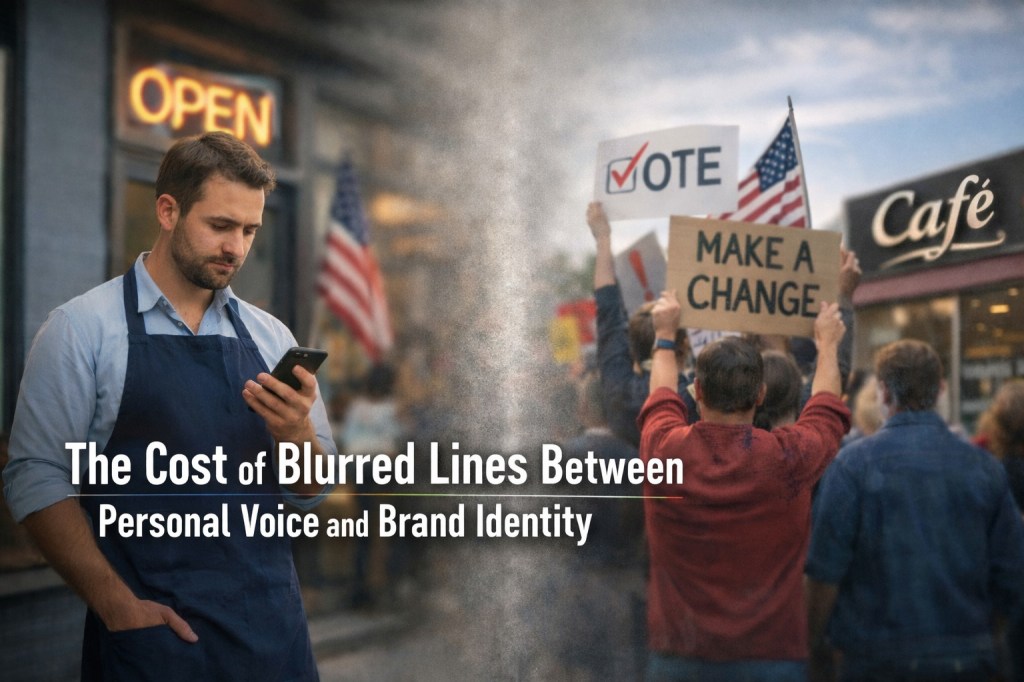
Today, this issue is even more complex because franchisees are no longer just operators behind the scenes. In most local markets, they are the face of the brand. Customers know who owns the business. They follow them online. They see their posts, comments, and reactions. The distinction between “personal” and “business” views has blurred to the point where, in the public eye, it often no longer exists. When a franchisee speaks publicly, especially on social media, that voice is frequently interpreted as an extension of the brand, whether that is fair or not.

Inside the organization, political signaling quietly erodes confidence in leadership and in one another. Franchisees are independent business owners, but they rely on the franchisor and the system for fairness, consistency, and support. When leadership appears to tolerate, ignore, or implicitly endorse political expression tied to the brand, some operators will feel alienated. Others disengage. Peer relationships fracture. Meetings that should focus on growth, execution, and problem-solving become tense or guarded. The culture shifts from collaboration to caution.

Employees are often the first to feel the pressure. Franchise locations are staffed by people with diverse beliefs who did not sign up to navigate political landmines at work. When political views, whether framed as personal or business-related, creep into management behavior, internal conversations, or brand-adjacent messaging, employees can feel uncomfortable, judged, or unsafe. Morale suffers. Turnover rises. Managers spend more time managing emotions than leading teams. None of this improves the customer experience.

Customers, however, are where the damage becomes most visible and immediate. Franchise brands serve broad audiences. A brand perceived as politically partisan instantly narrows its appeal. Customers do not walk into a restaurant, fitness studio, or service business looking for a political statement. They come for familiarity, reliability, and a sense of welcome. When political messaging intrudes, some customers quietly leave. Others respond publicly through reviews, complaints, or social media backlash. Either way, sales suffer, and the brand absorbs the hit.

This is where the common franchisor refrain begins to fall apart. “It’s not our role to monitor franchisees’ personal views.” In theory, that sounds reasonable. Franchisees are independent operators with lives, beliefs, and rights outside of their businesses. But theory ends the moment one franchisee’s publicly expressed views, whether labeled personal or business-related, begin to affect another franchisee’s business. At that point, it is no longer about individual expression. It is a brand issue. And brand issues are absolutely the responsibility of the brand leader.

Franchising is a shared-risk environment. One name. One logo. One reputation. Customers do not parse ownership structures or legal disclaimers. They see the brand, and they react accordingly. When one franchisee publicly associates political views with themselves as a known brand operator in the community, every other franchisee shares the exposure. The operator across town, who has said nothing and done nothing wrong, may still lose customers or face uncomfortable interactions simply because they share the same signage.

Social media has magnified this reality beyond anything franchising faced in the past. What was once said privately is now posted publicly, screenshot instantly, and shared widely. A personal account does not insulate the brand when the individual is clearly identified as a franchise owner. Once a franchise brand is perceived as partisan, reversing that perception is nearly impossible, regardless of intent or clarification.

Neutrality is often criticized as avoidance or weakness. In franchising, neutrality is stewardship. A franchise brand does not exist to take political positions. It exists to serve customers, support franchisees, create jobs, and build opportunity. Protecting that mission requires boundaries. It requires clarity about expectations for both business and personal public conduct when it intersects with the brand. And it requires leadership willing to act when those boundaries are crossed, even when doing so is uncomfortable.

Leadership in franchising is not passive. It is not limited to operations manuals, training programs, or marketing approvals. It includes protecting franchisees from unnecessary risk, including risk created by other franchisees’ public behavior. Saying “we don’t get involved” may sound hands-off, but when inaction allows one operator’s public views to harm another’s livelihood, it becomes a failure of responsibility.

This is not about policing beliefs or suppressing free thought. It is about understanding that franchising is a collective enterprise. When you choose to operate under a shared brand, you benefit from its strength and reach, and you also accept the discipline required to protect it. Shared opportunity demands shared accountability.

In an era defined by division and amplification, franchise organizations have a choice. They can allow politics, whether framed as personal or professional, to fracture trust, culture, and performance, or they can deliberately remain places of common purpose where people of different backgrounds and beliefs work toward a shared economic goal. Keeping sex, religion, and politics out of business is not outdated thinking. It is a leadership choice. One that protects the brand, respects the people within it, and preserves the very opportunity franchising is meant to create.


About the Author

Paul Segreto brings over forty years of real-world experience in franchising, restaurants, and small business growth. Recognized as one of the Top 100 Global Franchise and Small Business Influencers, Paul is the driving voice behind Acceler8Success Café, a daily content platform that inspires and informs thousands of entrepreneurs nationwide. A passionate advocate for ethical leadership and sustainable growth, Paul has dedicated his career to helping founders, franchise executives, and entrepreneurial families achieve clarity, balance, and lasting success through purpose-driven action.


About Acceler8Success America

Acceler8Success America is a comprehensive business advisory and coaching platform dedicated to helping entrepreneurs, small business owners, and franchise professionals achieve The American Dream Accelerated.

Through a combination of strategic consulting, results-focused coaching, and empowering content, Acceler8Success America provides the tools, insights, and guidance needed to start, grow, and scale successfully in today’s fast-paced world.

With deep expertise in entrepreneurship, franchising, restaurants, and small business development, Acceler8Success America bridges experience and innovation, supporting current and aspiring entrepreneurs as they build sustainable businesses and lasting legacies across America.

Learn more at Acceler8SuccessAmerica.com

The Heart of a Franchise Brand

Darren Hardy once said, “If people can’t feel your message, they won’t follow your mission.” Few statements speak more directly to the heart of franchising.

Maya Angelou expressed the same truth from a human perspective:
“People will never forget how you made them feel.”

For franchisors, franchisees, and the customers who experience the brand every day, these two insights form the foundation of sustainable success. In franchising, people don’t simply follow a system, they follow what moves them. They follow what they feel.

Franchising is often viewed through the lens of operations, manuals, technology, unit economics, and scalability. All important. All necessary. Yet none of these elements alone inspire belief, loyalty, or lasting brand culture. What people remember most, what creates momentum within a system is how the brand makes them feel.

A franchisee won’t recall every metric or every detail of the financial model. But they will remember whether the franchisor made them feel supported, respected, and set up for success.

A franchisor won’t remember every question a candidate asked in discovery day. But they will remember whether the candidate showed passion, alignment, and belief in the brand’s purpose.

Employees on the front lines won’t remember every policy or training video. But they will remember whether their franchise owner made them feel valued and part of something meaningful.

And customers, the lifeblood of every franchise system, won’t remember every feature of a menu item or every element of a service package. But they will remember whether the brand made them feel welcomed, cared for, and understood.

That emotional connection is everything.

A franchise system comes to life when every stakeholder — franchisor, franchisee, employee, and customer — can feel the mission.
It grows when franchisees feel connected not just to a business model, but to a purpose greater than their individual location.
It becomes a brand when people feel emotionally aligned with the story it tells and the experience it promises.
And it becomes a movement when customers feel seen, heard, and delighted in ways they don’t experience anywhere else.

This is why the franchisor’s most important responsibility isn’t just to build a strong system — it’s to communicate a meaningful one. It’s to lead with clarity and conviction so franchisees don’t simply follow processes; they follow purpose.

Maya Angelou’s wisdom reminds us that emotion is not optional in franchising… it’s essential. Logic may convince someone to buy a franchise, but emotion is what inspires them to stay, grow, and thrive. Trust is the currency of franchisor–franchisee relationships, and it is earned through how people feel interacting with the brand.

Many brands talk endlessly about what they do. Very few communicate why it matters and even fewer ensure every franchisee, every manager, every team member understands that why. But that is what transforms a franchise from a business model into a shared mission. It’s what turns customers into loyalists. It’s what turns a brand into a community.

If the franchisor’s message is polished but cold, franchisees won’t be inspired.
If the franchisee’s culture is efficient but emotionally empty, employees won’t commit.
If the customer experience is consistent but disconnected from real human warmth, the brand will not be remembered.

The strongest franchise brands don’t simply deliver products or services, they deliver experiences. They tell stories rooted in real values, real challenges, and real aspirations. They create a sense of belonging. They make people feel part of something bigger.

People don’t follow operations manuals.
They don’t follow marketing calendars.
They don’t follow strategies alone.

They follow leaders who make them feel confident.
They follow brands that make them feel seen.
They follow missions that make them feel inspired.

If you want your franchise system to thrive, lead with clarity.
If you want your brand to resonate, lead with connection.
If you want your company to become a movement, lead with emotion and with intention.

Because when your franchisees, your employees, and your customers can feel your message, they won’t just follow your mission.
They will champion it.
They will live it.
They will bring others into it.

That is how franchise systems grow.
That is how cultures deepen.
That is how legendary brands are built.

By making people feel — and by giving them something truly worth believing in.


About the Author

Paul Segreto brings over forty years of real-world experience in franchising, restaurants, and small business growth. Recognized as one of the Top 100 Global Franchise and Small Business Influencers, Paul is the driving voice behind Acceler8Success Café, a daily content platform that inspires and informs thousands of entrepreneurs nationwide. A passionate advocate for ethical leadership and sustainable growth, Paul has dedicated his career to helping founders, franchise executives, and entrepreneurial families achieve clarity, balance, and lasting success through purpose-driven action.


About Acceler8Success America

Acceler8Success America is a comprehensive business advisory and coaching platform dedicated to helping entrepreneurs, small business owners, and franchise professionals achieve The American Dream Accelerated.

Through a combination of strategic consulting, results-focused coaching, and empowering content, Acceler8Success America provides the tools, insights, and guidance needed to start, grow, and scale successfully in today’s fast-paced world.

With deep expertise in entrepreneurship, franchising, restaurants, and small business development, Acceler8Success America bridges experience and innovation, supporting current and aspiring entrepreneurs as they build sustainable businesses and lasting legacies across America.

Learn more at Acceler8SuccessAmerica.com