Tag: customer reviews

What Happens When Restaurant Brands Stop Focusing on Experience

There comes a point in the life of some restaurant brands where the logo becomes more powerful than the actual experience.

The name is recognizable. The signage is familiar. The social media following is large. New locations continue to open. Remodels are announced with polished renderings and upgraded décor packages. Limited-time menu items generate headlines. Nostalgia campaigns bring back products people once loved years ago.

And yet…

Customers leave saying the food was “okay.”

Or worse:

“It’s not what it used to be.”

What makes this particularly fascinating is that many customers continue to visit these brands anyway. The parking lots are still busy. The drive-thru lines reamin steady. The app promotions continue to drive traffic. The brand itself has become a habit, a default option, or simply part of the cultural landscape.

But popularity and customer satisfaction are not always the same thing.

That distinction matters more than many restaurant companies may want to admit.

There are brands today operating on decades of accumulated awareness, historical relevance, convenience, and marketing momentum rather than consistently delivering memorable customer experiences. The logo carries the business further than the operations do.

That can work for a while.

But eventually, the gap between perception and reality becomes difficult to ignore.

You can often see the warning signs in plain sight.

A company announces a remodeled prototype with upgraded seating, digital menu boards, and modern lighting. Another launches a celebrity collaboration or introduces a seasonal menu item designed to create social buzz. Another leans heavily into value messaging because traffic has softened.

But what you rarely hear discussed publicly is this:

What specific operational improvements are being made to create a better customer experience?

Are food quality scores improving?

Is hospitality improving?

Are speed-of-service metrics improving without sacrificing quality?

Are online reviews becoming more positive?

Are customers becoming emotionally connected to the experience again?

Or are companies simply attempting to stimulate traffic while leaving the underlying operational issues untouched?

Because if the customer experience remains average, or inconsistent, then eventually the marketing begins functioning like a temporary stimulant rather than a long-term solution.

The challenge for many large restaurant brands is that awareness can disguise operational erosion for years.

A newer or smaller restaurant concept has no such luxury. If the experience is poor, customers disappear quickly. But legacy brands often continue surviving because familiarity itself carries value. Consumers know what the brand is. They grew up with it. They understand the menu. The locations are convenient.

In many cases, customers continue visiting despite disappointment rather than because of enthusiasm.

That is a dangerous position for any brand.

Especially in an era where consumers have more choices than ever before.

What makes the situation even more revealing is how often entirely new competitors seem to emerge almost out of nowhere and suddenly become more culturally relevant, more talked about, and ultimately more financially productive than long-established segment leaders.

A once-dominant restaurant chain may still possess thousands of locations, decades of history, and one of the most recognizable logos in America, yet newer brands begin climbing the rankings in average unit volumes while the former category leader quietly slips downward year after year.

And that decline rarely happens because consumers suddenly stopped recognizing the legacy brand.

It happens because consumers stopped being excited by it.

The newer competitor often delivers something the larger brand lost along the way:

Energy. Focus. Consistency. Experience.

Sometimes the food is simply better. Sometimes the hospitality feels more authentic. Sometimes the operations are tighter. Sometimes the restaurants feel cleaner, more current, or more emotionally connected to today’s consumer expectations.

The irony is that many of these emerging brands are operating with a fraction of the resources, locations, marketing budgets, and infrastructure of the legacy chains they are overtaking.

Yet they outperform them where it matters most.

Customer enthusiasm. And eventually, unit economics.

That is why average unit volume rankings can become such an important measure of true brand strength. They often reveal what marketing campaigns and traffic counts attempt to conceal.

Because consumers may visit a legacy brand out of habit once in a while…

…but they consistently spend money with brands they genuinely enjoy.

That distinction changes everything.

When newer restaurant concepts begin generating higher per-store revenues, stronger customer advocacy, better digital engagement, and greater cultural momentum, it signals that emotional relevance is shifting elsewhere.

The segment leader may still dominate in total locations or overall systemwide sales due to sheer scale, but the marketplace has already started voting differently.

And once consumer momentum shifts, it becomes incredibly difficult to reclaim.

Especially when emerging competitors are relentlessly improving while legacy brands remain overly focused on promotions, remodels, and short-term traffic drivers instead of rebuilding the operational and experiential foundation that created their success in the first place.

The restaurant industry has entered a period where experience matters as much as product. In some cases, even more. Customers are no longer simply buying food. They are buying convenience, consistency, emotional comfort, hospitality, speed, cleanliness, digital ease, atmosphere, and perceived value all at once.

When one or more of those components consistently breaks down, customers notice.

Even if they continue showing up.

The bigger problem emerges when management teams begin confusing traffic with brand health.

A busy restaurant is not always a beloved restaurant.

Strong sales generated through discounting, loyalty rewards, heavy advertising, or sheer market saturation can create the illusion of strength while underlying customer sentiment continues deteriorating.

And customer sentiment matters.

Because eventually consumer behavior changes subtly before it changes dramatically.

Customers visit less often.

They stop recommending the brand.

They choose competitors for certain occasions.

They no longer get excited.

The restaurant becomes transactional instead of emotional.

Once that happens, the brand slowly loses something extremely difficult to recover: relevance.

Ironically, many of the solutions are not always revolutionary.

Sometimes customers simply want hotter food, friendlier service, cleaner dining rooms, better-trained employees, fresher ingredients, or greater consistency from one location to another.

Sometimes they want leadership to spend less time creating the next promotional campaign and more time fixing operational fundamentals.

That may not generate flashy headlines, but it creates something much more valuable: trust.

And trust produces repeat business.

Trust produces stronger reviews.

Trust produces organic advocacy.

Trust produces pricing power.

Trust produces long-term brand equity.

Most importantly, trust creates memorable experiences that customers actually want to repeat.

Imagine the financial impact if a major restaurant chain that already possesses national awareness dramatically improved operational consistency and customer satisfaction across its system.

Not marginally.

Dramatically.

How many existing customers would visit more often?

How many former customers would return?

How many negative reviews would disappear?

How much additional revenue could be generated without relying so heavily on discounts and promotions?

How much stronger would franchisee profitability become?

How much more valuable would the brand become over the next decade?

Those are the questions that deserve more attention.

Because while logos may attract traffic, customer experience determines longevity.

And eventually, every restaurant brand reaches a moment where consumers decide whether they still love the experience… or merely recognize the sign.

The difference between those two realities can determine the future of an entire brand.

I’m curious how you see it as there are restaurant brands today with incredible histories, powerful recognition, prime real estate, and enormous resources that still have every opportunity to reclaim emotional connection with consumers. But doing so requires more than marketing. It requires operational honesty, leadership discipline, and a willingness to confront the real customer experience occurring every single day inside the restaurants.

Not the experience shown in the commercial.

The real one.

Because in the end, customers rarely build loyalty to logos.

They build loyalty to how a brand consistently makes them feel.

Again, how do you see it? What are your thoughts?

If you are a restaurant operator, franchisor, franchisee, investor, or entrepreneur who recognizes these challenges within your own organization, or simply wants to discuss how customer experience, operational consistency, and brand relevance impact long-term growth and unit economics, I welcome the conversation.

Reach out directly at paul@acceler8success.com.
When Restaurants Fight Back: Are Online Review Retaliations Hurting More Than Helping?

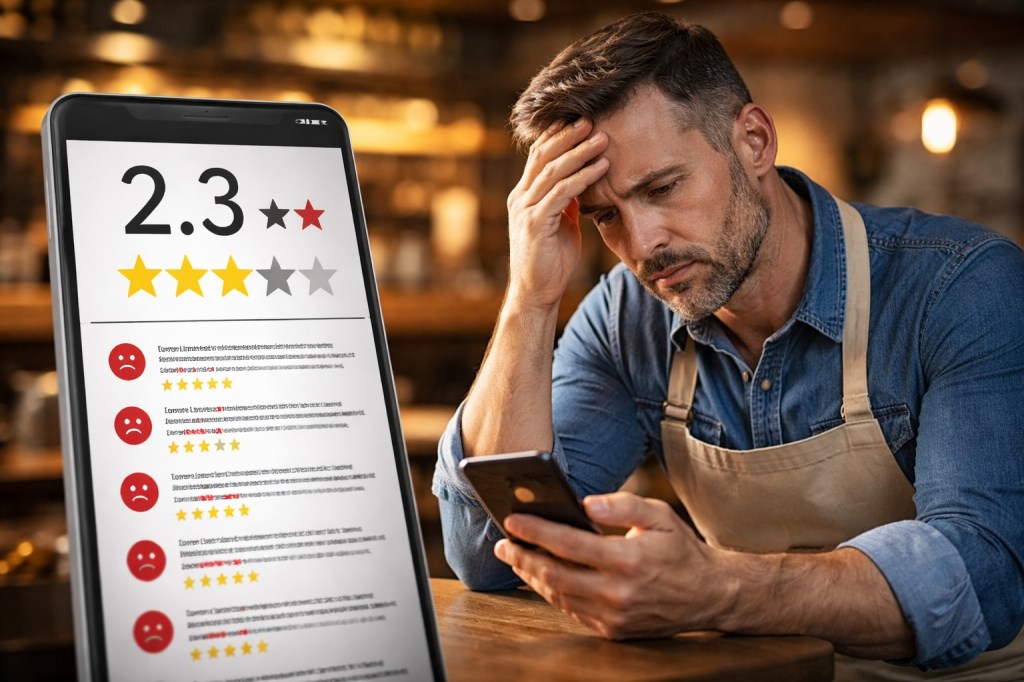
I’ve been reading a lot lately about the growing frustration restaurant operators feel toward online reviews and the sense that customer posting on review platforms may be getting out of hand. I understand where that frustration comes from. Reviews today can feel less like feedback and more like public judgment, delivered instantly, permanently, and often without context. Still, my mindset remains unchanged. Restaurants should be proactive in driving the best reviews possible rather than becoming reactive to the worst ones. I recently wrote about the value of each tenth of a point in Google Reviews and how those fractional increases materially affect trust, traffic, and revenue. Against that reality, the emerging conversation around how restaurants should respond, or even retaliate, against poor reviews deserves deeper scrutiny.

The idea of retaliation is emotionally understandable. Operators invest their money, their time, and often their identity into their restaurants. A single harsh review can feel personal, unfair, or even malicious, especially when it ignores circumstances, exaggerates facts, or misrepresents what actually happened. The instinct to push back is human. The risk is that once retaliation becomes a posture rather than an exception, it shifts the restaurant’s focus away from hospitality and toward ego. At that moment, the audience is no longer the unhappy guest. It is every future guest who reads the exchange and quietly evaluates whether this is a business that handles pressure with professionalism or defensiveness.

If retaliation is even considered a strategy, it must be narrowly defined and rarely used. A calm, factual response that corrects misinformation or explains policy is not true retaliation. It is brand stewardship. There is a meaningful difference between protecting the truth and trying to win an argument in public. Once responses cross into sarcasm, condescension, or moral superiority, the restaurant has already lost, regardless of whether the original review was fair. Online, perception becomes reality, and perception favors composure over confrontation every time.

The deciding factor in whether to respond firmly should never be how offensive the review feels. It should be whether the review introduces inaccuracies that, if left unaddressed, could mislead future guests. Silence can sometimes imply agreement, but not every negative review deserves oxygen. Responding emotionally to every complaint trains customers to believe the restaurant is combative rather than confident. The strongest brands respond selectively, deliberately, and with restraint.

The larger danger emerges when retaliation evolves from an occasional response into a prevailing mindset. At that point, reviews stop being viewed as potential signals and start being dismissed as noise. Operators begin to frame criticism as proof that customers are unreasonable, impossible to satisfy, or simply wrong. This mindset subtly undermines accountability. Teams absorb the message that feedback is something to fight rather than something to learn from. Over time, that attitude dulls the urgency to improve systems, consistency, and execution.

There is an even more troubling dimension to this way of thinking. A retaliatory posture can become a convenient excuse for improper or even nonexistent training. If operators convince themselves that bad reviews are primarily the result of overly sensitive customers or a broken review culture, it becomes easier to rationalize why investment in training is unnecessary. In some cases, this logic is taken a step further and framed as a cost-saving measure. If guests are going to complain anyway, why spend time and money on onboarding, service standards, leadership development, or reinforcement? As absurd as that sounds, it is a rationale that surfaces more often than many operators would like to admit.

This thinking is dangerous precisely because it can feel pragmatic in the short term. Training budgets get trimmed. Standards become loosely defined. Accountability softens. Meanwhile, leadership reassures itself that the problem exists outside the restaurant, not within it. The irony is that these decisions almost always produce the very outcomes operators claim are unfair. Inconsistent service, poor recovery, and disengaged staff generate more negative experiences, which then generate more negative reviews. Retaliation becomes the visible reaction, while the root cause remains unaddressed.

Hospitality has always been a people business, and people do not perform well in a vacuum. They need clarity, structure, coaching, and reinforcement. Choosing retaliation over training is not strength. It is surrender disguised as toughness. It signals a shift from ownership to defensiveness, from leadership to justification. No review response strategy, no matter how clever or aggressive, can compensate for weak preparation on the front lines.

There is also a philosophical line that should concern every operator. When the internal narrative becomes “we can’t please everyone, so why try,” something fundamental has already been lost. Guests do not expect perfection. They expect effort, care, and respect. Even unfair reviews often illuminate friction points that leadership may not see from inside the operation. Dismissing all criticism as unreasonable risks missing opportunities to improve the guest experience in ways that matter.

A proactive review strategy changes the entire dynamic. When a restaurant consistently delivers positively memorable experiences, encourages satisfied guests to share those experiences, and responds thoughtfully when things fall short, the occasional unfair review loses its power. Volume and consistency dilute outliers. In that environment, a firm response to a truly inaccurate review feels credible rather than defensive because it is supported by a broader pattern of positive feedback.

Reviews are not going away, and customers are not becoming quieter. The real decision for restaurant operators is whether reviews are treated as an adversary to battle or a reality to manage with discipline. Retaliation, if it exists at all, should be rare, deliberate, and rooted in protecting truth rather than pride. The real work remains unchanged. Build a culture that values the guest experience. Train teams to handle pressure and recover when things go wrong. Design systems that reduce inconsistency before it reaches the guest. When those fundamentals are in place, responses to reviews become less about damage control and more about reinforcing who you are.

The question is not whether customers sometimes go too far. They do. The more important question is whether restaurants allow those moments to pull them away from the principles that earn trust in the first place.


About the Author

Paul Segreto brings over forty years of real-world experience in franchising, restaurants, and small business growth. Recognized as one of the Top 100 Global Franchise and Small Business Influencers, Paul is the driving voice behind Acceler8Success Café, a daily content platform that inspires and informs thousands of entrepreneurs nationwide. A passionate advocate for ethical leadership and sustainable growth, Paul has dedicated his career to helping founders, franchise executives, and entrepreneurial families achieve clarity, balance, and lasting success through purpose-driven action.


About Acceler8Success America

Acceler8Success America is a comprehensive business advisory and coaching platform dedicated to helping entrepreneurs, small business owners, and franchise professionals achieve The American Dream Accelerated.

Through a combination of strategic consulting, results-focused coaching, and empowering content, Acceler8Success America provides the tools, insights, and guidance needed to start, grow, and scale successfully in today’s fast-paced world.

With deep expertise in entrepreneurship, franchising, restaurants, and small business development, Acceler8Success America bridges experience and innovation, supporting current and aspiring entrepreneurs as they build sustainable businesses and lasting legacies across America.

Learn more at Acceler8SuccessAmerica.com

A Tenth of a Star: The Most Overlooked Growth Lever in Fast Food, QSR, and Fast Casual

It’s hard for me to ignore what’s happening in the restaurant world right now.

Almost daily, it seems I read something about another restaurant closing. Sometimes it’s a small independent concept that never found its footing. Sometimes it’s a once-busy local favorite that quietly ran out of runway. Sometimes it’s a brand that looked strong from the outside, until it wasn’t. And then, in the middle of all that, I’ll visit restaurants that are clearly succeeding, some that have found short-term momentum and others that have stayed relevant and profitable for years. That contrast has been hitting me in a very real way, because it doesn’t feel like we’re just watching businesses close. We’re watching livelihoods disappear. We’re watching dreams end.

And as I’ve spent more time in the field talking to operators, observing service, watching team dynamics, and paying attention to what guests say when they think no one is listening, I’ve found myself drilling down to a common denominator that keeps showing up again and again.

Customer reviews.

Not because reviews are always fair. Not because a star rating tells the whole story. But because reviews reveal something that too many restaurants overlook: the gap between what an operator believes is being delivered and what the guest is actually experiencing. Reviews shine a light on execution, consistency, and trust… all the things that determine whether a guest comes back, and whether they tell someone else to try you or avoid you.

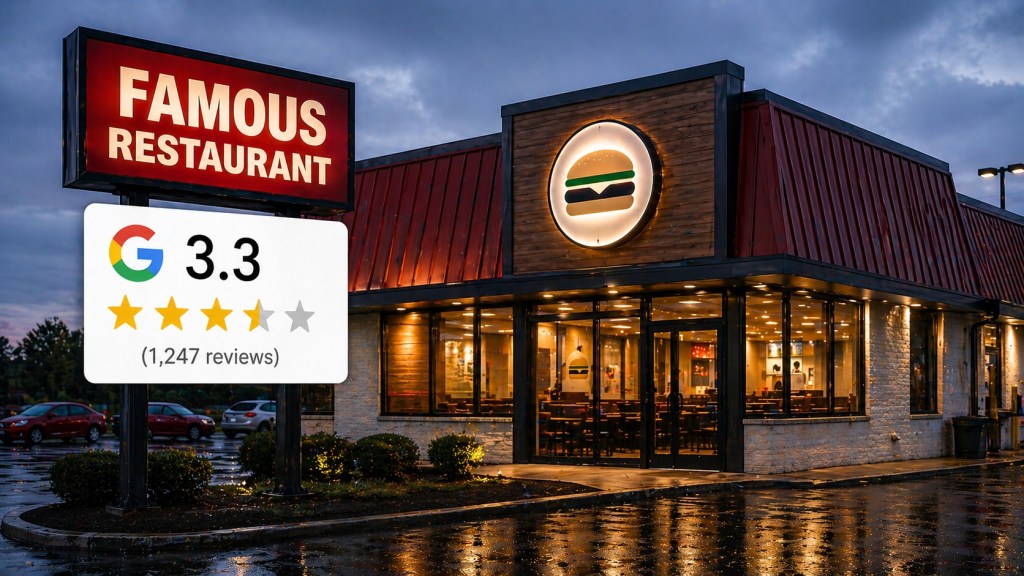
In our ongoing work at Acceler8Success America, we keep seeing a pattern that should get the attention of every operator and leadership team in fast food, quick service, and fast casual. Across many concepts and markets, the overall rating tends to settle around the high threes. An average around 3.7 out of 5 is common. Then you have brands like Chick-fil-A consistently showing higher averages, often around 4.2, enough of a difference to change customer behavior. The gap between 3.7 and 4.2 isn’t just a few tenths of a point. Online, it’s the difference between “it’s probably fine” and “I feel good about going there.” It’s the difference between convenience and confidence.

And it begs a bigger question: how much better would these restaurants perform if they could consistently move their locations from 3.7 to 4.2, and then beyond that to 4.5, 4.7, or even higher?

Because at that point, reviews stop being a vanity metric and become a growth engine.

Here’s another question that deserves to be asked out loud, especially by leadership teams and franchise operators who track every food cost variance and labor hour with precision: what does a tenth of a point actually equal in revenue and profitability?

If your rating moves from 3.7 to 3.8, what does that do to first-time trial? To repeat visits? To conversion when a customer is choosing between you and two nearby competitors? To the number of guests who decide to “give you a shot” versus scroll past you? To the number of comps you issue, the remakes you absorb, the refunds you process, and the time your managers spend dealing with avoidable recovery moments?

Now multiply that effect. Not once. Multiply it to the desired level.

If a tenth of a point creates lift, what does three tenths do? What does five tenths do? What does a full point do over the course of a year?

That right there is your future!

A 3.7 score often creates invisible drag. You may still get traffic, especially if you’re well located and convenient, but you’re constantly leaking first-time trial. You’re losing the guest who compares three nearby options and chooses the one that feels safer. You’re also paying a hidden tax that doesn’t show up as a neat line item in the P&L: more refunds, more remakes, more complaints, more comps, more employee stress, and more operational disruption. That tax hurts profitability. It hurts morale. And over time, it wears down leadership teams and owners who already feel like they’re fighting a daily battle just to stay afloat.

At 4.2, the perception changes. Customers trust you faster. The decision to visit becomes easier. Your online reputation does part of your marketing for you, which means you’re less dependent on promotions and discounting just to keep volume steady. That trust also tends to attract stronger talent. Better-run restaurants feel better to work in, and teams stay longer in environments that feel organized, supported, and consistent. The business becomes healthier from the inside out.

At 4.5 and above, you enter a different tier. You are no longer “one of the options.” You become the preferred choice. And that is where long-term growth becomes easier, faster, and more sustainable. Expansion carries less friction because new guests are more willing to try you. Franchise development becomes easier because operators want in. Unit-level economics improve because waste decreases and loyalty increases. And when the market tightens, as it always does, the most trusted brands tend to hold share while others scramble.

This is why customer reviews matter so much, and why they show up as a common denominator when you compare closures to longevity.

Reviews are not primarily judging your menu. They are judging your execution.

They measure friction.

Guests aren’t reviewing your strategy, your labor model, your lease terms, or your challenges with vendors. They’re reviewing what happened in the last thirty minutes of their life. If the experience felt smooth, respectful, and consistent, they reward you. If it felt slow, wrong, careless, or indifferent, they punish you, often with emotion that seems disproportionate to what went wrong.

And in fast food, QSR, and fast casual, those breakdowns tend to happen in predictable moments: lunch rush, dinner rush, late-night shifts, understaffed days, high-turnover weeks, promotion surges, weather spikes, and any situation where the team is operating under stress.

That’s where ratings are won or lost. Not at 2:00 p.m. when everything is calm. Ratings are determined at 12:10 p.m. and 6:40 p.m., when the line is long, the kitchen is slammed, and leadership either shows up, or doesn’t.

So why does Chick-fil-A often land higher?

Because their advantage is not perfection. Their advantage is a system that reduces breakdowns and protects the guest experience under pressure. They don’t treat service as separate from operations. They treat service as the outcome of operations done well.

Hospitality isn’t just a script. It’s a standard. And standards only work when supported by process, training, and leadership presence. When the system is designed well, the guest experiences consistency. And consistency is what lifts ratings above the high-threes ceiling that many brands can’t break.

Which leads to the most uncomfortable question of all.

If the upside is so clear, why aren’t more establishments pushing harder?

Some operators will argue that reviews are biased. Others will say customers only leave reviews when they’re angry. And while there’s truth in both, those explanations can become excuses that keep businesses stuck.

The more honest answer is that raising ratings requires operational discipline, and operational discipline requires leadership focus. Many restaurants are trapped in survival mode. They’re fighting labor shortages, turnover, food cost swings, equipment issues, delivery complaints, and constant urgency. In that environment, excellence starts to feel optional. A 3.7 begins to feel “good enough,” because it’s familiar.

But familiar is not the same as profitable.

And it definitely isn’t the same as scalable.

Another reason many brands don’t push harder is that they measure the wrong things with the most intensity. They track sales, labor, and food cost religiously, but treat guest sentiment like a soft metric. Yet guest sentiment drives the very traffic that produces the sales they’re chasing. When ratings drop, everything gets harder. When ratings rise, everything becomes easier.

So what needs to be done to raise scores?

It starts by identifying the handful of recurring failures that drive most 1-star reviews. In fast food, QSR, and fast casual, they are almost always the same: long waits, incorrect orders, missing items, cold food, inconsistent quality, disengaged tone, messy dining rooms or restrooms, and off-premise mistakes like poor packaging or forgotten sauces. These aren’t mysteries. They’re predictable.

Then you stop treating reviews like a marketing problem and start treating them like operational intelligence. Every week, reviews should be categorized into a small set of themes and tied back to dayparts, staffing patterns, and bottlenecks. “We’re slow” isn’t a diagnosis. “Drive-thru stalls during staging between 12:00 and 1:00 when we’re down one expo and bagging is inconsistent” is a diagnosis. Once you diagnose correctly, fixes become clear.

You build an “under load” playbook. A real one. Not a binder on a shelf. A trained, rehearsed plan for peak hours that defines roles, staging flow, accuracy checks, and guest communication standards. Speed and accuracy are not supposed to be trade-offs. The best operations achieve both because they are structured.

You make order accuracy a ritual, not a hope. One simple verification step at the right point of the line prevents an angry guest later and a public one-star review that lasts forever.

You protect hospitality during stress. This is where many restaurants lose the most ground. Teams get slammed and tone turns transactional or irritated. Guests interpret that as disrespect. The standard doesn’t have to be theatrical. It has to be consistent: greet quickly, acknowledge delays, communicate clearly, thank the guest, and never allow stress to turn into attitude.

You treat cleanliness like trust-building. Guests use cleanliness as a shortcut for what they can’t see. A neglected dining room makes them doubt your kitchen. A bad restroom makes them doubt leadership. Cleanliness needs a cadence of frequent micro-resets so it never becomes a visible failure.

You win off-premise with packaging discipline. Pickup and delivery are review accelerators. When guests eat at home, the bag is your brand. Label it, seal it, stage it correctly, and ensure hot/cold handling is intentional. Missing sauces and utensils sound small until they become the reason a family meal feels ruined.

You build recovery into the operation. Mistakes will happen. The difference between a 3.7 store and a 4.2 store is how often mistakes happen and how they are handled. A fast, respectful, generous recovery can actually create loyalty. A slow, dismissive recovery turns a small problem into a permanent warning sign for hundreds of future customers.

And you invite feedback consistently. Not selectively. Many restaurants get review scores skewed downward because only frustrated guests speak up. The ethical answer is simply to make it easy for satisfied guests to share too. A healthier review mix doesn’t “game” the system. It reflects reality.

When you put this all together, the real point becomes clear.

Moving from 3.7 to 4.2 isn’t just about looking better online. It’s about building a stronger business, one that grows faster, wastes less, recruits better, retains longer, and withstands tougher market cycles. It’s about building a restaurant that doesn’t just survive the season, but earns loyalty year after year.

And if we’re serious about reducing restaurant closures, if we truly care about the people behind these businesses, then we have to stop treating customer reviews like background noise.

Because the question isn’t whether reviews matter.

The question is whether leadership teams are willing to treat review performance as the strategic asset it is.

If the difference between “average” and “trusted” is only a few recurring breakdowns per week, then the opportunity is not theoretical.

It’s operational.

And it’s available to every fast food, QSR, and fast casual brand willing to push harder… not with slogans, but with systems.


About the Author

Paul Segreto brings over forty years of real-world experience in franchising, restaurants, and small business growth. Recognized as one of the Top 100 Global Franchise and Small Business Influencers, Paul is the driving voice behind Acceler8Success Café, a daily content platform that inspires and informs thousands of entrepreneurs nationwide. A passionate advocate for ethical leadership and sustainable growth, Paul has dedicated his career to helping founders, franchise executives, and entrepreneurial families achieve clarity, balance, and lasting success through purpose-driven action.


About Acceler8Success America

Acceler8Success America is a comprehensive business advisory and coaching platform dedicated to helping entrepreneurs, small business owners, and franchise professionals achieve The American Dream Accelerated.

Through a combination of strategic consulting, results-focused coaching, and empowering content, Acceler8Success America provides the tools, insights, and guidance needed to start, grow, and scale successfully in today’s fast-paced world.

With deep expertise in entrepreneurship, franchising, restaurants, and small business development, Acceler8Success America bridges experience and innovation, supporting current and aspiring entrepreneurs as they build sustainable businesses and lasting legacies across America.

Learn more at Acceler8SuccessAmerica.com