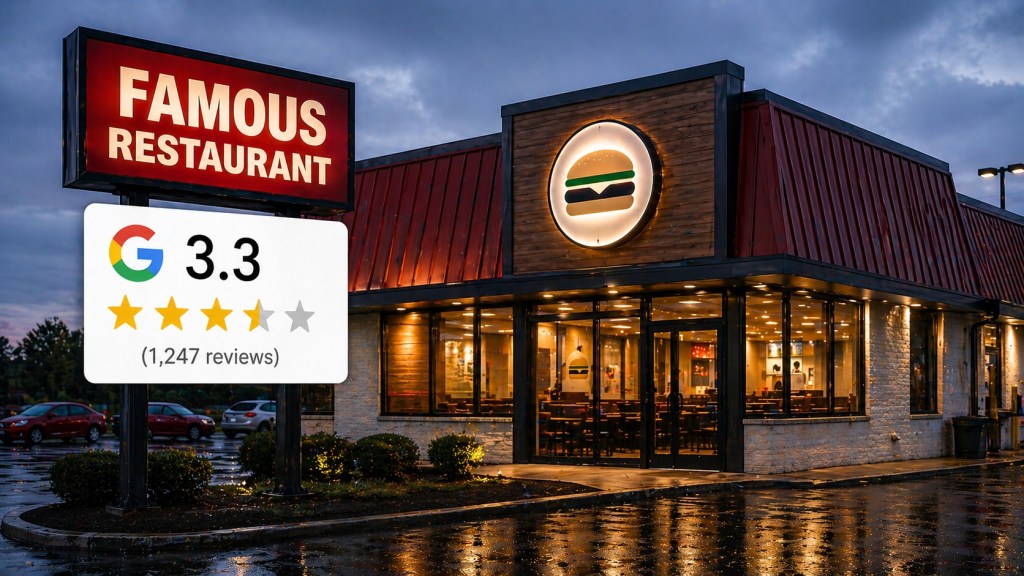
There comes a point in the life of some restaurant brands where the logo becomes more powerful than the actual experience.
The name is recognizable. The signage is familiar. The social media following is large. New locations continue to open. Remodels are announced with polished renderings and upgraded décor packages. Limited-time menu items generate headlines. Nostalgia campaigns bring back products people once loved years ago.
And yet…
Customers leave saying the food was “okay.”
Or worse:
“It’s not what it used to be.”
What makes this particularly fascinating is that many customers continue to visit these brands anyway. The parking lots are still busy. The drive-thru lines reamin steady. The app promotions continue to drive traffic. The brand itself has become a habit, a default option, or simply part of the cultural landscape.
But popularity and customer satisfaction are not always the same thing.
That distinction matters more than many restaurant companies may want to admit.
There are brands today operating on decades of accumulated awareness, historical relevance, convenience, and marketing momentum rather than consistently delivering memorable customer experiences. The logo carries the business further than the operations do.
That can work for a while.
But eventually, the gap between perception and reality becomes difficult to ignore.
You can often see the warning signs in plain sight.
A company announces a remodeled prototype with upgraded seating, digital menu boards, and modern lighting. Another launches a celebrity collaboration or introduces a seasonal menu item designed to create social buzz. Another leans heavily into value messaging because traffic has softened.
But what you rarely hear discussed publicly is this:
What specific operational improvements are being made to create a better customer experience?
Are food quality scores improving?
Is hospitality improving?
Are speed-of-service metrics improving without sacrificing quality?
Are online reviews becoming more positive?
Are customers becoming emotionally connected to the experience again?
Or are companies simply attempting to stimulate traffic while leaving the underlying operational issues untouched?
Because if the customer experience remains average, or inconsistent, then eventually the marketing begins functioning like a temporary stimulant rather than a long-term solution.
The challenge for many large restaurant brands is that awareness can disguise operational erosion for years.
A newer or smaller restaurant concept has no such luxury. If the experience is poor, customers disappear quickly. But legacy brands often continue surviving because familiarity itself carries value. Consumers know what the brand is. They grew up with it. They understand the menu. The locations are convenient.
In many cases, customers continue visiting despite disappointment rather than because of enthusiasm.
That is a dangerous position for any brand.
Especially in an era where consumers have more choices than ever before.
What makes the situation even more revealing is how often entirely new competitors seem to emerge almost out of nowhere and suddenly become more culturally relevant, more talked about, and ultimately more financially productive than long-established segment leaders.
A once-dominant restaurant chain may still possess thousands of locations, decades of history, and one of the most recognizable logos in America, yet newer brands begin climbing the rankings in average unit volumes while the former category leader quietly slips downward year after year.
And that decline rarely happens because consumers suddenly stopped recognizing the legacy brand.
It happens because consumers stopped being excited by it.
The newer competitor often delivers something the larger brand lost along the way:
Energy. Focus. Consistency. Experience.
Sometimes the food is simply better. Sometimes the hospitality feels more authentic. Sometimes the operations are tighter. Sometimes the restaurants feel cleaner, more current, or more emotionally connected to today’s consumer expectations.
The irony is that many of these emerging brands are operating with a fraction of the resources, locations, marketing budgets, and infrastructure of the legacy chains they are overtaking.
Yet they outperform them where it matters most.
Customer enthusiasm. And eventually, unit economics.
That is why average unit volume rankings can become such an important measure of true brand strength. They often reveal what marketing campaigns and traffic counts attempt to conceal.
Because consumers may visit a legacy brand out of habit once in a while…
…but they consistently spend money with brands they genuinely enjoy.
That distinction changes everything.
When newer restaurant concepts begin generating higher per-store revenues, stronger customer advocacy, better digital engagement, and greater cultural momentum, it signals that emotional relevance is shifting elsewhere.
The segment leader may still dominate in total locations or overall systemwide sales due to sheer scale, but the marketplace has already started voting differently.
And once consumer momentum shifts, it becomes incredibly difficult to reclaim.
Especially when emerging competitors are relentlessly improving while legacy brands remain overly focused on promotions, remodels, and short-term traffic drivers instead of rebuilding the operational and experiential foundation that created their success in the first place.
The restaurant industry has entered a period where experience matters as much as product. In some cases, even more. Customers are no longer simply buying food. They are buying convenience, consistency, emotional comfort, hospitality, speed, cleanliness, digital ease, atmosphere, and perceived value all at once.
When one or more of those components consistently breaks down, customers notice.
Even if they continue showing up.
The bigger problem emerges when management teams begin confusing traffic with brand health.
A busy restaurant is not always a beloved restaurant.
Strong sales generated through discounting, loyalty rewards, heavy advertising, or sheer market saturation can create the illusion of strength while underlying customer sentiment continues deteriorating.
And customer sentiment matters.
Because eventually consumer behavior changes subtly before it changes dramatically.
Customers visit less often.
They stop recommending the brand.
They choose competitors for certain occasions.
They no longer get excited.
The restaurant becomes transactional instead of emotional.
Once that happens, the brand slowly loses something extremely difficult to recover: relevance.
Ironically, many of the solutions are not always revolutionary.
Sometimes customers simply want hotter food, friendlier service, cleaner dining rooms, better-trained employees, fresher ingredients, or greater consistency from one location to another.
Sometimes they want leadership to spend less time creating the next promotional campaign and more time fixing operational fundamentals.
That may not generate flashy headlines, but it creates something much more valuable: trust.
And trust produces repeat business.
Trust produces stronger reviews.
Trust produces organic advocacy.
Trust produces pricing power.
Trust produces long-term brand equity.
Most importantly, trust creates memorable experiences that customers actually want to repeat.
Imagine the financial impact if a major restaurant chain that already possesses national awareness dramatically improved operational consistency and customer satisfaction across its system.
Not marginally.
Dramatically.
How many existing customers would visit more often?
How many former customers would return?
How many negative reviews would disappear?
How much additional revenue could be generated without relying so heavily on discounts and promotions?
How much stronger would franchisee profitability become?
How much more valuable would the brand become over the next decade?
Those are the questions that deserve more attention.
Because while logos may attract traffic, customer experience determines longevity.
And eventually, every restaurant brand reaches a moment where consumers decide whether they still love the experience… or merely recognize the sign.
The difference between those two realities can determine the future of an entire brand.
I’m curious how you see it as there are restaurant brands today with incredible histories, powerful recognition, prime real estate, and enormous resources that still have every opportunity to reclaim emotional connection with consumers. But doing so requires more than marketing. It requires operational honesty, leadership discipline, and a willingness to confront the real customer experience occurring every single day inside the restaurants.
Not the experience shown in the commercial.
The real one.
Because in the end, customers rarely build loyalty to logos.
They build loyalty to how a brand consistently makes them feel.
Again, how do you see it? What are your thoughts?
If you are a restaurant operator, franchisor, franchisee, investor, or entrepreneur who recognizes these challenges within your own organization, or simply wants to discuss how customer experience, operational consistency, and brand relevance impact long-term growth and unit economics, I welcome the conversation.
Reach out directly at paul@acceler8success.com.
Discover more from Acceler8Success Cafe
Subscribe to get the latest posts sent to your email.

You must be logged in to post a comment.