Tag: entrepreneurship

A Couple’s Guide to Entrepreneurship (When Only One is the Entrepreneur)

Living with an entrepreneur can be both exhilarating and exhausting. The dynamic nature of entrepreneurship means that life can often be unpredictable, filled with highs of success and lows of failure. For the spouses or life partners of entrepreneurs, this can lead to a series of emotional and practical challenges. Understanding and adapting to these challenges can help in fostering a supportive and healthy relationship.

The life of an entrepreneur is rarely a 9-to-5 job; it’s more of a 24/7 commitment. This often results in irregular working hours, financial instability, and periods of high stress. For their partners, this can mean unexpected changes to personal plans, increased responsibility for household or familial duties, and coping with the emotional rollercoaster that accompanies the pressures of starting and maintaining a business.

To navigate these challenges, communication is key. Partners of entrepreneurs need to integrate some entrepreneurial thinking into their own mindset, which includes understanding the drive, the risk tolerance, and the relentless pursuit of goals that characterize an entrepreneur. This understanding can transform a partner into a vital sounding board, providing not only support but also valuable outside perspectives that can help in decision-making processes.

Entrepreneurs, on their part, should strive to be transparent about their business. Sharing both the successes and the struggles can demystify the process for their partners, helping them feel more connected and less sidelined by the demands of the business. Involving them in small decisions or discussing strategies not only fosters this connection but also leverages the unique insights a life partner can offer, which might be overlooked in a typical business setting.

For partners looking to educate themselves further about entrepreneurship, there are several resources available including books, online courses, and workshops that focus on entrepreneurship, startup culture, and financial planning. This knowledge can enhance conversations and enable partners to provide more informed feedback and support.

A helpful book is The Untold Story of the Entrepreneur’s Wife: How to Permanently Exit Your Old Norm and Thrive in Your New Entrepreneurial Lifestyle. Author and coach, Amy Stefanik shows her perspective that being an entrepreneur’s wife is not all doom and gloom to entrepreneurial couples. Stefanik shares her tools with entrepreneurial families for when they find themselves in the valley and helps them transform “married to the business” to “the secret weapon” to becoming an unstoppable entrepreneurial power couple!

Of course, setting boundaries is crucial. Entrepreneurs need to consciously carve out quality time, free from business calls and emails, to devote to their personal relationships. This helps in maintaining a balance between work and life and reassures the partner that they are a priority.

So, while the entrepreneurial journey can be strenuous on personal relationships, it also offers unique opportunities for growth and bonding. By integrating entrepreneurial thinking, maintaining open lines of communication, and educating themselves about business, partners can not only navigate the complexities of their situation but also contribute significantly to the entrepreneurial venture. In return, entrepreneurs must recognize the value and support their partners provide, ensuring they are included and valued, not just as supporters but as partners in every sense of the word.

Make today a great day. Make it happen. Make it count!

About Acceler8Success

With over 70 years of combined experience in entrepreneurship, small business, franchises, and restaurants, Acceler8Success is dedicated to helping entrepreneurs and business owners succeed in various economic climates. For more information, please visit Acceler8Success.com.

If you’re an entrepreneur that feels lost, needs assistance or needs someone to talk to — with or without your partner, please contact Paul Segreto by text at (832) 797–9851 or via email to paul@acceler8success.com. Please, don’t hesitate!

The Power of Entrepreneurial Spirit: Dream it. Wish it. Do it!

Entrepreneurship is often romanticized as the pursuit of dreams, the manifestation of wishes, and the embodiment of action. At its core, it embodies the spirit of turning ideas into tangible realities. But what does it truly mean to embark on the entrepreneurial journey armed with nothing but a dream, a wish, and a relentless drive to do?

Dream It

Every entrepreneurial journey begins with a dream — a vision of what could be. It’s the spark that ignites the fire of ambition and sets the course for the future. Whether it’s creating innovative products, revolutionizing industries, or making a difference in people’s lives, dreams serve as the foundation upon which businesses are built.

Dreaming in entrepreneurship isn’t merely about wishful thinking; it’s about envisioning possibilities that others may overlook. It’s about daring to imagine a world that doesn’t yet exist and having the audacity to believe that you can bring it to fruition. Dreams fuel passion, perseverance, and the willingness to take risks.

Wish It

Wishes are the desires that propel entrepreneurs forward, serving as the bridge between dreaming and doing. Wishes encapsulate the aspirations, goals, and ambitions that drive entrepreneurs to action. They represent the tangible outcomes that individuals hope to achieve through their entrepreneurial endeavors.

Wishing in entrepreneurship involves setting clear objectives, defining success metrics, and envisioning the future state of the venture. It’s about articulating what you want to accomplish and committing to the journey required to make those wishes a reality. Wishes provide direction, motivation, and a sense of purpose amidst the challenges and uncertainties of entrepreneurship.

Do It

The essence of entrepreneurship lies in the willingness to take action — to transform dreams and wishes into concrete results. Doing is where the rubber meets the road, where ideas are tested, refined, and executed upon. It’s the relentless pursuit of progress, fueled by determination, resilience, and a bias towards action.

Doing in entrepreneurship requires courage — the courage to overcome obstacles, the courage to embrace failure as a learning opportunity, and the courage to persevere in the face of adversity. It’s about taking calculated risks, making tough decisions, and continuously iterating to improve and evolve.

The Entrepreneurial Spirit

The journey from dreaming to doing is not linear but rather a continuous cycle of ideation, execution, and adaptation. Along the way, entrepreneurs encounter setbacks, challenges, and moments of doubt. However, it’s the unwavering belief in the power of their dreams, the resilience to weather storms, and the relentless pursuit of their aspirations that define the entrepreneurial spirit.

Entrepreneurship is not for the faint of heart, but for those who dare to dream, wish, and do. It’s a journey characterized by passion, creativity, and relentless determination. And while success is never guaranteed, the very act of embarking on the entrepreneurial journey is a testament to the human capacity for innovation, resilience, and the pursuit of greatness.

In the end, it’s not just about the destination, but the journey itself — the experiences gained, the lessons learned, and the impact made along the way. So, dream boldly, wish fervently, and above all, dare to do. For in the realm of entrepreneurship, it’s those who are willing to turn their dreams into reality who ultimately shape the future.

Make today a great day. Make it happen. Make it count!

Entrepreneurship Coaching

Whether you’re interested in exploring a purchase of a franchise or acquiring an existing business, or possibly looking to sell, restructure or expand your business, we have you covered. Our mantra is to explore, identify, develop, implement & analyze to ensure connecting the right people, brands & opportunities. Our mission is to create long-term relationships, not transactions. Our promise is that we’ll be there, coaching you every step of the way. Inquire here for more info.

Will Franchising Boom in the Wake of Corporate Layoffs?

As major corporations continue to announce significant layoffs, a potential boom in franchising emerges as a hot topic. This trend prompts a critical examination of franchising as a viable career alternative for those displaced by the shrinking job market.

The Appeal of Franchising

Franchising offers a structured business model with substantial support from the franchisor, including marketing, training, and operational assistance. This can lower the barriers to entry for those new to entrepreneurship, providing a smoother transition from employment to business ownership. The inherent appeal of franchising lies in its ability to offer a “business in a box” model, where the framework for running a business, backed by a recognized brand and proven business strategies, is already established.

Economic Context and Financing

The economic uncertainty triggered by widespread layoffs could lead individuals to seek more control over their professional futures. Franchising may appeal as a safer harbor, allowing entrepreneurs to capitalize on established brands and customer loyalty that come with a franchise. However, the success of potential franchisees also heavily depends on the economic environment and access to financing. During economic downturns, securing loans and other financing options can be more challenging, potentially stifling the growth of franchising despite the increased interest.

Sectorial Expansion and Diversification

Traditionally, sectors like fast food, retail, and hospitality have dominated the franchising landscape. However, current trends could shift this dynamic. Emerging fields such as health, wellness, and technology are ripe for franchising opportunities, potentially attracting a more diverse group of entrepreneurs. This diversification can broaden the appeal of franchising, moving it beyond consumer-facing retail to services that are more specialized and knowledge-intensive.

Challenges and Considerations

While the prospect of a franchising boom is compelling, it is not without challenges. Prospective franchisees must conduct thorough due diligence, understanding both the risks and rewards. The success rate of franchises, while generally favorable, varies widely by sector and individual business acumen. Additionally, the franchising model itself may evolve in response to economic pressures and changing consumer behaviors, which could alter the landscape significantly. Key forecasts of the 2024 Franchising Outlook Report by the International Franchise Association include:

  • The number of franchise establishments will increase by more than 15,000 units, or 1.9%, to 821,000 units. This growth will be supported, in part, by lower interest rates for higher ownership affordability and increased investment from private equity firms.
  • Franchising is expected to add approximately 221,000 jobs in 2024. As overall U.S. unemployment is forecast to average 4.1%, higher than 2023’s unemployment rate of 3.7%, FRANdata forecasts employment to grow by 2.6%, down 0.3% in year-over-year comparisons.
  • Total franchise output will increase by 4.1%, from $858.5 billion in 2023 to $893.9 billion in 2024.
  • Franchises’ GDP will continue to grow, increasing at a pace of 4.3% to $545.8 billion.
  • Personal services and quick service restaurants (QSRs) will experience higher growth than other industries.
  • Growth in the Southeast and Southwest will outpace the rest of the U.S. franchise market in 2024.

While the trend of corporate layoffs might catalyze interest in franchising as a fallback career path, its success will hinge on several factors, including the economic climate, financing availability, and the ability to adapt to new market realities. Aspiring entrepreneurs should weigh these factors and review the IFA’s report carefully when considering franchising as a viable route to business ownership and financial independence.

Make today a great day. Make it happen. Make it count!

About Acceler8Success

Acceler8Success is a dynamic consulting firm that specializes in franchise development, business coaching, and professional growth strategies. Tailored to meet the unique needs of each client, the firm offers a range of services designed to enhance operational efficiency and promote business expansion. These services include franchise development, strategic planning, and consulting for existing franchise networks.

Additionally, Acceler8Success provides personalized business coaching to develop leadership skills, improve management practices, and boost overall performance through workshops and one-on-one sessions. The firm also facilitates networking through regular events, webinars, and seminars, creating opportunities for collaboration and strategic partnerships. Committed to delivering measurable results, Acceler8Success focuses on empowering entrepreneurs and business leaders with the tools, education, and mentorship needed to achieve and sustain success. Learn more at Acceler8Success.com.

Partners in Progress: Patriotism & Entrepreneurship

Patriotism and entrepreneurship, though different in nature, are deeply intertwined, especially in the context of economic recovery and growth. From an entrepreneur’s perspective, these two ideals are intrinsically linked, each reinforcing and supporting the other.

At the heart of patriotism lies a profound love and commitment to one’s country, a sentiment that resonates strongly with entrepreneurs, particularly those running small businesses. These ventures go beyond profit; they represent a dedication to the welfare of the society and the nation. Entrepreneurs are often driven by a desire to solve local problems, create jobs, and improve the quality of life in their communities, a form of patriotism in its own right.

In challenging economic times, such as recessions or post-crisis periods, entrepreneurs and small businesses play a pivotal role. They act as catalysts for economic rejuvenation, displaying agility and responsiveness that large corporations often lack. This ability to adapt and innovate is critical during recovery, where traditional economic models may falter.

Entrepreneurs also embody the patriotic ideal of self-reliance. Building a business requires independence and confidence, reflecting the ethos of a strong, self-sufficient nation. This mindset contributes to a resilient national economy, bolstering the country’s capacity to withstand and recover from economic challenges.

The relationship between patriotism and entrepreneurship also shapes a nation’s identity. Successful local businesses become symbols of national pride, showcasing the innovation and entrepreneurial spirit of a country. They reinforce the narrative of a nation that values creativity, hard work, and perseverance.

Entrepreneurs rooted in their communities often reinvest in the local economy. This reinvestment isn’t merely financial; it includes job creation, nurturing local talent, and supporting community projects. Such actions demonstrate a patriotic desire to uplift and improve the nation from the grassroots level.

The interplay between patriotism and entrepreneurship, particularly in small businesses, is fundamental in driving economic recovery and building a resilient economy. Entrepreneurs, in their pursuit of innovation and community development, are not just contributing to the economy but are also advancing the overall well-being and progress of their nation, making them invaluable in times of prosperity and recovery alike.

Make it a great day. Make it happen. Make it count!

The Vital Role of Self-Care in Entrepreneurship: Nurturing Mind and Body for Success

In the often demanding world of entrepreneurship, self-care emerges as a non-negotiable pillar of success. Entrepreneurs, recognized as the driving force behind innovation and economic growth, find themselves juggling multiple roles, responsibilities, and expectations. This continuous hustle, while admirable, can take a significant toll on physical and mental well-being. It’s crucial to remember: self-care is not just a luxury; it’s essential healthcare… self-care IS healthcare!

Understanding the Multi-Faceted Nature of Entrepreneurship: Entrepreneurs, whether introverts or extroverts, are de facto leaders. Their emotional and mental state can set the tone for their entire organization. In this high-stakes environment, staying physically and mentally sharp is not just beneficial; it’s imperative. An entrepreneur’s well-being directly influences decision-making, team morale, and ultimately, the success of their venture.

The Risks of Neglecting Self-Care: The perils of overlooking self-care are manifold. Lack of sleep, for instance, can weaken the immune system, leaving entrepreneurs more susceptible to illness. Mental exhaustion can lead to brain fog, impeding the ability to make clear, strategic decisions. Furthermore, the constant pressure can breed anxiety and depression, leading to poor personal and professional choices.

The Necessity of Support Systems: No entrepreneur is an island. Having a support system, be it a friend, coach, mentor, or a supportive community, is invaluable. These sounding boards offer perspective, guidance, and sometimes, the necessary jolt back to reality. Acts of kindness or encouragement from these supporters can reignite an entrepreneur’s passion and focus.

Faith and Reflection: Faith, whether in a higher power, in oneself, or in the vision of the business, can be a powerful source of strength and resilience. Reflective practices, such as meditation or journaling, can provide clarity and a sense of calm amidst the chaos of entrepreneurship.

Questions for Reflection:

  1. How do I balance my entrepreneurial drive with the need for physical and mental rest?
  2. What support systems do I have in place, and how can I effectively utilize them for my well-being and growth?
  3. In moments of overwhelming pressure, what practices help me regain perspective and maintain my mental health?

Conclusion: As entrepreneurs are poised to lead our nation’s recovery and growth, their well-being becomes a matter of public interest. The path to sustainable success in entrepreneurship is not just paved with hard work and innovation, but also with the crucial practice of self-care. Remember, taking care of oneself is not just a personal responsibility; it’s a professional imperative.

From the Author, Paul Segreto, CEO & Founder, Acceler8Success Group

The future may be a bit bumpy for some, more so for others. Knowing who to turn to and when for guidance and help is important. Having resources at your disposal is also important.

So, if you hit a wall, for whatever reason, please feel free to reach out to me for assistance or even if you just need to talk and bounce around a few thoughts. Please do not hesitate.

You can contact me at paul@acceler8success.com or you may reach me by text or phone at (832) 797–9851. I look forward to helping you… I’m sure we can help each other!

Make it a great day. Make it happen. Make it count!

Weekly Review April 24-30

With so much going on at Acceler8Success Cafe I know it’s easy to miss a newsletter or two, or possibly our Question of the Week slipped by without you noticing, or an announcement we may have made just seemingly got lost amongst the busy news feed. Well, just like an experience at your local cafe, I really want Acceler8Success Cafe to be conveniently located when you desire or need to relax, enjoy a cup of coffee, and catch up on some reading.

Okay, I may be going bit far with this, but my goal is for Acceler8Success Cafe to be your virtual cafe. A place where you may frequently visit to enjoy a few minutes to yourself. I’d like the experience to be memorable by providing learning opportunities, by presenting a different perspective & insight, by spurring thought & reflection, by encouraging interaction, and by spotlighting topics that, frankly, may not be as front and center as they should or need to be.

To that end, Acceler8Success Cafe is open for business daily, seven days a week. For the benefit of current & aspiring entrepreneurs, our daily newsletter will be delivered each morning. Our Question of the Week along with an occasional announcement will be delivered at various times throughout the week.

As a way to jumpstart the week ahead, we also will deliver a weekly review each Sunday morning which will include articles you might have missed during the previous week. My goal is to provide an opportunity to begin the new week with information and ideas that possibly could accelerate your success.

No alt text provided for this image

Conquering Fear “You gain strength, courage and confidence by every experience in which you really stop to look fear in the face. You are able to say to yourself, ‘I have lived through this horror. I can take the next thing that comes along.’ You must do the thing you think you cannot do.” – Eleanor Roosevelt

3 Steps Ahead of Business Ownership Whether doing so as an independent business or as a franchise there are important initial steps to take to ensure that business ownership is practical and feasible. Due diligence is essential in order to make the right decision – one that will go a long way toward minimizing risk of failure.

Sorry. Your Application Has Been Rejected! Despite being financially qualified and with a proven track record of success, is it possible for franchise candidates to be rejected for not being a “right fit” for a brand?

What role will entrepreneurs play in the economy over the next 5-10 years? This is our Question of the Week. As such, I’d really appreciate your feedback. So please, share your comments, insight and perspective in the comments section below. But first, let’s see if I can spur some thought.

Vision to Reality: A Deliberate Journey A deliberate approach led to the creation of the Acceler8Success mantra that is often seen alongside a black panther whose approach in getting to its goal is nothing less than deliberate.

Maintaining Work Life Balance Here’s to a great weekend and a productive stress-free week ahead. Please share this with others as there are far too many that have a difficult time managing stress and especially so during what are seemingly uncertain times.

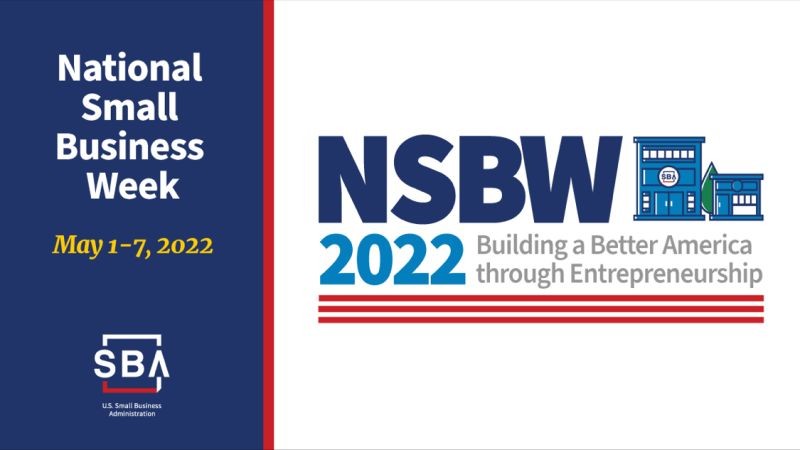
Are you ready for National Small Business Week May 1-7, 2022?

No alt text provided for this image

As we prepare to celebrate National Small Business Week 2022, it’s the perfect time to announce the new franchise & business opportunity platform by Acceler8Success Group. In its final stages of development, I anticipate an official introduction within the next 7-10 days.

No alt text provided for this image

“You must take personal responsibility. You cannot change the circumstances, the seasons, or the wind, but you can change yourself. That is something you have charge of.” – Jim Rohn

No alt text provided for this image

I am an entrepreneur. Go ahead. Say it!

Why is there reluctance to say, I am an entrepreneur? I’ve been asked that question many times. Heck, I’ve asked that question of myself on more than one occasion. It seems, at times we’re prouder to call ourselves, Founder or CEO or to say, I’m a business owner. Why is that?

Are those titles more respectful than, entrepreneur? Yet, we hear of late, we’re in an entrepreneurial economy. So, is that a bad thing or a good thing, and especially if we have a hard time fully admitting to entrepreneurship? Or should we just be entrepreneurial in how we approach our work, whatever that truly means?

Are we claiming to be in an entrepreneurial economy to justify the disappearance of the lifelong career at one company and this is just a way to say we need to create and prove ourselves over and over again, and forget the gold watch?

Back to the reference of being an entrepreneur… Is there a stigma of being a dreamer, always looking for something better, bigger, faster as opposed to what some believe is mundane, repetitive work with the security of a paycheck? Often, I hear it’s mostly due to yesterday’s immigrant mindset of being thankful to just have a job, yet it’s that same immigrant mindset that is the epitome of entrepreneurship.

 “Your time is limited, so don’t waste it living someone else’s life. Don’t be trapped by dogma – which is living with the results of other people’s thinking. Don’t let the noise of other’s opinions drown out your own inner voice. And most important, have the courage to follow your heart and intuition. They somehow already know what you truly want to become. Everything else is secondary.” – Steve Jobs

We are living our fears.

Actually, I believe it’s because of fear — fear of failure, fear of what other people think, fear of the unknown, fear of the what if, fear of starting over, fear of change… But it’s when those fears are hit head-on and the adrenaline rush of success far outweighs those fears because you know, deep in your heart that you have a deeply ingrained talent that can and will make a difference.

Does that mean failures aren’t possible? Hell no, but it’s working through those failures, those blips, those aberrations that provide experience and resiliency to improve and innovate to make the next step, the next task, the next venture successful. That is entrepreneurship. And it’s when I don’t consider what I do as entrepreneurship, is when failure mostly occurs. Conversely, it’s when I focus on what I do as an entrepreneur, complete with that thinking outside the box and failure is not an option perspective, and when focused more on results as opposed to opinion of others, THAT is when success mostly occurs.

Yes, I’m an entrepreneur. My focus will stay as such as it is not only good for me, but also for my family and for those that rely on me to help them achieve their wishes, hopes and dreams! Why? Because I believe in possibilities, as without them, there are none.

5 Considerations for Millennials & Generation Z Open to Franchising and Business Ownership

Franchising is not often considered by the approximately 139 million Millennials and Generation Z population (as of 2020). But, with so many qualified people looking to start or extend their careers, and on their own terms, every job option merits consideration.

First things first. Let’s understand who makes up this segment of the U.S. population that will make up the majority of the workforce for the next 30-40 years:

Millennials were the largest generation group in the U.S. in 2019, with an estimated population of 72.1 million. Born between 1981 and 1996, Millennials recently surpassed Baby Boomers as the biggest group, and they will continue to be a major part of the population for many years.

Generation Z is the most recent to have been named, and many group members will not be able to remember a time before smartphones and social media. However, the group already makes up around 20.35 percent of the U.S. population, and they are said to be the most racially and ethnically diverse of all the generation groups. 

The number of Baby Boomers, whose generation was defined by the boom in births following the Second World War, has fallen by nearly six million since 2010. However, they remain the second-largest generation group, and aging Boomers are contributing to steady increases in the median age of the population. Meanwhile, the Millennial and Gen Z generations continue to grow, and a big reason for this is the increasing number of young immigrants and refugees arriving in the United States.

Thanks to Adecco’s ‘Way to Work’ survey, which surveyed 1,001 Americans who are mostly currently in college or recently graduated and in their late teens to mid-20s, the primary differences between the two generations and how these differences might play out in the workplace have been identified. Three key takeaways, or differences between Millennials and Gen Z regarding work include:

  • Members of Gen Z are more concerned about the cost of education (21% of respondents), compared to Millennials (13% of respondents).
  • Millennials value stability (34%), while Gen Z puts more of an emphasis on finding their dream job (32%).
  • More Gen Zers follow their parents’ influence (42%), compared to their Millennial counterparts (36%).

So, what about business ownership and franchising, once the American Dream of Baby Boomers?

Here are five important considerations for Millennials and Gen Z open to this path of entrepreneurship:

Affordability. Most people between the ages of 18 and 35 cannot afford $800,000 for a brick-and-mortar business but a home-based business might cost between $40,000 and $60,000. There are a vast variety of franchises. Millennials and Gen Z can find one that fits their budget as well as their ideal income, lifestyle, wealth and equity.

Digital Minds. Both groups are digital natives who can capitalize on the Internet to grow their business. Every type of franchise can benefit from someone proficient in the cyber realm, whether that be growing an at-home business in pajamas, creating a digital work force or driving business with a creative social media campaign.  

Control. Some franchises have a web presence that is systemized from the top. If that’s the case, Millennial and Gen Z candidates need to decide if controlling the social presence is important to them or not, then choose a franchise accordingly.

Do Good. Many young people are as concerned their life work be meaningful and socially responsible as they are with money. A franchise allows Millennial and Gen Z candidates the opportunity to “do good” while being their own boss. Franchises exist for dog sitting, tutoring and healthy food, among countless options available for those looking align livelihood with their social mission. 

Difficulties. Both generations like their own voice on social media, their own marketing plan and are generally excited to execute their next big idea. Franchisors offer a replicable model so customers know what to expect. A Millennial or Gen Z candidates who decide to become a franchisee must be sure they completely support the system they choose.

21 Tips for Young and Aspiring Entrepreneurs

As the future of works rests on the shoulders of Millennials and Generation Z, changes to the work force will continue and most likely, not return to any semblance of what was common pre-pandemic. I guess the most important questions (concerns) for me are, Will Millennials and Gen Zers pull professional culture in opposite directions, or do both generations have common ambitions? After all, the workplace structure cannot be a work in progress forever.

Startup or Franchise? Focus on what is best for you but choose wisely.

Owning and operating a small business was once the exclusive domain of the risk takers of the business world. The true entrepreneur had a distinct flair for creativity, innovation and vision. He, and I emphasize “he”, knew how to operate outside-the-box. He knew how to make things happen. Many times, this individual had little choice as he knew from an early age, he would be responsible for shaping his future and for making it on his own. Formal education was usually limited and often just a far-fetched dream. Corporate life was not even an option. Besides, he couldn’t be told what to do, how to do it and when to do it. No way. No how.

Well, times certainly have changed in the business world. More so recently as many individuals are again faced with economic uncertainty. An advanced degree is no longer the fast track to success. As such, many individuals especially more women than ever before are deciding enough is enough. Wanting to control their own destiny they’re increasingly choosing small business ownership as opposed to leaving their future in the hands of Corporate America.

Sure, the financial aspects are vitally important. That’s a given. However, today’s new small business owners describe their number one priority as establishing true balance in all areas of their life. They desire the freedom of furthering their own personal growth but will limit that growth by their abilities and resources, finding it more important to help others improve the quality of their lives and build long-term mutually beneficial relationships; both business and personal. They firmly believe people and relationships to be the foundation of success even more than money itself as they have determined money (profits) will be the end result of their actions.

This is where the road gets tricky as a decision must be made between starting their own venture and assuming total risk or reducing the learning curve and limiting the risk by investing in a franchise where they would be in business for themselves but not by themselves. The key questions posed by many emerging small business owners are asked very emphatically, “Can I achieve my goals and objectives as part of a franchise system? And do I have what it takes to be a franchisee?”

In addressing these questions (and concerns), it’s relatively easy to analyze the two and realize, beyond the viability of a particular franchise brand as addressed in due diligence of the franchise concept itself, the answers are really contingent and dependent upon each other. The answers actually lie in understanding the mindset required to be a franchisee. Once understood, a choice must be made regarding the desired path either as an independent small business owner or as one of the hundreds of thousands of franchisees across several thousand franchise concepts worldwide.

The typical franchisee must be willing to follow and adhere to a franchise company’s business system and ultimately, promote the same within their new franchise community at all times. It must be completely understood the system cannot be changed by the franchisee nor can their business be operated differently than the franchise company requires as the system is proven and uniform across the chain. It’s this uniformity throughout the organization that is paramount to brand awareness leading to company and franchisee success and is the foundation of an interdependent relationship between both parties to the franchise agreement.

A franchise is almost definitely not the right choice for the business maverick or renegade. Certainly, there is an important place in business and in our hearts for these unique innovators. If not, we wouldn’t know Apple or Amazon as they’re known today. Even McDonalds, as probably the greatest franchise of all time that stormed through the country under the leadership and direction of a true maverick, Ray Kroc, would not have been successful without franchisees being required to strictly follow and adhere to the McDonalds system without fail. No questions asked and no room for negotiation.

Entrepreneurs will be around for centuries to come blazing trails as never before. Some will actually plan to choose franchising as an expansion strategy and build the foundation of future franchise concepts. They will provide a choice for tomorrow’s small business owners on whether to go it alone or invest in a franchise. And it will be those franchisees of tomorrow that will follow, promote and expand those systems that will prove to be the steel, bricks and glass built upon the foundation of new franchise companies. Thus, continuing the growth of franchising as it increasingly expands throughout the world, giving back by affording people more opportunities and options in determining the path to small business ownership that suits them best.

Fear And Consequences of Failure: A True Story Retold Once Again

I’ve been asked time and again to post the following article that I’ve written about in 2011 regarding my own personal experience as a multi-unit franchisee where I succeeded at first, only to crash and burn later on. Over the years, this article has been posted on several of my blogs, picked up by numerous other blogs & online publications, and discussed on various podcasts. I have received numerous comments and inquiries about the article and my experience as well as individuals sharing their own personal experiences and requests for assistance. Although I cringe at the thought of any business failing, I admire and respect the fact that franchisees and franchisors alike (small business owners and individuals & teams running larger organizations as well) know when to put their pride aside and ask for assistance, and I always look forward to providing my experience and expertise to help determine a practical resolve to their problems. 

I’m proud to say this article has been instrumental in helping a number of businesses keep their doors open and work towards recovery. On the other hand, I’m also sad to say several businesses were not as fortunate, but at least the owners were able to exit with dignity and in few cases, with less liability than they previously thought possible. And, in one case, the business owner actually exited in the black when we were able to facilitate the sale of her business when she previously thought about just walking away. Considering the difficulties many small business owners, restaurant operators, franchisees, entrepreneurs and organizations have experienced over the past two years and with challenges continuing, I’m sharing this article once again.

Fear and Consequences of Failure (unedited from 2011)

I can personally relate to the trials and tribulations of owning franchise businesses as I have “been there and done that” and have experiences on both ends of the spectrum from achieving overwhelming success to dealing with bitter failure. I have definitely come to understand the fine line between success and failure in trying to nail down the American Dream.

I know it is sometimes counterproductive to even mention failure which is why the subject is always avoided and never discussed. Yet, it’s out there and it’s real. Once franchisees face the possibility of failure and its very real consequences, they can be motivated to understand that failure is not an option and commit 100% to a plan that addresses immediate problems and provides solutions accordingly. Even if it’s necessary for the plan to be quite drastic or aggressive due to prevailing circumstances, franchisees that unequivocally realize that failure is not an option are prepared for immediate action.

Let me emphasize one point. Franchisees should not view poor sales and disappointing profits as either potential or immediate failure and stick their heads in the sand. I made that mistake in the past and suffered the consequences. Instead, franchisees should build upon the courage it took to become a franchise business owner and recommit to success as they did when they first took the entrepreneurial plunge.

They need to remember their wishes, hopes and dreams that prompted the decision to own their own business. They need to remember the admiration of family and friends when they heard about the new venture. They need to remember the excitement when they actually signed the franchise agreement.

Unfortunately, there’s a very distinct possibility the root of the problem is embedded in the franchisee’s actions, non-conformity to the franchise system and unwillingness to face reality. However, as there was some shining light evident during the franchise award process, it may not be a totally lost cause if the franchisee is made to completely understand the implications and consequences of failure.

As franchisors are faced with the potential of closed units [during this recession] that may be the result of things out of their control, it’s imperative they don’t lose even a single unit just because a franchisee just flat out needs a snap back to reality. It’s worth the effort.

Let me clarify something. I failed as a franchisee. Not because of anything the franchisor did or didn’t do but because I put and kept my head in the sand and did not face reality. I could go on and make excuses about things that happened around me but at the end of the day I could have turned things around if I got my own head out of the sand, made some difficult decisions and took full, immediate responsibility.

Unfortunately, I was scared of failing. I was afraid of what people would think. I was ashamed at what other franchisees, ones I put in business, would think of me. I couldn’t even think of facing my family. All lame excuses for not taking responsibility. Maybe a hard swift kick you-know-where would have helped.

Did I mention that I previously ran the franchise company where I failed as a franchisee? Did I mention I was elected by fellow franchisees, President of the National Advisory Council? Did I mention that I owned and operated five franchise units?

If I had clearly understood the implications and consequences that were looming on the horizon and if I was able to get my big ego out of the way and address things head on, maybe I could have survived. Maybe I could have at least implemented an exit strategy that would have, in some small way, paid back the loyalty and support of my employees, family and friends.

In the end, I may not have survived because it may very well have been too late when and if I finally took action and responsibility. But maybe I could have at least exited with some dignity. Also, I could have saved many innocent people a great deal of hardship, embarrassment, wasted effort and ill-spent resources if I did face reality. This includes my family, my employees and yes, my franchisor; all who believed in me.

Yes, it was a tremendous learning experience but not one I would bestow or wish on anyone. Now, all I can do is to offer my experience to anyone in the franchise industry that needs assistance. As we [prepare to enter 2012] in the realms of economic uncertainty, I’m certain already difficult situations have been compounded but I’m confident a snap back to reality could only help. If just one franchise business is saved from the consequences of failure, then we’ve made progress. Progress we’ll continue to build upon.