Tag: entrepreneurship

What Entrepreneurs Need Most Isn’t Another Coach or Consultant

This includes Founders, Small Business Owners, Franchisees & Restaurant Operators
Over the past several months, you may have noticed a change in how we describe our work, share our ideas, and engage with entrepreneurs.

Our articles have become more reflective. Our conversations have become more personal. Our calls to action have become less aggressive and more invitational. We have spent less time promoting programs and more time addressing the realities entrepreneurs face… the uncertainty, difficult decisions, financial pressure, setbacks, reinvention, responsibility, and determination required to keep moving forward.

That change has been intentional.

Acceler8Success America has evolved into an advisory-first organization focused on Entrepreneurship Advisory & Business Development.

This is more than a change in terminology.

It reflects a clearer understanding of who we are, where we create the most value, and how we believe experienced business professionals can best serve entrepreneurs today.

More Than Coaching or Consulting

There is no shortage of coaches, consultants, trainers, courses, systems, and programs competing for the attention of entrepreneurs.

Many provide meaningful value.

But we believe there are times in an entrepreneur’s journey when another program, formula, or motivational message is not what is needed most.

Sometimes an entrepreneur needs an experienced advisor.

Someone who listens before offering an opinion.

Someone who understands that the obvious answer is not always the right answer.

Someone who can look beyond the immediate problem or challenge and consider the business, the entrepreneur, the family, the financial realities, and the long-term consequences of a decision.

Someone who has built businesses, led organizations, developed brands, sold opportunities, made mistakes, survived setbacks, changed direction, and continued producing results.

That is the role we are embracing.

We are not positioning ourselves as people who have every answer.

We are positioning ourselves as experienced professionals who know how to ask better questions, recognize patterns, challenge assumptions, identify possibilities, and help entrepreneurs make more informed decisions.

Experience Creates Judgment

Information is everywhere.

Entrepreneurs can find business advice through books, podcasts, videos, webinars, artificial intelligence, social media, and online communities.

What is much harder to find is judgment.

Judgment is developed over time.

It comes from seeing what works, what fails, what appears promising but rarely delivers, and what may initially seem insignificant but ultimately makes the difference.

Experience teaches when to move decisively and when to slow down.

It teaches when an entrepreneur should remain committed to a vision and when commitment is becoming stubbornness.

It teaches the difference between a temporary obstacle and a fundamental flaw.

It teaches that growth is not always progress, revenue is not always profitability, activity is not always productivity, and opportunity is not always a good fit.

It also teaches that entrepreneurship is deeply personal.

Business decisions affect families, employees, partners, investors, customers, communities, and the entrepreneur’s own sense of identity.

Those realities cannot always be addressed through a standard coaching program or consulting template.

They often require a trusted advisory relationship.

Why We Have Become Advisory-First

Throughout our careers, we have worked with aspiring entrepreneurs, business owners, franchisors, franchisees, restaurant operators, sales professionals, executives, investors, and entrepreneur-led organizations.

We have helped people explore business ownership, launch ventures, develop brands, solve problems, pursue growth, create partnerships, generate revenue, and rebuild after difficult periods.

The work has taken many forms.

We have coached, consulted, trained, developed businesses, represented opportunities, supported sales efforts, created strategies, and helped organizations move ideas toward execution.

Yet the greatest value has rarely come from a document, presentation, training module, or standardized process.

It has come from the conversation surrounding it.

The conversation that uncovers the real issue behind the stated problem.

The conversation that helps an entrepreneur recognize an opportunity that had been overlooked.

The conversation that challenges an assumption before it becomes an expensive mistake.

The conversation that brings clarity when too many possibilities have created confusion.

The conversation that helps someone regain confidence without ignoring reality.

That is why advisory is becoming central to our work.

We want to work more closely with entrepreneurs, provide greater continuity, understand the complete situation, and remain involved as decisions lead to action and action leads to results.

Advisory Must Still Produce Results… Not Just Talk

Advisory should never become an excuse for endless discussion.

Experience, reflection, and thoughtful conversation only matter when they help entrepreneurs move forward.

Our advisory approach remains closely connected to business development.

That may include helping an aspiring entrepreneur evaluate opportunities, helping an early-stage founder establish direction, helping a business owner generate revenue, helping an organization develop strategic relationships, or helping an entrepreneur-led company bring a unique consumer-focused proposition to market.

It may also involve sales development, franchise development, partnerships, market expansion, brand positioning, strategic introductions, operational improvement, or new revenue opportunities.

We believe the strongest advisory relationships combine perspective with execution.

They help entrepreneurs understand what should be done, why it matters, what risks must be considered, and how the right next steps can be taken.

The purpose is not simply to provide advice.

The purpose is to help create meaningful progress.

Why Our Recent Initiatives Matter

The changes taking place across Acceler8Success America are part of a larger purpose.

We are developing initiatives that support aspiring entrepreneurs, early-stage founders, current business owners, experienced professionals, and entrepreneur-led organizations at different stages of their journeys.

Aspire Groups is being relaunched as a community where aspiring and early-stage entrepreneurs can participate in meaningful conversations, learn from shared experiences, and gain the confidence to move forward.

Our Entrepreneurship Coaching & Advisory Certification initiative is designed to help experienced professionals transform a lifetime of business, leadership, management, sales, consulting, or industry knowledge into meaningful advisory work of their own.

Our educational and academy initiatives are being developed to strengthen entrepreneurial capabilities, business development skills, and professional sales performance.

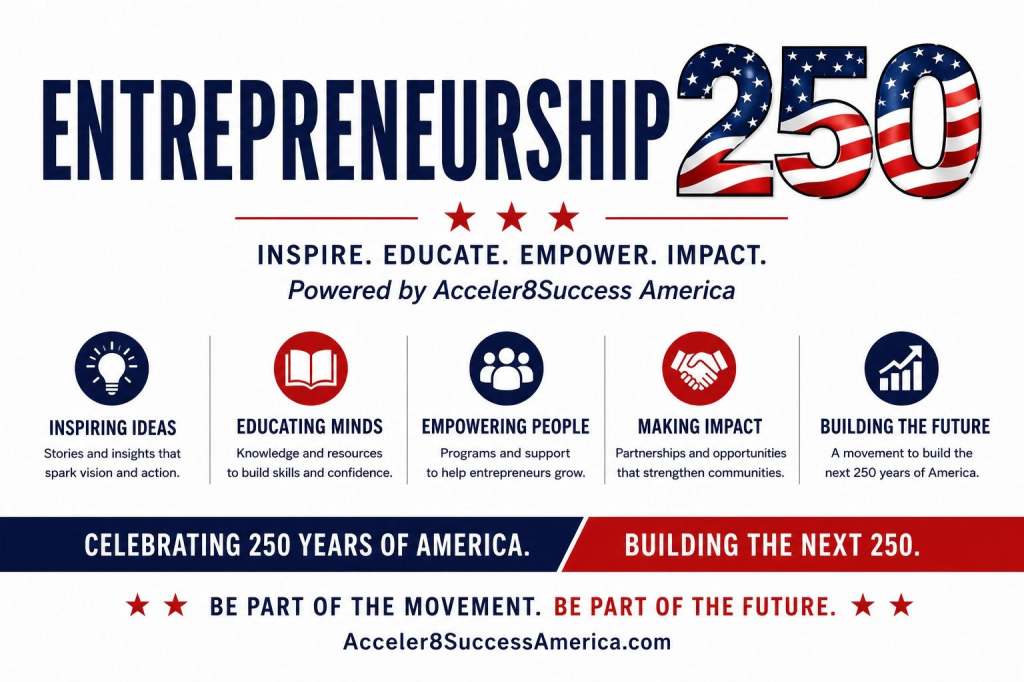
Entrepreneurship250 was established to recognize America’s entrepreneurial heritage while inspiring the people who will build its future.

Our personal platforms, articles, newsletters, and conversations are becoming less promotional and more focused on ideas that encourage people to think, question, explore, and act.

These initiatives are connected by one belief:

The future of entrepreneurship will require both the ambition of a new generation and the wisdom of those who came before it.

Experience Should Not Disappear

One of America’s greatest underused resources is the knowledge held by experienced entrepreneurs, executives, operators, sales professionals, and business leaders.

Many have spent decades developing capabilities that cannot be replicated through a short course or certification.

They understand people.

They understand pressure.

They understand what happens when plans meet reality.

They understand that businesses are rarely built exactly as originally imagined.

Yet too often, that knowledge disappears when someone retires, changes careers, or steps away from an industry.

We believe experience should not simply retire.

It should be redirected.

It should help aspiring entrepreneurs avoid preventable mistakes.

It should help early-stage founders develop stronger foundations.

It should help business owners see challenges from a different perspective.

It should help the next generation become better prepared to build, lead, and contribute.

This is one of the reasons we are expanding beyond simply advising entrepreneurs. We also want to encourage experienced professionals to become advisors, mentors, educators, and guides for those following behind them.

A Different Kind of Business Relationship

We are not interested in becoming the loudest organization in the marketplace.

We are interested in becoming one of the most trusted.

That means listening before recommending.

Understanding before proposing.

Being honest when an idea needs more work.

Acknowledging when the timing is wrong.

Recognizing when we are not the right fit.

It also means remaining willing to roll up our sleeves when the opportunity is right and the work can produce meaningful results.

We want our relationships to feel less like transactions and more like entrepreneurs working alongside entrepreneurs.

Experienced professionals helping others explore, build, grow, reinvent, and move forward.

An Invitation to Begin a Conversation

You may be considering entrepreneurship but unsure where to begin.

You may be building an early-stage venture and struggling to establish direction.

You may own a business that needs stronger sales, new relationships, additional revenue, or a renewed strategy.

You may lead an entrepreneur-driven organization with an idea that deserves greater attention and market reach.

Or you may be an experienced professional wondering how your knowledge can help develop the next generation of entrepreneurs.

Wherever you are in the journey, the first step does not always need to be a program, proposal, or sales presentation.

Sometimes it can simply be a conversation.

A thoughtful discussion about where you are, what you are facing, what you hope to accomplish, and what may be standing in the way.

No pressure.

No exaggerated promises.

No predetermined answer.

Just experienced entrepreneurs listening, asking questions, sharing perspective, and exploring whether there may be a path forward together.

Because meaningful advisory does not begin by telling someone what to do.

It begins by asking:

“Tell us your story.”

The Founding Fathers Didn’t Just Build a Nation. They Built an Entrepreneurial Spirit.

For America’s 250th Birthday, we will rightly celebrate the courage, sacrifice, and vision that gave birth to the United States.

But there is another story that deserves equal recognition.

America wasn’t built solely by statesmen, soldiers, and revolutionaries. It was built by entrepreneurs.

That entrepreneurial spirit, an enduring belief that individuals can create opportunity through hard work, innovation, perseverance, and personal responsibility, has been woven into the fabric of our nation since its founding.

It is a spirit that transformed thirteen colonies into the world’s largest economy. It built industries, created jobs, strengthened communities, and expanded the possibilities of what the American Dream could become.

As we commemorate America’s Semiquincentennial, we have an opportunity not only to honor the past but to inspire the future.

That is precisely the purpose behind Entrepreneurship250, powered by Acceler8Success America.

More Than Founding Fathers

History often remembers America’s Founding Fathers for their political leadership. Yet many were also builders, innovators, inventors, investors, publishers, farmers, merchants, financiers, and business owners.

Their understanding of commerce, education, innovation, and opportunity helped shape not only a new government but an economic philosophy centered around freedom and enterprise.

Consider the lessons they continue to teach us today.

Benjamin Franklin: Success Is Earned

Benjamin Franklin famously observed:

“Diligence is the mother of good luck.”

Franklin understood something entrepreneurs discover every day.

What many call luck is often the product of preparation.

The successful entrepreneur rarely succeeds by accident. Behind every “overnight success” are years of learning, sacrifice, persistence, and disciplined effort.

Opportunity tends to find those who have prepared themselves to recognize it.

Thomas Jefferson: Hard Work Creates Opportunity

Thomas Jefferson reminded us:

“I’m a great believer in luck, and I find the harder I work the more I have of it.”

Entrepreneurs understand this paradox well.

The harder they work to improve themselves, strengthen their businesses, serve their customers, and solve meaningful problems, the more opportunities seem to appear.

Luck often follows effort.

George Washington: Perseverance Changes History

George Washington offered timeless wisdom:

“Perseverance and spirit have done wonders in all ages.”

Every entrepreneur eventually encounters setbacks.

Markets change.

Plans fail.

Capital disappears.

Customers leave.

Competitors emerge.

What separates successful entrepreneurs is rarely perfection.

It is perseverance.

History repeatedly demonstrates that extraordinary accomplishments belong to ordinary people who refused to quit.

John Adams: Entrepreneurship Is About More Than Making Money

John Adams wrote:

“There are two educations. One should teach us how to make a living and the other how to live.”

Entrepreneurship has never been solely about generating income.

The best businesses improve lives.

They solve problems.

They create opportunity for employees.

They support local charities.

They strengthen neighborhoods.

They provide dignity through meaningful work.

Making a living matters.

Building a life of purpose matters even more.

James Madison: Knowledge Protects Freedom

James Madison observed:

“The advancement and diffusion of knowledge is the only guardian of true liberty.”

Entrepreneurs who stop learning eventually stop growing.

The marketplace constantly evolves.

Technology changes.

Consumer behavior shifts.

Industries transform.

Continuous learning is not optional, it is essential.

Knowledge empowers entrepreneurs to innovate, adapt, and continue creating value for others.

The American Dream Has Always Been Entrepreneurial

For nearly 250 years, entrepreneurs have represented one of the purest expressions of the American Dream.

Some arrived with little more than hope.

Others started businesses from garages, kitchens, workshops, storefronts, farms, or spare bedrooms.

Many experienced failure before finding success.

Yet they continued.

They built companies.

Created jobs.

Strengthened local economies.

Invested in their communities.

Mentored future generations.

Their stories are America’s story.

Entrepreneurship has never belonged exclusively to large corporations or Silicon Valley.

It belongs to every individual willing to pursue opportunity with determination, integrity, and purpose.

Why Entrepreneurship250 Matters

Entrepreneurship250 is more than a celebration.

It is a tribute.

It honors the entrepreneurs who built America over the past 250 years while encouraging those who will shape the next 250.

Our objective is simple.

Inspire more people to explore entrepreneurship.

Educate aspiring entrepreneurs with practical knowledge.

Empower individuals to pursue opportunity with confidence.

Strengthen communities through business ownership.

Encourage experienced entrepreneurs to mentor those following behind them.

Celebrate the entrepreneurial spirit that continues to define America.

As America marks this historic milestone, we should remember that freedom and entrepreneurship have always traveled together.

One provides opportunity.

The other transforms opportunity into progress.

Looking Toward America’s Next 250 Years

The next chapter of America’s story has not yet been written.

It will be written by entrepreneurs launching startups.

By franchise owners investing in their communities.

By family businesses serving neighborhoods.

By inventors solving tomorrow’s challenges.

By immigrants pursuing opportunity.

By veterans beginning second careers.

By students with bold ideas.

By retirees starting encore businesses.

By dreamers willing to become builders.

Just as our Founding Fathers laid the foundation for a nation built upon liberty and opportunity, today’s entrepreneurs have the privilege and responsibility to continue building upon that foundation.

America’s greatest entrepreneurial achievements may still lie ahead.

Spirit and a promise

The Founding Fathers gave us far more than a nation.

They gave us a philosophy.

A belief that free people, equipped with knowledge, guided by perseverance, committed to diligence, and inspired by purpose, can accomplish extraordinary things.

That philosophy remains alive today in every entrepreneur willing to take a chance on an idea, solve a problem, create opportunity, and contribute to something greater than themselves.

As we celebrate America’s 250th Birthday, may we honor those who built the first 250 years by inspiring those who will build the next 250.

That is the spirit of Entrepreneurship250.

That is the enduring promise of the American Dream.


For 250 years, the strength of America has never rested in its institutions alone, but in the character of its people… those who chose action over complacency and opportunity over fear:
✅ Patriots
✅ Builders
✅ Risk-takers
✅ Visionaries
✅ Entrepreneurs

Now, it’s time to build the next generation.

It’s not about nostalgia.
And it’s not simply a celebration of entrepreneurship.

It’s a forward-looking movement focused on enabling the next 250 years of entrepreneurs… from all walks of life.

It’s not a tribute… and again, it’s a movement.
Entrepreneurship250 is for:
✅ The aspiring entrepreneur exploring the path to ownership
✅ The corporate professional questioning long-term security
✅ The immigrant family building from scratch
✅ The franchise investor evaluating opportunity
✅ The 25-year-old driven by ambition
✅ The 45-year-old ready to reinvent themselves
✅ The 65-year old who wants to give back

Entrepreneurship is not reserved for a select few
It is built through discipline, structure, resilience, and deliberate action.

That’s exactly what the Entrepreneurship250 initiative stands for… builders, not dreamers.

Interested in learning more?

Please reach out by email to paul@acceler8success.com or text “E250” to (832) 797-9851

Powered by Acceler8Success America — Accelerating the American Dream.

The Entrepreneurial DNA of Franchising

Over the past 40 years, I’ve had the privilege of working alongside franchise founders, franchisees, multi-unit operators, emerging brands, legacy brands, and just about every type of entrepreneur imaginable within franchising. And after decades of observing the relationships, the successes, the failures, the conflicts, and the extraordinary growth stories, I’ve come to one very firm conclusion:

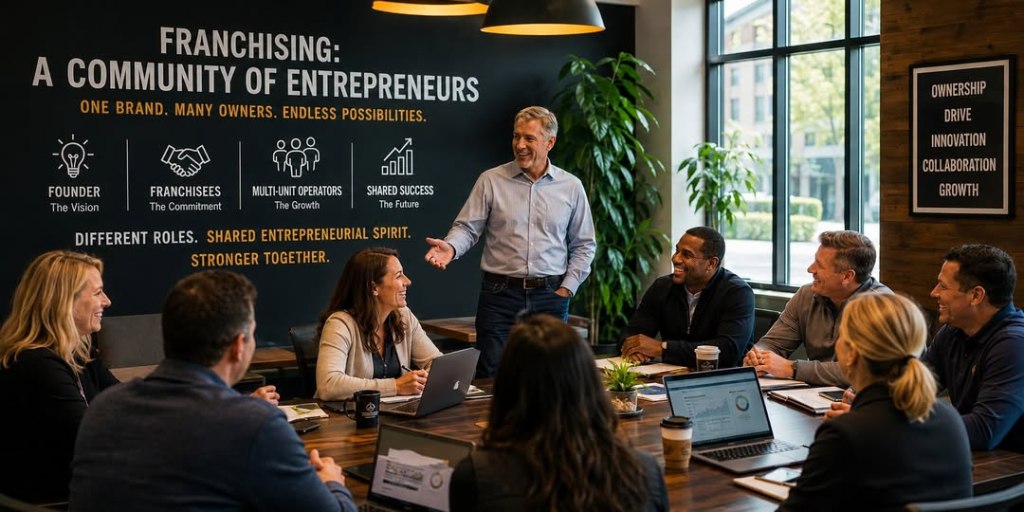
Franchising is, at its core, an entrepreneurial ecosystem.

Yet for some reason, the industry still occasionally struggles with the idea that franchisees are entrepreneurs.

Personally, I’ve never fully subscribed to that debate. Yes, over the years I’ve questioned it, analyzed it, and listened carefully to the arguments from both sides. But ultimately, I’ve always come back to the same conclusion.

There is absolutely no doubt that franchise founders are entrepreneurs. In fact, many are among the most driven entrepreneurs I’ve ever encountered. They often begin with little more than a vision, relentless belief, and a willingness to risk nearly everything in pursuit of building something meaningful. They create systems from scratch. They make mistakes. They adapt. They pivot. They survive uncertainty. They spend years, and often decades refining operations, shaping culture, strengthening the brand, and building something scalable that others can eventually become part of.

That is entrepreneurship in every sense of the word.

But franchisees? In my opinion, they are entrepreneurs too. Absolutely.

No, they may not have created the original concept. They may not have started from a blank sheet of paper. But let’s stop pretending that investing substantial capital, signing long-term leases, hiring employees, managing operations, taking on debt, risking family savings, and putting your reputation on the line somehow isn’t entrepreneurship.

That’s real risk.
That’s real pressure.
That’s real ownership.

And anyone who has ever sat across from franchisees during difficult times — recessions, inflationary periods, labor shortages, economic downturns, operational crises, family sacrifices, sleepless nights — understands very quickly that these are entrepreneurs fighting every day to build successful businesses.

Then we move into the world of multi-unit operators and especially multi-unit, multi-brand operators.

Without question, many of these individuals and groups are highly sophisticated entrepreneurs. In some cases, they’ve evolved into organizations with infrastructure, leadership teams, financial sophistication, operational expertise, development strategies, and growth visions that rival large independent companies. Some have mastered scaling businesses across multiple concepts, territories, and industries while balancing people, culture, profitability, operations, and long-term growth simultaneously.

Again, entrepreneurship at the highest levels.

So now let’s step back and look at what franchising really is.

You have founders who are entrepreneurs.
You have franchisees who are entrepreneurs.
You have multi-unit operators who are entrepreneurs.
You have multi-brand operators who are entrepreneurs.

Essentially, you have an entire organization filled with entrepreneurial blood flowing throughout every layer of the system.

And that’s where things become both incredibly powerful and, at times, incredibly challenging.

Because entrepreneurs don’t think like employees.

Entrepreneurs are independent by nature.
They’re opinionated.
They move fast.
They challenge ideas.
They look for opportunities.
They push boundaries.
They want input.
They want ownership.
They want to innovate.
They want to improve things.
And yes, sometimes they want to do things their own way.

Over the years, I’ve seen franchise systems thrive when they understand this dynamic properly. I’ve also seen systems create unnecessary friction because they attempt to suppress entrepreneurial behavior rather than channel it productively.

That’s a major mistake.

One of the biggest misconceptions in franchising is the belief that operational consistency and entrepreneurial thinking cannot coexist. In reality, the strongest franchise systems I’ve ever encountered are the ones that found a healthy balance between both.

Franchisees should never feel like employees, nor should they be treated as such because they are not employees of the franchisor. They are independent business owners who have invested their own capital, assumed substantial risk, and committed themselves to building successful businesses. At the same time, a franchise system cannot operate as a free-for-all where every operator simply does things their own way. The strength of franchising lies in finding the proper balance between entrepreneurial independence and system-wide consistency.

The best franchise cultures create alignment without destroying individuality.

That requires leadership.
Real leadership.

Not leadership through fear.
Not leadership through control.
Not leadership through constant enforcement.

Leadership through trust, communication, collaboration, and mutual respect.

Over the years, I’ve watched many franchise founders struggle during the transition from entrepreneur to franchisor. Building a successful unit and leading a network of entrepreneurs are two entirely different skill sets. Founders often begin with passion, instinct, and vision. But once franchisees enter the system, leadership becomes less about control and more about influence.

That shift is critical.

Franchisees want to feel heard.
They want transparency.
They want honesty.
They want to understand why decisions are made.
They want opportunities to contribute.
They want partnership.

And frankly, they should.

The healthiest franchise organizations create environments where entrepreneurial input is welcomed while still protecting the integrity of the brand. Advisory councils, collaborative planning, open communication, franchisee involvement, peer leadership groups, operational collaboration, and mutual accountability all become essential pieces of long-term cultural health.

When franchisees feel emotionally invested in the brand beyond their four walls, the entire system becomes stronger.

Unfortunately, I’ve also seen the opposite.

I’ve seen organizations where distrust develops between franchisor and franchisee.
I’ve seen founders become disconnected from operators.
I’ve seen franchisees become cynical.
I’ve seen corporate leadership teams unintentionally create “us versus them” environments.
I’ve seen entrepreneurial energy turn into frustration instead of innovation.

And once that happens, growth becomes much harder.

Culture always wins in the long run.

Always.

You can have great branding, sophisticated technology, beautiful locations, impressive development numbers, and strong marketing. But if the entrepreneurial spirit within the organization becomes fractured, eventually the cracks begin to show.

The franchise organizations that endure are the ones that create cultures where entrepreneurs can thrive together.

Not identically.
Not perfectly.
But collectively.

That takes maturity from everyone involved.

Founders must evolve into leaders capable of empowering other entrepreneurs.
Franchisees must recognize the value of systems and alignment.
Multi-unit operators must use their experience to strengthen organizations rather than divide them.
Corporate leadership must become facilitators of growth, not simply enforcers of rules.

Most importantly, everyone must remember they entered the same sandbox for a reason:
To build something bigger than themselves.

In my opinion, encouraging entrepreneurship within a franchise organization should never be viewed as dangerous. It should be viewed as one of the organization’s greatest assets… if properly aligned and nurtured.

After 40 years of working throughout franchising, I can say with confidence that the strongest systems are rarely built solely through operational control. They’re built through entrepreneurial alignment, trust, collaboration, shared vision, and culture.

That’s where real long-term growth happens.

If you’d like to have a discussion about how to encourage and strengthen the entrepreneurial mindset within your franchise organization while still protecting operational consistency and brand integrity, I’d welcome the opportunity to connect.

Entrepreneurship250 Officially Launches

A New Entrepreneurship Coaching & Advisory Platform Powered by Acceler8Success America

This week marks the official launch of Entrepreneurship250, a national initiative powered by Acceler8Success America—and it arrives with a clear purpose: to support both aspiring and current entrepreneurs in achieving and accelerating the American Dream.

Not someday.

Now.

Entrepreneurship250 is more than a platform. It is a movement grounded in the belief that the American Dream has always been built by entrepreneurs, and that the next generation of entrepreneurs will redefine it. A long-standing goal of the initiative is to help build that next generation… those new to business as well as generational entrepreneurs who will carry forward, evolve, and expand what has already been built.

At its core, Entrepreneurship250 is an Entrepreneurship Coaching & Advisory platform designed to meet individuals wherever they are in their journey.

For some, that journey is just beginning.

For others, it is already underway but filled with challenges, uncertainty, and unanswered questions.

And that is exactly where the distinction between Entrepreneurship Coaching and traditional Business Coaching becomes critically important.

Because they are not the same.

Business Coaching has long played an important role in helping companies improve performance. It is often centered on metrics… revenue, margins, systems, processes, efficiency, and accountability. It is structured, data-driven, and focused on measurable outcomes. In many ways, it lives in a world of black and white numbers.

And those numbers matter.

They always will.

But numbers alone do not build entrepreneurs.

Entrepreneurship Coaching is fundamentally different.

It is personal.

It focuses on the individual behind the business, their mindset, their discipline, their confidence, their decision-making ability, their resilience, and their capacity to lead through uncertainty. It recognizes that before a business can succeed, the entrepreneur must first be developed.

That is the biggest difference.

Business Coaching improves the business.

Entrepreneurship Coaching develops the person.

And in reality, the success of any business is directly tied to the growth of the individual leading it.

That is the foundation of Entrepreneurship250.

For aspiring entrepreneurs, the platform provides something that is often missing in today’s landscape… clarity. Many individuals are drawn to entrepreneurship for the promise of freedom, flexibility, and control over their future. But the path forward is rarely clear. Should they start a business? Buy one? Invest in a franchise? Partner with others? Wait? Move forward?

Entrepreneurship250 is designed to help answer those questions.

Not with generic advice, but through structured coaching and advisory that builds understanding, confidence, and direction.

For relatively new entrepreneurs, the platform addresses a different reality.

The early stages of business ownership can be overwhelming. What begins with excitement quickly evolves into responsibility. Decisions carry weight. Time becomes compressed. Mistakes become more costly. Many new entrepreneurs find themselves reacting instead of leading, surviving instead of building.

Entrepreneurship Coaching helps bridge that gap.

It provides structure where there is chaos. Perspective where there is doubt. Discipline where there is inconsistency. It helps transform activity into intentional action.

For current entrepreneurs, the need often shifts again.

Growth introduces complexity. Success introduces pressure. Leadership requires evolution. Many business owners reach a point where operational improvements alone are not enough. The challenge is no longer just about systems or revenue, it is about the entrepreneur themselves.

Burnout. Indecision. Loss of vision. Fear of expansion. Difficulty delegating. Isolation.

These are not spreadsheet problems.

They are human challenges.

And they require a different kind of support.

Entrepreneurship250 addresses that reality directly by focusing on the personal and professional development of the entrepreneur… not just the performance of the business.

That does not mean Business Coaching is not valuable.

It absolutely is.

Strong businesses require strong systems, strong financial management, and strong operational execution. But without a strong entrepreneur leading the way, even the best systems will eventually break down.

Entrepreneurship Coaching ensures that the person behind the business continues to grow alongside it.

That is where real sustainability is built.

That is where long-term success is created.

And that is why the launch of Entrepreneurship250 matters.

It reflects a broader shift in how entrepreneurship is being approached. In a rapidly changing world shaped by technological advancement, economic shifts, and evolving career paths, more individuals are turning toward entrepreneurship as a means of creating opportunity, independence, and long-term security.

But entrepreneurship is not an escape.

It is a responsibility.

It is a commitment to growth, to learning, to adapting, and to leading, often in the face of uncertainty.

Entrepreneurship250 is designed to support that journey at every stage.

Through coaching.

Through advisory.

Through real conversations about what entrepreneurship actually requires, and what it truly offers.

Because the American Dream is not simply something to be imagined.

It is something to be built.

And for those willing to pursue it, Entrepreneurship250 stands as a platform dedicated to helping make that possible, by developing entrepreneurs who are ready not only to start businesses, but to sustain them, grow them, and lead them forward… today and for generations to come.

To learn more about the Entrepreneurship250 Initiative and how it supports aspiring and current entrepreneurs, connect with Paul Segreto at paul@acceler8success.com.

After 2,000+ Articles, It’s Time for a Higher Standard

Over the years at Acceler8Success Café, I’ve written over two thousand articles.

On franchising.
On restaurants.
On small business ownership.
On leadership, growth, survival, reinvention, and resilience.

Some were tactical. Some philosophical. Some urgent. Some reflective. All written with the intention of helping entrepreneurs navigate an increasingly complex business landscape.

But recently, I’ve been asking myself a different question.

Is more content what entrepreneurs actually need?

We live in an era where information is infinite. Advice is everywhere. Every scroll offers another expert, another framework, another checklist promising clarity.

Yet clarity feels more elusive than ever.

The problem is no longer access to knowledge. The problem is discernment.

After four decades as an entrepreneur, operator, executive, advisor, and franchise professional, I’ve come to a simple conclusion:

Entrepreneurs don’t need more noise. They need sharper thinking.

They don’t need more hacks. They need discipline.

They don’t need urgency. They need deliberation.

Looking back at the volume of what I’ve written, I’m proud of the work. But I also recognize something important. Content alone does not build stronger businesses. Leadership does. Financial discipline does. Emotional resilience does. Strategic clarity does.

So this next season of Acceler8Success Café will look different.

Less coverage.
More conviction.

Less reacting to trends.
More defining standards.

Less publishing for the sake of publishing.
More writing that challenges how we think about building, scaling, franchising, stabilizing, and leading.

In the weeks ahead, I’ll be focusing on a handful of themes that matter deeply in 2026 and beyond:

The discipline of deliberate leadership.
The realities behind strategic franchising.
Financial clarity in restaurant and franchise operations.
The emotional cost of entrepreneurship.
And the evolving meaning of the American Dream through business ownership.

Not every business should franchise.
Not every growth opportunity is healthy.
Not every busy restaurant is profitable.
Not every entrepreneur is prepared for the weight of ownership.

These aren’t popular statements. They’re honest ones.

I’ve spent decades watching operators succeed quietly and fail loudly. I’ve seen growth mask structural weakness. I’ve seen ego interfere with EBITDA. I’ve seen brands expand before they were ready. I’ve also seen disciplined leadership build durable, generational enterprises.

The difference was rarely access to information.

It was judgment.

If you’ve followed my writing for years, thank you. That foundation matters. But going forward, my intention is simple.

I’m not interested in publishing more. I’m interested in publishing better.

I’m not here to compete with the noise. I’m here to elevate the conversation.

Acceler8Success Café will continue. But it will reflect a more deliberate standard. A higher bar. A sharper lens.

If you’re serious about building thoughtfully in 2026, about stabilizing what you’ve built, about refranchising with intention, about strengthening culture, profitability, and revenue before chasing expansion — stay with me.

If you’re looking for shortcuts, surface-level advice, or quick inspiration without structure, there is no shortage of that elsewhere.

Entrepreneurship has always been a serious pursuit. It deserves serious thinking.

This is the next chapter.

And I’m writing it with greater intention than ever.

So, if you are building, scaling, or working to stabilize a business and you recognize that clarity, not more content, is what you truly need, then it may be time for a different level of conversation.

Acceler8Success America was never meant to be just a content channel. It was built as a strategic business advisory platform dedicated to strengthening entrepreneurs, franchise brands, and restaurant operators who are serious about building durable enterprises.

This next chapter reflects that commitment.

Through Acceler8Success America, we work with leaders who want disciplined growth, structural clarity, and financial strength, not surface-level motivation. The focus is deliberate leadership, measurable profitability, and long-term enterprise value.

If you are ready to think differently about your business and approach the rest of 2026 with intention rather than reaction, reach out directly.

Schedule a confidential advisory discussion.
Email me.
Send a direct message.

Let’s determine whether your next move strengthens the foundation… or simply adds motion.

The American Dream is still alive. But it rewards discipline.

— Paul

e-IDEA: A Proven Framework for Franchise Leadership and Growth

In 2009, franchising was not expanding. It was pausing.

The financial crisis had brought franchise development to a near standstill. Emerging brands could not grow. Established brands could not sell units. Prospective franchisees could not secure financing. Confidence was fragile. Momentum had disappeared.

At the same time, something new was quietly emerging.

Social media was beginning to take hold. Platforms like Facebook, LinkedIn, and Twitter were no longer curiosities. They were becoming infrastructure. Yet most franchise organizations did not understand what they were seeing. Many dismissed it as a fad. Others viewed it tactically, as another advertising channel. Very few understood it strategically. Fewer still understood it operationally.

What was missing was not tools. It was structure.

Working closely with hundreds of franchise organizations during this period, I saw the same pattern repeat itself. Leaders knew social media mattered, but they did not know how to approach it. Marketing teams experimented inconsistently. Franchise development teams ignored it. Operations teams viewed it as irrelevant. There was no shared framework, no disciplined approach, and no integration into the broader organization.

In response, I developed a framework called e-IDEA.

It was simple by design. It was intended to bring clarity to something that felt chaotic.

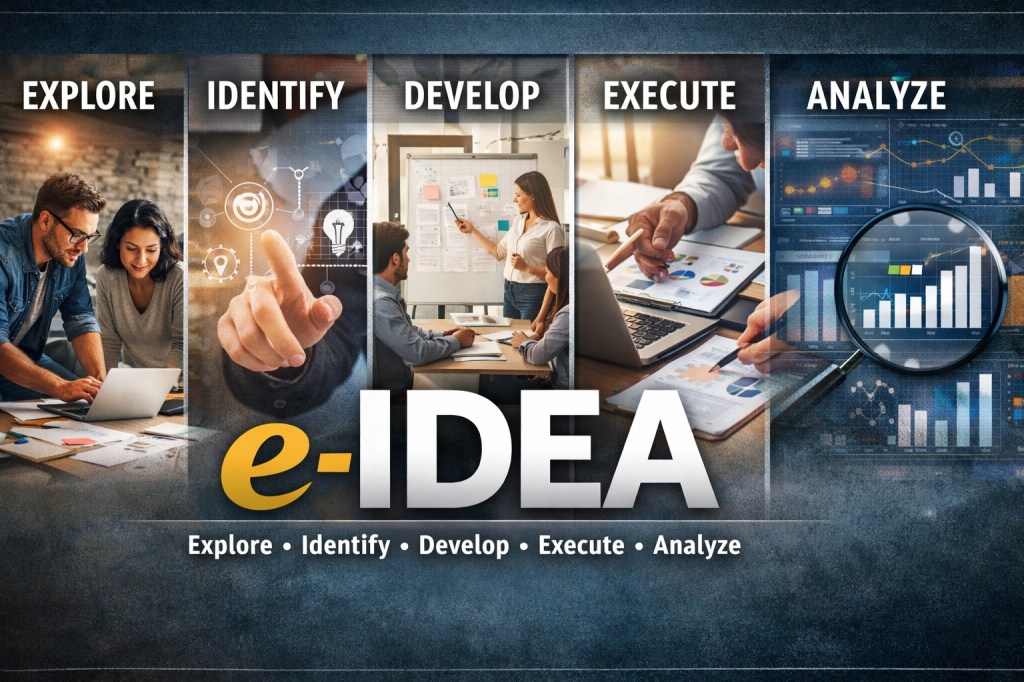
e-IDEA stood for Explore, Identify, Develop, Execute, Analyze.

Franchise Social Media: A Look Back to 2009 and Social Media e-IDEA

At the time, it was created to help franchise organizations understand and integrate social media. What became clear very quickly, however, was that e-IDEA was not about social media at all. It was about disciplined organizational thinking. It was about how franchise organizations evaluate, adopt, and integrate anything new.

More than fifteen years later, I still use e-IDEA to this day. It remains one of the foundational frameworks guiding my advisory work with franchise organizations, restaurant brands, and entrepreneurs. Whether evaluating new technology, developing franchise growth strategies, strengthening operational systems, or helping emerging brands find clarity, the same disciplined process applies. The tools have evolved. The framework has not. Because e-IDEA was never about a moment in time. It was about creating a reliable method for navigating uncertainty, opportunity, and change.

Explore was the beginning. It required curiosity without commitment. Franchise organizations needed to observe what was happening without prematurely deciding what it meant. This was where many failed. They either ignored social media entirely or rushed into it without understanding it. Exploration required stepping back. Watching how franchisees, customers, competitors, and emerging brands were using these platforms. Understanding behavior before determining strategy. Exploration was about awareness.

Identify came next. Exploration created awareness, but awareness alone was not actionable. Franchise organizations needed to identify where social media intersected with their specific objectives. For franchise development, it meant identifying prospective franchisees where they were already engaging. For operations, it meant identifying communication opportunities with franchisees and field teams. For marketing, it meant identifying how customers interacted with brands in public, visible ways. Identification brought focus. It answered the question: where does this matter to us?

Develop transformed focus into structure. This was where strategy became intentional. Franchise organizations needed to develop policies, guidelines, and approaches aligned with their culture and objectives. Franchisees needed clarity on how to represent the brand. Development teams needed processes to engage prospective candidates professionally. Marketing teams needed defined voice, tone, and purpose. Development ensured that social media was not random activity, but organized behavior aligned with the brand.

Execute was where discipline was tested. Execution was not about activity for its own sake. It was about consistent, intentional implementation. Franchise organizations that succeeded were not those who posted the most. They were those who communicated consistently, professionally, and purposefully. Execution turned strategy into presence. It demonstrated commitment.

Analyze completed the cycle. This was where learning occurred. Franchise organizations needed to evaluate what worked, what did not, and why. Not just through vanity metrics, but through meaningful outcomes. Were better franchise candidates emerging? Were franchisees more engaged? Were customers more connected to the brand? Analysis provided feedback. It ensured that exploration would begin again, informed by experience rather than assumption.

What became clear over time was that e-IDEA extended far beyond social media.

It became a framework for franchise development itself. Organizations exploring new markets could apply the same discipline. Explore the market. Identify viable territories. Develop a structured development strategy. Execute intentionally. Analyze results and refine.

It applied equally to franchise operations. Explore operational challenges. Identify root causes. Develop improved systems. Execute changes. Analyze performance.

It applied to marketing, leadership, technology adoption, franchisee recruitment, culture development, and brand positioning.

It applies today to artificial intelligence, digital transformation, and the evolving expectations of franchisees and customers. The principle remains unchanged. New tools should never be adopted reactively. They should be integrated deliberately.

e-IDEA was never about tools. It was about thinking.

Franchise organizations that struggled during periods of change often skipped steps. They executed without exploring. They developed without identifying. They adopted trends without analyzing outcomes. Their actions were reactive rather than deliberate.

Franchise organizations that succeeded approached change with structure. They explored before committing. They identified where opportunities aligned with their objectives. They developed intentional strategies. They executed consistently. They analyzed continuously.

This discipline created stability in unstable times.

Looking back now, social media is no longer questioned. It is embedded. It is infrastructure. What was once dismissed as a fad became essential.

The lesson was never about social media.

It was about how organizations respond to change.

New technologies will continue to emerge. New platforms will appear. New operational challenges will arise. Franchise organizations that succeed will not be those who react fastest. They will be those who respond most deliberately.

They will explore.

They will identify.

They will develop.

They will execute.

They will analyze.

I developed e-IDEA in response to uncertainty. I continue to use it today because uncertainty never disappears. It simply changes form.

Frameworks like e-IDEA ensure that regardless of what changes, the way we think remains disciplined, intentional, and aligned with long-term success.


About the Author

Paul Segreto brings over forty years of real-world experience in franchising, restaurants, and small business growth. Recognized as one of the Top 100 Global Franchise and Small Business Influencers, Paul is CEO & Founder of Acceler8Success America, and is the driving voice behind Acceler8Success Café, a daily content platform that inspires and informs thousands of entrepreneurs nationwide. A passionate advocate for ethical leadership and sustainable growth, Paul has dedicated his career to helping entrepreneurs, founders, franchise executives, and leadership teams achieve clarity, balance, and lasting success through purpose-driven action.


About Acceler8Success America

Acceler8Success America is a strategic advisory and development organization dedicated to helping entrepreneurs, small business owners, and franchise professionals accelerate The American Dream.

Through a combination of strategic consulting, results-focused coaching, and empowering content, Acceler8Success America provides the tools, insights, and guidance needed to start, grow, and scale successfully in today’s fast-paced world.

With deep expertise in entrepreneurship, franchising, restaurants, and small business development, Acceler8Success America bridges experience and innovation, supporting current and aspiring entrepreneurs as they build sustainable businesses and lasting legacies across America.

Learn more at Acceler8SuccessAmerica.com

Seventeen Years of Content. One Clear Mission. Accelerating the American Dream.

On this day, February 10, 2019, Acceler8Success Cafe officially opened its doors, marking the next natural milestone in a journey that began a full decade earlier as FranchisEssentials, first introduced in February 2009. What started as a focused effort to share practical, experience-driven insights around franchising and business ownership steadily evolved into something broader, deeper, and far more intentional. Acceler8Success Cafe became a digital café built for entrepreneurs who believe in accelerating the American Dream—from startup, to development, to the creation of enduring legacy brands.

Today, just a couple of months into the rebranding of Acceler8Success to Acceler8Success America, the momentum feels especially energizing. This moment represents far more than a name change. It signals the beginning of a new chapter and the continued expansion of a growing ecosystem designed to inform, challenge, and support entrepreneurs, brand founders, franchisors, restaurant operators, and small business owners across the country. The vision is clearer than ever: to serve as a trusted resource and guide through every stage of the entrepreneurial journey.

A sincere and heartfelt thank you goes out to everyone who has contributed along the way—our readers, subscribers, collaborators, contributors, and partners. Your engagement, feedback, and trust have helped shape Acceler8Success Cafe into one of today’s leading online resources for entrepreneurship. That support has never been assumed, and it has always been deeply appreciated.

If you didn’t already know, Acceler8Success Cafe is open 24/7/365. Our digital café never closes. It’s a place to stop in whenever you need perspective, clarity, encouragement, or a practical takeaway you can put to work immediately. At times, it is also a place where we intentionally challenge conventional thinking and ask hard questions about business practices that directly affect our readers. Growth does not come from comfort alone, and thoughtful challenge is often where real progress begins. Whether you’re building a brand from the ground up, growing a single-unit operation, or navigating the complexities of scaling, there’s always something here designed to meet you where you are and push you to think more deliberately about where you’re going.

With more than two thousand articles published to date, Acceler8Success Cafe has grown into a deep and continually expanding library of insights, resources, and real-world guidance. And this is only the beginning. As we look ahead to 2026, significant growth and exciting new opportunities are on the horizon, especially for our subscribers, whether through our website or the Acceler8Success Cafe LinkedIn Newsletter, who want to stay close to the conversation and ahead of the curve.

If you’re not yet part of our growing community, we’d truly love to have you join us. If you find value in what we share, please consider subscribing and spreading the word. Your support fuels everything we do and helps us continue building something meaningful for entrepreneurs everywhere.

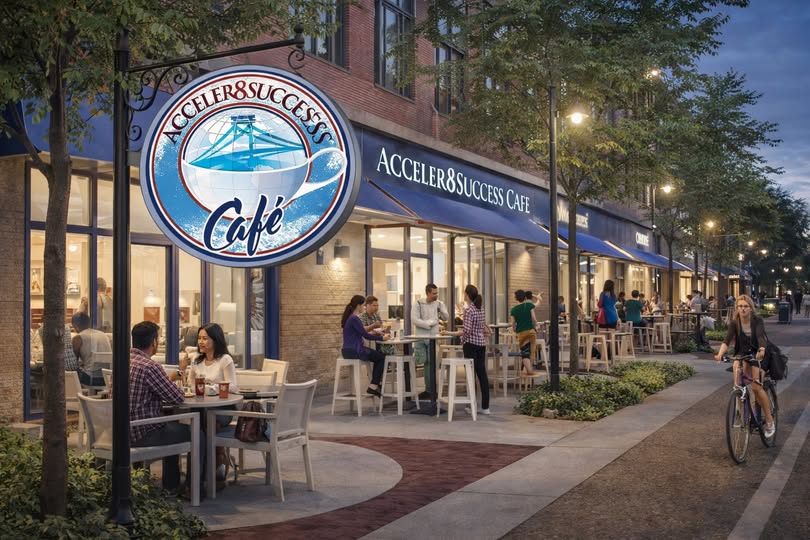
Who knows, perhaps 2026 will close with the opening of the very first brick-and-mortar Acceler8Success Cafe. It’s an interesting thought, and with genuine interest already being expressed, it’s no longer just a passing idea. For now, it remains a possibility worth keeping an eye on, because sometimes the most meaningful ventures begin exactly this way. Possibly, we may be able to chat about accelerating the American Dream together… over an actual cup of coffee!


About the Author

Paul Segreto brings over forty years of real-world experience in franchising, restaurants, and small business growth. Recognized as one of the Top 100 Global Franchise and Small Business Influencers, Paul is the driving voice behind Acceler8Success Café, a daily content platform that inspires and informs thousands of entrepreneurs nationwide. A passionate advocate for ethical leadership and sustainable growth, Paul has dedicated his career to helping founders, franchise executives, and entrepreneurial families achieve clarity, balance, and lasting success through purpose-driven action.


About Acceler8Success America

Acceler8Success America is a comprehensive business advisory and coaching platform dedicated to helping entrepreneurs, small business owners, and franchise professionals achieve The American Dream Accelerated.

Through a combination of strategic consulting, results-focused coaching, and empowering content, Acceler8Success America provides the tools, insights, and guidance needed to start, grow, and scale successfully in today’s fast-paced world.

With deep expertise in entrepreneurship, franchising, restaurants, and small business development, Acceler8Success America bridges experience and innovation, supporting current and aspiring entrepreneurs as they build sustainable businesses and lasting legacies across America.

Learn more at Acceler8SuccessAmerica.com

The Entrepreneurial Transition Inside Franchising

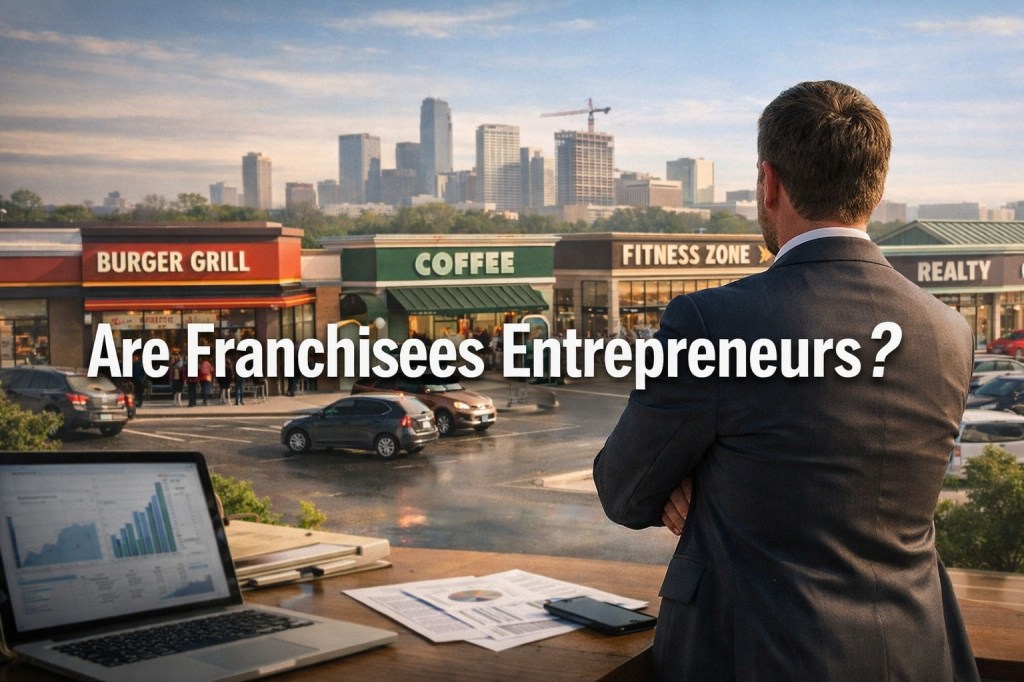
Are franchisees entrepreneurs? If you look only at the black-and-white definitions, the answer feels deceptively simple. A franchisee is a business owner licensed to operate a proven brand, paying fees in exchange for systems, trademarks, and support. An entrepreneur, by definition, creates something new, assumes most of the risk, and enjoys most of the reward. On paper, one appears structured and guided, the other inventive and self-directed. Yet those definitions miss the gray space where real-world ownership lives, especially as a franchisee grows beyond a single location.

At the entry level, a first-time franchisee often looks more like a disciplined operator than a classic entrepreneur. The model is established, the playbook is written, and the expectations are clear. Risk still exists, but it is partially mitigated by brand recognition, operating systems, and collective learning. Vision, at this stage, is often borrowed rather than invented. The goal is execution, not reinvention. Success depends on following systems, hiring well, managing cash flow, and delivering consistency. In that moment, calling the franchisee an entrepreneur may feel like a stretch to some purists.

But that perspective freezes the franchisee at day one and ignores what happens next.

The moment a franchisee begins thinking beyond survival and into growth, the equation changes. Opening a second location introduces new layers of risk that are no longer shared equally with the franchisor. Capital exposure increases. Management complexity expands. The franchisee is no longer simply running a store; they are building an organization. Decisions about people, culture, leadership structure, real estate, and market prioritization become theirs to own. The safety net of “just follow the system” starts to thin.

With each additional location, the franchisee’s role shifts further away from operator and closer to architect. Vision is no longer limited to executing a model; it becomes about designing a portfolio. Strategy enters the conversation. Questions around scale, timing, financing, and long-term exit begin to matter more than daily transactions. At this point, risk is no longer confined to a single unit’s performance. One bad decision can affect an entire multi-unit enterprise.

The entrepreneurial mindset becomes even more pronounced when a franchisee expands across multiple brands. Now the individual is not just scaling within a framework but selecting frameworks themselves. Evaluating concepts, assessing markets, diversifying revenue streams, and balancing brand-specific risks requires the same instincts as launching a new venture. While the brands themselves may not be original creations, the ecosystem being built absolutely is. The entrepreneur is not inventing the product, but they are inventing the business behind the products.

This is where the gray area provides the clearest answer. Entrepreneurship is not solely about creating something from scratch. It is about ownership of outcomes, tolerance for uncertainty, and the ability to allocate resources toward future opportunity. A multi-unit, multi-brand franchisee carries most of the risk tied to growth decisions and enjoys most of the upside if those decisions succeed. That balance of risk and reward aligns far more closely with entrepreneurship than with simple business operation.

There is also a psychological transition that occurs. Early-stage franchisees often think in terms of compliance and performance. Entrepreneurial franchisees think in terms of leverage and possibility. They ask different questions. How do I build a leadership team that can scale without me? How do I create enterprise value beyond cash flow? How do I turn locations into assets rather than jobs? These are not operator questions. They are entrepreneurial ones.

So are franchisees entrepreneurs? Not automatically. Not on day one simply by signing a franchise agreement. But many become entrepreneurs through growth, complexity, and intentional risk-taking. The transition from single-unit operator to multi-unit owner, and from single-brand participant to portfolio builder, strengthens and ultimately demands an entrepreneurial mindset.

In that sense, franchising can be less a shortcut around entrepreneurship and more a pathway into it. For those who choose to stay small and operational, the franchisee role may remain primarily that of a business owner. For those who expand, diversify, and build something larger than themselves, the line fades quickly. At that point, the question answers itself.


About the Author

Paul Segreto brings over forty years of real-world experience in franchising, restaurants, and small business growth. Recognized as one of the Top 100 Global Franchise and Small Business Influencers, Paul is the driving voice behind Acceler8Success Café, a daily content platform that inspires and informs thousands of entrepreneurs nationwide. A passionate advocate for ethical leadership and sustainable growth, Paul has dedicated his career to helping founders, franchise executives, and entrepreneurial families achieve clarity, balance, and lasting success through purpose-driven action.


About Acceler8Success America

Acceler8Success America is a comprehensive business advisory and coaching platform dedicated to helping entrepreneurs, small business owners, and franchise professionals achieve The American Dream Accelerated.

Through a combination of strategic consulting, results-focused coaching, and empowering content, Acceler8Success America provides the tools, insights, and guidance needed to start, grow, and scale successfully in today’s fast-paced world.

With deep expertise in entrepreneurship, franchising, restaurants, and small business development, Acceler8Success America bridges experience and innovation, supporting current and aspiring entrepreneurs as they build sustainable businesses and lasting legacies across America.

Learn more at Acceler8SuccessAmerica.com

20 Reasons Not to Franchise Your Business (Until You’re Ready… Or Not!)

Franchising is often viewed as the ultimate badge of success for business owners. The idea of expanding rapidly with someone else’s capital while gaining brand recognition and market share is understandably attractive. But the truth is, franchising is not a shortcut to growth, nor is it a guaranteed path to fortune. In fact, for many business owners, it can become a burden financially, emotionally, and operationally if pursued prematurely or for the wrong reasons.

Before you take the leap into franchising, it’s essential to understand why you shouldn’t. These aren’t roadblocks meant to discourage ambition but rather reality checks that, when addressed, will either affirm your business is ready to scale or save you from a costly and painful detour. Below are 20 reasons why you should not attempt to franchise your business, at least not yet.

20 Reasons Why You Should Not Franchise Your Business

  1. Your Business Isn’t Profitable Enough
    If you aren’t consistently generating strong profits, there’s no business model to replicate, let alone sell to others.
  2. You Don’t Have Documented Systems
    Without clearly defined and repeatable operational procedures, your business can’t be taught, and franchising is, at its core, a teaching model.
  3. You Are the Business
    If your business relies heavily on your personal involvement, personality, or expertise, it’s not yet ready to be duplicated.
  4. You Don’t Understand Franchising
    Franchising isn’t just growth, it’s legal, operational, marketing, and support infrastructure with very specific responsibilities to franchisees.
  5. You’re Desperate for Capital
    Franchising should never be a Band-Aid for cash flow problems. You’re selling a business model, not just collecting franchise fees.
  6. Your Brand Isn’t Established
    Weak branding makes it hard to market and differentiate your franchise from others, leading to confusion or poor consumer reception.
  7. You Can’t Support Franchisees
    Without the infrastructure to provide training, marketing assistance, and ongoing support, your franchisees will struggle, and so will your brand.
  8. You Don’t Like Managing People
    Franchising involves managing relationships, solving disputes, and leading by influence, not command. If this doesn’t appeal to you, think twice.
  9. You’re Not Ready for Legal Compliance
    Franchise laws are strict, vary by state, and require specialized legal documentation and ongoing disclosures… a major commitment.
  10. You Don’t Have a Unique Selling Proposition
    If your concept isn’t truly different or better, why would someone invest their future into your business instead of starting their own?
  11. You Can’t Let Go
    Franchising requires letting others run your concept their way within your system. Micromanagement doesn’t scale.
  12. Your Current Location Isn’t Strong Enough
    If your flagship store isn’t a well-oiled machine with strong customer reviews and a loyal base, it won’t serve as a convincing model.
  13. You Haven’t Tested in Multiple Markets
    A business that works in one neighborhood may not work in another. Proving adaptability across markets is crucial.
  14. You Lack Marketing & Sales Strategy
    You’ll need a strategy to attract franchisees, sell territories, and market the brand and that takes time, talent, and money.
  15. You Underestimate the Cost
    Franchising costs more than most anticipate. From legal fees to training manuals, marketing, and franchisee support, it adds up fast.
  16. You’re Not Ready to Train Others
    Can you break down every role, process, and nuance into an understandable training program that others can replicate?
  17. You Don’t Have a Clear Vision
    Without a long-term roadmap for growth, brand standards, and expansion, you’ll struggle to lead a network of franchisees effectively.
  18. You Think Franchising Means Less Work
    The reality: franchising is more work, more responsibility, and less control, especially at the beginning.
  19. You Haven’t Considered Alternative Growth Models
    Franchising isn’t the only way to grow. Corporate-owned expansion might be more suitable.
  20. You’re Not Emotionally Ready
    Franchisees will challenge you, markets will shift, and expectations will rise. You must be resilient, strategic, and adaptable.

After the Reality Check: Rethink, Refocus, Rebuild

If several of these reasons resonated with you, that’s not a signal to give up, it’s a wake-up call to double down on strengthening your existing business. Use this pause to refine your systems, train your team, define your brand, test your concept in other locations, and build the infrastructure that can eventually support multiple units, franchised or not.

Going through this process may prove to be one of the best decisions you’ll ever make. Even if you ultimately decide not to franchise, your business will be stronger, more efficient, and better positioned to scale. You may discover that developing company-owned locations is a better fit. Or, after building a rock-solid foundation and developing the right support systems, you might find franchising to be the logical next step… one you’re finally ready for.

Either way, you win because a well-built business is always the best growth strategy.


About the Author

Paul Segreto brings over forty years of real-world experience in franchising, restaurants, and small business growth. Recognized as one of the Top 100 Global Franchise and Small Business Influencers, Paul is the driving voice behind Acceler8Success Café, a daily content platform that inspires and informs thousands of entrepreneurs nationwide. A passionate advocate for ethical leadership and sustainable growth, Paul has dedicated his career to helping founders, franchise executives, and entrepreneurial families achieve clarity, balance, and lasting success through purpose-driven action.


About Acceler8Success America

Acceler8Success America is a comprehensive business advisory and coaching platform dedicated to helping entrepreneurs, small business owners, and franchise professionals achieve The American Dream Accelerated.

Through a combination of strategic consulting, results-focused coaching, and empowering content, Acceler8Success America provides the tools, insights, and guidance needed to start, grow, and scale successfully in today’s fast-paced world.

With deep expertise in entrepreneurship, franchising, restaurants, and small business development, Acceler8Success America bridges experience and innovation, supporting current and aspiring entrepreneurs as they build sustainable businesses and lasting legacies across America.

Learn more at Acceler8SuccessAmerica.com

A 2026 Commitment to Clarity, Accountability, and Action

Happy New Year.
Not as a greeting, but as a promise.

I will not be louder.
I will be clearer.

After a disappointing couple of years and a past year largely defined by personal health challenges, I enter 2026 with perspective I didn’t have before. I’ve learned what truly matters. I’ve learned what drains energy and what deserves it. And I’ve learned that clarity earned through adversity is far more powerful than confidence built on momentum alone.

As 2026 begins, I will stop chasing momentum and start moving with intention.
I will measure progress by alignment, not activity.
I will remember that speed without direction is not progress, and noise is not leadership.

I will bring everything I’ve built into one clear ecosystem.
Coaching, advising, writing, podcasting, community, unified by purpose.
I will not build more for the sake of more.
I will build what belongs together.

In 2026, my laser focus will be this:
I will help others succeed.
I will help them achieve their dreams.
Not mine reflected through them, but theirs, clearly defined, honestly pursued, and responsibly built.

I will be a source of clarity when the noise is overwhelming.
I will offer perspective when shortcuts are tempting.
I will speak truth, even when it’s uncomfortable, because clarity always costs less than confusion.

I will not convince people to become entrepreneurs.
I will stand beside those who already feel the pull.
I will help them pursue ownership wisely, intentionally, and with eyes wide open.

I will ensure everything I stand for is real.
Not hype.
Not slogans.
But the belief that the American Dream is alive,
and that it requires discipline, responsibility, and ownership.

I will speak calmly and deliberately.
I will not rush to comment.
I will speak when it matters.
I will challenge assumptions instead of chasing relevance.

I will meet entrepreneurs where they are,
before the leap, in the chaos, and in the responsibility that follows growth.
I will not rescue them.
I will help them see clearly enough to lead themselves and their businesses forward.

I will choose depth over volume.
I will say no faster.
I will partner with intention.
I will do fewer things, better.

I will build communities rooted in accountability, not applause.
Smaller. Stronger. Serious.
Places where standards matter and progress is earned.

And this matters deeply to me:

For anyone who has ever had a disappointing experience with me,
for anyone whose expectations were not met,
for anyone who, in the past year or in years past,
walked away feeling let down or unresolved,
I will not defend it with explanations.
I will not minimize it with words.

I will work tirelessly to resolve it and to prove otherwise through action,
by creating new value,
by exceeding expectations where I once fell short,
and by ensuring the outcome is meaningfully better than before.

Through consistency.
Through follow-through.
Through showing up fully and intentionally.

Not promises.
Not positioning.
Results.

I will put my long-form thinking into the world, not to teach tactics, but to tell the truth.
The truth about pressure.
The truth about doubt.
The truth about resilience.
And the quiet dignity of building something that lasts.

I will align everything I do.
Strategy will feed content.
Content will feed community.
Community will feed opportunity.

Nothing will be scattered.
Nothing will be forced.

I will not accelerate chaos.
I will accelerate clarity.

Because growth without intention is empty.
And success without direction is fragile.

So as this New Year begins, this is my commitment:
To show up focused.
To serve relentlessly.
To help others win.

And if I ever miss the mark…
tell me.
I will listen.
And together, we’ll determine the shift or pivot needed to get it right.

This is who I will be in 2026.
This is the standard I will hold.
This is the work I will do.

And this is the story I will live.

Happy New Year to you and your family, and to all pursuing the American Dream.

Paul Segreto