Tag: franchise social media

Social Media Metrics: Not Yet a Science!

In continuing to simplify Social Media, let’s take a peek at Social Media metrics, or better yet, how to figure out if it’s working effectively for YOU and your franchise organization!

If, the net result of online activity adds up to effective social media engagement, then, what is the monetary value of a visit, comment, link or friend? Well, the ONLY honest answer is, “it depends.” Only YOU know how much these interactions matter to your brand, and how they relate to YOUR goals and objectives.

Measuring Social Media is not yet a science. Nor, is it rocket science! But, we can break it down to five key factors, Attention, Participation, Authority, Influence, and what I like to call the “X-Factor,” Sentiment.

Attention
– The amount of traffic to your content for a given period of time.  Similar to the standard web metrics of site visits and page/video views.

Participation – The extent to which users engage with your content in a channel.  Think blog comments, Facebook wall posts, YouTube ratings, or widget interactions.

Authority – The inbound links to your content – like trackbacks & inbound links to a blog post or sites linking to a YouTube video.
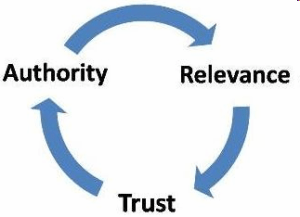
Social Media Authority
Influence – The size of the user base subscribed to your content. Subscribers for blogs, feed or email
Followers on Twitter or Friendfeed. Fans of your Facebook page.

Sentiment, the “X-Factor” – The spirit driving user participation, because it really matters!
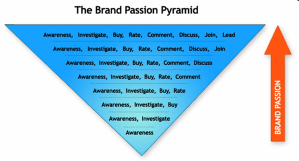
brand passion

Yesterday, we noted some specific goals that are typically listed in discussions with franchise executives about venturing into Social Media and determining exactly what they would like to accomplish. This list includes:

Create or improve brand awareness
Increase business at unit level
Create or improve interest in franchise opportunity
Generate qualified franchise sales leads
Improve franchise sales efficiency
Improve communications throughout franchise system
Locally, regionally or nationally

But, as your Social Media program is moving along, don’t lose site of the not so obvious results that are often mixed in with the obvious results.

System-wide revenue – obvious
Customer satisfaction – not so obvious
Corporate profitability – obvious
System-wide stability – not so obvious
Franchise development – obvious
Vendor / Supplier reaction – not so obvious

I look forward to your questions and comments.

*This post was originally published on this site March 2011


Bookmark and Share

An Hour a Day with The Big Three Social Networks

I often hear many individuals state they don’t have enough time in a day for social media. Well, I know we can all squeeze in an hour of social media work somewhere, but the key is to do it efficiently to accomplish doing it effectively.

Just like eating an elephant, take one bite at a time. Never try to do too much at one time. And, try to make all your social media activity relevant and in line with your goals and objectives for entering social media in the first place. Once you’re past the development stage of setting up accounts at the Big Three social networks, LinkedIn, Facebook and Twitter, including establishing “complete” profiles, dedicate 15 minutes to each network which I recommend doing so at the beginning of the day. Total time spent – 45 minutes.

Check previous days’ activity, making sure to use each networks “notifications” features effectively. Respond to direct comments and requests accordingly. Check discussions and respond as necessary, review other individuals’ responses, always keeping an eye open for new contacts. Post a discussion, status statement as appropriate Again, keep your goals and objectives in mind. Last, post a few tidbits of information through links to items of interest to your target group. Hey, I hate to beat dead horse here, but make sure everything you do is in line with your goals and objectives for being involved in social media in the first place.

Establish Google Alerts so you know what is being said about you or your brand throughout the day. As you check your email, whether by computer or mobile device, take a glance at any alerts that have come through, and only immediately address negative comments. Then, at the end of your day, take five minutes to review each of the three networks activity, respond only to activity that is very pertinent or urgent, and mentally prepare for your next morning’s activity. This will give you some time to think about discussion responses, etc. Total time spent – 15 minutes.

Shortcuts and Tools Help!

As for posting links to tidbits of information, as you progress through the day, keep an eye open for information through newsletters you subscribe to and in reading news online. When you find something of relevance, bookmark it for later in the day. Use tiny urls to convert long links to manageable links and to accommodate 140 characters within Twitter. Learn how to use key tools such as Facebook applications that convert your Facebook activity to Twitter activity, and applications that enable you to post in advance throughout the week.

*This post was originally published on this site March 2011


Bookmark and Share

Starting your social media program with the “Big Three”

Once your social media strategy has been developed, the resources have been committed and everyone is on board, it’s time to put the plan into action. Just like when you first started to read and count, you began with the “Big Three” of A-B-C and 1-2-3. Well, in social media, we’ll start with the Big Three of L-F-T, otherwise known as LinkedIn, Facebook and Twitter.

Here are some very simple activity highlights that should help you along:

LinkedIn

Develop company LinkedIn profile
Each LinkedIn group has a discussion feature
Start out responding & answering questions
Earn the right to post questions / discussions
Be proactive in LinkedIn Q & A forum

Facebook

Create Facebook page for your brand
Frequently post items of interest & links
Routinely post information about your concept
Utilize photos, videos & blogs

Twitter

Post links that “touch” your franchise concept
Post links to your concept’s website and blogs
Post links to press releases, events and appearances
Search and follow celebrities for causes to align with
Research followers’ profile and follow significant individuals
Search and follow individuals and companies within ideal franchise profile
Post general items of interest and importance to your concept and franchise customers

As you progress in your social media efforts, follow the list below to enhance the foundation you’ve established with your activity:

Develop and promote a company blog
Develop and promote webinars
Post photos on Flickr
Post videos on YouTube
Explore niche social networks
Explore internet radio
Tag, Tag, Tag, wherever possible
Link to social networking sites
Integrate efforts with traditional strategies

Simple enough, right?

I look forward to your questions and comments…

*This post was originally published on this site March 2011


Bookmark and Share

Who, What, When, Where, Why & How of Social Media within a Franchise Organization

So, you may be thinking that it’s about time you and your franchise organization jumped into the social media pool. Of course, it’s not too late! Throughout the day, we will take a shot at simplifying social media with the hope that all phobias and concerns will be put to rest and venturing into the social media pool will be a piece of cake. So, here we go!

Recently, we addressed developing a social media plan of action around our simple Social Media e-IDEA. Well, let’s simplify that even further and get you to do a little homework beforehand. Your assignment is to answer the key questions of Who? What? When? Where? Why? and How? to make certain you’re heading in the right direction.

wwwwwhWho? (Identify your targets)

Know your ideal franchisee profile
Know your targets

What? (Manage the conversation)

Determine and integrate social media responsibilities within current job function or position
Identify and train “voices” of the company and brand
Develop social media guidelines for the entire franchise system including negative response protocol

When? (Plan accordingly)

Review previous day’s activity
Determine today’s objectives
Determine corresponding activities
Divide the day accordingly
Be certain to monitor alerts
Use social media tools wisely
Encourage regular participation
Prepare for evenings & weekends
Key: Quality over Quantity

Where? (Locate your targets)

Know where your targets “listen and speak”

Why? (Some possible goals and objectives are listed)

Create or improve brand awareness
Increase business at unit level
Create or improve interest in franchise opportunity
Generate qualified franchise sales leads
Improve franchise sales efficiency
Improve communications throughout franchise system
Locally, regionally or nationally

How? (Making it happen)

Determine specific goals and objectives
Focus all marketing efforts
Know what’s going on at all times

*This post was originally published on this site March 2011


Bookmark and Share

Social Media – KISS for Optimum Results!

Of course I’m referring to a term we all know, Keep it Simple Stupid, when referring to KISS. Sure, social media has so many different facets that it’s difficult to simplify. Especially in its entirety. Well, so is using social media. I would not recommend attempting to work with multiple social media at one time without perfecting skills one platform at a time.

The following is an article I had published in the August 2010 issue of the IFA’s Franchising World magazine that addresses simplifying social media. And as we’re all focused on results, focus is clearly on utilizing social media to achieve optimum results. An easy path? You be the judge. But, remember to keep it simple!

Simplifying Social Media for Optimum Results
Franchising World – August 2010

Social-media technology is evolving at a rapid pace. New tools enabling increased communication with various constituencies are being introduced on a frequent basis. While the franchising community is not yet embracing social media at the levels of the public-at-large, its members are beginning to understand the multi-tiered value that social-media participation can provide to their firms. This value includes:

• Creating or improving brand awareness that drives business to franchise locations,

• Creating interest in franchise opportunities or franchise-candidate lead generation, and

• Establishing or improving communications and information-sharing throughout the franchise organization.

A frequently-cited impediment to the franchising industry’s adoption of social media is the perceived time commitment required to achieve optimum results. There are many implementation methods and technology tools that can be utilized to execute a firm’s social-media program in a way that will maximize ROI, minimize time requirements and achieve complete integration into its overall marketing strategy, all of which will serve to achieve optimum results.

Read the full article in Franchising World, August 2010


Bookmark and Share

Facebook for Small Business Q&A

Below is an excerpt from a recent interview by USA Today with Facebook’s Director of Local, Emily White. I thought you might be interested in reading the same as it addresses some of the same questions many within franchising continue to ask…

Facebook exec says, “Tools can promote small businesses.”

Q: Let’s start off by talking “Likes.” There is such an emphasis now by companies on getting customers to “like” them, by clicking the “Like” tab on Facebook. Why are likes such a big deal?

A: A “like” is an endorsement, a lightweight action that allows a user to say “I like what you’re doing in this area; I like your product; I like your photo; and I want to put in a vote for you.”

It’s a way for your customer to say, “I like this business, and I’m going to tell everyone about it.”

Q: Competition for “likes” has gotten so heated that many companies are actually offering to sell “likes,” by paying folks to hit the “like” button over and over again. How does Facebook feel about that?

A: We’re not fans. They’re disingenuous and don’t mean anything. If that page is publishing to an individual’s profile, they’ll start marking it as spam. You want a genuine “like.” You want someone to “like” your business because they really do.

Q: How often should businesses post to their customers? Hourly? Daily? Weekly?

A: “The general rule is, you’re in pretty good shape if you’re posting three times a week. That gets you to a pretty sweet spot. Any more would be just too much.

Q: Many businesses offer special discounts for Facebook members, free items if you mention the Facebook post and the “like.” What’s the best-performing offer?

A: It’s all about authentic content. The great thing about Facebook is you can try something and see how it works with your customers. Ask them, and see the response.

Q: Facebook recently introduced “Deals,” a Groupon/LivingSocial type offer for Facebook customers. How can local businesses participate? What’s the advantage of using Deals instead of, say, just buying ads on Facebook?

A: Local businesses in the five cities we’re testing Deals in (Atlanta, Austin, Dallas, San Francisco and San Diego) can sign up at http://Facebook.com/deals/business. Since Deals really focused on things you can share with your friends, Deals is great for local businesses because it can help bring in qualified customers. When businesses run Deals on Facebook, we also help them run ads directing to their Deals. Deals are intended to drive customers specifically into the store. The purpose of Deals and ads is different, but we think they’re complementary.

Q. What about Places? That’s another new Facebook feature, allowing customers to “check in” and tell their friends. How can businesses work with Facebook Places?

A: A few months ago, we made it easier for businesses with a physical location to merge their Page with their Place. This allows people to run Check-in deals for their Page. We started testing this in November. Check-in Deals is a free product that helps businesses reward their customers for checking into their stores.

Q: Many small businesses are concerned about taking on another project — social networking. Why should they take the time?

A: The Web is changing from an information Web to a social Web. The way people are interacting with online materials is really starting to mimic what they’re doing offline. . A small business not on Facebook is missing a ton of opportunity. People are probably already talking about them, but all the positive things they’re saying are going off into the ether — and not getting shared broadly. Your page becomes a living, breathing representation of your business.

Spread the word

“There’s this idea that if you have a Facebook page, people will come,” says Krug. “No — you’ve got to do things to get people there.”

She says that just having a Facebook page isn’t enough — the social network has to be combined with your website, Twitter and e-mail marketing. All three should mention the Facebook page in an integrated way. “This takes a serious time commitment, but it will pay off.”

Read the article / Watch the video


Bookmark and Share

Social Media Tips & Resources for Small Businesses

  • HOW TO: Poll Consumers on Facebook
    We collected some simple ways to poll your consumers on Facebook, as well as a mini-list of best practices.
  • HOW TO: Set Up a Foursquare Special
    There are now seven types of specials available on Foursquare — here’s an explanation of each special, along with some tips to help you get started.
  • 10 Proven Strategies for Greater Likeability on Facebook
    Here are 10 universal laws for brand likeability in social media.
  • HOW TO: Get Your Employees On Board With Your Social Media Policy
    It’s not an easy job to help people reconcile their public and private lives on social media, and it all comes down to training, mentorship, and establishing guidelines and best practices. Here are some tips.
  • 5 Best Practices for Travel & Tourism Brands on Facebook
    Best practices for travel and tourism brands on Facebook — borrowed from the big players in the industry — that will help you attract gadling jetsetters and secure more reservations.
  • HOW TO: Create a Group Tumblr Blog
    Want to set up a company blog that contributors can post to from multiple accounts? Want to use a password-protected Tumblr internally? Here we show you how.
  • 5 Tips for Closing a Sale on Facebook
    How can you maximize the social network to close sales for your own business? Here are five tips to help you design a Facebook presence that makes buying your products more desirable and easy.
  • 14 Best Practices for Long-Term Social Media Success
    Following these best practices will prevent your brand from falling victim to the coming wave of customer unlikes and unfollows. But more importantly, focusing social channels and investing in the value of each will improve the customer experience and encourage greater engagement.
  • HOW TO: Start Marketing on Foursquare
    The most recent iteration of the location-based app, Foursquare 3.0, expanded the features and made it much easier for businesses to jump on the bandwagon and start marketing. Get started here.
  • HOW TO: Get Started With Photo Blogging
    We consume so much content in our digital lives, it seems we’ve developed a need for it to be presented in the simplest, most efficient way possible. Enter: the photo blog.
  • Social Media for Small Businesses: 6 Effective Strategies
    Many small business owners are either too busy for social media, or they don’t truly understand Facebook, Foursquare or Twitter. So they choose to delegate these tools to interns or specialists. This may not always be in the best interest of the company.
  • How Tasti D-Lite Has Raised the Bar for Social Media Success
    Frozen dessert shop Tasti D-Lite has been heating up the social space over the past few years, introducing a series of innovative digital programs and campaigns. We spoke with Chief Marketing Officer Bill Zinke to get a taste for what the company is up to lately and what digital and social projects it’s working on next.
  • How Small Businesses Can Use Social Media for Customer Service [INTERVIEW]
    Customer relationship management isn’t just the domain of big brands, and these days, more and more companies are offering free online tools to make it easier for SMBs to keep track of and reach out to their customers.
  • HOW TO: Start Marketing With HootSuite
    As social media increasingly becomes optimized for brands, marketers are finding themselves juggling multiple accounts across a variety of networks. With so many statuses to update and so little time, keeping yourself organized is key.
  • 5 YouTube Marketing Tips for Better Engagement
    In addition to its incredible success as the de facto portal for video uploads and viewing, YouTube is itself a community. For brands, it provides an additional viable opportunities to spark discussion with followers. It’s a place to build relationships and create a space for users to converse with each other about branded content.
  • 5 Tips for Recruiting College Students via Social Media
    More and more companies are recognizing the value of social media in building their employer brand in the minds of college students. From the Department of State (@DOScareers) to Google (@GoogleStudents) to MTV (@MTVNetworksJobs), organizations across many industries are taking to Facebook, LinkedIn, Twitter, YouTube and blogs to enhance their image and build a pipeline of talent from college campuses.
  • HOW TO: Add Social Sharing Buttons to Your Website
    For many sites, adding social sharing buttons is a simple and effective way to quickly boost pageviews and sharing stats. Unfortunately, it can also be a way to clutter up your pages, confuse your users, and cause massive bugs and layout issues. Here’s a quick guide to best practices for adding social sharing buttons to your site or blog.
  • Should You Outsource Your Social Media Efforts?
    Hiring a social media consultant may not be as straightforward as hiring other types of professional service providers, such as a web designer or an accountant. Here are four questions to consider when deciding whether to outsource your social media.
  • How The Pros Measure Social Media Marketing Success
    The notion that marketing costs can’t always be understood is an ancient one. John Wanamaker, a department store mogul who died in 1922, once mused, “Half the money I spend on advertising is wasted; the trouble is I don’t know which half.” Here are some tips to help you figure it out.
  • HOW TO: Get the Most Out of Facebook and Twitter Promotions
    As social media has worked its way into every aspect of our lives, we as a culture have come to expect that our favorite brands — from “Big Gay Ice Cream” trucks to national airlines and fashion houses — are easily accessible on the most popular social networks.
  • 9 Digital Marketing Lessons From Top Social Brands
    Big brands have already blazed trails in the digital marketing world. We spoke to social media and marketing experts at MTV, American Express, Xbox, NBA and AT&T to get the scoop on how they learned to hit the mark.
  • HOW TO: Use Facebook Social Plugins on Your Website
    One of the easiest ways to make your online presence more social is by adding Facebook social plugins to your website. There are many different Facebook social plugins to choose from — here are four of the top plugins for business and tips on how and when to use them.
  • How Businesses Can Survive a Product Recall Using Social Media
    These five tips will help companies maximize the potential of social media to protect consumers and their brands in the midst of any product recall situation.
  • HOW TO: Avoid and Prevent Facebook Spam
    Facebook is doing a lot to help curb app-generated spam, with platform spam down 95% in 2010, but no automated system is perfect. Here are some tips to reduce the amount of spam that you see on Facebook — and avoid contributing to the problem yourself.
  • 6 Common Email Marketing Mistakes Small Businesses Make
    For small businesses, email still represents a cheap, effective way to establish or maintain a relationship with clients. But the content has the power to either attract or repel — check out these tips before you hit “send.”
  • HOW TO: Launch Any Product Using Social Media
    Guy Kawasaki shares 12 things he did to launch his new book, including information about costs, vendors and analytics.
  • 5 Excellent Small Business Blogs To Learn From
    Here are five small businesses that are using a blog to reach local communities and showcase the company’s experience and expertise. We’ve outlined exactly what they’re doing right as a guide for other small businesses to improve their own blogging activities.
  • 10 Tips for Posting on Your Brand’s Facebook Page
    Once your brand is on Facebook, the question becomes: How you engage those fans and sustain a meaningful online dialogue with your customers?
  • Top 5 Mistakes to Avoid on Your Company Blog
    Corporate websites are often little more than interactive brochures that display basic information and describe what the business offers. But if you’re looking to do more, then a company blog is a much better choice.
  • 5 Tips for Maintaining Brand Consistency Across Social Media
    As the recent foibles of Aflac, Chrysler and Kenneth Cole and others demonstrate, keeping an up-to-date, 24/7 presence on social media has its risks. A bigger risk though, is to ignore social media. So what is a brand to do?
  • The Pros and Cons Of Tumblr For Small Business
    More and more businesses have been getting hip to social blogging platform Tumblr, which may have you wondering, “Should I be on Tumblr, too?”

Originally posted by Lauren Drell, Assistant Editor of Supported Content for Mashable


Bookmark and Share

Integrating Social Media with Traditional Marketing

The following is a discussion on a blog by Michelle Bonat originally posted in late 2008 but still very relevant today. Michelle discusses taking small steps towards integrating Social Media Marketing with classic (traditional) marketing programs.

Babysteps…How to integrate social media with traditional marketing programs

Social media marketing is most effective when it is an integrated part of your overall marketing efforts. But how do you jump into social media when you already have some really effective classic marketing programs in play? Here are a few ways you can babystep into the world of social media by leveraging the good stuff you already have.

1) Maintain a single consistent marketing strategy through classic and social media marketing.

Your goals, objectives and messages should be consistent across all of your marketing. Sounds simple, but unless you define and enforce this it won’t happen.

The good news here is that you don’t have to re-figure this all out just for social media. It’s really just taking your existing marketing platform and extending it.

2) Extend your reach – Reach out to your influencers in ways that they like to communicate.

Use your existing marketing knowledge about who influences your product’s purchasing decisions, and use social media tools to create a discussion with them where they hang out.

Some specific examples: Are your influencers kids? Get on the social networks catering to the younger set. IT buyers? Figure out which bloggers are influencing this community. Mobile sales professionals? Deliver content in a mobile enabled way, such as Twitter.

3) Invite your customers into the process.

While you are planning your next product, refining your messaging, or even launching a marketing campaign, figure out a way to get your customers involved whenever possible as early as possible. When you do this they feel that they have been heard, feel more engaged and valued, which results in a tighter connection with your company and product. It also gives you the benefit of upfront input. A product that people actually want? Described in a manner that speaks to them? Wonderful!

A good way to on-ramp this customer involvement include online communities (public or private, even a public group on an existing social network). You can even ask them to deliver their thoughts in video form by way of a contest – “describe what our product means to you”.

4) Turn an online forum into a social media hub.

Make people feel more at home by adding profile information and allowing the posting of pictures (or pointers to a picture posting service like Flickr).

Recognize that you have to give to get. Start a genuine conversation with your audience by having company employees contribute to the forums in their own words. For example, instead of just asking for feature enhancements suggestions, tell them what direction you are headed and, if possible, the timing for these enhancements (without giving away too much info). Then ask them their opinion.

Try these few tips to help ease into a social media program that leverages your existing marketing – and you will soon be on your way!


Bookmark and Share

Small Business Continues to Embrace Social Media

“How important is social media to my business?” is a question I hear repeatedly. Especially, as franchisees attempt to juggle or put off their online efforts, thinking and believing social media may fall by the wayside. Well, as the article below confirms, social media will not only stay front and center, it will continue to grow as more and more small businesses are finding social media a key component for business growth.

Increased use of Facebook, Twitter, LinkedIn

Small businesses are continuing to increase their use of social media marketing, and now nearly half are using it to find new customers, according to one survey.

The spring 2011 edition of the American Express OPEN “Small Business Monitor” found the use of social media for marketing was up over previous years. More than a third (35%) of US small businesses reported using online social networking for marketing, up from 15% in fall 2009. In addition, 12% of respondents were using blogs as a social tactic, nearly double the figure from fall 2009.

The leading reason for using social media, according to the September 2010 edition of the survey, was to increase the exposure of the business, and American Express OPEN found that more small businesses were turning to social media for customer acquisition. By spring 2011, 44% were using social media to help their businesses, up from 39% in September 2010. They were focusing on the top social networking sites for those efforts.

READ MORE HERE


Bookmark and Share