Tag: franchise success

Developing and Cultivating the Right Culture

Recently, in a discussion about organizational culture, the exchange was quite robust and included the following statement from a CEO participant who stated, “The challenge becomes determining where and when things might be out of alignment. So, developing the methodology about how to realign must be developed and committed to early on.”

To the CEO’s point, the development and management of organizational culture is much like that of developing and cultivating a brand…

It must be planned.

It must be nurtured.

It must be allowed to grow.

It must be invested in.

It must be protected.

It must be promoted.

It must be cherished.

It must be the center of the universe.

I believe it’s relatively easy to determine when and where things are out of alignment in a franchise organization – disgruntled franchisees, refusal of franchisees to develop additional locations and instead are investing in other brands, frequent franchisor employee turnover… just to name a few that would be very apparent. Obviously, these are the results of, but not the root of the problem that may have caused things to move out of alignment. Mostly the problems occur (and fester) due to poor communications and lack of transparency between franchisor and franchisees. Inconsistent messaging adds fuel to the fire. Basically, similar problems to a marriage or other types of relationships that fail.

As for methodology to realign, that takes full commitment and focus from all parties to the relationship. However, in a franchise relationship it takes the franchisor to take the bull by the horns and lead the charge. The franchisor must spearhead the initiative to create open, honest, transparent communications, and especially through difficult scenarios. Franchisees have made a significant investment in the brand, and they must be kept aware of the good, bad AND ugly. Two precarious points include: How much is too much? Do franchisees need to know everything? Getting back to square one, a benchmark of sorts is critical as emotions running high will dictate more rather than less. Actions must speak louder than words!

At workshops and seminars, as well as within coaching and consulting projects, I talk a great deal about creating and delivering positively memorable experiences at all times. I believe it applies to the franchise relationship as much as it applies to customers & clients. I won’t get too deep here as this past week I shared my thoughts on the topic in this newsletter and in the past in the IFA’s Franchising World magazine. Instead, I will share my thoughts on a guideline that will help monitor the experience factor in any transaction or relationship. This guideline is what I refer to as, “The Emotion Circle”.

The Emotion Circle

There are seven key steps within the circle. Think in terms of a clock with the top being the starting point. This is where the relationship begins. Once something occurs that doesn’t meet expectations the first reaction is surprise. From there, emotions may escalate to the next steps of disappointment and doubt. Or it may not escalate but another “incident” will definitely move the needle along. Sometimes, even an unaddressed issue will move it.

Of course, it is inevitable things happen, and expectations aren’t met or even understood. This is why proactive, open, transparent communications are paramount. If the issues are discussed openly and frankly in a respectful way, the needle can be moved back to the 12 o’clock position with minimal or no chance of fueling a fire. We must keep the emotions within the blue section of the circle. This is key!

However, if issues are not addressed in a timely and respectful manner the fire burns rapidly and on occasion to the point where it flares up and / or quickly burns out of control. And, just like wildfires in the forest, these fires can and will jump across roads from house to house and community to community with devastating results.

If not brought under control in a swift manner, the next emotions are often expressed in rapid order through the pink sections and into the red circle. These include frustration, anger, hostility and yes, remorse (think “buyer’s remorse). Ultimately, the end result is broken trust and as we know, trust is the backbone of ANY relationship. Moving back from the pink section is extremely difficult, but not impossible. However, once emotions escalate into the red section, the possibility of salvaging the relationship is almost impossible. Trust will need to be earned back without any assumption on the part of the offending party that it will.

In order for realignment to occur throughout the emotion circle, issues must be addressed expeditiously. It’s paramount that trust be rebuilt before further escalation of emotions. It’s certainly not easy – but it can and must be done. However, it does take huge, ongoing commitment to be established, to remain in place, and to be built upon.

An important question to ask yourself or of an organization’s leadership – Are we truly committed to our relationships? If the answer is not a resounding yes, rest assured trouble is on the horizon. As such, it’s essential to find out the reason(s) and immediately take action to correct. The foundation of developing and curating the right culture depends on it.

3 Key Questions to Consider Before Becoming a Franchisee

The dream of owning your own business is alive and well for most Americans. The only problem is that many people don’t know where to start on the journey to becoming self-sufficient. There are a million different options, but first and foremost each potential entrepreneur must decide if he or she wants to become a franchisee or start a business independently.

Each route has its benefits; therefore, it’s critical to take the time to consider both options before making a decision. What it initially comes down to is asking yourself the following questions:

1. Do you understand every aspect of the business or do you thrive in one area?

When starting a business from scratch, entrepreneurs should be well versed in every single element of the enterprise. They need to create systems and procedures and test whether these work for that particular business. This process of ironing out the details deters some from choosing to own an independent business but excites and challenges others.

Conversely someone who buys a franchise knows that someone else has already done the “dirty work” and found the most effective systems for that particular business. A franchisee must simply thrive at correctly running the system while adding their own personal management touch.  

2. Are you an expert at making a name for yourself or would you like to be associated with an already strong brand?

When purchasing a franchise, you are also inheriting the reputation of that brand. For example, if you open your own Dunkin’ Donuts shop, you will encounter customers who already recognize the pink and orange logo. Many people will know whether they like the brand and will expect speedy service providing them doughnuts and steaming hot coffee.

On the other hand, those starting a business from scratch have a chance to create a unique brand identity. But consumer trust and awareness don’t come easily; they need to be earned through time, consistency and excellence.

3. Are you the kind of person who likes to go it alone or do you appreciate a sense of community?

Owning a business — whether it’s a franchise or not — can be risky. Some people prefer to be self-reliant and want to manage potential problems using past experiences and premonitions as guides. An entrepreneur must solve the issues that arise.

Others prefer enlisting the support and help of others to ensure that their business runs smoothly. A franchisee has many built-in allies, including the franchisor and other franchisees within the system.

The most important factor for success is making sure that problems are identified, and steps are taken in the right direction.

Is Franchising the Right Way to Grow Your Restaurant Business… or Any Business, for That Matter?

This past January I presented a webinar for RestaurantOwner.com about the ins and outs of franchising a restaurant business. Special attention was also placed on preparing to franchise and how doing so could significantly improve the business itself and provide a road map for multi-unit operations – even without actually proceeding into franchising.

Well, the response after the event was quite robust and led to us performing a number of franchise feasibility studies for independent restaurant owners in various markets across the country. Our recommendations were split on whether to franchise or stay the course as an independent operation. In the coming months, we’ll be able to see how our recommendations play out. In the meantime, interest remains high, not only for restaurants but also non-foodservice operations across a multitude of industries and industry segments exploring franchising as an expansion or growth strategy.

RSG_Logo_Rev3.pngLast month, in Restaurant Startup & Growth magazine, a RestaurantOwner.com publication, appeared an article by the RS&G staff, taking a deep dive into my webinar and philosophy about franchising a business. The article started out…

Some of the most successful brands – in any sector – are franchises. In the restaurant business, they are household names. For many independent operators, franchising their concept is the so-called “Big Hairy Audacious Goal”. Before you take that leap, there are a lot of small and critical steps to consider.

The rest of the article, Baby Steps – Is Franchising the Right Way to Grow Your Restaurant Business? may be read on pages 42-47 by clicking HERE.

Do Transitioning Corporate Executives [Really] Make Good Franchisees?

This question was discussed on Linkedin approximately a year and a half ago and there were some interesting responses. However, the further we drift from the onslaught of transitioning executives caused by the 2008-2012 economic downturn, maybe we should now pose a different question… How have franchisors fared since awarding focusing on transitioning executives?

We often look at franchise success as up to the franchisor, i.e. it’s the franchisor’s job to be sure franchisees succeed. But of course, we know that not all franchisees, including transitioning executives, are created equal. Some are better than others! People in transition may, in fact, not make very good decisions – maybe they may panic and jump into a franchise too quickly and they don’t do all the homework that’s necessary or possibly don’t ask all the right questions. Some actually have limited skill set to their former job.

It would be interesting for franchisors to reveal how “transitioning executives” have fared, though that’s probably asking a bit too much. Because again, even if the transitioning executives have failed, it doesn’t mean the franchise system is bad. Maybe the system is just not right for certain individuals?

It really doesn’t matter whether a candidate is a transitioning executive or an immigrant national or even a mom exploring business ownership instead of returning to the workforce. What matters is how well prepared a candidate is for franchising (and business ownership) and whether or not the candidate is a right-fit for a particular franchise, and the franchise for him or her. Because we also know that all candidates are not created equal. Nor are franchisors! It’s all the more reason to identify and develop ideal candidate profiles, and keep in mind, there may be several.

Any thoughts?

Controlled Growth Key to Success for New Franchise Concepts!

Working with entrepreneurs exploring franchising as a business expansion strategy, I’m often asked the question, “How does a new franchise company sell franchises without brand recognition?” Here are my thoughts…

Initially, the founder is the brand. It’s his or her passion for the business. It’s how he or she treats customers and employees alike. It’s how the business is promoted within the local market. Not just through typical advertising efforts, but through solid grassroots, organic efforts.

The initial franchise candidates are actually the “low hanging fruit” of the original business. These are the customers that inquire whether or not the business is a franchise and how they can learn more about owning their own. Most are interested because the business appears to be thriving and they’ve seen the owner (founder) time and again, always smiling and shaking hands. Public Relations efforts should ensure this occurs.

They admire the owner a great deal and will base their decision to open a franchise location, on the potential of establishing a relationship with the owner. They’ll compare the opportunity to other franchises and justify to themselves that they’re in on a ground floor opportunity with a direct line to the founder. As such, they feel their probability of success is greater because their location will be in the home office city and if they need help, they could easily approach the founder and the home office because of the proximity to their franchise location.

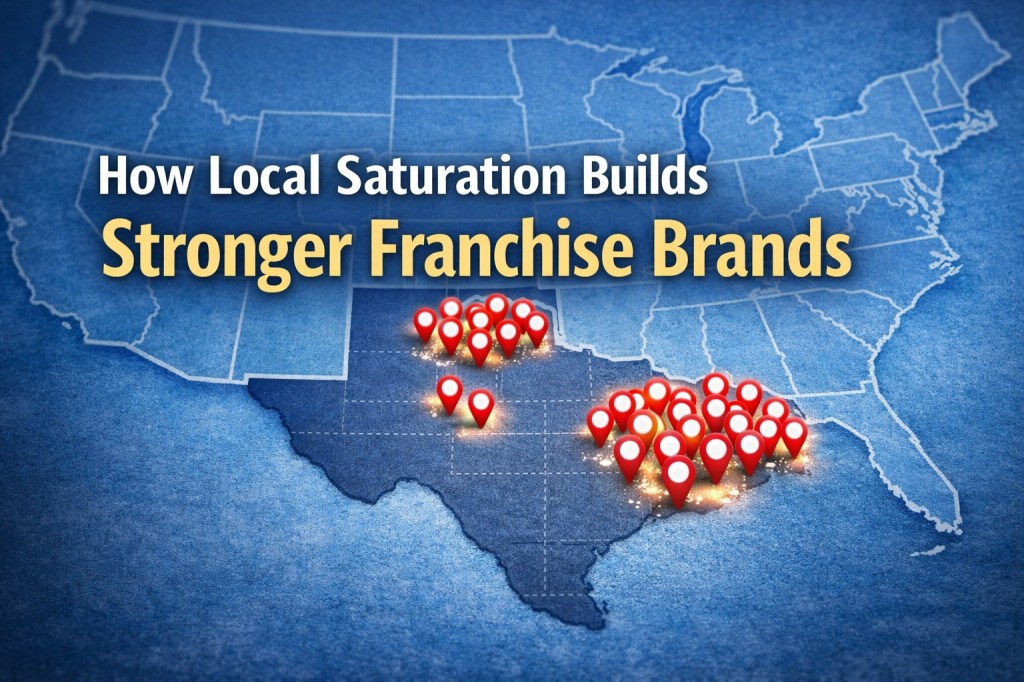
Ideally, the next few franchisees will also be in the same market as the original business and the first franchise location. It’s prudent to only expand locally until critical mass is established in the market, ad cooperative is developed and support systems are perfected. Now the concept is ready to expand outside the initial market.

However, it is often financial suicide to entertain requests from candidates all over the country. Instead, development efforts should be concentrated on one or two cities relatively close to home office city. For instance, if original business and home office is in Houston, the natural progression would be to promote the opportunity next in San Antonio/Austin and Dallas/Fort Worth areas.

As these markets start to become established with franchise locations, it’s advisable to promote the concept in another two or three areas. Maybe, explore another “hub” and “spoke” scenario. Let’s say, Atlanta as the next hub.

Expansion efforts should be the same as they were in Houston and expansion out of that market shouldn’t occur until Atlanta has a critical mass. Then, when that occurs, the opportunity could be promoted close by in Nashville and Charlotte. Now, you see the spokes of national expansion beginning to form.

While this is going on, maybe inquiries start coming in from the San Francisco area. So, the next phase of expansion might be in the Bay Area. The Bay Area becomes another hub, and once developed, the franchise opportunity could be promoted up the road in Portland and to the East in Sacramento and the process continues.

It’s all about controlled growth and the founder exhibiting tremendous restraint in expanding too fast and in areas far away from his core group and subsequent hubs to be able to provide ample support, create ad cooperatives and build the brand geographically. Chances of franchise success are far greater at all levels of the franchise organization within the parameters of a controlled plan of development.

So, to answer the often-asked question directly, I suggest everyone in the system having a clear understanding of the founder’s vision and if it includes anything but a controlled development plan with his or her firm commitment to actively participate in the franchise sales process, the chances of selling the first ten to twenty franchises will be a frustrating, monumental task that most likely will fail miserably.

Franchise Failure – What Would You Do?

The following is an excerpt from a recent article on CNBC.com about business failure. The article, Five Businesses That Did Not Survive 2011 included one business that was a franchise… actually, a franchisor, Just Mouldings. The excerpt about Just Mouldings demise was subtitled, “We Did Everything Right”.

In my ongoing dedication to franchise success at all levels, I always attempt to analyze why a franchise business succeeds, and why one would fail. As we work our way out of economic uncertainty I’m sure we’ll have more and more opportunity for analysis, and as the excerpt details, we’ll see more identified as business failure due to the economy… which was listed as the reason for Just Mouldings’ failure.

In this case, the principals stated, “We did everything right” and I’m sure they truly believed they did. I’m also sure they did all they felt they could do. Especially as they faced an uphill battle of selling a non-essential product in an economy that saw many consumers limit their spending to necessities.

So, let’s put on our thinking caps and dig into our extensive experience in franchising and business management and attempt to define how this franchise could have succeeded. Let’s look at this as a workshop of sorts. After reading the excerpt below, please share your thoughts as to what you might have done differently if you were in the position of leading this franchise.

Certainly, this is not an attempt at diminishing the efforts of the Just Mouldings’ principals. Instead, let’s look at this as an exercise where we can assist other franchisors (and franchisees) that may be facing similar challenges. If, through our collective efforts, we can assist franchise businesses from failing, even if it’s just one, then we’ve accomplished a great deal. And, it may just help someone from losing their life savings, or help franchisees within a failing franchise system cope and survive despite franchisor failure.

‘We Did Everything Right’

Just Moulding, based in Gaithersburg, Md., sold and installed decorative molding. It opened in 2004 and closed last April.

AT ITS PEAK Mark Rubin and Kevin Wales started with a single workshop that handled small jobs larger installers did not want. In 2007 things were going so well they decided to sell franchises in the business and raised $700,000 from 21 investors. After Mr. Wales left the company in 2010, Mr. Rubin’s father-in-law, Richard Hayman, took over as president. Soon after, sales increased by 20 percent and the company became profitable.

WHAT WENT WRONG The recession. The company, Mr. Hayman said, sold a product that people wanted but did not need: “It was crown molding, not a furnace or a roof.” And while the business had the high legal and accounting costs associated with selling franchises, it had sold only three by the end of 2009. Potential franchisees had trouble raising the $100,000 to $250,000 needed to get started.

LOOKING BACK “We did everything right,” said Mr. Hayman, who sank $470,000 into the company. “We hired the best people and had a great product. We could not overcome the bad economy.” He and Mr. Rubin declined to discuss what they are doing now.

Bookmark and Share

Unique Franchise Model Raises Questions…

As most everyone in franchising knows, the Chick-fil-A franchise opportunity is quite unique, especially as compared to thousands of other franchise opportunites across all industry segments.

It appears Chick-fil-A has been quite successful with this unique business model, so why haven’t more franchisors followed suit? And, for the ones that have, why haven’t they succeeded?

With respect to a recent article’s reference to average franchisee profits, are there potential issues with Financial Performance Representations in the franchisor’s Franchise Disclosure Document?

Here’s a thought as I compare Chick-fil-A to other franchises… Should Chick-fil-A really be considered a franchise?

Hey, don’t get me wrong… I admire a company that affords individuals the opportunity to earn significant income, provides a great product and customer experience, and stands by its convictions (Closed on Sundays for religious reasons). My questions are entirely focused on the franchising aspect. Is it really a franchise?

Is the Chick-fil-A model more successful from the perspective of failed locations than other franchise chains?

From a business standpoint it appears there is much to be learned from Chick-fil-A. So, why aren’t more franchisors developing similar business practices, even beyond the franchise practices.

Looking to keep this positive… and really looking forward to all thoughts, insight and perspective!

Bookmark and Share

What Excites You About Working Within Franchising?

What an extraordinary time it is in franchising. Many of us are still riding high from the IFA Convention. Approximately 160 franchise professionals attended the Franchise Unconference last week in Utah. It is my understanding turnout at this week’s Franchise Finance Conference in Las Vegas was very good. And, in a few weeks many of us will be in Washington DC for the International Franchise Expo. That’s just a great deal of positive energy in a six-week period within franchising. Certainly, it’s exciting to be working in franchising as the economy continues to rebound.

Of course, it’s easy to be excited when there’s a load of positive energy at showcase events. Seeing long-time friends with similar interests and objectives adds to the excitement. It’s also relatively early in the year, and many are filled with New Year’s resolutions that have yet to be challenged. Optimism fuels excitement! But, let’s take a step back and look at the core of franchising. Let’s evaluate why we have decided to continue earning a living within franchising. Through the worst of economic times, with franchise sales bottoming out, why did we hang around instead of doing something else for a living? Sure, many will say there weren’t other jobs available. But, I truly believe there was more to it than that.

Approximately eight months ago, in the LinkedIn Franchise Executives group, I asked, What Excites You About Working Within Franchising? and received over 50 responses. Let’s take a look…

John Teza, President at Janus Brands, responded “Empowering an individual to change their lives. No matter the intended change, be it in terms of income, lifestyle, or equity building, for many individuals, opening a business is a life changing experience. Playing a small part in that transformation is very rewarding.”

Lyndsey Jardine Wolfsmith, Business Coach at The Entrepreneur Source, exclaimed “Love your question Paul! I think franchising is fascinating…there are so many facets from developing a successful franchise model to helping clients understand the sheer breadth of options. When you are surrounded by all that variety, how can you not be excited!”

Even The Franchise King, Joel Libava, chimed in “I really enjoy moving folks away from corporate employment, so that they can have their shot at the American Dream. (Only if it makes sense to do so on a whole bunch of levels) I also enjoy providing an independent perspective on the state of franchising in a very gentle way.”

Many of the responses spoke about the satisfaction of putting people in business, helping them achieve the American Dream. And, despite what franchise professionals went through at the low point of the economic downturn, some only needed to be reminded of the passion behind franchising to get moving back in the right direction as evident by the following response…

Kevin Joiner, former, President at Crye-Leike Franchises, stated “Wow! Reading all of these positive comments re-energize me dramatically. I agree with many of the comments. I am the FORMER president of a Real Estate franchising company that operated primarily in the Southeastern U.S. Unfortunately, I was required to layoff my complete staff effective March 1, 2010 (as a cost-cutting, cost-savings measure) and turn over franchise system oversight to the founder and owner of the parent company. Having grown the organization from virtually nothing, into a $500 million dollar sales enterprise with approximately 50+ franchisees in six years, it was hard to take. However, I am expecting to hopefully regain momentum and move forward with another organization soon.”

Many ask how I would answer my own question…

“I’m excited to work within franchising because I get many chances to help franchise organizations succeed at all levels. I know that’s a lofty proposition, but it’s true. It’s what I’ve dedicated myself to as I have recovered from a near-catastrophic experience ten or so years ago as a once-successful multi-unit franchisee that took his eye off the ball and subsequently failed. Certainly, it would be easy to reflect upon what that experience did to me. But there are other things to consider as such experiences can effect entire franchise organizations. There could be collateral damage, and at times, a ripple affect.

Of course, I do what I do to earn a living and provide for my family. But I could do that in a host of different industries or business environments. Instead, I chose to put the bad experience aside and focus on how I can help others within franchising. Not only to avoid the mistakes I’ve made, but to focus on best practices that lend towards franchise success at levels.

With extensive experience and success in franchise marketing and development, and in training franchisees and franchise staff alike, gained in the various positions I have held for franchisors, I have focused my attention on making a difference in franchise organizations in these key areas. Sure, many know me from my almost incessant social media activity, but I’m just embracing what I believe to be a tremendous technology and communications tool that when utilized effectively and coupled with best practices, will contribute to franchise success at all levels.”

In case you haven’t noticed, it is also the same response when I’m asked, What is it that I do?


Bookmark and Share

Utilizing Social Media for Franchise Success

I believe anything a franchisor does should be done to benefit the franchise relationship, and social media plays perfectly into this philosophy as it affords interactivity at all stages of the franchise relationship. From prospecting for qualified franchise candidates to supporting current franchisees, the utilization of social media tools and technology creates environments that strengthen relationships, shares information, provides two-way communications, and provides points of reference for follow up. It creates a multi-tiered platform of information that benefits both franchise development and customer generation efforts alike. Often, simultaneously.

For franchise startups, the founder’s vision of the concept is paramount to future success. They are perceived as the concept. They are essentially the brand. At least until a significant number of franchises are awarded and brand awareness is established across multiple markets, they are the inspiration for franchise candidates. The benefit to spreading this message through social media outlets such as social networking, video sharing, blogs, etc. is that these tools and associated strategies will generate direct excitement about the business model while generating subliminal, subtle interest in the franchise concept. This establishes a perfect foundation for growth. It also defines a very worthwhile, visible support mechanism for franchisees. Of course, it’s imperative to have a well-defined support system in place for training and assisting franchisees.

For established franchise brands, it’s a matter of improving brand awareness in current markets while creating brand awareness in new markets, and markets that are on the horizon for expansion. Again, as with startup franchise concepts, the interactivity created by social media makes it a viable option in driving customers to franchise locations and generating interest in the franchise concept. But, what’s important in a mature system, and a complement to its franchise development efforts, is the improvement of communications throughout the franchise system that is created by social media activity and ultimately lends itself to validation of the franchise concept by the franchisees. For once, franchisees are feeling part of the franchise development process as it’s visible in the organization’s social media efforts. Something that many franchisees have not been a part of in the past.


Bookmark and Share

Fear and Consequences of Failure: A Story Worth Repeating

I’ve been asked time and again to post the following article that I’ve written about my own personal experience as a multi-unit franchisee where I succeeded at first, only to crash and burn later on. This article has been posted on several of my blogs, and picked up by numerous other blogs and online magazines. I have received numerous comments and inquiries about the article, individuals sharing their personal experiences and requests for assistance. Although I cringe at the thought of any business failing, I admire and respect the fact that franchisees and franchisors alike know when to put their pride aside and ask for assistance, and I look forward to providing my experience and expertise to help determine a practical resolve to their problems.

I’m proud to say this article has been instrumental in helping a number of businesses keep their doors open and work towards recovery. On the other hand, I’m also sad to say several businesses were not as fortunate, but at least the owners were able to exit with dignity and in few cases, with less liability than they previously thought possible. And, in one case, the owner actually exited in the black when we were able to facilitate the sale of her business when she previously thought about just walking away.

Fear and Consequences of Failure

I can personally relate to the trials and tribulations of owning franchise businesses as I have “been there and done that” and have experiences on both ends of the spectrum from achieving overwhelming success to dealing with bitter failure. I have definitely come to understand the fine line between success and failure in trying to nail down the American Dream.

I know it is sometimes counterproductive to even mention failure which is why the subject is always avoided and never discussed. Yet, it’s out there and it’s real. Once franchisees face the possibility of failure and its very real consequences they can be motivated to understand that failure is not an option and commit 100% to a plan that addresses immediate problems and provides solutions accordingly. Even if it’s necessary for the plan to be quite drastic or aggressive due to prevailing circumstances, franchisees that unequivocally realize that failure is not an option are prepared for immediate action.

Let me emphasize one point. Franchisees should not view poor sales and disappointing profits as either potential or immediate failure and stick their heads in the sand. I made that mistake in the past and suffered the consequences. Instead, franchisees should build upon the courage it took to become a franchise business owner and recommit to success as they did when they first took the entrepreneurial plunge.

They need to remember their wishes, hopes and dreams that prompted the decision to own their own business? They need to remember the admiration of family and friends when they heard about the new venture? They need to remember the excitement when they actually signed the franchise agreement?

Unfortunately, there’s a very distinct possibility the root of the problem is embedded in the franchisee’s actions, non-conformity to the franchise system and unwillingness to face reality. However, as there was some shining light evident during the franchise award process, it may not be a totally lost cause if the franchisee is made to completely understand the implications and consequences of failure.

As franchisors are faced with the potential of closed units during this recession that may be the result of things out of their control, it’s imperative they don’t lose even a single unit just because a franchisee just flat out needs a snap back to reality. It’s worth the effort.

Let me clarify something. I failed as a franchisee. Not because of anything the franchisor did or didn’t do but because I put and kept my head in the sand and did not face reality. I could go on and make excuses about things that happened around me but at the end of the day I could have turned things around if I got my own head out of the sand, made some difficult decisions and took full, immediate responsibility.

Unfortunately I was scared of failing. I was afraid of what people would think. I was ashamed at what other franchisees, ones I put in business, would think of me. I couldn’t even think of facing my family. All lame excuses for not taking responsibility. Maybe a hard swift kick you-know-where would have helped.

Did I mention that I previously ran the franchise company where I failed as a franchisee? Did I mention I was elected by fellow franchisees, President of the National Advisory Council? Did I mention that I owned and operated five franchise units?

If I had clearly understood the implications and consequences that were looming on the horizon and if I was able to get my big ego out of the way and address things head on, maybe I could have survived. Maybe I could have at least implemented an exit strategy that would have, in some small way, paid back the loyalty and support of my employees, family and friends.

In the end, I may not have survived because it may very well have been too late when and if I finally took action and responsibility. But maybe I could have at least exited with some dignity. Also, I could have saved many innocent people a great deal of hardship, embarrassment, wasted effort and ill-spent resources if I did face reality. This includes my family, my employees and yes, my franchisor; all who believed in me.

Yes, it was a tremendous learning experience but not one I would bestow or wish on anyone. Now, all I can do is to offer my experience to anyone in the franchise industry that needs assistance. If just one franchise business is saved from the consequences of failure, then we’ve made progress. Progress we’ll continue to build upon.


Bookmark and Share