Tag: Franchisees

From $15/Hour Tasks to Million-Dollar Thinking: Reframing the Franchisee Role

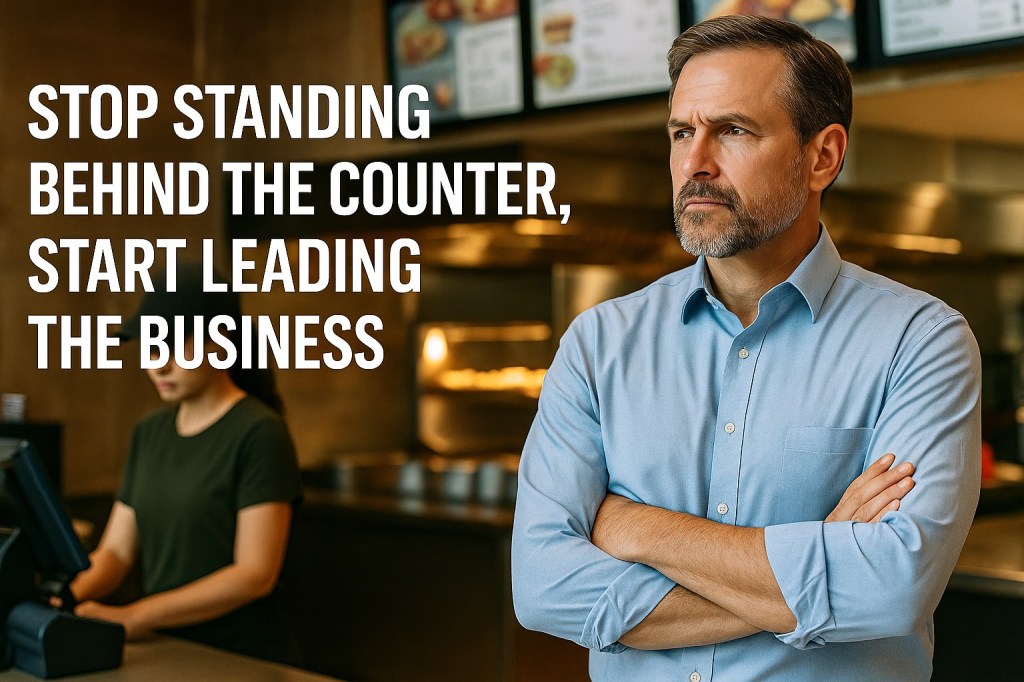
Franchise systems succeed when franchisees succeed, yet one of the most common and costly missteps within franchising is how often owners spend the majority of their time working inside their business instead of on it. Franchisors have an opportunity — and an obligation — to train franchisees to understand the difference. It begins with a simple but powerful question: should a franchisee take on what effectively becomes a $15-per-hour position within the business, or should they lead the business to maximize profitability, growth, scalability, and asset value?

For years, the belief was that franchisees needed to be hands-on, shoulder-to-shoulder with their team, immersed in day-to-day operations to stay connected to challenges. That argument still surfaces today. It is often said that working in the business keeps a franchisee tuned in to what customers expect and what employees need. However, there is a counterargument that cannot be ignored — and it is far more aligned with long-term success. When a franchisee becomes absorbed in daily tasks, they risk losing strategic perspective. They may become excellent at frontline responsibilities, but less effective at leadership, management, marketing, financial oversight, and growth. Essentially, they cannot see the forest for the trees.

This issue often reveals itself early in the franchisor’s training process. Many systems teach franchisees how to run the business but fall short in teaching them how to lead the business. Training is heavily weighted toward operations, checklists, recipes, service steps, or POS procedures. While these are critical, they can inadvertently reinforce the franchisee’s instinct to jump behind the counter, perform tasks, and fill shifts. The outcome is predictable. Franchisees become the highest-paid hourly employees in their own business, stretched thin, exhausted, and unable to make the kinds of decisions that actually grow revenue or profitability.

What franchisors must teach — and reinforce continuously — is the discipline of working smarter. Franchisees must understand that their responsibilities cannot be delegated, while most operational tasks can and should be. Their value lies in building people, tightening systems, driving marketing, analyzing financials, improving culture, and increasing customer lifetime value. When they step back from the front line and step into leadership, the business scales beyond their physical presence. That is where true profitability is found.

The challenge, of course, is mindset. Many franchisees come from corporate roles, operations-heavy backgrounds, or first-time entrepreneurial experiences where doing equals progress. Their instinct is to stay busy, to be seen, to jump in wherever help is needed. If they come from a customer-facing business, they often believe their personal involvement is what drives customer experience. But franchisors must help them see that their real job is not to ring the register but to build a business that rings without them.

This shift begins with training that emphasizes leadership over labor. Scenario-based learning, financial modeling, staffing strategies, task delegation frameworks, and metrics-driven management must take center stage. Franchisees should leave training not only knowing how to operate the business, but knowing how to create an environment where employees can operate the business successfully. Franchisors must explain the opportunity cost: every hour spent on a frontline task is an hour not spent growing the top line, improving margins, strengthening teams, or expanding to additional units.

There is also the matter of visibility. Some franchisees argue that working inside the business keeps them connected to daily challenges, employee morale, and customer behavior. That is valid to a point, but it becomes problematic when it replaces strategic leadership. Franchisors should teach franchisees how to maintain visibility without sacrificing their role. Scheduled floor time, structured observation periods, listening tools, weekly team meetings, and performance dashboards provide insight without trapping the owner inside daily operations.

Ultimately, the franchisee’s highest and best use is leadership. They must set the tone, drive accountability, build a culture of execution, and ensure compliance with brand standards. These responsibilities cannot be outsourced to a $15-per-hour employee. They also cannot be fulfilled effectively when the franchisee is constantly running registers, prepping product, or filling shifts. Leadership requires elevation, and franchisors must help franchisees understand the value of stepping into that role.

Training is the foundation of that shift. When franchisors prioritize teaching franchisees to think like leaders, act like strategists, and operate like business owners, everything changes. The franchisee becomes more profitable. The location becomes better run. The brand becomes stronger. And the system becomes more sustainable. Working on the business is where growth happens, where opportunities are recognized, and where long-term success is built.

Franchisees who embrace this philosophy discover that their business doesn’t depend on their physical presence to succeed — only their leadership. And that is the difference between owning a job and owning a scalable enterprise. For franchisors, the more effectively they train franchisees to work smarter, not harder, the stronger their entire network becomes.


About the Author

Paul Segreto brings over forty years of real-world experience in franchising, restaurants, and small business growth. Recognized as one of the Top 100 Global Franchise and Small Business Influencers, Paul is the driving voice behind Acceler8Success Café, a daily content platform that inspires and informs thousands of entrepreneurs nationwide. A passionate advocate for ethical leadership and sustainable growth, Paul has dedicated his career to helping founders, franchise executives, and entrepreneurial families achieve clarity, balance, and lasting success through purpose-driven action.


About Acceler8Success America

Acceler8Success America is a comprehensive business advisory and coaching platform dedicated to helping entrepreneurs, small business owners, and franchise professionals achieve The American Dream Accelerated.

Through a combination of strategic consulting, results-focused coaching, and empowering content, Acceler8Success America provides the tools, insights, and guidance needed to start, grow, and scale successfully in today’s fast-paced world.

With deep expertise in entrepreneurship, franchising, restaurants, and small business development, Acceler8Success America bridges experience and innovation, supporting current and aspiring entrepreneurs as they build sustainable businesses and lasting legacies across America.

Learn more at Acceler8SuccessAmerica.com
Organizational Skills All Small Business Owners Should Possess

Organizational skillsWho hasn’t seen the phrase “organizational skills” listed as a requirement of a position? It might seem excessive that this vague term is so in demand, but the possession of organizational skills can make or break your career success.

While this is true for any role, it is even more integral for a small business owner.* Because there are so many tasks to juggle on any given day, keeping everything organized is the best way to ensure you’re getting the most out of your working hours.

Read on for a look at the essential organizational skills to propel your small business toward success:

Scheduling. More than just scheduling shifts and meetings, as a small business owner you’ll be expected to schedule every aspect that goes into running your business. From scheduling progress check-ins for projects to scheduling incentive programs for sales goals, the ability to create a schedule and stick to it is essential to running your business.

Delegation. It’s impossible for one person to handle everything that needs to happen to keep a business running smoothly—that’s why delegation is key. By delegating, you’re lightening the load on your own shoulders while empowering your team to tackle the difficult tasks.

Time Management. In many jobs, your time is managed for you. You’re provided with small goals on the way to larger accomplishments and project timelines are completed at your own manager’s discretion. However, as a small business owner, those project timelines and daily tasks are set by you.

People Management. Managing is commonly regarded as a “people skill,” but it takes organizational savvy as well. Planning evaluations, building a successful team and orchestrating group meetings may not be the leadership tasks that get all the attention, but they’re just as integral to being a respected and regarded manager.

Preparation. Being prepared is the key to staying on top of your business routine. Whether it’s taking notes before a meeting with your staff, franchisor, or banker or jotting down the next to-do list at the end of the day, starting off on the right foot will keep you from playing catch-up when you should be looking ahead.

*Note: Small business owners include small independent business operators (Mom & Pop), franchisees, restaurant operators, professional services providers (law offices, medical offices) and even solopreneurs with staff.

Visit Acceler8Success Daily at https://paper.li/Acceler8Success-Daily

Visit Acceler8Success Group website at www.Acceler8Success.com

Do Transitioning Corporate Executives [Really] Make Good Franchisees?

This question was discussed on Linkedin approximately a year and a half ago and there were some interesting responses. However, the further we drift from the onslaught of transitioning executives caused by the 2008-2012 economic downturn, maybe we should now pose a different question… How have franchisors fared since awarding focusing on transitioning executives?

We often look at franchise success as up to the franchisor, i.e. it’s the franchisor’s job to be sure franchisees succeed. But of course, we know that not all franchisees, including transitioning executives, are created equal. Some are better than others! People in transition may, in fact, not make very good decisions – maybe they may panic and jump into a franchise too quickly and they don’t do all the homework that’s necessary or possibly don’t ask all the right questions. Some actually have limited skill set to their former job.

It would be interesting for franchisors to reveal how “transitioning executives” have fared, though that’s probably asking a bit too much. Because again, even if the transitioning executives have failed, it doesn’t mean the franchise system is bad. Maybe the system is just not right for certain individuals?

It really doesn’t matter whether a candidate is a transitioning executive or an immigrant national or even a mom exploring business ownership instead of returning to the workforce. What matters is how well prepared a candidate is for franchising (and business ownership) and whether or not the candidate is a right-fit for a particular franchise, and the franchise for him or her. Because we also know that all candidates are not created equal. Nor are franchisors! It’s all the more reason to identify and develop ideal candidate profiles, and keep in mind, there may be several.

Any thoughts?

Local Marketing Challenges: What is a Franchisee to do?

No TomorrowI believe the most common local marketing challenges in a franchise organization are the typical franchisee’s lack of marketing 101 skills, their inability to develop a defined marketing strategy, and certainly their inability to execute any marketing plan. However, let’s be fair. They may not have learned about marketing and marketing strategies.

Now, here’s something that franchisees do know something about, and that’s making things happen. Unfortunately, many franchisees don’t have the drive to do whatever it takes to make it happen as it sometimes means integrating their local marketing efforts with grassroots, guerilla, word-of-mouth, or as I like to refer to it as “get off your ass” marketing.

Many franchisees find it necessary to stand behind the counter and serve the customer when they would better serve the business by getting out from behind the counter and mingling with the customers, visiting other businesses, participating in community events, etc.

The major challenge is that most franchisees refuse to take this approach, feeling they’ve made a large investment and the business should come to them, or put the responsibility on the franchisor, or are just lazy and would rather wait for tomorrow. Well, as Garth Brooks sings, “if tomorrow never comes…” Instead, they need to make it happen today and forget tomorrow, as if there is no tomorrow!

Franchisors Financially Assisting Franchisees: Good Or Bad Idea?

The following article was posted at LSJ.com and discusses franchisors assisting franchisees froma financial standpoint in order for the franchisees to withstand the current economic crisis. But, is it a good or bad idea? Does it set precedence that will become expected at the first sign of economic trouble in the future? Will franchisors’ efforts and goodwill be used to hold them hostage in the future? Read the article and then decide for yourself. We look forward to your thoughts.financial-assistance

Some franchisers taking drastic steps to weather today’s tough economy
Staff and Wire Reports • April 6, 2009 • From Lansing State Journal

Co-signing loan papers, buying out operating contracts and modifying licensing fees are among the aggressive steps some franchisers are taking to help their franchisees weather the chilly economy.

Just like small, independent business owners, many franchisees have struggled amid a lingering credit crunch and weak consumer spending.

Their survival is important. Nationally, franchises accounted for 11 million jobs, or 8.1 percent of the private workforce, and produced $880.9 billion in goods and services in 2005, according to the most recent data available from the Washington-based International Franchise Association.

Franchisers, who license the right to operate businesses in their names, have a vested interest in continuing to attract new franchise buyers and to help their current store operators survive. Fewer franchises mean less licensing – and royalty-fee revenue, on which franchisers depend to survive.

A rash of store closures also can mar a franchise’s brand.

“I think we’re going to see a fallout in our industry just like we’re going to see a fallout in other industries,” said Jeff Johnson, founder and CEO of the Franchise Research Institute. The institute, based in Lincoln, Neb., performs surveys for franchisers that gauge their franchisees’ satisfaction.

The strategies franchisers are employing now are not unheard of even when the economy is good, Johnson said. But some of the more aggressive steps, such as buying back stores from franchisees who want out of their contracts and temporarily foregoing certain fees, are rare.

Restaurant and other food service franchisees have been among the hardest hit by the economic downturn. Health care and certain technology-related franchises still are seeing strong demand, though.

Local and national franchisers say they’re still seeing demand from prospective buyers who want to open new franchises. The biggest problem is securing credit.

“It’s like a pendulum has swung,” said Bob Fish, CEO of East Lansing-based Biggby Coffee, which has 109 franchise-owned coffee shops.

A year ago, Fish said, new franchisees easily could get loans to cover the roughly $300,000 cost to open a Biggby store – even with a company stipulation that franchisees have enough cash to cover about one-third of the cost.

Now, he said, franchisees are lucky to get loans for half the cost. “It has slowed things down, absolutely,” he said.

Fish said his advice to franchisees stays the same: Shop around for a lender.

But some franchisers have stepped in to help applicants obtain financing by being a co-guarantor for loans and lines of credit.

“We have literally done a handful of those, but it is not a big number at all,” said Lee Knowlton, chief operating officer for Scotts-dale, Ariz.-based franchising company Kahala Corp. Kahala’s chains include Cold Stone Creamery, Blimpie, Samurai Sam’s Teriyaki Grill, TacoTime and other fast-food restaurants.

One of the biggest challenges for Kahala and other restaurant franchises has been real estate.

In some instances, franchisees who moved into shopping malls and neighborhood strip centers are struggling because major tenants around them closed.

But the economy has created opportunities, too. With the real estate market in decline, there are deals to be had for commercial space to open new stores, said Brent Taylor, president and CEO of East Lansing-based TT&B Inc., which franchises toy stores.

Taylor owns TreeHouse Toys & Books in Lansing Township’s Eastwood Towne Center and franchises under the Brilliant Sky Toys & Books name.

“We’ve been able to negotiate some real estate deals with landlords that are just unprecedented with what we’ve seen,” he said.

Some franchisers have started buying back distressed stores from their franchisees or letting them be shut down.

Tropical Smoothie Cafe, a Destin, Fla.-based franchise that sells sandwiches, wraps, salads and fruit drinks, reopened two Phoenix-area franchises in the last year. “It’s the very first time that we’ve done anything like that,” said Scott Palmateer, a regional franchise consultant for Tropical Smoothie Cafe.

Delhi Township-based Two Men and a Truck International Inc. CEO Brig Sorber said failing franchises can damage the reputation of the whole system.

So, even as growth has slowed at the moving company – which added only six franchises last year – Sorber is focusing attention on improving existing operations.

The privately owned company, with about 200 locations, has been hurt by the national decline in the housing market – which means fewer people are moving.

Two Men is working on ways to help its franchisees cut costs and to get into new markets, such as moving for businesses and interstate moving, Sorber said. “There’s less moving going on, but there also are less people doing the moving,” he said.

Lansing State Journal business reporter Jeremy W. Steele and Andrew Johnson of the Arizona Republic contributed to this story.

Franchise Growth: Are Concessions and Discounts Necessary?

This article is based upon a recent discussion in a LinkedIn franchise group. The original discussion posted the question, “What kind of discounts or concessions are required now to get a franchisee candidate to move forward?” and generated many responses and different views. The following is my response when my view about getting back to basics was preceived to be fine during “normal” times as opposed to during more difficult times, such as the present. A subsequent response from another franchise professional implied there are too many franchisors. I’ve addressed that as well.

discountAlthough it’s certainly easier to accomplish franchise growth during “normal” times, the basics need to be in place even more so during tough times. That’s not to say we don’t need to think and act outside-the-box to make something happen. It just means we need to be extra prudent and diligent in our actions and not use the economy as an excuse for poor execution of skills.

If we are to offer discounts and concessions in awarding franchises we need to be extremely careful we don’t oversell or create the perception of desperation. By doing so, we’ll either lose the deal or create a situation whereby the franchisee will not have respect for the franchise system and feel if one or two concessions were made initially, why not more moving forward? And then, there’s the perspective of franchisees already in the system that paid full amounts without concessions. What’s in it for them?

Nevertheless, with reports like Franchise Update’s about poor franchise sales performance and practices, I can’t help believe franchise systems wouldn’t be in better shape if their sales basics were perfected. It has to start with the basics before changing direction or considering revisions to the program.

In any business, just like in any sport, when a slump is emminent, it’s the fundamentals that need to be worked on before anything else should be considered or entertained. Once that’s done, then it makes good business sense to consider other options. At the very least, it should be done simultaneously. If not, what’s going to be the excuse when concessions and discounts don’t work?

PS – Saying there are too many franchisors is akin to saying there are too many businesses of the same kind. What happened to free enterprise and entrepreneurship? Maybe, franchising could be better served by more regulation, licensing and policing, to weed out the weaker (for whatever reason) franchisors and make it more difficult to become a franchisor. Unfortunately, I don’t see that happening because the “big boys” of franchising will squash those efforts in a New York minute. I look forward to debating this topic in a different discussion or forum.

Are Franchisees Entrepreneurs?

In business circles we frequently hear and make reference to “entrepreneurial spirit.” It’s this spirit that drives an individual to taking risks, sometimes calculated, but not always. “Spirit” is often associated with “free.” Sir Richard Branson of Virgin Airways fame, among other successful business ventures, would definitely be considered a risk taker, an entrepreneur and free-spirited.

It’s often been said that individuals explore franchising due to it being less risky than starting a business from scratch as the franchise comes complete with a proven business system. The old adage about being in business for yourself, but not by yourself, creates a nice, warm sense of security that a franchise can ultimately provide.

Minimized risk. Proven system. Sense of security. Could you really see Sir Richard as a franchisee? So, if Sir Richard Branson epitomizes the true entrepreneurial spirit, my question remains, “Are franchisees entrepreneurs?”