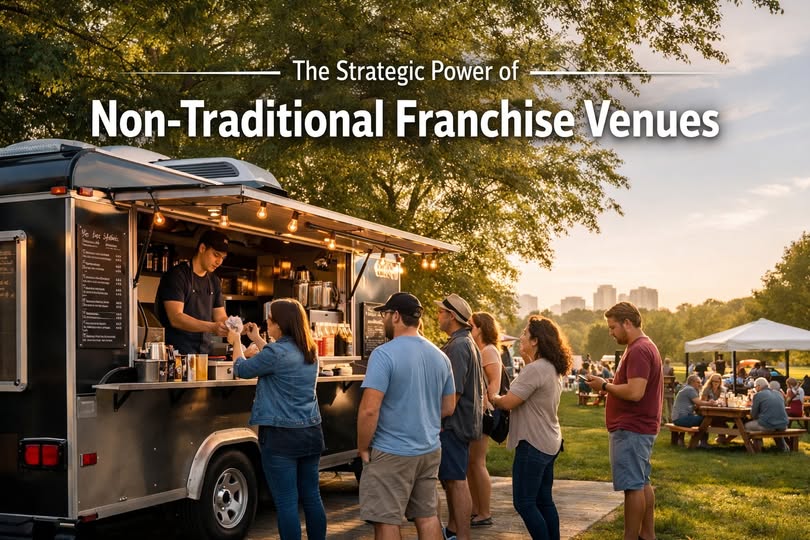
Tag: Franchising

I Love Franchising, But…

An open conversation about profitability, pressure, and the future of responsible franchising.

During the past two years of my forty-plus years in and around franchising, I have felt a shift that is difficult to dismiss. Franchising has always carried a natural tension between promise and reality, but rarely has that tension felt this persistent, this widespread, or this quietly unsettling. What I am seeing now is not a single broken link in the chain, nor a few isolated business failures that can be rationalized away as “operators who did not execute.” What I am seeing is a growing sense that the balance the model relies upon is being tested in ways the industry has not fully reconciled, and perhaps has not fully wanted to.

That context is what made this past week’s news so resonant. A 100+ unit franchisee of Popeyes filing for bankruptcy protection is not, by itself, a verdict on a brand or on franchising as a whole. But placed alongside what has unfolded over the last two years, it feels less like an anomaly and more like another marker in an emerging pattern. Distress has surfaced across systems of every size and stage. Large multi-unit operators with sophisticated infrastructure. Smaller franchisees who followed the playbook precisely. Legacy brands and emerging concepts alike. The stories are not identical, but the undertone is familiar: the economics have become harder, the margin for error thinner, and the path to stability less certain than the model has historically implied.

And then there are the quieter developments that rarely make headlines. Franchisors closing corporate locations. Emerging franchise systems quietly disappearing when capital tightens, when development pipelines stall, or when early optimism meets the reality of operations. What often goes unspoken is what happens to franchisees in those moments. They do not disappear when a brand contracts or fails. They remain attached to leases, loans, equipment, staffing obligations, personal guarantees, and in many cases, personal identity. When a franchise system falters, it does not simply “fail.” It leaves people behind.

The instinctive reaction in franchising, especially among those who have built careers on the model, is to search for blame and then defend the model against that blame. To point at inflation, labor volatility, the cost of goods, supply chain disruptions, third-party delivery, interest rates, changing consumer behavior, rising real estate costs, and increased regulatory and compliance burdens. All of those forces are real. But the industry has always faced headwinds. The deeper question is why those headwinds now feel capable of breaking operators at scale, including those who are experienced, well-capitalized, and once considered “the best of the best.”

Because franchising, stripped to its essentials, is an economic arrangement. When unit-level economics no longer work consistently, everything else becomes secondary. Support, marketing, culture, brand strength, operational excellence, each matters, but all of them ultimately feed a single outcome: profitability. Not theoretical profitability. Not “on paper.” Not “once the next three stores open.” Real profitability that can withstand shocks, absorb reinvestment, pay down debt, and provide a return worthy of the risk.

Yes, there are profitable franchisors and profitable franchisees. Some are thriving. Some are scaling responsibly. Some are generating exceptional returns. Those examples deserve recognition and study. But they also risk masking the more uncomfortable truth: a significant portion of franchising appears to be living in a state of fragility. Units that are technically open but financially strained. Owners deferring reinvestment because the math no longer supports it. Operators compensating for margin compression with longer hours, reduced staffing, or personal sacrifice. Businesses continuing not because the model is healthy, but because exiting feels worse than enduring.

The question that rarely gets asked publicly is how large that middle has become. Not the winners. Not the failures. The wide swath of franchising that is barely holding together. How many franchisees are one unexpected expense away from serious trouble? How many are “profitable” only if the owner works sixty or seventy hours a week, effectively subsidizing the business with labor the P&L does not reflect? How many have stopped paying themselves appropriately just to keep the doors open? How many are staying in the game because they have too much personally guaranteed debt to walk away?

Now ask the next question, the one franchising tends to avoid: if a material portion of franchisees are living like that, what does it say about the health of the model, not in its best-case form, but in its average form?

Because franchising is not judged by its outliers. It is judged by its median. The “middle” is the industry. If the middle is strained, the industry is strained.

That brings me to another question that feels uncomfortable, but necessary to ask. At what point are there simply too many franchise brands? There are now more than 4,000 franchise concepts competing for the same franchisees, the same territories, the same real estate, the same labor pool, and the same consumer attention. Entire segments feel crowded to the point of indistinguishability, brands differentiated more by marketing language than by true strategic advantage. We see the same categories proliferate: chicken, burgers, pizza, coffee, smoothies, cleaning, restoration, lawn care, senior care, fitness, pet services, tutoring, and countless others. Many are good concepts. Some are exceptional. But the marketplace can only support so many “good” concepts before the fight becomes less about excellence and more about survival.

This is not an anti-capitalism argument. I believe in capitalism and the American Dream deeply. Markets should decide. Entrepreneurs should be free to build. Innovation deserves room to breathe. But believing in capitalism does not mean ignoring the consequences of oversaturation. Oversaturation has a way of turning opportunity into a zero-sum contest where only the strongest balance sheets win, while the average operator gets squeezed.

So the question is not whether there are too many brands in the abstract. The question is this: have we normalized launching franchise systems without fully stress-testing unit economics under real-world conditions? And are we honest about what “success” looks like for the average franchisee in a crowded segment?

If a concept requires best-in-class execution just to be marginally profitable, is it truly franchiseable? Or is it simply scalable for a small percentage of operators and a narrow set of markets?

If a franchisor’s growth story depends on adding units faster than the system can support them, does that create strength or does it hide weakness until it is too late?

If a franchisee’s path to “success” increasingly depends on becoming a multi-unit operator to gain purchasing leverage and overhead absorption, what does that mean for the single-unit owner, the one franchising has historically positioned as the heartbeat of the model?

Another subtle but telling signal has surfaced in recent conversations. I have heard more about the possibility of five-year franchise agreement terms, a shift away from the ten-year agreements that have long been standard. On the surface, this may be framed as flexibility. But it is hard not to wonder what is really driving it. I almost feel like there is worry about franchisees making it ten years. If the industry is shortening terms because it is unsure about long-term viability at the unit level, what does that say? Is it a prudent modernization, or is it an admission, however quiet, that the road ahead feels less predictable?

And if franchise terms shrink, what happens to long-term thinking? Does it encourage reinvestment and brand stewardship, or does it subtly incentivize short-term optimization? Does a five-year term make it easier for franchisees to exit, or does it make it harder for them to build wealth because they are constantly in renewal mode? Does it change how lenders view the risk? Does it alter the relationship between franchisor and franchisee in ways we have not yet fully considered?

Now let’s zoom out further. The balance that once defined franchising feels increasingly misaligned in multiple directions:

The balance between franchisor revenue structures and franchisee margins… When royalties, marketing funds, technology fees, and required vendor costs rise while unit economics tighten, where does the pressure go? It goes to the franchisee.

The balance between “support” as a promise and “support” as an experience… What does support mean today when operations have become more complex, labor is more volatile, and technology is no longer optional? Are franchisors adequately resourced to deliver meaningful support at scale, or is support increasingly a marketing statement rather than a lived reality?

The balance between development momentum and operational readiness… Is the industry rewarding franchisors for selling franchises or for building profitable franchisees? When the scoreboard is unit count, does that create blind spots around unit performance?

The balance between brand standards and local market realities… As costs rise, franchisees look for flexibility. As brand competition intensifies, franchisors look for consistency. Where is the line between protecting a brand and suffocating a franchisee’s ability to adapt?

None of these questions are intended to indict franchising. They are intended to protect it. Because if franchising does not engage in honest self-examination, external forces will. Regulators. Media. Plaintiffs’ attorneys. Consumer advocates. That is not fearmongering. It is how industries get reshaped when they fail to address internal fractures before those fractures become public.

So let’s ask the questions that might actually matter most right now.

What is the franchisor’s responsibility in ensuring unit economics remain viable, not just at the start, but over time as costs and markets change?

How often should franchisors revisit and recalibrate their economic model, especially in segments where margins are structurally thin?

Should franchise systems be required, ethically, if not legally, to present prospective franchisees with a more stress-tested picture of potential outcomes, including scenarios where costs rise faster than revenue?

What is a fair measure of success for a franchisee today? Is it net income? Cash flow? Return on invested capital? Owner wage plus profit? And how many franchisees in a given system are truly hitting that measure?

How do we define “responsible franchising” in 2026? Is it slower growth? More selective franchisee recruitment? Different fee structures? Greater franchisor skin in the game? More investment in support? Some combination of all of the above?

And perhaps the hardest question: if a system’s economics cannot support an average operator in an average market, does the industry have the courage to say that model needs to change, even if it disrupts the way franchising has traditionally generated growth?

I do not believe franchising is broken. I do believe it is at an inflection point. Franchising has survived many cycles, but survival has never been accidental. It has required adjustment, restraint, and sometimes reinvention. Tweaks address symptoms. Structural shifts address causes. Avoiding that work risks allowing the story of franchising to be written by bankruptcy filings, closures, and disillusionment rather than by opportunity and partnership.

This is intentionally an open conversation, not a verdict. I want to hear from franchisors wrestling with these realities internally, from franchisees who are thriving and from those who are struggling but still believe in the model, and from lenders, suppliers, advisors, and operators who see the pressure points from different angles.

If asking whether there are too many brands, too many look-alike concepts, or too many systems chasing the same segments sparks deeper thinking and conversation, then so be it. Not because I want fewer entrepreneurs. Not because I want less competition. But because I want franchising to remain one of the most credible and powerful vehicles for the American Dream, not a model that quietly drifts toward imbalance until a reputational crisis forces change.

From what I have seen during the past two years, the question is not whether the industry will change. It will. The real question is whether that change will be deliberate, transparent, and collaborative, or reactive and forced under scrutiny. The conversation is not a distraction from the work. It may be the work.


About the Author

Paul Segreto brings over forty years of real-world experience in franchising, restaurants, and small business growth. Recognized as one of the Top 100 Global Franchise and Small Business Influencers, Paul is the driving voice behind Acceler8Success Café, a daily content platform that inspires and informs thousands of entrepreneurs nationwide. A passionate advocate for ethical leadership and sustainable growth, Paul has dedicated his career to helping founders, franchise executives, and entrepreneurial families achieve clarity, balance, and lasting success through purpose-driven action.


About Acceler8Success America

Acceler8Success America is a comprehensive business advisory and coaching platform dedicated to helping entrepreneurs, small business owners, and franchise professionals achieve The American Dream Accelerated.

Through a combination of strategic consulting, results-focused coaching, and empowering content, Acceler8Success America provides the tools, insights, and guidance needed to start, grow, and scale successfully in today’s fast-paced world.

With deep expertise in entrepreneurship, franchising, restaurants, and small business development, Acceler8Success America bridges experience and innovation, supporting current and aspiring entrepreneurs as they build sustainable businesses and lasting legacies across America.

Learn more at Acceler8SuccessAmerica.com

The Entrepreneurial Transition Inside Franchising

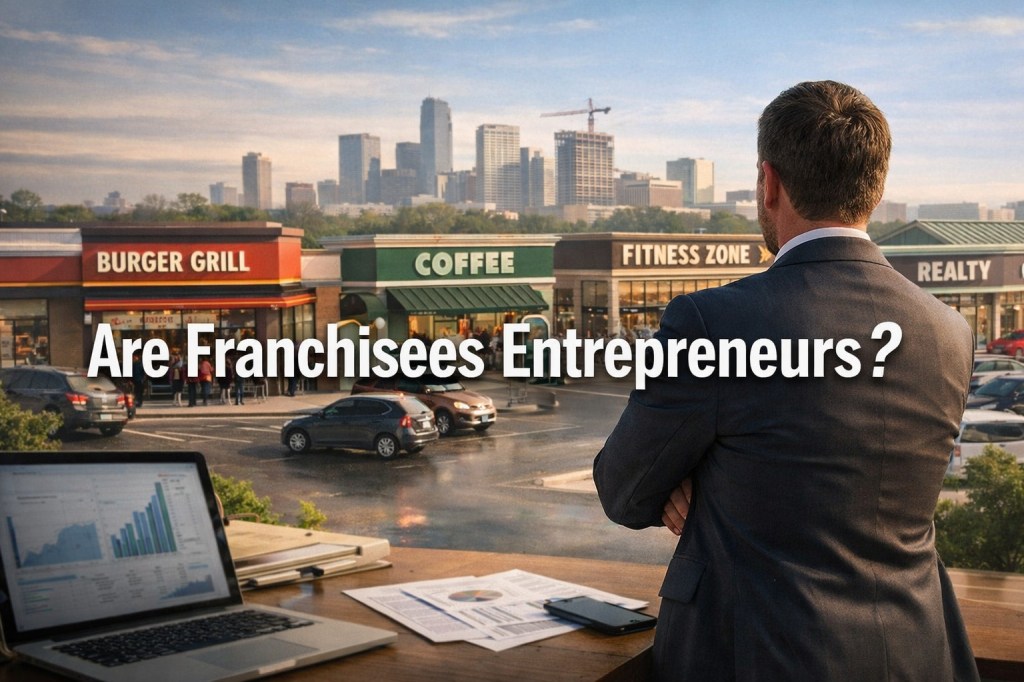
Are franchisees entrepreneurs? If you look only at the black-and-white definitions, the answer feels deceptively simple. A franchisee is a business owner licensed to operate a proven brand, paying fees in exchange for systems, trademarks, and support. An entrepreneur, by definition, creates something new, assumes most of the risk, and enjoys most of the reward. On paper, one appears structured and guided, the other inventive and self-directed. Yet those definitions miss the gray space where real-world ownership lives, especially as a franchisee grows beyond a single location.

At the entry level, a first-time franchisee often looks more like a disciplined operator than a classic entrepreneur. The model is established, the playbook is written, and the expectations are clear. Risk still exists, but it is partially mitigated by brand recognition, operating systems, and collective learning. Vision, at this stage, is often borrowed rather than invented. The goal is execution, not reinvention. Success depends on following systems, hiring well, managing cash flow, and delivering consistency. In that moment, calling the franchisee an entrepreneur may feel like a stretch to some purists.

But that perspective freezes the franchisee at day one and ignores what happens next.

The moment a franchisee begins thinking beyond survival and into growth, the equation changes. Opening a second location introduces new layers of risk that are no longer shared equally with the franchisor. Capital exposure increases. Management complexity expands. The franchisee is no longer simply running a store; they are building an organization. Decisions about people, culture, leadership structure, real estate, and market prioritization become theirs to own. The safety net of “just follow the system” starts to thin.

With each additional location, the franchisee’s role shifts further away from operator and closer to architect. Vision is no longer limited to executing a model; it becomes about designing a portfolio. Strategy enters the conversation. Questions around scale, timing, financing, and long-term exit begin to matter more than daily transactions. At this point, risk is no longer confined to a single unit’s performance. One bad decision can affect an entire multi-unit enterprise.

The entrepreneurial mindset becomes even more pronounced when a franchisee expands across multiple brands. Now the individual is not just scaling within a framework but selecting frameworks themselves. Evaluating concepts, assessing markets, diversifying revenue streams, and balancing brand-specific risks requires the same instincts as launching a new venture. While the brands themselves may not be original creations, the ecosystem being built absolutely is. The entrepreneur is not inventing the product, but they are inventing the business behind the products.

This is where the gray area provides the clearest answer. Entrepreneurship is not solely about creating something from scratch. It is about ownership of outcomes, tolerance for uncertainty, and the ability to allocate resources toward future opportunity. A multi-unit, multi-brand franchisee carries most of the risk tied to growth decisions and enjoys most of the upside if those decisions succeed. That balance of risk and reward aligns far more closely with entrepreneurship than with simple business operation.

There is also a psychological transition that occurs. Early-stage franchisees often think in terms of compliance and performance. Entrepreneurial franchisees think in terms of leverage and possibility. They ask different questions. How do I build a leadership team that can scale without me? How do I create enterprise value beyond cash flow? How do I turn locations into assets rather than jobs? These are not operator questions. They are entrepreneurial ones.

So are franchisees entrepreneurs? Not automatically. Not on day one simply by signing a franchise agreement. But many become entrepreneurs through growth, complexity, and intentional risk-taking. The transition from single-unit operator to multi-unit owner, and from single-brand participant to portfolio builder, strengthens and ultimately demands an entrepreneurial mindset.

In that sense, franchising can be less a shortcut around entrepreneurship and more a pathway into it. For those who choose to stay small and operational, the franchisee role may remain primarily that of a business owner. For those who expand, diversify, and build something larger than themselves, the line fades quickly. At that point, the question answers itself.


About the Author

Paul Segreto brings over forty years of real-world experience in franchising, restaurants, and small business growth. Recognized as one of the Top 100 Global Franchise and Small Business Influencers, Paul is the driving voice behind Acceler8Success Café, a daily content platform that inspires and informs thousands of entrepreneurs nationwide. A passionate advocate for ethical leadership and sustainable growth, Paul has dedicated his career to helping founders, franchise executives, and entrepreneurial families achieve clarity, balance, and lasting success through purpose-driven action.


About Acceler8Success America

Acceler8Success America is a comprehensive business advisory and coaching platform dedicated to helping entrepreneurs, small business owners, and franchise professionals achieve The American Dream Accelerated.

Through a combination of strategic consulting, results-focused coaching, and empowering content, Acceler8Success America provides the tools, insights, and guidance needed to start, grow, and scale successfully in today’s fast-paced world.

With deep expertise in entrepreneurship, franchising, restaurants, and small business development, Acceler8Success America bridges experience and innovation, supporting current and aspiring entrepreneurs as they build sustainable businesses and lasting legacies across America.

Learn more at Acceler8SuccessAmerica.com
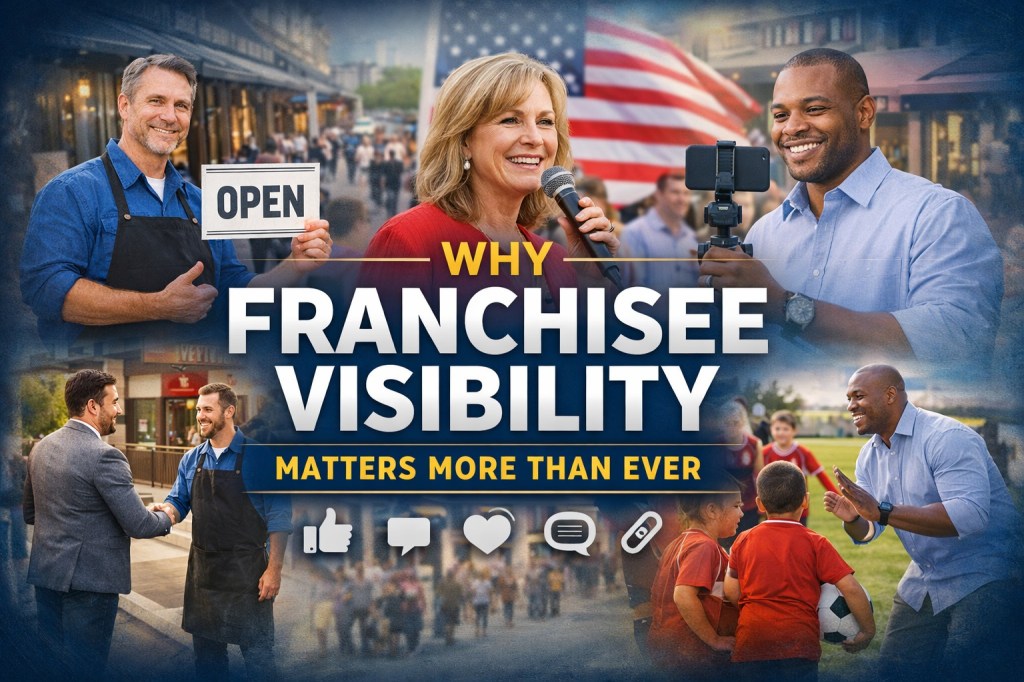
Choosing the Right Franchisee: Five Traits That Protect and Grow Your Brand

Franchise systems are often described as proven business models, but the most seasoned franchisors understand that the model itself is only half the equation. The other half is the individual who is granted the right to operate under the brand. Every new franchisee is not just opening a business; they are assuming custody of a reputation that may have taken decades to build. That reality elevates franchisee selection from a transactional process to a strategic responsibility with long-term consequences for the entire system.

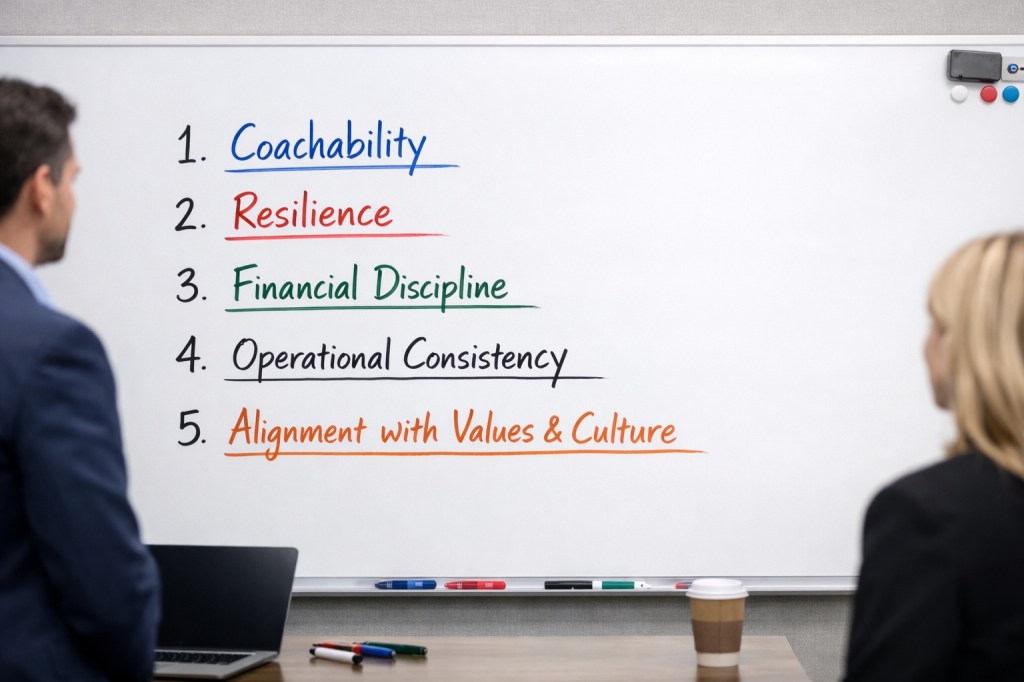
The first trait franchisors should consistently seek is coachability. Franchising is built on the premise that there is a defined way to do things, yet many candidates enter the process believing their experience alone will carry them. Coachable franchisees demonstrate humility, curiosity, and a willingness to follow systems even when their instincts suggest otherwise. They understand that brand standards are not constraints, but safeguards. A franchisor must ask: is this candidate truly open to guidance, or are they simply nodding in agreement to get through the approval process? And when the honeymoon period ends, will they still be receptive to feedback that challenges their assumptions?

Resilience is the second indispensable trait. Every franchise system, regardless of maturity, encounters disruption. Labor shortages, supply chain issues, economic downturns, and local market challenges are not hypothetical; they are inevitable. Resilient franchisees do not internalize setbacks as personal failures, nor do they externalize blame. They remain engaged, solutions-oriented, and accountable. Franchisors should ask themselves whether a candidate has demonstrated perseverance in past ventures or whether they have a pattern of exiting when conditions become uncomfortable. How will this individual respond when the business underperforms projections for several consecutive months?

Financial discipline is the third core trait and one that is frequently misunderstood. Capital alone does not equate to financial maturity. Disciplined franchisees respect unit economics, manage cash flow conservatively, and understand the long game of reinvestment. They resist the temptation to overextend, underpay, or compromise quality to chase short-term relief. Franchisors should consider whether a candidate views the franchise as a system to be stewarded or a personal ATM to be optimized for immediate returns. What decisions will this franchisee make when faced with the choice between preserving cash and protecting the brand experience?

Operational consistency follows closely behind. Franchising depends on reliability, not brilliance. Customers choose franchise brands because they know what to expect, and that expectation must be met repeatedly across locations and markets. Franchisees who value consistency train diligently, measure performance, and respect procedures even when no one is watching. Franchisors must ask whether a candidate appreciates the discipline required to execute a system day after day, or whether they are prone to improvisation that may feel innovative but ultimately dilutes the brand. How much variation is too much, and who bears the cost when consistency erodes?

Alignment with brand values and culture rounds out the top five traits. Culture is not a poster on the wall; it is reflected in daily decisions, employee treatment, customer interactions, and community engagement. Franchisees who align with the brand’s values strengthen trust across the network and become informal leaders within the system. Those who do not may technically comply while quietly undermining the spirit of the brand. Franchisors should ask whether this candidate represents the brand they want replicated dozens or hundreds of times. If every franchisee behaved the same way, would the brand be stronger or weaker?

For franchisees aspiring to multi-unit ownership, these traits become even more consequential, but additional qualities emerge. Strategic thinking is essential, as multi-unit operators must understand how decisions scale and how systems perform across multiple locations. Leadership replaces individual effort as the primary driver of results, requiring the ability to recruit, develop, and retain capable managers. Delegation becomes a necessity rather than a preference. Franchisors should ask whether a candidate can transition from operator to leader without losing control or clarity. Is this individual prepared to build infrastructure, or are they simply accumulating units without a scalable plan?

When a promising candidate is missing one or two traits, franchisors face a critical judgment call. Not every deficiency should result in rejection, but none should be ignored. Coachability can sometimes be developed through structured onboarding and mentoring. Financial discipline can be reinforced with education, reporting, and accountability. What matters is whether the candidate acknowledges the gap and demonstrates a genuine commitment to growth. Franchisors must ask whether they are prepared to invest the time and resources required to close that gap, and whether the system is equipped to support that development.

Unaddressed gaps, however, can become systemic risks. A franchisee who lacks resilience may disengage during challenging periods, increasing the burden on support teams and creating instability within the network. A financially undisciplined operator may fall out of compliance, strain relationships with vendors, or compromise brand standards in ways that affect neighboring franchisees. Over time, these issues can erode trust, create internal friction, and weaken the brand’s market perception. Franchisors should ask themselves whether tolerating a misalignment today creates a larger problem tomorrow.

The most effective franchisors approach franchisee selection and development with clarity and courage. They define the traits that matter most, assess them honestly, and address gaps proactively. They recognize that saying no to the wrong candidate is often an act of stewardship, not exclusion. Perhaps the most important question franchisors can ask is this: are we building a network of owners who can grow with the brand, protect it during adversity, and represent it with pride, or are we simply filling territories and hoping the system absorbs the risk?

Franchising succeeds not when every unit opens, but when every unit contributes positively to the whole. The traits franchisors prioritize today will shape the culture, performance, and resilience of the brand for years to come.


About the Author

Paul Segreto brings over forty years of real-world experience in franchising, restaurants, and small business growth. Recognized as one of the Top 100 Global Franchise and Small Business Influencers, Paul is the driving voice behind Acceler8Success Café, a daily content platform that inspires and informs thousands of entrepreneurs nationwide. A passionate advocate for ethical leadership and sustainable growth, Paul has dedicated his career to helping founders, franchise executives, and entrepreneurial families achieve clarity, balance, and lasting success through purpose-driven action.


About Acceler8Success America

Acceler8Success America is a comprehensive business advisory and coaching platform dedicated to helping entrepreneurs, small business owners, and franchise professionals achieve The American Dream Accelerated.

Through a combination of strategic consulting, results-focused coaching, and empowering content, Acceler8Success America provides the tools, insights, and guidance needed to start, grow, and scale successfully in today’s fast-paced world.

With deep expertise in entrepreneurship, franchising, restaurants, and small business development, Acceler8Success America bridges experience and innovation, supporting current and aspiring entrepreneurs as they build sustainable businesses and lasting legacies across America.

Learn more at Acceler8SuccessAmerica.com
From Founder’s Vision to Franchise Reality: Why Great Brands Go Back to Basics

There was a moment, long before disclosure documents, franchise sales funnels, conferences, and awards, when a founder looked at a thriving business and asked a simple but consequential question: how can this grow without losing its soul? Franchising was rarely the first answer. It emerged after proof of concept, after customers validated the offering, after systems were tested under pressure, and after the founder recognized a ceiling that could not be broken alone. Franchising began as a solution to scale impact, extend a brand’s reach, and create opportunity for others to succeed through a proven model.

Getting back to basics requires revisiting that original intent. Franchising at its core is not a sales strategy. It is a relationship-based growth model built on shared risk, shared responsibility, and shared upside. The franchisor contributes the brand, the systems, the training, and the ongoing leadership. The franchisee contributes capital, execution, local market knowledge, and daily operational discipline. One without the other does not work. The strength of the system is determined not by how fast it grows, but by how well the relationship functions when growth becomes difficult.

The franchise relationship was never meant to be passive. It was designed to be active, accountable, and dynamic. Franchisors lead, protect, and evolve the brand. Franchisees operate, represent, and deliver on the brand promise every day in their communities. Trust is not implied by the agreement. It is earned through consistency, transparency, communication, and follow-through. When either side forgets this, the system begins to drift from purpose to transaction.

The mindset required for successful franchising is demanding and often underestimated. Founders must transition from operator to leader of leaders. Control gives way to influence. Ego gives way to stewardship. Decisions must be made with the long-term health of the system in mind, not short-term revenue or convenience. Franchisees must embrace the discipline of following systems while still thinking like owners. Independence exists within structure, not outside of it. The commitment on both sides is ongoing, not front-loaded, and it deepens as the brand grows.

“Be in business for yourself, not by yourself” is one of the most quoted lines in franchising, yet one of the most misunderstood. It does not mean abdication of responsibility. It does not mean guaranteed success. It means support exists, guidance is available, and lessons are shared so mistakes do not have to be repeated alone. The moment a franchisee expects the franchisor to run their business for them, or a franchisor expects franchisees to perform without engagement, the phrase loses its meaning.

“We are family” is another familiar refrain. In its best form, it reflects mutual respect, honest dialogue, and a willingness to work through challenges together. In its worst form, it becomes a slogan used to soften hard conversations or excuse poor performance. Real family holds each other accountable. Real family tells the truth even when it is uncomfortable. Real family understands that loyalty is built through actions, not words.

Founders would benefit from asking themselves why franchising was chosen in the first place. Was it to scale responsibly or to accelerate revenue? Was it to create opportunity for others or to offload operational burden? Was the infrastructure built to support franchisees at the level promised, or did growth outpace leadership capacity? Franchisees should ask equally difficult questions. Did you fully understand the role you were stepping into? Are you operating the business as designed or selectively following systems? Are you contributing to the health of the brand or merely extracting from it?

Getting back to basics is not about nostalgia. It is about clarity. It is about reaffirming the purpose of the franchise model and recommitting to the relationship that sustains it. It is about remembering that franchising works best when both sides see themselves as partners in something larger than a single unit or a single quarter.

The call to action is simple and demanding. Pause the noise. Revisit the original promise of the brand. Re-examine how the franchise relationship is being honored today. Initiate honest conversations with franchisees and leadership teams. Invest in communication, training, and alignment before investing in expansion. Measure success not only by unit count, but by trust, consistency, and shared belief in the future.

Franchising did not begin as a shortcut. It began as a commitment. The brands that endure are the ones willing to return to that commitment again and again.


About the Author

Paul Segreto brings over forty years of real-world experience in franchising, restaurants, and small business growth. Recognized as one of the Top 100 Global Franchise and Small Business Influencers, Paul is the driving voice behind Acceler8Success Café, a daily content platform that inspires and informs thousands of entrepreneurs nationwide. A passionate advocate for ethical leadership and sustainable growth, Paul has dedicated his career to helping founders, franchise executives, and entrepreneurial families achieve clarity, balance, and lasting success through purpose-driven action.


About Acceler8Success America

Acceler8Success America is a comprehensive business advisory and coaching platform dedicated to helping entrepreneurs, small business owners, and franchise professionals achieve The American Dream Accelerated.

Through a combination of strategic consulting, results-focused coaching, and empowering content, Acceler8Success America provides the tools, insights, and guidance needed to start, grow, and scale successfully in today’s fast-paced world.

With deep expertise in entrepreneurship, franchising, restaurants, and small business development, Acceler8Success America bridges experience and innovation, supporting current and aspiring entrepreneurs as they build sustainable businesses and lasting legacies across America.

Learn more at Acceler8SuccessAmerica.com

A Franchisor’s Annual Message: A Leadership Blueprint for the Year Ahead

At the beginning of every year, leaders in government deliver a State of the Union–style address. It is not merely a recap of the past twelve months. It is a moment of leadership. It sets direction, acknowledges realities, establishes priorities, and creates a shared understanding of where the nation stands and where it is going. Franchisors should be thinking the same way as a new year begins. A well-crafted State of the Union for a franchise brand is one of the most powerful leadership tools a franchisor can deliver, yet it is often overlooked or reduced to a sales-heavy presentation or an overly optimistic rally speech.

A true State of the Union for a franchise system should begin with clarity about why it exists. This communication is not marketing. It is leadership. It is meant to align the franchisor, franchisees, corporate staff, and key partners around a common reality and a common direction. Franchisees are not passive listeners. They are business owners who have invested capital, time, and trust into the brand. They deserve a candid assessment of where the brand stands and what the year ahead realistically looks like.

The most effective State of the Union opens with an honest reflection on the previous year. This does not mean airing every internal issue, but it does mean addressing what actually happened. Growth achieved or missed. Initiatives that worked and those that did not. Operational improvements that moved the needle and programs that fell flat. Franchisees already know when things are not working. Avoiding these realities erodes trust. Addressing them builds credibility. Transparency here sets the tone for everything that follows and reinforces that leadership understands the system from the inside out.

From there, the conversation should shift to the current state of the brand. This is where many franchisors miss the mark by defaulting to high-level language that sounds good but says little. Franchisees need to understand where the brand stands today in terms of unit economics, system health, operational consistency, brand perception, support infrastructure, and competitive positioning. This does not require disclosing confidential details that could harm the system, but it does require enough specificity that franchisees can see themselves in the narrative. When leadership clearly articulates the brand’s present condition, it creates a shared baseline for the year ahead.

Equally important is addressing the external environment. Markets do not exist in a vacuum. Labor conditions, supply chain pressures, consumer behavior, technology shifts, regulatory changes, and local market dynamics all impact franchise performance. A strong State of the Union demonstrates that leadership is paying attention to these forces and factoring them into strategy. Franchisees gain confidence when they see that plans are grounded in reality rather than hope.

The heart of the State of the Union is the roadmap for the year. This is not a long wish list of initiatives or a deck full of buzzwords. It is a focused articulation of priorities. What are the three to five things the brand must get right this year? What initiatives will receive the most attention, resources, and leadership involvement? What will not be pursued, even if it sounds attractive, because focus matters? Clarity here helps franchisees understand how decisions will be made and where expectations should be set.

With priorities must come realistic expectations. Overpromising may energize a room in the moment, but it damages credibility over time. Franchisees would rather hear a grounded plan that acknowledges constraints than an aggressive vision that never materializes. Leadership should clearly define what success looks like for the year, what progress will realistically look like quarter by quarter, and where patience will be required. This honesty allows franchisees to plan their own businesses with greater confidence and alignment.

Accountability is what separates a State of the Union from a motivational speech. The communication should clearly define who owns what. What responsibilities sit with the franchisor. What responsibilities sit with franchisees. What shared commitments are required for success. When expectations are mutual and explicit, the system functions with greater discipline and fewer misunderstandings. This also reinforces the idea that franchising is a partnership, not a top-down directive.

A powerful State of the Union should also establish metrics that matter. Not every number needs to be shared, but the system should understand what leadership will be measuring and why. Whether it is unit-level profitability trends, same-store sales growth, operational compliance, brand consistency, or customer experience, defining the scorecard creates alignment. What gets measured gets managed, and what gets shared creates accountability on both sides of the franchise relationship.

Just as important is acknowledging the human side of the system. Franchise brands are built by people. Recognizing franchisees, operators, managers, and support teams reinforces culture and connection. A State of the Union is an opportunity to reaffirm values, reinforce the standards that matter most, and remind the system why the brand exists beyond financial performance alone.

Finally, a franchisor’s State of the Union should not be a one-time event. Leadership should clearly state that this roadmap is something the brand will manage by, not simply talk about. Committing in advance to a six-month review sends a strong signal of accountability. At that midpoint, leadership should revisit what was promised, what progress has been made, what assumptions have changed, and what adjustments are required. This reinforces discipline, adaptability, and trust. It tells franchisees that leadership is willing to hold itself accountable to the same standards it expects of the system.

When done correctly, a State of the Union becomes a living document and a shared point of reference for the year. It guides decisions, frames conversations, and creates alignment across a diverse network of independent business owners. More importantly, it reinforces leadership credibility. In a franchise system, trust is currency. A clear, transparent, and realistic State of the Union is one of the most effective ways a franchisor can earn and protect that trust as the new year begins.


About the Author

Paul Segreto brings over forty years of real-world experience in franchising, restaurants, and small business growth. Recognized as one of the Top 100 Global Franchise and Small Business Influencers, Paul is the driving voice behind Acceler8Success Café, a daily content platform that inspires and informs thousands of entrepreneurs nationwide. A passionate advocate for ethical leadership and sustainable growth, Paul has dedicated his career to helping founders, franchise executives, and entrepreneurial families achieve clarity, balance, and lasting success through purpose-driven action.


About Acceler8Success America

Acceler8Success America is a comprehensive business advisory and coaching platform dedicated to helping entrepreneurs, small business owners, and franchise professionals achieve The American Dream Accelerated.

Through a combination of strategic consulting, results-focused coaching, and empowering content, Acceler8Success America provides the tools, insights, and guidance needed to start, grow, and scale successfully in today’s fast-paced world.

With deep expertise in entrepreneurship, franchising, restaurants, and small business development, Acceler8Success America bridges experience and innovation, supporting current and aspiring entrepreneurs as they build sustainable businesses and lasting legacies across America.

Learn more at Acceler8SuccessAmerica.com
Deliberate Franchising: Why the Smartest Brands Choose Local Dominance Before National Expansion

In franchising, growth is often spoken about in sweeping, almost romantic terms. Coast to coast. Nationwide presence. Hundreds or thousands of locations dotting the map. Those aspirations sound impressive, and in some cases they are justified. But there is a quieter, more disciplined ambition that rarely gets talked about publicly, even though many of the strongest franchise systems ultimately follow it. That ambition is not to be everywhere, but to be unmistakably dominant somewhere.

You rarely hear franchisors say their goal is to become the largest franchise brand in a city, a state, or a region. Yet when you look closely at brands that are truly healthy, profitable, and operationally sound, many of them first focused on saturating a defined market until the brand became a household name. This is not accidental. It is deliberate franchising.

Deliberate franchising starts with the recognition that scale is not just about distance, it is about density. A brand with ten locations spread across five or six states may technically be “multi-state,” but it is not truly scaled. It is scattered. Each unit operates in isolation, franchisees are often far removed from one another, and the franchisor’s support team is stretched thin trying to serve operators who may be hundreds or even thousands of miles apart. The optics of expansion exist, but the infrastructure rarely keeps pace.

Contrast that with a brand that chooses to dominate a city or a state. Multiple locations within a tight geographic footprint create operational leverage almost immediately. Field support becomes more effective because visits are efficient and frequent. Training improves because new franchisees can learn from nearby peers, not just manuals and webinars. Best practices spread faster when operators see them working down the street rather than hearing about them on a monthly call.

Marketing is where localization truly shines. A concentrated market allows a franchisor to build real brand awareness instead of fragmented impressions. Advertising dollars work harder when multiple locations benefit from the same message in the same media market. Local PR becomes meaningful because the brand shows up repeatedly, consistently, and visibly. Over time, the brand stops being “a franchise in town” and starts becoming “the brand” in that category. That kind of recognition is almost impossible to achieve when locations are scattered across distant markets with small, disconnected budgets.

There is also a franchisee confidence factor that often goes overlooked. Prospective franchisees are far more comfortable investing in a brand they see everywhere locally than one they have to imagine succeeding from afar. Existing franchisees feel supported when they know the franchisor’s attention is not diluted by distant outposts. Performance benchmarks become more accurate when units operate under similar market conditions, rather than trying to compare results from vastly different regions.

Deliberate franchising does not reject growth. It simply reframes it. The goal is not to rush toward a national footprint but to build a repeatable model of market dominance. If a brand can successfully saturate a city or a state, refine its systems, prove its unit economics, and establish itself as a local authority, that success can be replicated. One state becomes two. Two become four. Each expansion is intentional, supported, and informed by real experience rather than ambition alone.

This approach also forces franchisors to mature faster. Weak operations are exposed quickly when locations are clustered. Ineffective marketing cannot hide behind geography. Support gaps become obvious when franchisees are close enough to compare notes. While this can feel uncomfortable early on, it ultimately strengthens the system and prepares it for broader expansion when the time is right.

Scaling locally before scaling nationally is not a lack of vision. It is a different kind of vision, one grounded in sustainability, brand strength, and long-term franchisee success. Becoming coast to coast is not a strategy. It is a result. And more often than not, the brands that get there are the ones that first chose to win at home.


About the Author

Paul Segreto brings over forty years of real-world experience in franchising, restaurants, and small business growth. Recognized as one of the Top 100 Global Franchise and Small Business Influencers, Paul is the driving voice behind Acceler8Success Café, a daily content platform that inspires and informs thousands of entrepreneurs nationwide. A passionate advocate for ethical leadership and sustainable growth, Paul has dedicated his career to helping founders, franchise executives, and entrepreneurial families achieve clarity, balance, and lasting success through purpose-driven action.


About Acceler8Success America

Acceler8Success America is a comprehensive business advisory and coaching platform dedicated to helping entrepreneurs, small business owners, and franchise professionals achieve The American Dream Accelerated.

Through a combination of strategic consulting, results-focused coaching, and empowering content, Acceler8Success America provides the tools, insights, and guidance needed to start, grow, and scale successfully in today’s fast-paced world.

With deep expertise in entrepreneurship, franchising, restaurants, and small business development, Acceler8Success America bridges experience and innovation, supporting current and aspiring entrepreneurs as they build sustainable businesses and lasting legacies across America.

Learn more at Acceler8SuccessAmerica.com

Private Equity in Franchising: Bridging the Gap Between Legacy and the Future

In my more than forty years in franchising, I have had the opportunity to serve in a wide range of leadership roles, including CEO, COO, and President, across organizations that experienced mergers and acquisitions, turnarounds, aggressive growth phases, and periods of steady, disciplined expansion. While those roles placed me squarely in the middle of strategic decision-making, I was always clear-eyed about where my greatest strengths lived and where they did not. My expertise was built through operations, franchise relations, marketing, and franchise development. When it came to complex financial engineering, capital structures, valuation models, and exit scenarios, I leaned heavily on what I often refer to as the smartest people in the room: seasoned Chief Financial Officers and highly capable financial consulting firms. That balance between operational leadership and financial rigor shaped many of the outcomes I was part of.

Over the years, I have also consulted with and advised a broad spectrum of franchise organizations, which has given me a better-than-average understanding of private equity’s expanding role in franchising. I have seen it from multiple vantage points: inside the boardroom, across leadership teams, through the eyes of franchisees, and from the perspective of founders who suddenly found themselves accountable to investors rather than to the systems they spent years building. What follows is written through that lens. It is not meant to be definitive, nor is it intended to indict or defend private equity as a category. There is certainly more to add and gaps to fill. But it is a conversation worth having, especially as private equity continues to shape the future of franchising in ways that are both powerful and deeply consequential.

Private equity’s growing presence in franchising is one of those topics that resists a simple yes-or-no conclusion. Like most things in business, it carries clear advantages alongside equally clear risks. Setting aside debates around deal structures, leverage ratios, and valuation multiples, the more important question is whether private equity ownership is truly compatible with franchising as a long-term system built on relationships, shared risk, and mutual success. That distinction matters because franchising, at its core, is not simply a growth strategy. It is a partnership model that depends on trust, alignment, consistency, and patience over long periods of time.

There is no denying the upside. Private equity has elevated franchising’s profile and reinforced what many operators and founders have long understood: franchising, when executed well, is a powerful and scalable business model. Institutional capital brings visibility, credibility, and access to resources that many brands could not achieve on their own. In numerous cases, private equity ownership has helped modernize legacy systems, professionalize leadership teams, improve financial reporting, introduce data-driven decision-making, and accelerate growth. From an enterprise perspective, franchising has benefited from being taken seriously as an asset class rather than being viewed as a fragmented collection of small, independently owned businesses.

But the same spotlight that brings credibility also exposes fault lines that have always existed beneath the surface of the franchise model.

Private equity firms are driven by return on investment. That is not a criticism; it is their mandate. Most funds operate on a three- to five-year investment horizon with a disciplined focus on increasing EBITDA, improving margins, tightening unit economics, and positioning the brand for a successful exit. Franchise agreements, by contrast, typically span ten years, often with renewal options that extend the relationship even further. Franchisees commit capital, sign personal guarantees, take on long-term leases, and structure their lives around businesses they expect to operate for decades. These timelines do not naturally align, and the consequences of that misalignment are very real.

Once a private equity firm acquires a franchise brand, the clock begins ticking almost immediately. Strategic decisions are filtered through the lens of exit readiness. Growth targets, cost controls, staffing models, technology investments, fee structures, and system-wide initiatives are evaluated based on how they enhance valuation within a relatively short window. Financial discipline and accountability matter, but problems arise when near-term financial optimization begins to outweigh the long-term health of the franchise system and the people who operate it every day.

Franchisees are not short-term investors. They are operators, employers, and community members. They have invested their savings, taken on debt, and tied their livelihoods to a brand they expect to grow with over time. When decisions are driven primarily by what a future buyer wants to see rather than by what franchisees need to succeed over the next decade, strain shows up quickly. Support resources may be reduced. Growth may outpace training and operational infrastructure, and other core areas can be impacted as well. Individually, these changes may appear manageable. Collectively, they can quietly erode trust.

This dynamic plays out very differently depending on whether the brand is a mature, legacy franchise system or an emerging franchise concept, and the chasm between those two realities is significant.

Legacy brands often have decades of operating history, substantial unit counts, established training platforms, experienced field teams, and strong consumer awareness. While franchisees in these systems are not immune to the pressures created by private equity ownership, the brand’s scale and maturity can provide a buffer. There is institutional knowledge, proven economics, and operational depth that can absorb disruption and ownership transitions with less volatility.

Emerging franchise brands operate without those safety nets. These systems are still being built. Unit economics are evolving. Processes are being refined in real time. Early franchisees are often taking on disproportionate risk in exchange for belief in the concept and the leadership team. When private equity enters at this stage, the margin for error narrows dramatically. Aggressive growth mandates can push systems to scale before the foundation is solid. Cost controls can strip away critical support functions at precisely the moment franchisees need them most. Strategic decisions may prioritize optics over durability. For emerging brands, private equity ownership can either accelerate maturation responsibly or magnify weaknesses that ultimately destabilize the system.

This reality leads to a difficult but necessary question: who is the true steward of the brand under private equity ownership?

Is stewardship held by individuals who have built businesses, understand the realities of operating a location, and feel personal accountability for franchisee outcomes? Or does it rest with boards and investment committees whose expertise is rooted primarily in financial modeling and portfolio performance? Many of the latter have never met payroll, negotiated a lease, or managed frontline employees. When stewardship shifts from builders and operators to financial overseers, culture often becomes abstract, decision-making more distant, and franchisees begin to feel like data points rather than partners.

The issue becomes even more pronounced at exit. If a franchisee has several years remaining on their agreement when a private equity firm sells the brand, they are suddenly partnered with someone new and often without a voice in that transition. The strategy they originally bought into may change overnight. The new owner may have entirely different priorities, growth expectations, or operational philosophies. Yet the franchisee remains bound by the same agreement, often living with decisions made years earlier by owners who have long since moved on.

This is where long-term risk quietly accumulates. Cost-cutting that weakens franchise support, aggressive development that overwhelms training and operations, fee increases without value creation, or a shift from partnership to extraction can damage trust in ways that are difficult to reverse. Franchising only works when trust exists. Once that trust erodes, even strong financial performance cannot fully compensate for the loss.

There is also a human and historical dimension that deserves acknowledgment. Many industry veterans remember a time when founders and franchisees built brands together in a more direct and personal way. Leaders such as Bud Hadfield, Fred DeLuca, and Anthony Martino were not distant figures hidden behind layers of management and investor relations teams. They were builders and stewards who thought in decades, not exit multiples. Franchisees felt seen, heard, and supported, and the success of the brand and the success of the franchisee were inseparable.

That era was not perfect, and mistakes were certainly made. But alignment was clearer. Long-term health mattered. Today, with some franchise brands changing ownership multiple times within a single franchise term, that sense of shared destiny can feel diluted, particularly for emerging systems still searching for their identity.

This is not an argument against private equity. It is a call for balance, responsibility, and awareness. Private equity can be a positive force in franchising when it respects the long-term nature of franchise relationships, honors the commitments embedded in franchise agreements, and treats franchisees as true partners rather than line items on a spreadsheet. When capital and stewardship work together, franchising can thrive.

But when short-term exit strategies collide with long-term franchise agreements, both the math and the trust begin to unravel. Franchising was never meant to be a flip. It was meant to be a relationship. And the further the industry moves away from that principle, especially across the wide gap between emerging and legacy brands, the more fragile the model becomes, regardless of how strong the numbers may look on paper.

If you are a franchisor, franchisee, investor, advisor, or industry professional who has lived through private equity ownership, explored possibilities, or deliberately chosen to avoid it, I invite you to share your perspective. What have you seen work well? Where have you seen tension or breakdowns occur? How do you believe private equity can better align with the long-term nature of franchising? This conversation matters, and the future of the franchise model will be shaped not just by capital, but by the collective insight and experience of those who are part of it every day.


About the Author

Paul Segreto brings over forty years of real-world experience in franchising, restaurants, and small business growth. Recognized as one of the Top 100 Global Franchise and Small Business Influencers, Paul is the driving voice behind Acceler8Success Café, a daily content platform that inspires and informs thousands of entrepreneurs nationwide. A passionate advocate for ethical leadership and sustainable growth, Paul has dedicated his career to helping founders, franchise executives, and entrepreneurial families achieve clarity, balance, and lasting success through purpose-driven action.


About Acceler8Success America

Acceler8Success America is a comprehensive business advisory and coaching platform dedicated to helping entrepreneurs, small business owners, and franchise professionals achieve The American Dream Accelerated.

Through a combination of strategic consulting, results-focused coaching, and empowering content, Acceler8Success America provides the tools, insights, and guidance needed to start, grow, and scale successfully in today’s fast-paced world.

With deep expertise in entrepreneurship, franchising, restaurants, and small business development, Acceler8Success America bridges experience and innovation, supporting current and aspiring entrepreneurs as they build sustainable businesses and lasting legacies across America.

Learn more at Acceler8SuccessAmerica.com
Why Responsible and Sustainable Franchise Growth Starts With Restraint

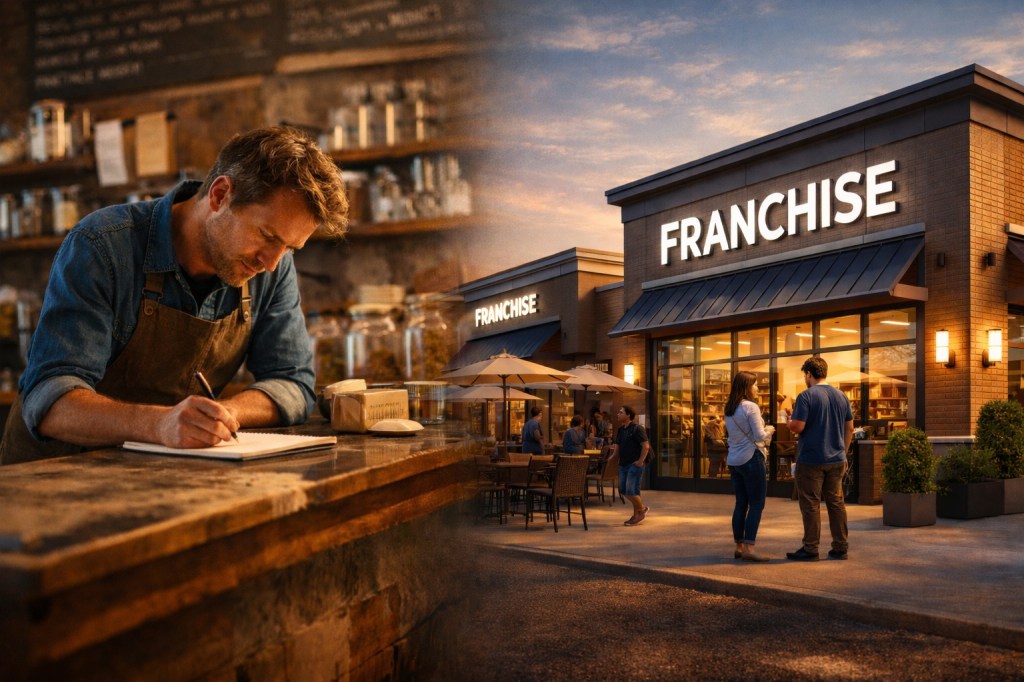
Franchising is often framed as a pathway to scale. In reality, it is a decision to permanently intertwine the fate of a brand with the financial lives of independent business owners. That distinction is not philosophical; it is practical, ethical, and enduring. As 2026 unfolds amid economic recalibration, heightened franchisee awareness, and increased scrutiny of franchise systems, the most responsible form of growth is also the most sustainable one: deliberate franchising.

Responsible franchising and sustainable franchising are not abstract ideals. They are the direct outcome of leadership that thinks beyond speed and short-term valuation. Deliberate franchising sits at the intersection of these principles. It recognizes that growth achieved without discipline may be impressive in the moment, but it is rarely durable. Systems built deliberately, by contrast, are designed to support franchisees through cycles, not just expansions. The question leaders must ask themselves is not whether they can grow, but whether they can do so in a way that deserves long-term trust.

Every franchise system begins with an entrepreneur who believes their business is ready for replication. That belief is often well-earned, but belief is not the same as preparedness. Deliberate entrepreneurs pause before franchising to ask questions that go beyond enthusiasm. Is the model genuinely transferable, or does it still rely on founder-driven decision-making and informal problem-solving? Are unit economics resilient enough to support average operators, not just exceptional ones? Would this business remain viable if market conditions tightened or costs rose unexpectedly? Responsible franchising requires confronting these questions before inviting others to invest.

Once franchising begins, leadership obligations change permanently. Decisions no longer affect only the corporate entity; they directly impact franchisees who have committed capital, signed personal guarantees, and structured their lives around the system. Deliberate franchisors understand that every mandate, every required investment, and every strategic shift must be evaluated through the lens of franchisee sustainability. Sustainable franchising is not about maximizing franchisor control. It is about ensuring franchisees can remain healthy, profitable, and engaged over the long term.

Development is where the consequences of nondeliberate franchising are most often revealed. Growth pursued without discipline can strain support infrastructure, dilute culture, and create misalignment that lingers for years. Deliberate franchisors ask whether the system is ready for additional units before approving them. Are training resources scalable? Are field teams positioned to support new locations effectively? Are markets being awarded based on strategic fit rather than availability? Responsible development prioritizes system health over unit count.

At the same time, deliberateness is not an excuse for stagnation. Sustainable franchising requires leadership that can make timely, informed decisions. Avoiding necessary changes, delaying difficult conversations, or postponing strategic shifts in the name of caution ultimately undermines trust. Franchisees expect clarity, not perfection. Deliberate leaders accept uncertainty, act with intention, and communicate openly about trade-offs and risks.

Diligence is the foundation of deliberate franchising. Responsible franchisors stay close to unit-level performance, not just aggregated metrics. They listen to franchisees with discernment, separating patterns from outliers. They invest in infrastructure before growth demands it. This diligence creates readiness, allowing leadership to act decisively when conditions change. Sustainable systems are not reactive; they are prepared.

Being informed is equally critical. The franchising environment is crowded with innovations, advisors, and promised accelerants to scale. Deliberate franchisors resist the urge to adopt solutions simply because they are popular or available. They ask whether proposed initiatives strengthen the franchise relationship or introduce unnecessary complexity. Sustainable franchising values simplicity, clarity, and execution over novelty.

Trust remains the defining currency of franchising. Responsible and sustainable systems are built on consistent, transparent leadership. Deliberate franchisors earn trust by explaining decisions, acknowledging their impact, and taking accountability for outcomes. Franchisees are more willing to align, invest, and adapt when they believe leadership is acting with long-term stewardship rather than short-term gain.

Culture is the natural byproduct of these choices. A deliberate franchise culture prioritizes clarity over ambiguity and accountability over avoidance. It does not rush change without preparation, nor does it allow unresolved issues to linger. When leadership models thoughtful decision-making and disciplined execution, the system becomes more resilient, more aligned, and better positioned to endure market shifts.

As 2026 continues to test assumptions across franchising, the distinction between fast growth and sound growth will become increasingly clear. Responsible franchising, sustainable franchising, and deliberate franchising are not separate philosophies. They are the same commitment expressed in different ways. The central question for franchisors and aspiring franchisors alike is whether they are willing to lead with the foresight, restraint, and accountability that shared risk demands. Growth achieved deliberately may take longer, but it is far more likely to last—and far more worthy of the trust franchisees place in the system.


About the Author

Paul Segreto brings over forty years of real-world experience in franchising, restaurants, and small business growth. Recognized as one of the Top 100 Global Franchise and Small Business Influencers, Paul is the driving voice behind Acceler8Success Café, a daily content platform that inspires and informs thousands of entrepreneurs nationwide. A passionate advocate for ethical leadership and sustainable growth, Paul has dedicated his career to helping founders, franchise executives, and entrepreneurial families achieve clarity, balance, and lasting success through purpose-driven action.


About Acceler8Success America

Acceler8Success America is a comprehensive business advisory and coaching platform dedicated to helping entrepreneurs, small business owners, and franchise professionals achieve The American Dream Accelerated.

Through a combination of strategic consulting, results-focused coaching, and empowering content, Acceler8Success America provides the tools, insights, and guidance needed to start, grow, and scale successfully in today’s fast-paced world.

With deep expertise in entrepreneurship, franchising, restaurants, and small business development, Acceler8Success America bridges experience and innovation, supporting current and aspiring entrepreneurs as they build sustainable businesses and lasting legacies across America.

Learn more at Acceler8SuccessAmerica.com
Is Your Franchise System Built to Scale… or to Struggle?: Why AI Fluency Is the New Test of Readiness

AI fluency is emerging as one of the most consequential strategic capabilities for franchise organizations, particularly for emerging brands and companies considering franchising as a growth initiative. This is not a discussion about adopting tools or chasing efficiencies. It is a leadership-level issue tied directly to scalability, alignment, franchisee success, brand integrity, and long-term enterprise value. In franchising, where complexity multiplies with every new unit, intelligence embedded into the system is no longer optional.

Franchising works when replication is disciplined and decision-making improves as the system grows. Yet growth naturally introduces friction: more locations, more data, more variables, and greater distance between leadership and day-to-day operations. AI addresses that tension by allowing insight to scale alongside unit count, rather than eroding visibility as the system expands. The real question is no longer whether AI belongs in franchising, but whether a franchise system can realistically mature without it.

This moment should feel familiar to anyone who has spent time in the franchise industry. I recall hearing Erik Qualman speak at one of the Franchise Update conferences roughly a decade ago, when social media was still being debated across franchise systems. His message stood out because it avoided tactics and platforms and went straight to relevance and survival. He framed digital change not as a marketing option, but as a business imperative.

Two of his statements cut through the room then and remain remarkably relevant today. “The ROI of social media is that your business will still exist in 5 years.” And, “We don’t have a choice on whether we DO social media, the question is how well we do it.” At the time, those words felt provocative. With hindsight, they read more like an early warning.

Those ideas were reinforced through Qualman’s influential book Socialnomics, which challenged leaders to recognize that technology reshapes behavior long before organizations adapt structurally. Franchising learned that lesson the hard way. Systems that delayed social media adoption spent years rebuilding consistency, credibility, and control across their networks. Some never fully recovered.

AI represents a similar inflection point for franchising, but with far less patience built into the curve. Social media adoption unfolded over years. AI adoption is unfolding over quarters. The operational impact is deeper, expectations are higher, and the cost of delay compounds far more quickly.

From the franchisor’s perspective, AI fluency increasingly determines whether a system can scale without becoming fragile. Corporate teams are expected to support more locations, analyze more data, and deliver better guidance without proportionally increasing overhead. AI enhances system-wide visibility, enabling earlier identification of performance gaps, sharper insight into unit economics, more effective training, and more informed decisions around pricing, territories, marketing, and labor models.

For emerging franchise brands, the implications are even more significant. Early-stage systems often rely heavily on founder intuition and a small leadership team’s experience. While that may fuel early growth, it does not scale indefinitely. AI helps convert intuition into process and experience into repeatable insight. That transition is critical not only for operational stability, but for credibility with sophisticated franchise candidates, lenders, private equity groups, and future acquirers.

This reality raises difficult but necessary questions for franchisor leadership. How dependent is system performance on a handful of individuals? How quickly can best practices be identified and shared across the network? How early can underperformance be detected and addressed before it becomes systemic? And how attractive is the brand to next-generation franchisees who increasingly expect data-driven support rather than anecdotal guidance?

From the franchisee’s perspective, AI fluency is becoming inseparable from profitability, resilience, and quality of life. Franchisees operate under pressure from rising labor costs, staffing volatility, supply chain complexity, and ever-evolving customer expectations. AI does not replace the operator’s judgment, but it strengthens it. It supports better demand forecasting, smarter labor decisions, tighter inventory control, real-time reputation monitoring, and clearer evaluation of local marketing performance.

This leads to a more fundamental question for franchisees. How much time is spent reacting versus leading? How many decisions are driven by habit rather than insight? And how sustainable is that approach as competition intensifies and margins tighten? AI does not remove responsibility from the operator. It provides better tools to carry it.

Alignment between franchisor and franchisee around AI adoption is therefore critical. When AI is left to ad hoc experimentation, inconsistency and confusion follow. When it is embedded intentionally into systems, standards, and support structures, it creates shared language, shared metrics, and shared accountability. It strengthens trust by replacing ambiguity with clarity and support with substance.

For companies exploring franchising as a growth initiative, AI fluency should be foundational from day one. Franchising a business that is already AI-enabled increases the likelihood that early franchisees succeed, which ultimately determines whether a system gains momentum or stalls. It forces essential questions to be answered early. Are operating systems truly repeatable? Can training scale without dilution? Can performance be monitored without micromanagement? Is the concept designed for today’s operator and tomorrow’s market?

The risks of ignoring AI are not hypothetical. Franchise systems that delay become slower, more reactive, and less attractive to high-quality franchise candidates. Corporate teams spend more time managing noise than driving strategy. Franchisees operate in silos. Competitors that embrace AI position themselves as more sophisticated, more supportive, and more future-ready. Over time, the gap widens, not because one brand is inherently smarter, but because one chose to adapt sooner.

The lesson from social media remains instructive. Franchise organizations do not get to decide whether transformational shifts occur. They only decide how prepared they will be when those shifts reshape the competitive landscape. Today, the most important question in franchising is no longer whether AI delivers a return. It is whether a franchise system without AI fluency can remain relevant, competitive, and valuable in the near future.

For additional perspective on this parallel and why waiting is such a costly mistake, read my article on Substack, “Ignoring AI Is the New Ignoring Social Media: Why Waiting Even a Few Years Could Cost You Your Business”, available HERE.

AI is not a future upgrade for franchising. It is a present-day capability. The franchise organizations that recognize this now will build stronger systems, healthier unit economics, and brands designed to scale with intention rather than scramble under pressure.


About the Author

Paul Segreto brings over forty years of real-world experience in franchising, restaurants, and small business growth. Recognized as one of the Top 100 Global Franchise and Small Business Influencers, Paul is the driving voice behind Acceler8Success Café, a daily content platform that inspires and informs thousands of entrepreneurs nationwide. A passionate advocate for ethical leadership and sustainable growth, Paul has dedicated his career to helping founders, franchise executives, and entrepreneurial families achieve clarity, balance, and lasting success through purpose-driven action.


About Acceler8Success America

Acceler8Success America is a comprehensive business advisory and coaching platform dedicated to helping entrepreneurs, small business owners, and franchise professionals achieve The American Dream Accelerated.

Through a combination of strategic consulting, results-focused coaching, and empowering content, Acceler8Success America provides the tools, insights, and guidance needed to start, grow, and scale successfully in today’s fast-paced world.

With deep expertise in entrepreneurship, franchising, restaurants, and small business development, Acceler8Success America bridges experience and innovation, supporting current and aspiring entrepreneurs as they build sustainable businesses and lasting legacies across America.

Learn more at Acceler8SuccessAmerica.com
The Franchise Development Reset Every Franchisor Should Consider in the New Year

For franchisors, few decisions shape the long-term health of a brand more than who represents it during the franchise sales process and how those conversations unfold. Long before a franchisee signs an agreement, pays a fee, or opens their doors, the relationship has already begun. It starts with dialogue, positioning, tone, and expectations. As franchisors look toward a new year, this is not simply a sales issue to manage. It is a leadership issue that directly influences culture, trust, and the integrity of the system.

Franchise development sits at a difficult intersection of optimism and obligation. On one hand, the role is to inspire confidence, communicate opportunities, and attract qualified candidates. On the other, it carries a responsibility to ensure alignment, accuracy, and long-term fit. Franchise sellers must provide information that is accurate, complete, and fully aligned with proper disclosure. Anything stated, implied, or framed in a way that could be interpreted otherwise introduces risk. Culture is shaped not only by what is written in manuals or stated in mission statements, but by how people talk when no one is listening and how opportunities are described when candidates are excited and appear ready to move forward, even prepmaturely.

The most common friction points rarely come from what is written in the Franchise Disclosure Document. They come from everyday conversations. Earnings potential discussed without full context. Ramp-up timelines portrayed as easier or faster than reality. Support levels implied rather than clearly defined. Flexibility is suggested where consistency is required. Over time, these conversations do more than create misaligned expectations. They quietly establish a culture of interpretation rather than clarity. When that happens, franchisees do not just feel misled. They enter the system with a mindset that exceptions are normal and standards are negotiable.

In-house franchise development teams play a powerful role in setting cultural tone. The language they use, the stories they tell, and the behaviors they model signal what truly matters inside the organization. If internal franchise sellers feel pressure to prioritize volume over fit, that pressure becomes embedded in the culture. Franchisees sense it immediately. As franchisors plan for the year ahead, it is worth reflecting on whether development teams are being rewarded for the right outcomes or simply the fastest growth.

Third-party brokers and franchise sellers are often overlooked as cultural ambassadors, yet their impact can be just as significant. Even though they operate outside the organization, they represent the brand at its most influential moment: the decision to invest. If brokers are not aligned with the franchisor’s values, standards, and expectations, they can unintentionally introduce a culture of overpromising, comparison-driven selling, or transactional thinking. That culture does not stop at the sale. It enters the system with the franchisee and influences how they interact with the franchisor, other franchisees, and their own teams.

As important as this is for the franchisor, there is an equally important obligation to the franchisee. Franchise sales are not only about brand protection or system growth. It is about ensuring franchisees move forward informed, prepared, and confident in the reality of the business they are entering. This responsibility exists because franchising is inherently an interdependent relationship. Interdependence in franchising means the franchisor and franchisee rely on one another for success. The franchisor depends on franchisees to execute the brand, protect the customer experience, and represent the system in their local markets. The franchisee depends on the franchisor for the brand, systems, training, support, innovation, and leadership that make the business viable. Culture is the connective tissue that allows interdependence to function effectively.

When franchisees enter the system oversold or underinformed, the interdependent model weakens. Franchisees may become defensive or disengaged. Franchisors may experience increased support strain, resistance to standards, and erosion of trust. That breakdown does not stay contained. It creates a trickle effect. Field teams feel the tension. Operations become reactive. Support resources stretch thin. Other franchisees observe the friction and question alignment. Even customers can feel inconsistency at the unit level. What began as a development issue becomes a system-wide cultural issue.

Strong franchise systems understand that culture is not established after onboarding. It is established during the sales process. The healthiest brands treat franchise development as the first cultural handshake. They ensure that anyone representing the brand, internal or external, understands not just the economics, but the values, expectations, and responsibilities that come with ownership. They create a shared language that emphasizes realism, accountability, and partnership over hype and urgency.

As franchisors look toward a new year, this is an ideal time to reflect on the culture being reinforced through franchise development. Are franchise sellers modeling transparency or optimism at any cost? Are brokers aligned with the brand’s long-term vision or simply its commission structure? Are franchisees entering the system with a mindset of collaboration or entitlement? These questions are cultural in nature, and they deserve thoughtful consideration in annual planning discussions.

Alignment between leadership, operations, legal compliance, franchise development, and third-party sellers does not happen by accident. It requires intention, clarity, and consistent reinforcement. When development messaging mirrors operational reality and cultural expectations, franchisees enter the system grounded and prepared. They are more receptive to coaching, more committed to standards, and more invested in the success of the broader network.

Ultimately, franchise development either establishes a culture of trust and interdependence or one of skepticism and transaction. Every conversation matters. Every promise, implication, or omission contributes to the culture franchisees carry forward into their businesses. As franchisors plan for the year ahead, the most important growth strategy may not be the number of units sold, but the culture being built through the way those units are sold and the ripple effect that culture has on every stakeholder connected to the brand.


About the Author

Paul Segreto brings over forty years of real-world experience in franchising, restaurants, and small business growth. Recognized as one of the Top 100 Global Franchise and Small Business Influencers, Paul is the driving voice behind Acceler8Success Café, a daily content platform that inspires and informs thousands of entrepreneurs nationwide. A passionate advocate for ethical leadership and sustainable growth, Paul has dedicated his career to helping founders, franchise executives, and entrepreneurial families achieve clarity, balance, and lasting success through purpose-driven action.


About Acceler8Success America

Acceler8Success America is a comprehensive business advisory and coaching platform dedicated to helping entrepreneurs, small business owners, and franchise professionals achieve The American Dream Accelerated.

Through a combination of strategic consulting, results-focused coaching, and empowering content, Acceler8Success America provides the tools, insights, and guidance needed to start, grow, and scale successfully in today’s fast-paced world.

With deep expertise in entrepreneurship, franchising, restaurants, and small business development, Acceler8Success America bridges experience and innovation, supporting current and aspiring entrepreneurs as they build sustainable businesses and lasting legacies across America.

Learn more at Acceler8SuccessAmerica.com