Tag: social networking

The World’s Biggest Cocktail Party… and Nobody Is Networking

Social platforms connected billions of people, yet brands increasingly use them to broadcast. The resurgence of community may finally change that.

There was a time when we didn’t talk nearly as much about social media. We talked about social networking. The distinction may sound insignificant today, perhaps even like a matter of terminology, but I believe it represents one of the most consequential changes in how businesses, brands and individuals have come to use the internet. Social networking was originally about connecting people. We joined networks, participated in groups, introduced ourselves, commented on discussions, exchanged ideas and found people with common interests. Quite often, those online connections eventually moved into telephone conversations, meetings, business relationships and even friendships. The technology was certainly important, but the technology wasn’t the point. The people were.

Somewhere along the way, networking became media, and media changed the objective. Instead of asking who we might meet, we began asking how many people we could reach. Conversations became impressions. Relationships became followers. Participation became engagement rates. Communities became audiences. Listening increasingly gave way to posting. We became fascinated with views, likes, shares, followers, algorithms and eventually virality. Businesses that had initially entered social networks to connect with people gradually learned to behave more like publishing companies, and individuals increasingly began thinking of themselves as personal brands with audiences to cultivate. It was an extraordinary transformation, and in many respects an enormously beneficial one. But after nearly two decades, it may be worth asking whether something valuable was lost along the way.

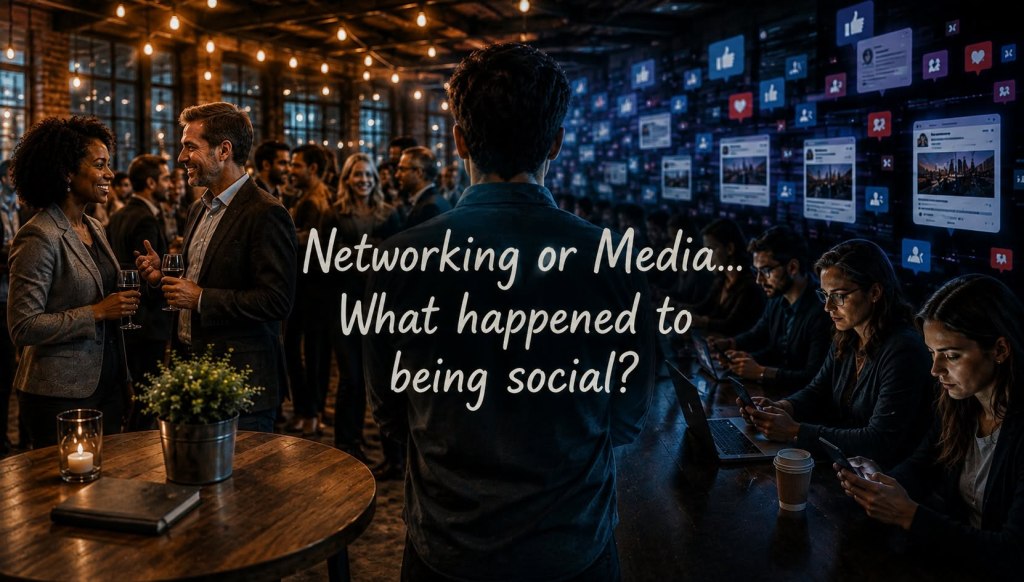
I remember the excitement surrounding social networking in 2009 and 2010, when I was spending considerable time writing, speaking and working with franchise organizations about what was then still a relatively new business phenomenon. What fascinated me wasn’t simply the ability to distribute information inexpensively or reach prospective customers and franchise candidates. It was the possibility of connecting people who otherwise might never meet. I thought of the emerging online world much like an enormous virtual cocktail party. You could walk into a room filled with people from different cities, industries and backgrounds and begin conversations that geography, time and circumstance previously might have prevented.

Think about how we traditionally behave at a cocktail party, networking event or business reception. Most of us wouldn’t walk through the door, climb onto a chair and immediately begin shouting about our company, our services, our accomplishments and whatever we’re selling. We would look around the room. We might recognize someone and say hello. We would introduce ourselves to someone new. We’d listen to conversations before joining them. We’d ask questions. Someone might introduce us to another person because we shared an interest or could possibly help one another. We might exchange business cards and agree to continue the conversation later. Some conversations would lead nowhere. Others could unexpectedly lead to customers, partnerships, friendships, investments or opportunities that neither person anticipated when walking into the room. That was networking, and social networking promised to replicate much of that human behavior on an unprecedented scale.

That thinking was reflected in work I was doing at the time. A 2010 presentation for Virtual Franchise Events described online environments that included lounges, conference halls, roundtables and opportunities for one-on-one interaction and “interactive social gatherings.” The idea wasn’t simply to reproduce a trade show on a computer screen. The larger promise was that technology could create places where people gathered, interacted and developed relationships even when they couldn’t occupy the same physical room. Around the same period, in writing about social media and franchise development, I emphasized the need to move beyond simply distributing information and toward personal interaction. The interaction, I argued, should be subtle and guiding rather than an aggressive sales effort. The objective wasn’t merely to capture someone’s attention. It was to begin developing a relationship.

Looking back from 2026, the contrast is striking. We have built social platforms infinitely more powerful than anything we imagined then. Smartphones have placed sophisticated publishing studios in virtually everyone’s pocket. Video can reach millions of people within hours. Entrepreneurs can build recognizable personal brands without traditional media. Restaurants can show thousands of customers tonight’s special before dinner. Franchise brands can communicate across entire systems almost instantaneously. Small businesses can reach customers around the world. Executives can speak directly to employees, customers and investors without waiting for a newspaper, television station or trade publication to give them access. The democratization of media has been extraordinary, and there is no reasonable argument for turning back the clock on those capabilities.

But there is a reasonable argument for asking what we have done with them.

Open almost any social platform today and everyone seems to be talking. Companies are publishing. Entrepreneurs are publishing. Influencers are publishing. Consultants are publishing. Politicians are publishing. Employees are publishing. Customers are publishing. Artificial intelligence is now helping all of us publish even more. Content calendars are filled weeks in advance. Videos are optimized for attention. Headlines are designed for clicks. Posts are evaluated by impressions, engagement and reach. Algorithms are studied, praised when they favor us and blamed when they don’t. Businesses invest enormous amounts of time determining what they should post next.

Perhaps the more revealing question is how much actual networking is taking place.

How many businesses intentionally introduce people within their networks to one another? How many brands participate meaningfully in conversations that aren’t taking place beneath their own posts? How many executives spend time listening to customers rather than studying reports about customers? How often does a thoughtful comment receive a thoughtful response rather than a quick “Thanks for sharing”? How many organizations know how many genuine business relationships were created through their social presence last year? How many even attempt to measure such a thing?

We may have created the largest cocktail party in human history and somehow ended up with everyone standing on chairs shouting announcements at one another.

That’s the irony of where social networking has taken us. We have never been more connected technologically, yet much of what takes place on social platforms increasingly resembles broadcasting rather than networking. The platforms are called social, but the behavior frequently looks remarkably similar to traditional media, except now everyone owns a microphone. Brands build audiences. Individuals build followings. Companies distribute messages. The tools changed dramatically, but in many cases we recreated the one-to-many communication model that social networking originally appeared capable of disrupting.

This doesn’t mean social media has failed. Far from it. Social media has become one of the most powerful communication, marketing and information systems ever created. For brands in particular, the benefits have been enormous. Businesses can tell their stories directly, respond to crises quickly, demonstrate expertise, humanize leadership, showcase customers and employees, recruit talent, generate leads and reach audiences that would have required enormous advertising budgets a generation ago. An entrepreneur operating from a home office can command an audience that once required ownership of a television station or newspaper. That is remarkable progress.

The question is whether reach and relationship must be mutually exclusive. I don’t believe they are. In fact, I believe brands that recognize the difference may be approaching one of the most significant opportunities of the next several years.

We’re already seeing renewed interest in community. Businesses are developing private groups, membership communities, customer networks, founder communities, professional groups and niche environments organized around shared interests. Entrepreneurs are discovering that several hundred highly engaged people can sometimes be more valuable than tens of thousands of passive followers. Brands are increasingly recognizing that customers don’t merely want to consume messages; many want to participate, contribute, share experiences and interact with people who have something in common with them. In some respects, what is being promoted today as the future of community-led business looks remarkably similar to what social networking was supposed to accomplish in the first place.

The danger, of course, is that marketing has a habit of turning every human behavior into a tactic. If “community” simply becomes the next marketing buzzword, we will repeat the same cycle. Companies will establish community strategies, community KPIs and community funnels. Managers will be instructed to increase community engagement by a certain percentage each quarter. People will be pushed through communities toward transactions, and before long “community” will become little more than another word for audience. That would miss the point entirely.

A genuine community isn’t simply a group of people listening to the organization that assembled them. People within a community communicate with one another. They exchange ideas, help each other, challenge each other, recommend resources, make introductions and develop relationships independent of the brand at the center. The organization may provide the room, but it doesn’t need to dominate every conversation taking place inside it. In fact, one of the clearest signs that a community has become valuable may be when meaningful conversations continue even when the organization isn’t participating.

This presents an interesting strategic question for brands. What would happen if companies began thinking about social networking again rather than simply social media? Instead of beginning every morning by asking what they should post, what if they asked who they should talk with? Instead of concentrating primarily on increasing followers, what if they focused on creating relationships? Instead of evaluating success almost exclusively through views and impressions, what if they considered how many meaningful conversations were started? Instead of always trying to move people into a funnel, what if they concentrated on becoming valuable enough that people voluntarily remained connected?

The opportunity becomes even greater when a brand stops thinking only about its relationship with individual customers and begins thinking about relationships among the people surrounding the brand. A restaurant doesn’t have to limit its social presence to photographs of food, promotions and announcements. It can help create conversations within the neighborhoods it serves. A franchise organization doesn’t have to use social platforms solely to promote its franchise opportunity. It can create environments where franchisees, prospective entrepreneurs, suppliers, employees and business owners exchange knowledge and experiences. A professional services firm doesn’t need to demonstrate expertise through an endless stream of thought leadership while everyone else politely watches. It can become a catalyst for introducing people who should know one another.

There is a profound difference between building an audience around your brand and building a network around a shared interest. The first makes the company the center of attention. The second makes the company valuable because it helps create connections. One asks people to watch. The other gives people reasons to participate.

There is also a practical business argument for reconsidering this distinction. Brands that build their entire social strategy around reach increasingly depend upon platforms they don’t control. An algorithm changes and organic reach disappears. Advertising costs increase. A platform falls out of favor. A new one emerges. Suddenly, a company can discover that years spent accumulating followers didn’t necessarily translate into years spent building relationships. The audience belonged, at least in part, to the platform all along.

Relationships behave differently. When someone knows you, trusts you, subscribes to your communications, participates in your community, attends your events, introduces others to you and engages with people within your network, that relationship can transcend any particular social platform. Facebook may facilitate the introduction. LinkedIn may start the conversation. Instagram may create awareness. An email newsletter, virtual event, private group or face-to-face meeting may deepen the relationship. The technology changes, but the human connection survives. Perhaps that was one of the most important principles embedded in the original idea of social networking: the platform was never supposed to become the relationship. It was supposed to facilitate one.

That idea may become even more important as artificial intelligence accelerates content creation. We are rapidly entering a world in which almost every organization can produce competent articles, social posts, images, videos, presentations and marketing messages at extraordinary speed and relatively little cost. The amount of content competing for attention will continue increasing. If everyone can produce more media, media itself becomes less scarce. When something becomes less scarce, its ability to differentiate tends to decline.

Human connection, however, may move in the opposite direction.

Trust is difficult to automate. Genuine conversation is difficult to scale. Relationships take time. Community requires participation. Introductions require judgment. Listening requires patience. Helping someone without immediately calculating the return isn’t easily captured on a marketing dashboard. In a world overflowing with automatically generated content, those distinctly human behaviors may become more valuable rather than less.

Perhaps that is why the renewed interest in community deserves more attention than simply treating it as another marketing trend. Maybe we’re witnessing the beginning of a correction. After years of building enormous audiences and sophisticated publishing machines, perhaps businesses and individuals are beginning to recognize that reach without relationship has limitations. Having 100,000 followers isn’t necessarily the same as knowing 100,000 people. Being seen by millions isn’t the same as being trusted by hundreds. Engagement isn’t necessarily connection, and attention isn’t automatically community.

I don’t believe the answer is abandoning social media. That would ignore everything valuable it has created. Instead, perhaps the opportunity is to reclaim the social part of social media. Use media to initiate conversations rather than treating the publication itself as the objective. Allow conversations to develop into relationships. Allow relationships to create communities. And allow those communities to produce opportunities that advertising, algorithms and content calendars cannot manufacture on their own.

Nearly seventeen years after those early conversations about social networking, I find it fascinating that we’re again talking so much about community, belonging, authenticity, conversation and human connection. Maybe we’ve come full circle. Maybe people are growing tired of being audiences, followers, prospects, targets and data points. Maybe they want to participate again. Maybe they want to be part of something instead of simply being marketed to by something.

If social networking originally resembled a virtual cocktail party, perhaps somewhere along the way we became so focused on building bigger stages, brighter lights and louder microphones that we forgot about the people standing in the room. We became extraordinarily good at attracting attention while gradually becoming less intentional about what happened after we received it.

Perhaps it’s time for brands to step down from the stage and walk back into the room. Introduce people. Listen to conversations. Ask questions. Participate in discussions that aren’t about themselves. Help people connect with one another. Create reasons for people to return even when nothing is being sold. Use technology for what once made social networking seem so revolutionary: bringing people together who otherwise might never have met.

So maybe the question isn’t whether social media has been good or bad for brands. Clearly, it has created extraordinary opportunities. The more interesting question is whether we’ve taken one of the greatest networking technologies ever created and gradually turned it into another broadcasting system.

And if we have, perhaps the next great innovation in social media won’t be technological at all.

Maybe it will simply be remembering how to network again.

What do you think? Have we gained more than we’ve lost in the evolution from social networking to social media? Is today’s movement toward community simply the next marketing strategy, or is it evidence that people and brands are searching for something we left behind? And perhaps most importantly, when you log onto a social platform today, are you there to network… or are you there to broadcast?

Maybe the answer to that question says more about the future of social media than any algorithm ever could.


Social Networking & Franchise Lead Generation Revisited

In light of discussions at this year’s International Franchise Association Convention about “new” ways of generating franchise candidate leads, and as I continue to field an influx of questions from start up and emerging franchisors trying to find a “silver bullet” to jump-start franchise sales, I am again sharing the following article I wrote back in 2011 as the principles continue to apply to this day. Actually, they may apply even more today as more and more have adopted social networking platforms as major sources of securing information and for communicating.

Social Networking and Lead Generation

We’re often asked if social networking can be utilized effectively for franchise lead generation purposes. Well, the answer is a resounding, “Yes!”

When working on a lead generation project, establishing objectives is paramount to the success of the overall strategy. Assuming the strategy has been developed, complete with establishing an ideal candidate profile and identifying specific geographic areas for expansion, we typically proceed as follows:

First, we focus on networking groups that include individuals that best fit our client’s ideal candidate profile. From there we drill down to individuals in the geographic area we’re targeting per our plan. Let’s say teachers fit my candidate profile. we would search out networking groups specific to teachers, education, etc. Then, we would participate in discussion groups to get a feel for the group and to be noticed and subsequently accepted within the group. There’s always a spin one could use to achieve this objective.

Next, we seek out members from the specific geographic areas we’re targeting and begin communicating what we’re ultimately trying to accomplish… to generate interest in a specific franchise opportunity. Sometimes there’s interest right there in the group. Often, it’s a referral that we get that makes the effort within that group worthwhile.

We also focus on groups that can provide me with referrals such as insurance agents, realtors, financial planners and attorneys. Again, if you’re proactive within networking groups it’s relatively easy to enlist support and gather information. Again, there has been some interest from members of these groups but it’s amazing how many times we’ve been referred to an interested party who lives in another part of the country that is willing to jump at an opportunity in my target area. You see, the fact that it stems from a referral is key!

Lead generation through social networking takes time and effort no doubt. However, once you’re proactive within networking groups, you almost end up with a snowball effect as the leads come in bunches. Some leads start out by simply posting a thought provoking discussion with some back and forth interaction with a responder and the responder saying,”what is it that you do?” Next thing you know, you’re discussing an opportunity and the door is wide open.

Most times however, it takes considerably more effort, but we’ve found people are networking online and participating in discussion groups for specific reasons. They’re all looking to expand their business, improve their position, seek out various types of opportunities, and make money. Attracting these individuals online sure beats running an ad in the local paper and waiting for the phone to ring!

An Hour a Day with The Big Three Social Networks

I often hear many individuals state they don’t have enough time in a day for social media. Well, I know we can all squeeze in an hour of social media work somewhere, but the key is to do it efficiently to accomplish doing it effectively.

Just like eating an elephant, take one bite at a time. Never try to do too much at one time. And, try to make all your social media activity relevant and in line with your goals and objectives for entering social media in the first place. Once you’re past the development stage of setting up accounts at the Big Three social networks, LinkedIn, Facebook and Twitter, including establishing “complete” profiles, dedicate 15 minutes to each network which I recommend doing so at the beginning of the day. Total time spent – 45 minutes.

Check previous days’ activity, making sure to use each networks “notifications” features effectively. Respond to direct comments and requests accordingly. Check discussions and respond as necessary, review other individuals’ responses, always keeping an eye open for new contacts. Post a discussion, status statement as appropriate Again, keep your goals and objectives in mind. Last, post a few tidbits of information through links to items of interest to your target group. Hey, I hate to beat dead horse here, but make sure everything you do is in line with your goals and objectives for being involved in social media in the first place.

Establish Google Alerts so you know what is being said about you or your brand throughout the day. As you check your email, whether by computer or mobile device, take a glance at any alerts that have come through, and only immediately address negative comments. Then, at the end of your day, take five minutes to review each of the three networks activity, respond only to activity that is very pertinent or urgent, and mentally prepare for your next morning’s activity. This will give you some time to think about discussion responses, etc. Total time spent – 15 minutes.

Shortcuts and Tools Help!

As for posting links to tidbits of information, as you progress through the day, keep an eye open for information through newsletters you subscribe to and in reading news online. When you find something of relevance, bookmark it for later in the day. Use tiny urls to convert long links to manageable links and to accommodate 140 characters within Twitter. Learn how to use key tools such as Facebook applications that convert your Facebook activity to Twitter activity, and applications that enable you to post in advance throughout the week.

*This post was originally published on this site March 2011


Bookmark and Share

Optimizing Your Social Networking Presence

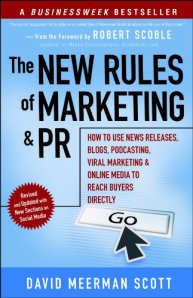
Whether you’re establishing your presence on Facebook, LinkedIn or any of the other social networking sites, it’s important to get the most out of your experience for it to be effective in your marketing efforts. Basically, it’s important to optimize your social networking presence. In the book, The New Rules of Marketing & PR, the author, David Meerman Scott, detailed how to get the most out of social networking sites for marketing with the following suggestions:

Target a Specific Audience – Create a page that reaches an audience that is important to your organization. It is important to be thinking about a small niche market.

Be a Thought Leader – Provide valuable and interesting information that people want to check out. It is better to show your expertise or at solving problems than to blabber on about your product or company.

Be Authentic and Transparent – Don’t try to impersonate someone else. It is sleazy and could do irreparable harm to your company and to your reputation.

Create Lots of Links – Link up to your own sites and blogs, and those of others in your industry and network!

Encourage People to Contact You – Make it easy for people to reach you online, and be sure to follow up personally on your fan mail.

Participate – Create groups and participate in online discussions. Become an online leader and organizer.

Make it Easy to Find You – Tag your pages and add your pages into the subject directories. Encourage others to bookmark your pages.

Experiment
– These sites are great because you can try new things. If it isn’t working, tweak it, or try something new.


Bookmark and Share

What questions do you need answered before including social media in your organization’s marketing strategy?

sales questionsHere’s five questions (and answers) to start with:

1. Isn’t social media just a new type of ad?

No it’s more than that, it’s actually a whole new way of reaching clients. If you think of ads as one technique used to communicate your value to prospects, social media is a whole new channel to do this. Yes you can still communicate your value but rather than trying to cram it all into one sentence (as you would with an ad) you have to be a bit more patient.

2. Isn’t all this social media stuff expensive?

Well yes and no. From a cash investment perspective, most of the top online social media services are free of charge to register with. However, to really make an impact through these tools you need to spend a lot of time on them. You have to explore, see who’s talking about things related to your company and try to open up a dialogue with them in a non-creepy way.

3. But I hear it’s all a fad anyways.

Certainly various social media services will come and go and some will be a bit more gimmicky than others, but the underlying principle of social media, transparency, is hard-coded into the very DNA of the world wide web. If you can build your social media ‘muscles’ on one tool you’ll quite easily be able to transfer this skill set and mentality to other tools.

4. It’s all very well to make ‘friends’ online but SHOW ME THE MONEY

There are clear cut and well documented examples of companies making money from social media. But it doesn’t quite work like a typical print/online ad. You’re not likely to get a flood of business from your first blog post, your first message on Twitter or your first video uploaded to YouTube. But as you start developing a base of followers you can really start to leverage the power of social media. Imagine having a few thousand online users following your every uttering on Twitter, or subscribing diligently to your blog updates. These become powerful channels for launching new products, promoting special offers and even testing products.

5. Ok, so I guess we’ll need to hire some guru to get us set up?

By all means if you can, hire one of the multitude of talented social media gurus and specialist agencies. But I think you’d do just fine with a couple of diligent, friendly and passionate members of staff. After all, you and your staff know your product and your clients better than any guru. Also, in the world of social media, an authentic, if perhaps clumsy approach trumps a polished but scripted approach. People can usually see through that quite quickly and your credibility will drop dramatically.

These are just a few of the questions and answers I recently posted on LinkedIn. I’m sure you have some more, so please fire away and I’ll do my best to provide you with the best answer or solution.

Has LinkedIn Run Its Course?

LinkedIn logoIs LinkedIn missing the boat in keeping up with Facebook? Is it due to inability to utilize various applications, tools, etc. in making the social networking experience more enjoyable and less regimented. Hey, one can’t even make text “bold” in a discussion!
Would the ability to post actual audio and video within discussions enhance the experience? Has LinkedIn just become a social networking HR site and nothing more? If, and when, the economy turns around and unemployment falls to more respectable levels, will LinkedIn activity decrease significantly?

Personally, I do believe LinkedIn is missing the boat, but I would love to hear your opinion as well.

Please Note

Within 15 minutes of posting this discussion on a Linkedin group, I received the following response that I now feel compelled to share with my readers, along with my response to the same which should clarify that I am, in fact, a Linkedin proponent and only am looking for added enhancements and features to LinkedIn.

Owner of a Marketing Group responded: “Has LinkedIn run its course? Not even close. If you feel it has, move on, and stick to Facebook, period. We have had remarkable results, 20+ new clients in 2009 alone, due to LinkedIn. But, then again, we have a tangible service. How is the “Social Media Coach” biz treating you? If it were not for LinkedIn, I doubt you would even be brandishing that fancy title. Please keep that in mind when being negative about all the benefits that a 100% no-cost LinkedIn account can produce.”

I responded accordingly: “Just because I asked a question, does not mean I am negative. If anything, I utilize social media to encourage participation, which is an integral part of successful social networking.

Further, as much as I utilize LinkedIn, I would like to see more features and enhancements, just as I would with Facebook, Twitter, or any other social media. And, the best way to get LinkedIn to take a look at adding the same, is to discuss the same within the groups. More than likely they are already considering the features I mentioned. Maybe some more discussion would move them along.

I would highly recommend you consider adding Facebook, Twitter and other social media to your LinkedIn activity and your 20+ new clients might have been 40 or more. Integrating all types of social media together, and with traditional marketing, has proven quite successful for many businesses and is advocated by many leading social media experts.

Last, I’m a firm believer in the positive, and in developing and strengthening relationships with everyone and anyone I can help, or that can help me. That being said, I’m amazed you’re as successful as you claim with such a condescending attitude and your lack of ability to see beyond the obvious. So, please consider this social media coaching on the house and with my sincerest compliments.

Oh, and by the way, if you truly embrace LinkedIn and all it has to offer, I would think you would have followed a very common LinkedIn tip, and check an individual’s LinkedIn profile, including connections, group membership and discussion activity, before engaging that individual. In my case, you would have certainly realized I am a LinkedIn proponent by the number of my connections and extensive group participation both in posting discussions and responses alike.”

CEOs and Social Media

Today, Gini Dietrich, CEO at Arment Dietrich PR presented an interesting question on the company blog, F.A.D.S. (the Fight Against Destructive Spin), “Should CEOs Spend Time On Social Networking?” Of course, always having to add my two cents, I responded accordingly.

CEO“I would be surprised if any CEO of a publicly-traded company had a social media presence. The reason I say this is because of the SEC and FTC.

The SEC has certain rules about information being presented and disclosed to the public and the CEO would need to be extremely careful as to what he or she communicates, even through his or her own personal social networking efforts. From a liability standpoint, I’m not sure the benefits outweigh the potential downside.

With respect to the FTC, the issue here is the marketing message and how it can and may be perceived. Currently, the FTC is considering guidelines and rules about marketing messages being conveyed through social media. Again, as the leader of a public company, the CEO must tread carefully and, even in conveying a marketing message, must be very careful not to break any SEC rules. Again, the benefits need to be weighed against potential consequences.

All that being said, I stongly believe public companies should have a major presence in social media, including social networking, letting the marketing experts spearhead the activity and content. While doing so, I do believe the CEO could, and should, participate strategically with key, well-defined content, more to enhance the overall effort as opposed to being front and center.

Now the flipside, private companies. I do believe CEOs of private companies need to be as transparent as possible. They’re usually the vision and drive behind the company. His or her thoughts and statements lend a great deal of credibility to the company, which ultimately may be defining factors in a customer, client, vendor or partner doing business with the company.

Often, the CEO, “is” the company which why we see companies named after the Founder and CEO. Many times, the CEO is actually the “commodity” being sold by the company. This is especially true with professional organizations, consulting companies, etc.

Service and product driven companies are different as there are usually consumers or clients as end-users. As such, they rely on the “personal guarantees” of the CEO and that message usually needs to be promoted to drive business. I’m thinking along the lines of George Zimmer, CEO of Men’s Wearhouse.

When it’s all said and done, there are few, more efficient ways of promoting a business, large or small, than through social media, and social networking. The messages are concise and clear, and often present the human side of the business. And, clients and customers alike, feel more confident “knowing” the CEO and his or her thoughts, feeling more comfortable with their decision to do business with the company or organization.

Here’s a simple, yet totally unscientific rule of thumb: If a business needs to have the CEO’s personal guarantee on loans and lines of credit, then the CEO should be very active in social media and social networking activities. If the company can enter into loan and credit agreements without any personal guarantees, it’s best to leave the social media and social networking efforts to the marketing experts.”

Please note: CEOs of franchise organizations also need to be careful not to present inadvertent earnings claims in any social media activities.

Social Media ROI: Is It Worth The Effort?

Many of our readers and clients have asked about quantifying social media results and determining a return on investement. The following article by Julie Keyser-Squires, APR provides a great perspective of the subject along with some suggestions that can be utilized in various franchise businesses. Ultimately, social media can improve the bottom line for franchisors and franchisees, alike.

Franchisors, Owners, Operators: Questions You Always Wanted to Ask | By Julie Keyser-Squires, APR
as posted June 3, 2009 on HospitalityNet.org

If you are a franchisor, owner or operator, you may be asking these four questions about social media:

ROI1.What is the ROI of social marketing?
2.How aggressively do we want to play on the social media front?
3.Is it enough for the brand to communicate on behalf of hotels or do franchisees want their hotels to provide individual promotions and unique offerings?
4.What kind of manpower does it take to stay in touch with “followers”? Can hotels feasibly dedicate the resources individually, or should the responsibility be with a brand marketing and eBusiness effort?

Here are the answers, with a focus on social media sites Twitter and Facebook. First, however, would you consider one more question that could jump start your participation in social media:

“How did you create your revenue management strategy and processes?”

1.What is the ROI on your revenue management program?
2.How aggressively do you deploy it?
3.Is it owned at the brand level, the property level, or both?
4.What are the manpower commitments? 100% to 25% of one — or more – person’s time?

Revenue management and marketing are two sides of the same coin. Both are integral to every area of the enterprise; each requires internal consensus and a cultural shift; and both can positively impact top line revenue. You might be able to leverage an earlier learning curve as you consider these questions about your social media involvement.

1. What is the ROI of social media (or “Want a cheap hotel? Just give up the bed.”)

In social marketing, is Return on Investment becoming Return on Engagement? Possibly. Although among franchisors, owners and operators it is still in the early adoption phase, Kimpton Hotels & Restaurants and luxury resort The Rancho Bernardo Inn already realize measurable success.

•Since engaging in social media in 1Q ’09, visits to the Kimpton website have increased 500 percent and 600 percent (year over year) from its Facebook fan page and Twitter, respectively. Look for the goldfish icon.

· General Manager John Gates (@GMGoneMad on Twitter) at the luxury destination resort Rancho Bernardo Inn realizes two to three responses per offering of his pop up specials on Twitter, including the Inn’s exciting “Survivor Packages” below:

o Posted 8:50 AM May 15th . “Check out our new “Survivor” Package: Just $219 per night,including deluxe accommodations and breakfast for 2. Stay tuned for details…”

o And eight posts later with each “tweet” shaving $20 to $30 off the rate:

o Posted 7:30 PM May 15th. “My FINAL offer: Stay for $19 without breakfast, honor bar, A/C, heat, pillows, sheets, lights, linens, toiletries or bed!”

· Fairmont Hotels & Resorts is on both Twitter and Facebook to create a greater awareness and understanding of its brand.

A quick search on Twitter.com reveals that companies like Wyndham Worldwide Corporation, Choice Hotels International, Inc., Hilton Hotels Corporation, Best Western International, Inc., and InterContinental Hotels Group are starting to have a presence as well.

2. How aggressively do we want to play on the social media front?

•Depends on your business. A personality driven sales approach like Kimpton’s, which is not a hard sell, may be a good fit.
•• Consider a balance between exploring social marketing venues and executing on your existing marketing and Internet public relations plan.

3. Is it enough for the brand to communicate on behalf of hotels or do franchisees want their hotels to provide individual promotions and unique offerings?

•Both.
•Facebook lets individual hotels share tips about their cities and local promotions.
•On Facebook, people post interesting content three to four times a week, which is manageable for most hotels (Twitter posts can stream into Facebook, too, which lets you repurpose content.).
•Twitter, where the norm is three posts per day, could be a better fit for corporate communications teams, although many properties are on Twitter as well.
•Franchisors, owners and operators that allow any employee to start a Twitter account might consider instituting corporate social computing guidelines. IBM’s social marketing guide is a good example and may be modified [http://www.ibm.com/blogs/zz/en/guidelines.html].

4. What kind of manpower does it take to stay in touch with “followers”? Can hotels feasibly dedicate the resources individually, or should the responsibility be with a brand marketing and eBusiness effort?

•Consider carving resources out of your existing communications — or revenue management — team.
•During the learning curve, maintaining a presence on Facebook and Twitter can take from 15 to 30% of one person’s time for a brand the size of Kimpton. Tools like TweetDeck, which let you categorize the people you follow on Twitter, can streamline tracking “followers.”
•Some brands, like Fairmont, have a different individual dedicated to each social media touch point. Team members can spend from 30 to 50% of their time on social media and the remainder on traditional marketing.

If you are a franchisor, owner or operator, you may be guiding your team to tighten the relationship between revenue management and marketing. You know that promotions which include precisely targeted incentives can drive incremental revenue to the top line; social media gives you tools to serve them up in engaging ways.

Julie Keyser-Squires, APR, and CFO, vice president of Softscribe Inc., is passionate about using technology to connect people and ideas. You can give her a shout at Julie@softscribeinc.com, on twitter @Juliesquires, make a comment on her business blog, “First Light, and sign up for her free quarterly video email snack at www.marketingsnacks.com.

Act Like It’s A Party!

Party TimeJust finished reading my “Get to the Point” email from Marketing Profs and smiled when I saw the headline “Be Professional. Act Like It’s A Cocktail Party.” As you may know from reading my four part series “Franchise Development via Social Media” on this blogsite, I referred to social networking sites as “Virtual Party Rooms” and instructed people to act the same as they would if they were in-person at a party. Mingle. Participate in discussions. Share information. And, shhh!, sales effort should be subtle.

Anyway, I’ve reposted the Marketing Profs email below as it reinforces what we’ve been discussing all week about social media.

Be Professional: Act Like It’s a Cocktail Party
as distributed by Marketing Profs via email (May 22, 2009)

You might have seen the PSA in which a teenage cyber-bully reads her hateful words from the podium of a school assembly. The absurdity of the scene illustrates a disconnect that often exists between our online and offline behavior—when emboldened by the impersonal buffer of a social network, we might say or do things we never would in person.

In a post at his Web Ink Now blog, David Meerman Scott encourages readers to treat social-networking sites as if they’re cocktail parties. In other words, to interact with others in the same way you would at a face-to-face industry mixer. To make his point, he asks questions like these:

Do you go into a large gathering filled with a few acquaintances and tons of people you do not know and shout “BUY MY PRODUCT”?

Do you go into a cocktail party and ask every single person you meet for a business card before you agree to speak with them?

Do you listen more than you speak?

“Sure, you can go to a cocktail party and hit everyone up as a sales lead while blabbing on about what your company does,” says Scott. “But that approach is unlikely to make you popular.”

Your Marketing Inspiration: Before you say something at Facebook or elsewhere, ask yourself if you’d say it to the person standing next to you. Unless you’re really obnoxious, a “yes” means it’s probably okay.

Social Media to Franchise Sales: Fantasy or Reality?

Let’s assume you’ve followed the advice and quidelines in the first three segments of the series on Franchise Development via Social Media. You’ve established your “Virtual Meeting Room” as a Facebook group page and requests to join are submitted everyday. Customers of your franchisees are joining and posting comments about how much they enjoy the experience at the franchise locations. Franchisees have posted some testimonials that really do complement the Founder’s video about his passion and vision for the business. You’re even surprised at how many corporate and franchisee employees have participated and posted comments and photos. All-in-all, you’re proud of the Facebook page and proud of the effort put into developing and maintaining the page.

You’re now looking at you’re social media strategy and you preview the company blog. You feel the content may be all over the board, touching on franchise development, expansion into the Southeast, a new franchisee in Santa Fe, community activity at the franchise location in Seattle and even an article submitted by one of your franchisees about one of his long-time customers, but then you stop a realize how much this menagerie of topics, text, graphics and photos portrays the true face of the franchise concept. You make a note to have your social media administrator issue a press release on just that thought.

twitter imagesA quick review of Twitter puts a smile on your face as you see the number of people following the concept increasing everday. Then you recall the blog stats revealed a sharp increase in visits from Twitter. Wow, there’s a positive trend here we need to watch. Come to think of it, you’ve noticed an increase in franchise inquiries and wonder if there’s a correlation here. You then look closely at the new people following on Twitter and you backtrack to the company’s recent posts and discussions in several LinkedIn and Facebook groups that just so happen to consist of educators, and realize many of the new franchise inquiries have educational backgrounds. Hmmm, you decide to cross-check the names against LinkedIn profiles and smile again as you notice they’re members of LinkedIn, are in the specific groups you’ve targeted, and many have actually participated in the group discussions where the social media administrator posted some very interesting discussions about careers after teaching and about moms returning to the workforce or exploring career alternatives. It sure is coming together.

You note there are some qualified candidates frequently visiting your Facebook group page, checking out the same information repeatedly and posting specific questions about your franchise opportunity. You’ve even noticed some candidates posting comments about the customer testimonials and some personal messages about the Founder’s video. Now what? Certainly this social media thing isn’t magical that it’ll actually close a few franchise deals, right?

personaltouchJust like you’ve integrated traditional marketing strategies with social media strategies, you need to be integrating personal interaction as well. However, instead of an aggressive, focused sales approach, the interaction should be subtle and guiding. Use the social media tools to make your points and make the experience enjoyable and interesting. Your candidates will most likely marvel at the new technology and feel comfortable learning about the technology AND the franchise concept. And yes, they’ll be more comfortable with you and be fully at ease working through disclosure and the finer points of the concept itself.

The rest comes down to guiding your candidates towards making a decision as it will now fully be an informed decision that has been validated by the social media experience AND the franchisees the candiates have contacted. Hmmm, your franchisees actually feel more part of the franchise sales process than ever before. You smile again as you realize it did make the process easier than in the past. Yes, it’ll be very nice to achieve your franchise development goals once again. Maybe next year, you’ll actually exceed them!

Fantasy or Reality? Achieveable or Not? Easy or Hard? That’s up to you and your team. It comes down to personal accountability, diligent execution of your strategy and plan, professional handling of franchise candidates at all times and above all, NO SHORTCUTS!

Personal accountability is necessary in monitoring your social media activity, updating blog content and keeping things fresh. Nobody will stay at a dull party, right? Putting off things for tomorrow that should be done today is just not acceptable. It becomes a reflection of how you handle even the simplest things and the a lack of urgency and poor attention to detail will translate into how you’ll handle the franchise sale and ultimately, your franchisees.

Diligent execution of your strategy and plan is essential. Certainly, you’ll make adjustments along the way. But your plan is your roadmap. Follow it as closely as possible. Allow extra time and resources as necessary for roadblocks and detours, but stay on course. Monitor your progress. How fast did you get from point A to point B. How fast did a candidate get from point A to Point B? Is the process slowing down or speeding up? Why? Do you need to do some system maintenance to the social media vehicle? Maybe your videos aren’t playing correctly? Maybe the photos aren’t laoding fast enough? Maybe it’s time to bring in a technician so you can get back on the road as quickly as possible?

Professional handling of candidates means working with each candidate as you would want to be worked with and treated if you were the one on the verge of making a substantial investment, maybe putting your life savings on the line! It means converying a sense of urgency when asked for information. It means paying attention to detail in something as simple as pronouncing their name correctly all the way to something complex such as full disclosure of the franchise concept. And, it means having the right attitude and conveying the same at every moment of working with the candidate at every point of “contact” including by email, on the phone, in-person, and yes, in the virtual world. Keep in mind, at all points of contact, your attitude will shine through so make sure it shines bright and your franchise future will shine bright as well!

Thank you for travelling with me on this exciting, eye-opening journey. It will be an experience you should be able to relive everytime an individual expresses interest in your concept. At that point, it’s time to smile, focus on the resources you’ve invested, the time you’ve dedicated, and the vision and passion you had when you first started in franchising, and share it with your candidate just as you would share your life with a new addition to your family.

If you have any questions or comments, please feel free to submit them in the space below. If you would like to contact me directly, my email is segreto.paul@gmail.com. In any case, I will respond promptly.