Franchising needs an honest conversation about the difference between growing a system and strengthening the businesses within it.
Let’s be honest.
If your franchise agreement came with a money-back guarantee—not just a refund of the franchise fee, but reimbursement of the entire initial investment—what percentage of your franchisees would exercise that clause today?
For the sake of the question, assume they could also exit their related obligations without a lingering financial burden. A clean break. The opportunity to get their money back, go home, and decide what comes next.
How many would take it?
And how many would stay because, knowing everything they know today, they would choose your brand again?
I am not suggesting that franchisors offer such a guarantee. Business ownership involves risk. I am suggesting that the answer to that hypothetical question might reveal more about the health of a franchise organization than its next development announcement.
Because there is a considerable difference between a franchisee who wants to remain in a system and one who cannot afford to leave it.
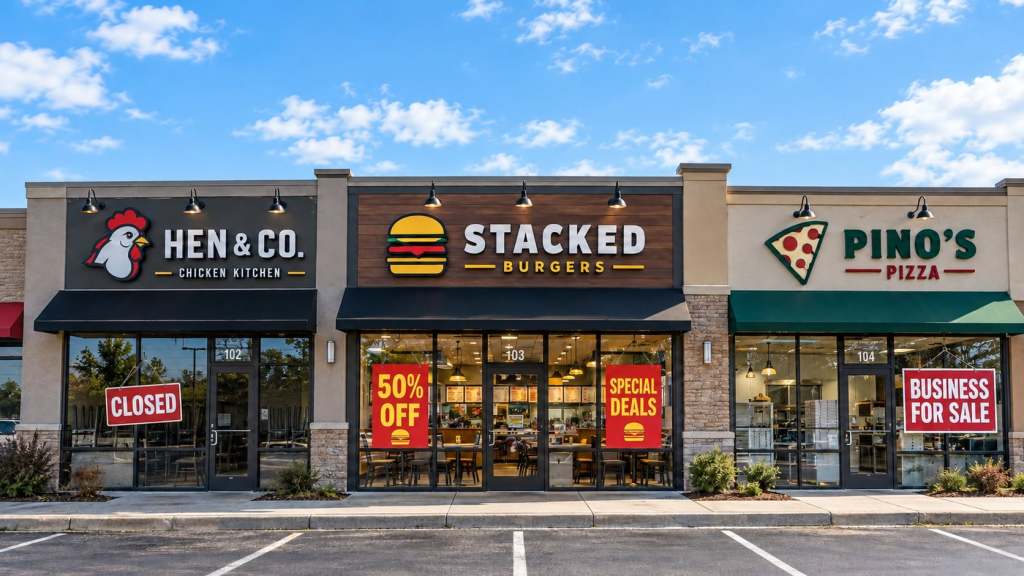
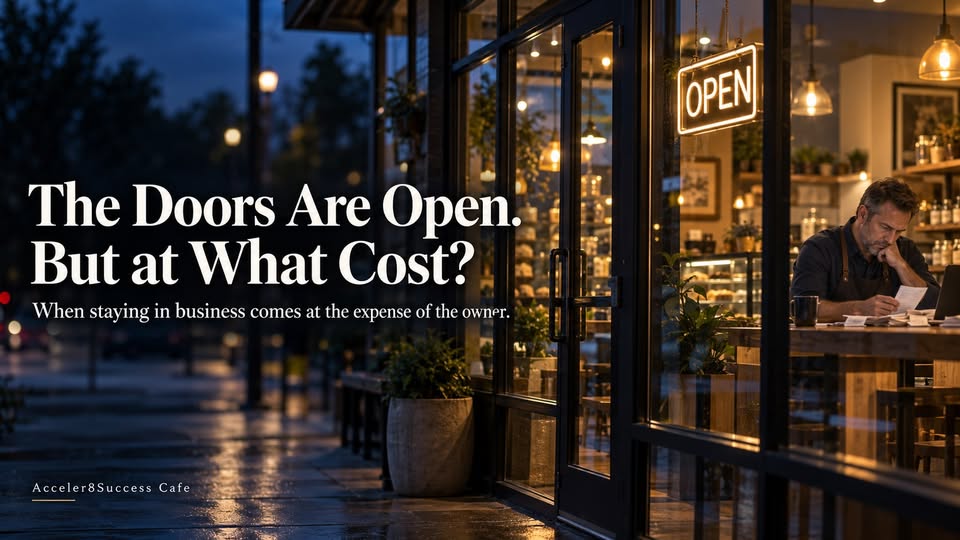
From a distance, both locations look open for business.
When staying open becomes the goal
I firmly believe franchising is a great model. I have spent more than four decades working in and around franchising, restaurants, and small business. I have seen what a strong concept, capable leadership, sound economics, and a committed franchise relationship can accomplish.
That belief is precisely why I think we need to have a more uncomfortable conversation.
My concern is that too many franchisees are barely making it. Working harder. Taking home less. Covering shifts. Delaying repairs. Contributing additional personal funds. Hoping the next promotion, the next season, or the next operational adjustment will finally create breathing room.
The broader restaurant environment gives that concern context. The National Restaurant Association reported that 42% of surveyed operators said their restaurants were not profitable in 2025. That is not a franchise-specific failure rate, and it should not be presented as one. It is, however, a sobering reminder of the conditions in which restaurant franchisees are operating.[1]
For an owner in that position, the original ambition can gradually narrow. Building wealth gives way to covering payroll. Expanding to a second location gives way to getting through another month. Creating something to sell eventually gives way to hoping there will be anything worth selling.
The business remains open. The owner remains committed. But committed to what? Building a future—or preventing a financial situation from getting worse?
Those are very different realities.
The cost of being unable to leave
Financial disappointment is only part of this story.
There is also the effort required to run a business today: staffing problems, customer expectations, administrative demands, equipment failures, rising expenses, and the steady pressure of being responsible for everyone and everything.
Long hours are not new to entrepreneurship. Neither are sacrifice and uncertainty. But there is a difference between working hard toward a plausible return and working indefinitely to contain a loss.
An owner can reach the point where the exhaustion matters as much as the income. Even a modest improvement in profitability may no longer compensate for the toll on health, family, and time.
Then comes the question: Why not sell? Why not close?
Because leaving is not necessarily a clean financial exit. Depending on the agreements and circumstances, a lease, loan, or personal guarantee may leave obligations behind after the doors close. The precise exposure requires individual review; turning off the lights does not, by itself, settle every commitment.
Consider a hypothetical owner who invests $500,000, works for years, contributes more cash along the way, and eventually sells for $100,000—20% of the original investment. That sale price is not necessarily what the owner takes home after debt and transaction expenses.
This is an illustration, not a claim about typical franchise resale values. But it exposes the weakness in treating every completed resale as a successful outcome.
A transfer may preserve a location and the royalty stream while crystallizing a devastating loss for the departing owner.
We need to be willing to look at both sides of that transaction.
How many versions of the same opportunity can a market support?
Chicken. Pizza. Burgers. Cookies. Coffee…
How many brands can pursue the same customers, the same intersections, the same employees, and the same discretionary dollars before the economics become increasingly difficult?
I believe in capitalism. I believe in free enterprise. Entrepreneurs should be free to introduce better products, challenge established businesses, and build something of their own.
But the freedom to enter a market does not establish that the market needs another location. Nor does a successful original business automatically demonstrate that the concept can support an expanding franchise network.
A different logo is not necessarily meaningful differentiation. A strong opening week is not proof of durable demand. A signed development agreement is not evidence that the locations will produce acceptable returns.
Saturation is also local. A category can have room to grow nationally while a particular trade area has more capacity than customer demand can support.
The question is not simply whether people like chicken, pizza, burgers, or cookies. It is whether enough people will choose this particular business, often enough, at prices that support its full operating costs and a reasonable return.
That evaluation should include the consequences for existing franchisees. A new location can add system sales while weakening another location’s economics. The brand’s footprint grows, but an owner’s customer base shrinks.
Wouldn’t a stronger brand with fewer, healthier locations be preferable to a larger brand whose owners are struggling to survive?
Not every system needs fewer locations. Every system needs a growth pace its economics and support capabilities can justify.
A commitment should change the budget and the calendar
Nearly every franchise organization says it is committed to franchisee success.
The real test is what happens when fulfilling that commitment costs money, consumes leadership time, or requires postponing a growth target.
A meaningful commitment begins with understanding each location’s economics. Sales alone are insufficient. Leadership needs visibility into operating profit, debt service, required reinvestment, and whether the business can compensate an owner or manager appropriately.
A business that appears profitable only because its owner works extensive unpaid hours deserves a closer look. So does one that generates cash by postponing necessary maintenance.
System averages are not enough, either. Strong performers can obscure a substantial group of struggling businesses. Leadership should understand outcomes by location age, market, format, and operator circumstances—and identify where problems are concentrated.
Then the information must lead to action.
An underperforming location needs a specific improvement plan, a responsible person on the franchisor’s team, defined responsibilities for the franchisee, and regular reviews of measurable results. Depending on the problem, that work may involve purchasing, labor deployment, pricing, menu or service complexity, customer retention, local marketing, or management development.
A field visit should leave the owner better equipped to improve the business. A completed checklist is not enough.
Promotions should be evaluated for their effect on location profitability, not just transaction counts. Required technology should justify its cost. Remodels should have a credible business rationale. Supplier arrangements should be examined for the value they deliver to the franchisee.
Where appropriate, a franchisor should be willing to consider targeted financial assistance or temporary fee relief alongside operational correction. Relief alone will not repair an unviable business, but insisting on every dollar while a recoverable location deteriorates may be shortsighted.
Commitment should also influence compensation inside the franchise organization. If leadership rewards development while treating existing-unit performance as someone else’s problem, it should not be surprised by the results.
What receives attention, resources, and recognition reveals the organization’s actual priorities.
Responsibility runs in both directions
Franchisees have obligations as well.
They must manage responsibly, follow the system, maintain standards, participate in local business development, and provide accurate information. They cannot expect a brand name to compensate indefinitely for poor execution.
Franchisors cannot guarantee success, eliminate competition, or rescue every location. Some businesses will require difficult decisions about relocation, transfer, restructuring, or closure.
But accountability must be reciprocal.
Before concluding that a franchisee simply needs to work harder, leadership should ask whether the model still works under current conditions. Are investment requirements reasonable? Are operating demands manageable? Does the pricing strategy support a viable margin? Has the support infrastructure kept pace with expansion?
When similar problems appear across multiple locations, “operator execution” becomes an incomplete explanation.
The answer may require changes at the brand level.
Maybe the problem is a weak franchise system
Perhaps the question we should be asking is even more uncomfortable: What if the problem is not weak franchisees, but weak franchise systems?
That does not excuse poor operators. It challenges the habit of assigning responsibility to the person closest to the cash register while leaving the structure around that person unexamined.
If a concept requires an exceptional operator, unusually favorable rent, constant owner intervention, and nearly flawless execution just to produce an acceptable return, how broadly replicable is it? If the original location succeeded because of its founder’s personal relationships, distinctive skills, or extraordinary effort, what exactly has been transferred to the franchisee?
A brand name and an operating manual cannot, by themselves, reproduce those advantages.
Which raises another question: Has it become too easy to franchise a business before it is ready to become a franchise system?
I am not suggesting that the legal work is trivial or that launching a franchise organization is inexpensive. I am questioning whether the ability to assemble the documents, marketing materials, and sales process is too easily mistaken for proof that a business should be franchised.
Being prepared to offer a franchise and being prepared to support franchisees are different milestones.
Before expansion begins, a founder should be able to demonstrate that the economics remain attractive after the costs of operating within the franchise system are included. The business should be capable of functioning without the founder’s daily presence. Training should transfer the necessary skills. Support should be funded and staffed for the commitments being made.
And the concept’s appeal should survive beyond its original location and the enthusiasm surrounding its launch.
An emerging brand does not need to have every answer. It does need enough evidence to justify asking others to invest their savings and assume substantial obligations.
Too often, the language of entrepreneurship celebrates the leap while giving less attention to the landing. In franchising, someone else is making that leap with their capital, their family’s security, and years of their working life.
That deserves more than confidence in a concept. It deserves a functioning system.
A franchisor that depends on the next franchise sale to fund support already owed to existing owners should confront that weakness before accelerating development. Selling additional franchises does not resolve an underdeveloped support model; it adds people who will depend on it.
Sometimes the responsible advice to a business owner is straightforward: You may have a good business, but you are not ready to franchise it.
And sometimes the responsible advice to an existing franchisor is equally direct: Strengthen the system you have before asking more people to join it.
The widening gap—and the limits of private equity
I am concerned about a widening gap between brands with the resources to adapt and those that are asking franchisees to absorb more pressure with too little support.
At the upper end, well-capitalized organizations can invest in purchasing capabilities, technology, customer data, management talent, and brand visibility. Private equity can help fund those capabilities.
From outside that circle, it can look as though capital has gathered around the strongest brands while everyone else is left to compete with fewer resources.
But private equity ownership is not a guarantee of franchisee prosperity. Nor is independent ownership a sentence to weakness. Capital can fund useful improvements; debt burdens, fees, and aggressive expansion expectations can also create pressure.
The decisive issue is how resources are deployed and whose economics improve.
A smaller brand with disciplined leadership, genuine differentiation, and healthy franchisees can be stronger than a much larger organization with troubled locations. An emerging franchisor may be unable to match a national competitor’s advertising budget, but it can remain close to its owners, simplify operations, choose markets carefully, and respond quickly.
What it cannot afford is to imitate the expansion pace of a larger organization without the infrastructure to support it.
The breaking point may arrive one location at a time
Will there be a breaking point if nothing changes?
I do not think it necessarily arrives as a single industrywide event. It can emerge gradually: an owner stops reinvesting, service deteriorates, customers visit less often, and the economics become harder still.
Other franchisees notice. Prospective buyers ask questions. Existing owners lose interest in additional locations. Resales become more difficult. The brand’s growth story becomes harder to support.
That is how stress within individual businesses can become a problem for the entire organization.
Waiting for closure statistics to confirm the damage means waiting too long.
A franchisee who remains open but no longer believes in the future of the business is already telling leadership something important.
Final Thoughts
I believe in franchising too strongly to accept survival as an adequate measure of success.
A location should offer a credible opportunity to compensate its owner, sustain its operations, reinvest, and build transferable value. Those outcomes will never be guaranteed. They should nevertheless remain central to the decisions a franchise organization makes.
We should celebrate openings. We should also ask what happened to the owners who opened three, five, or ten years ago.
Are they earning a reasonable return? Would they invest again? Can they hire the management support they need? Have they built an asset someone else would want to own? Can they discuss problems with leadership and expect a useful response?
And if they could recover their investment and leave without the financial weight of the decision following them home, would they stay?
The answer deserves more than reassurance. It deserves action.
The future of a franchise brand rests, in substantial part, on whether the people operating its locations have a future worth investing in.
Let’s discuss what that commitment looks like in your organization. If you are a franchise founder, executive, or franchisee evaluating profitability, support, growth, or the long-term direction of your business, I welcome a candid conversation. Through Acceler8Success America, we help business and franchise leaders assess challenges, evaluate strategic options, and develop practical plans for strengthening performance. Reach out to me directly to discuss your priorities and the actions that can move your business or brand forward.
[1] National Restaurant Association, “Elevated costs continue to pressure restaurant profitability,” July 8, 2026. https://www.restaurant.org/research-and-media/research/restaurant-economic-insights/analysis-commentary/elevated-costs-continue-to-pressure-restaurant-profitability/







You must be logged in to post a comment.