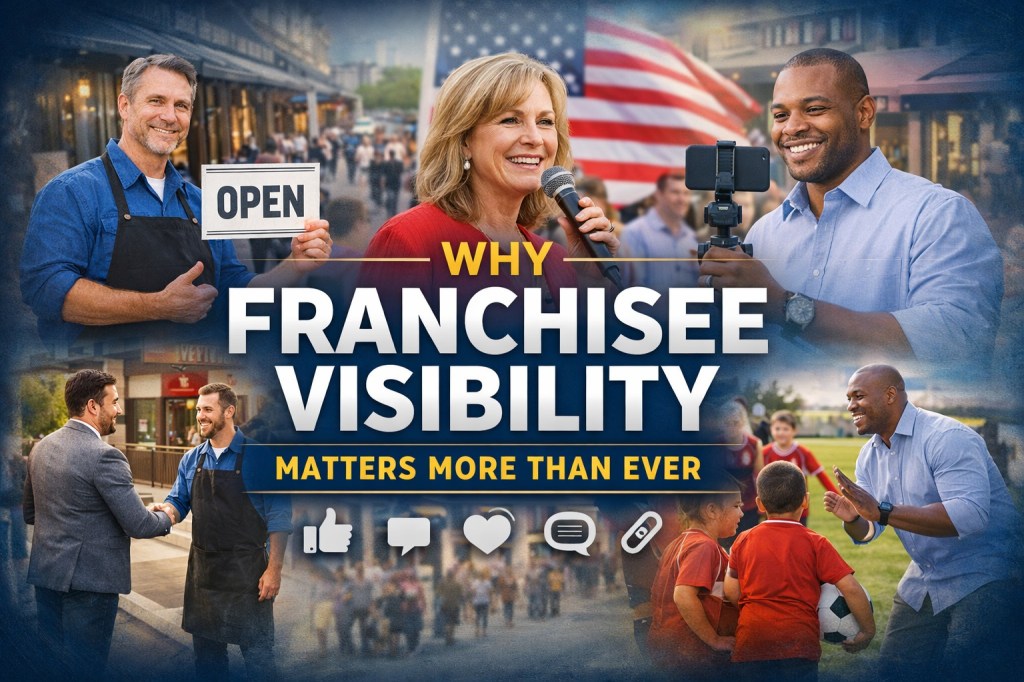
For decades, franchising has relied on a familiar formula: a strong brand at the center, consistent systems, and franchisees expected to execute locally while remaining largely invisible as individuals. That model no longer reflects how customers discover, evaluate, and ultimately trust businesses. Today, the franchise brand is experienced not only through logos, advertising, and operations, but through people. Specifically, through the franchisees who live in the communities they serve and represent the brand every day.
This shift creates a compelling case for franchisors to motivate, encourage, and in some cases even expect franchisees to actively build and strengthen their personal brands. Not as influencers or commentators, and not as independent voices detached from the system, but as credible, visible local business owners whose identity reinforces the brand’s values, professionalism, and community presence.
Customers increasingly want to know who they are doing business with. They want to see the owner, understand their commitment, and feel a sense of accountability and connection. When a franchisee shows up consistently on professional platforms, in community involvement, local media, or brand-aligned storytelling, the brand stops feeling distant or corporate and starts feeling local and human. That trust compounds. It accelerates decision-making, increases loyalty, and strengthens reputation in ways national advertising alone cannot.
Personal branding aligns naturally with community-driven franchising and with the International Franchise Association’s Franchising Is Local initiative. Franchising Is Local exists to remind policymakers, consumers, and communities that franchised businesses are locally owned and operated by real people who create jobs, invest locally, and contribute to the fabric of their neighborhoods. Personal branding gives that message a face. It transforms a concept into a living reality by allowing franchisees to demonstrate their role as local owners, employers, and community stakeholders.
When franchisees share their entrepreneurial journey, highlight community involvement, or showcase their teams and local partnerships, they reinforce the idea that franchising is not abstract or remote. It is local. These stories resonate most powerfully when they come directly from owners rather than from centralized corporate messaging.
From the franchisor’s perspective, encouraging personal branding strengthens the entire system. Each visible franchisee expands the brand’s reach organically, reinforces credibility at the local level, and contributes to a perception of leadership and momentum across the network. Over time, a system filled with confident, visible owners becomes more attractive to customers, prospective franchisees, and even policymakers.
There is also a critical element of narrative control. When franchisees are silent, the brand’s story is shaped by third parties, reviews, social media commentary, and competitors. When franchisees are visible and engaged, they help shape and protect that narrative. They provide context, build goodwill, and establish trust long before challenges arise, making the brand more resilient during difficult moments.
At the same time, personal branding must be approached with discipline and clarity. Visibility without boundaries creates risk. Franchisors should be clear that a franchisee’s personal brand is an extension of the business and, by association, the system as a whole. This means being thoughtful about what is shared and what is intentionally left out. Franchisees should be strongly cautioned against tying their personal brand to divisive social issues or expressing opinions on politics, religion, or sex. These topics, while personal, can quickly polarize audiences, distract from the business, and create unintended consequences for the broader brand.
Effective personal branding in franchising is not about broadcasting personal beliefs. It is about demonstrating leadership, professionalism, community involvement, and commitment to customers and employees. Staying focused on business values, local impact, service, entrepreneurship, and community contribution protects both the franchisee and the franchisor while keeping the message inclusive and brand-safe.
Protecting the Franchise Brand in a Politically Divided World
Personal branding also tends to elevate franchisee performance. Owners who are publicly associated with their business often operate with a higher level of accountability and long-term thinking. They are more engaged with their teams, more intentional about culture, and more invested in reputation. This mindset aligns naturally with stronger operations, better employee retention, and improved customer relationships.
For franchisors concerned about brand consistency, the answer is not to discourage personal branding but to structure it. Clear guidelines, messaging pillars, visual standards, and approved themes give franchisees confidence while protecting the brand. Training and education replace guesswork with intention and reduce risk far more effectively than silence ever could.
There is also a strong argument for positioning personal branding as an expectation of modern franchise ownership. Just as franchisees are expected to market locally, engage with their communities, and uphold brand standards, maintaining a professional, community-focused presence can be framed as part of responsible ownership in today’s environment.
The impact extends to franchise development as well. Prospective franchisees are influenced by the people already in the system. A network of visible, articulate, community-engaged owners signals strength, transparency, and opportunity in ways that no brochure or slide deck can.
Ultimately, personal branding, community engagement, and Franchising Is Local are not separate efforts. They reinforce one another. Personal branding gives community-driven franchising a human voice. Community engagement gives personal branding purpose. Together, they strengthen trust, relevance, and long-term brand equity.
If franchising is about replicating success, then it must replicate not only systems and operations, but leadership, visibility, and trust at the local level. The strongest franchise brands moving forward will be those whose owners are not hidden behind the logo, but thoughtfully, professionally, and responsibly visible alongside it.
About the Author
Paul Segreto brings over forty years of real-world experience in franchising, restaurants, and small business growth. Recognized as one of the Top 100 Global Franchise and Small Business Influencers, Paul is the driving voice behind Acceler8Success Café, a daily content platform that inspires and informs thousands of entrepreneurs nationwide. A passionate advocate for ethical leadership and sustainable growth, Paul has dedicated his career to helping founders, franchise executives, and entrepreneurial families achieve clarity, balance, and lasting success through purpose-driven action.
About Acceler8Success America
Acceler8Success America is a comprehensive business advisory and coaching platform dedicated to helping entrepreneurs, small business owners, and franchise professionals achieve The American Dream Accelerated.
Through a combination of strategic consulting, results-focused coaching, and empowering content, Acceler8Success America provides the tools, insights, and guidance needed to start, grow, and scale successfully in today’s fast-paced world.
With deep expertise in entrepreneurship, franchising, restaurants, and small business development, Acceler8Success America bridges experience and innovation, supporting current and aspiring entrepreneurs as they build sustainable businesses and lasting legacies across America.
Learn more at Acceler8SuccessAmerica.com
Discover more from Acceler8Success Cafe
Subscribe to get the latest posts sent to your email.

You must be logged in to post a comment.