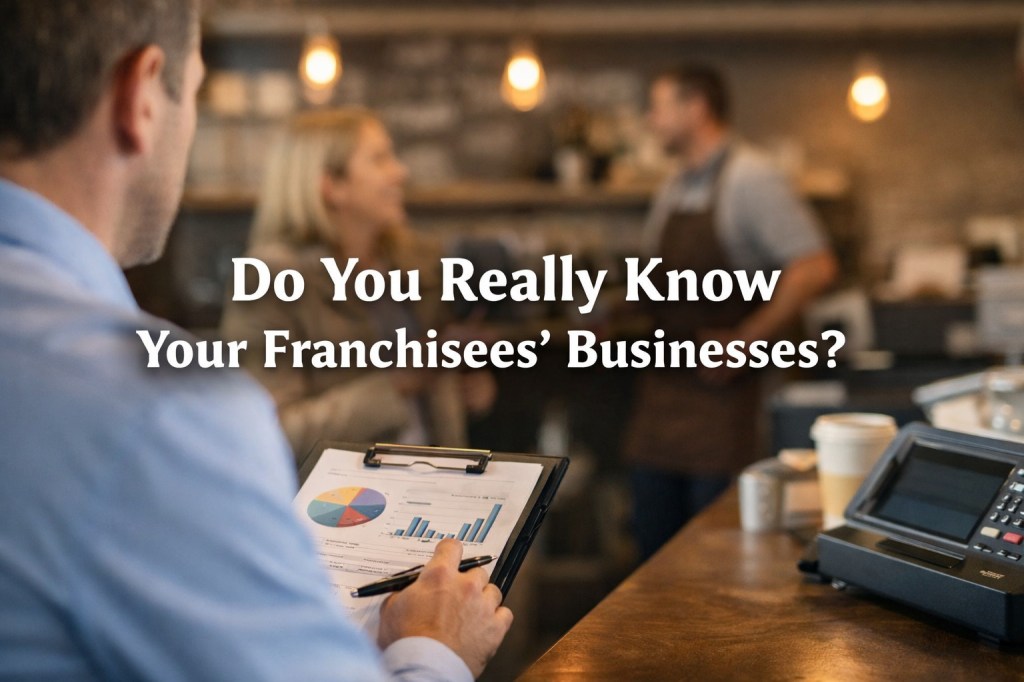
In franchising, we often hear the phrase “we’re like family.” It’s comforting. It’s marketable. It builds trust during discovery days and fuels long-term brand narratives. But it also raises a serious and often unspoken question… does the franchisor truly know each franchisee’s business, or are they simply managing it from a distance through reports, dashboards, and periodic check-ins?
For large legacy brands with hundreds or thousands of units, the answer is complicated. At that scale, true intimacy with each operation becomes nearly impossible at the corporate level. Responsibility shifts to regional leadership, field consultants, and layered structures designed to maintain standards. The intent may still be there, but the execution becomes diluted.
For emerging brands, particularly those with 50 units or fewer, there is a different opportunity. Not just to manage franchisees, but to deeply understand them. Not just to monitor performance, but to engage with the realities behind that performance. This is where franchising can either become transactional… or transformational.
Understanding a franchisee’s business starts with the obvious, but it cannot end there.
Financials are the first window. Revenue trends, cost structures, margins, and profitability tell a story, but only part of it. A franchisor reviewing P&Ls should not simply confirm submission or glance at top-line sales. They should be asking deeper questions. Why is food cost higher here than in a comparable market? Why is labor fluctuating beyond expected thresholds? Are marketing dollars translating into measurable growth? Are royalty payments timely because the business is healthy, or because the franchisee is stretching elsewhere to stay current?
Operational proficiency is the next layer. Standards matter in franchising, but standards without context are dangerous. A location may score well on an operational audit, yet struggle with customer retention. Another may have minor inconsistencies but deliver exceptional guest experiences. A franchisor who truly understands the business doesn’t just check boxes. They connect operational execution to outcomes.
Customer reviews add another dimension. Today’s digital landscape offers unfiltered insight into what guests are experiencing in real time. Patterns emerge quickly. Service delays, cleanliness issues, product inconsistencies, or on the positive side, standout team members and exceptional experiences. These reviews should not be treated as background noise. They are frontline intelligence.
Sales growth, or lack thereof, must also be viewed through a lens of relativity. Growth in one market may not equate to growth in another. A 5% increase in a mature suburban market may outperform a 10% increase in a rapidly developing urban corridor. Context matters. Always.
This is where true understanding requires a more disciplined approach… comparison.
Not comparison for the sake of ranking, but for the purpose of clarity.
A franchisor must look at similar locations through a meaningful lens. Comparable demographics. Similar trade areas. Similar business age. Similar physical footprints. Similar rent structures, including base rent and triple net expenses. Only then can you begin to compare performance in a way that resembles “apples to apples.”
Without this level of discipline, benchmarking becomes misleading. And worse, it can lead to misguided decisions, unnecessary pressure on franchisees, or missed opportunities for improvement.
But even with all of this… financials, operations, reviews, growth, and comparisons… something critical is still missing if we stop here.
The human element.
Franchise businesses are not run by spreadsheets. They are run by people.
Does the franchisor understand whether the franchisee is an owner-operator or an absentee investor? Do they know who is actually running the day-to-day business? Is there a strong general manager in place, or is leadership inconsistent?
And just as important… how connected is that franchisee to the brand itself?
When was the last time they attended a training session? Have they shown up at the annual conference, or have they been absent for years? Do they actively engage in regional meetings, peer groups, or brand initiatives? When they are in the room with other franchisees, do they collaborate, share ideas, and contribute… or do they remain isolated?
These are not soft observations. They are leading indicators.
Engaged franchisees tend to perform differently than disengaged ones. They are closer to best practices. They adopt new initiatives faster. They build relationships that allow for shared learning. They feel part of something bigger than their individual unit.
Disengagement, on the other hand, often shows up quietly before it shows up financially.
Missed conferences become missed updates. Missed updates become inconsistent execution. Inconsistent execution eventually becomes declining performance.
Understanding a franchisee’s level of participation within the brand ecosystem is just as important as understanding their P&L.
And then there is the layer that many franchisors either avoid or underestimate… life outside the business.
A divorce. A separation. A strained partnership. A family illness. The loss of a loved one. These are not “business metrics,” but they have a direct and often profound impact on performance, focus, decision-making, and leadership within the business.
If franchising is truly “like family,” then the level of awareness and empathy should reflect that.
This doesn’t mean overstepping boundaries. It means being present. It means creating an environment where franchisees feel comfortable sharing challenges. It means recognizing when performance issues are not purely operational, but deeply personal.
Culture plays a defining role here.
A franchisor culture that values transparency, communication, and genuine care will naturally foster deeper understanding. Franchisees in this environment are more likely to share real challenges, not just polished updates. They are more open to feedback because they trust the intent behind it.
It also creates a culture of participation. Franchisees want to attend conferences. They want to be part of training. They want to engage with peers. Not because they are required to… but because they see value in it.
On the other hand, a culture driven solely by metrics and compliance will produce surface-level interactions. Reports will be submitted. Calls will be held. But the real story of the business will remain hidden.
And that is where franchising breaks down.
The benefit of truly understanding each franchisee’s business is not just better oversight. It is better outcomes.
Stronger unit economics because issues are identified early and addressed with precision.
Improved operational consistency because best practices are shared among truly comparable locations.
Higher franchisee satisfaction because they feel seen, heard, and supported.
Greater engagement across the system, leading to stronger collaboration, better idea sharing, and more consistent execution of brand initiatives.
Reduced turnover and conflict because challenges are addressed proactively rather than reactively.
And perhaps most importantly, a brand that actually lives up to the promise of partnership.
For emerging brands, this is a defining opportunity. The ability to build systems, processes, and culture around genuine understanding before scale makes it difficult. To institutionalize not just data collection, but data interpretation. Not just communication, but meaningful connection.
For larger brands, the challenge is different but no less important. It becomes about empowering regional leadership to operate with this same mindset. To go beyond checklists and truly know the businesses they are responsible for supporting… including how connected those franchisees are to the brand and to each other.
So, does a franchisor truly know each franchisee’s business?
The honest answer is… it depends on how intentional they are about wanting to know.
Because the tools exist. The data exists. The access exists.
What separates great franchisors from the rest is not information.
It is commitment.
And ultimately, it is culture.
A culture where franchisees are not just monitored, but understood. Not just measured, but supported. Not just part of a system, but part of something meaningful.
That kind of culture does not happen by accident. It is designed. It is reinforced. And it is led from the top.
If you are evaluating your brand and questioning whether you truly understand your franchisees… or whether your culture is driving engagement, performance, and alignment across your system… now is the time to take a closer look.
Reach out and let’s start a conversation about how to strengthen the culture of your brand, deepen franchisee engagement, and build a system where performance and partnership go hand in hand.
Discover more from Acceler8Success Cafe
Subscribe to get the latest posts sent to your email.

You must be logged in to post a comment.