The markets you prioritize and the operators you need should shape how your franchise opportunity reaches the right people.
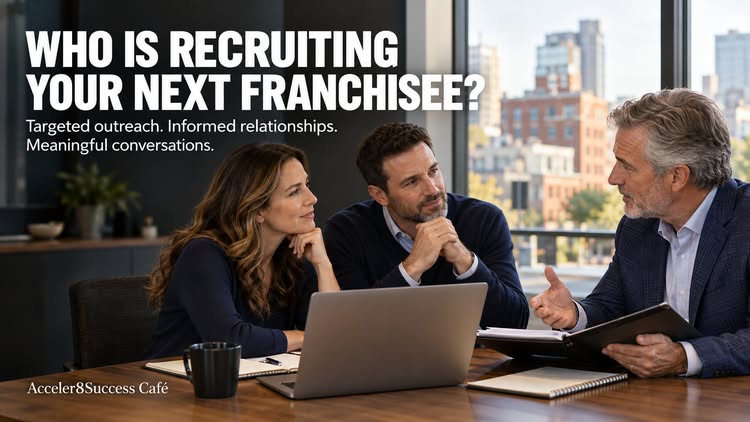
Your franchise opportunity is being promoted.
It appears on a franchise portal. Social media posts are circulating. A digital campaign is generating inquiries. Information has been sent to brokers, and someone is following up with prospective candidates.
There is activity. There may even be encouraging interest.
But who is actually recruiting your next franchisee—and what do they understand about the business you are trying to build?
That question reaches beyond who answers the phone or manages the advertising account. It concerns the people being pursued, the relationships being activated, the message being delivered, and the coordination that turns an introduction into a meaningful ownership conversation.
In my recent op-ed, “What Is Your Franchise Sales & Development Company Really Doing for Your Emerging Franchise Brand?,” I challenged emerging franchisors to examine the development work behind their sales efforts. The first two articles in this series addressed where a brand should grow and whether a candidate is prepared to operate the business.
This third article examines how those decisions should shape recruitment.
Once you understand your priority markets and the capabilities your franchisees need, the next question becomes practical: How will you reach people who fit that assignment?
Begin with the Recruitment Assignment
“Find us franchisees” leaves too much open to interpretation.
A development partner needs to understand what leadership has approved and what the operating model requires. That includes priority markets, ownership expectations, relevant experience, financial requirements, and the development commitments the organization is prepared to support.
A restaurant brand seeking an experienced multi-unit operator for a defined metropolitan market has a different assignment than a service concept seeking active first-time owner-operators.
Those differences should influence outreach lists, referral relationships, campaign language, educational events, and qualification conversations.
Without that clarity, recruitment can drift toward whoever responds most readily. An interested candidate begins asking about a market the brand has not evaluated. An investor expects a level of operating independence the model does not support. A referral partner promotes a multi-unit opportunity when leadership intends to concentrate on selective single-unit awards.
Each conversation requires time. When the underlying assignment is unclear, the development team spends that time resolving misunderstandings that could have been addressed earlier.
A clear assignment gives the recruitment effort direction and gives candidates a more accurate starting point.
Understand the Candidate’s Reasons for Considering Your Brand
Knowing the intended franchisee means understanding more than their financial profile.
An experienced operator may be evaluating whether your concept complements an existing portfolio. A transitioning executive may be exploring a new professional direction. A local business owner may see an opportunity to apply existing management resources. A development group may be considering whether the brand fits its market strategy.
Those people will bring different questions to the conversation.
The experienced operator may want to understand management requirements, supply arrangements, and the franchisor’s support capabilities. The executive may need a clearer picture of daily ownership responsibilities. The development group may be particularly concerned with site requirements, opening schedules, and the resources needed to execute a commitment.
Recruitment materials should help those candidates understand the opportunity in terms relevant to their decisions.
The brand’s story can establish interest. The substance of the ownership opportunity helps people decide whether to continue.
A compelling restaurant concept is still an operating business. Recruitment should make that business understandable.
Direct Outreach Should Have a Reason Behind It
A database can provide access to prospective candidates. Its usefulness depends on the relevance of the people in it and how they are approached.
Sending the same message to every contact may create responses, but it offers little evidence that the effort reflects your development plan.
Targeted outreach starts with a reason for contacting someone.
An operator may have experience in a related category. An ownership group may already have resources in your priority market. A business owner may have expressed interest in expansion. A professional may have identified goals that fit an active ownership model.
That context should inform the introduction.
The message should explain why the opportunity may merit consideration, identify the approved market focus, and invite a substantive conversation. It should avoid assuming that professional success, an existing franchise portfolio, or apparent wealth automatically establishes suitability.
Direct outreach also needs ownership. Someone must be responsible for responding, recording what is learned, and determining an appropriate next step.
A contact list becomes useful through informed engagement.
Referral Partners Need More Than a Brochure
Franchise brokers, business brokers, advisers, and other professional contacts can introduce candidates a brand might otherwise never reach.
Their effectiveness depends partly on how well they understand the assignment.
A brochure may explain the concept and investment range while leaving important questions unanswered. Who is expected to operate the business? Which markets are priorities? What experience matters? What type of development commitment is appropriate? What should a candidate understand before an introduction?
An informed referral partner should have a consistent, approved explanation of those points.
The development team should also learn about the partner’s relationships. Do they work primarily with first-time owners, experienced franchisees, restaurant operators, or investors? What information do they typically establish before making an introduction?
Those discussions help determine where the relationship fits.
A smaller group of engaged partners who understand the opportunity may produce more useful conversations than broad distribution to contacts who have little familiarity with the brand.
The relationship requires continuing attention. When introductions repeatedly reveal the same misunderstanding, the briefing or targeting may need to change.
Market Relationships Can Create Useful Introductions
Recruitment can benefit from relationships with people who understand the business activity in a priority market.
Commercial real estate professionals may know operators seeking expansion space. Developers may be working with ownership groups evaluating new concepts. Local business organizations and economic development contacts may offer insight into commercial growth and introductions to relevant professionals.
These relationships can help the development team understand the market as well as reach potential candidates.
However, an introduction should be treated as the beginning of evaluation. Someone’s interest in a site does not establish their ability to operate your concept. Their familiarity with local development does not resolve questions about management, funding, or ownership involvement.
The purpose is to create informed access and better context.
For an emerging restaurant brand, conversations in the market may reveal where experienced operators are expanding, which developments fit the concept’s requirements, and what practical obstacles deserve attention.
That information can improve recruitment planning without replacing candidate qualification or the franchisor’s real estate approval process.
Digital Campaigns Should Reflect the Business Being Offered
Digital marketing can extend reach, create awareness, and give interested people a way to begin a conversation.
The campaign should reflect the same market priorities and ownership expectations used elsewhere in the recruitment process.
If the brand requires active operating involvement, the message should make that expectation understandable. If initial development is concentrated in an approved region, the landing page should explain the geographic focus. If experienced operators are the intended audience, the content should address the questions that matter to them.
The candidate should encounter a consistent opportunity as they move from an advertisement to a landing page to a conversation.
Controlled campaign tests can help the team evaluate whether the message reaches appropriate people. The useful questions extend beyond how many forms were submitted.
What did respondents understand about the opportunity? How many fit the intended ownership profile? Are they interested in approved markets? What recurring questions suggest that the message needs clarification?
That feedback should influence targeting and content.
A campaign that produces fewer inquiries may still merit attention if it generates more relevant, productive conversations. Leadership needs enough visibility to understand that distinction.
Content and Webinars Should Prepare Candidates for the Conversation
Educational content gives a brand an opportunity to explain the work behind ownership before asking someone to advance through the process.
A webinar for prospective first-time owners may address involvement, training, opening preparation, and the relationship with the franchisor. A session for experienced operators may focus more closely on development requirements, management resources, and the brand’s approach to supporting expansion.
Both should help participants assess whether the opportunity fits their objectives.
The strongest content anticipates questions candidates will need to answer. What would ownership change in their daily lives? Who would lead operations? What preparations would be necessary? How would their experience apply?
Approved information and realistic expectations should guide the presentation.
The follow-up matters as much as the event. An attendee who asks a substantive question should receive a response that recognizes it. Someone exploring a future market should understand the current priorities. Someone whose goals do not fit the model should receive a candid explanation.
Education makes recruitment more useful when it helps people make informed decisions.
Put the Brand and the Candidate in the Same Room
In-person engagement can add depth to a process that begins online or through a referral.
A visit to an operating location can help candidates observe the business beyond a presentation. A market tour can make development requirements more concrete. A meeting with the proposed ownership group can clarify responsibilities that remained vague during early calls.
These activities should have a purpose.
If a candidate intends to rely on an operating partner, meeting that person matters. If the group proposes several locations, a discussion of management availability and development sequencing matters. If the candidate is entering an unfamiliar market, the conversation should examine how local involvement will be established.
A polished meeting cannot substitute for disciplined evaluation. It can create opportunities to ask better questions and test assumptions.
Emerging brands need that depth as they select the people who will represent the concept in new locations.
Coordinate the Channels Around One Candidate Journey
Recruitment becomes confusing when each channel operates with its own message and follow-up practices.
A broker introduces a candidate. The same person submits an online inquiry. Another team member sends a different presentation. Leadership joins a call without knowing what has already been discussed.
The candidate may begin receiving inconsistent explanations of the opportunity. The franchisor may believe progress is being made while basic responsibilities remain unresolved.
Coordination requires clear ownership of the conversation, shared records, approved materials, and a common understanding of the next step.
Different channels can support the same relationship. A candidate might first encounter an article, attend a webinar, speak with a referral partner, and then visit the market. The development team should be able to connect those interactions.
The candidate should feel that the organization understands their interest and circumstances as the discussion develops.
That continuity helps both sides use their time more effectively.
Follow-Up Should Advance Understanding
“We are following up” is an incomplete explanation of recruitment work.
What remains unanswered? What has the candidate learned? What does leadership still need to understand? Is there a meaningful next step?
A conversation may need to clarify who will operate the business. Another may require further discussion of market priorities. A candidate may be waiting for information necessary to evaluate the opportunity.
Useful follow-up addresses those needs.
It also recognizes when circumstances have changed. A candidate may need more time, a different commitment, or an opportunity that better fits their goals.
Keeping someone in the pipeline indefinitely does little for either party if the underlying fit has not been established.
Recruitment should create progress toward an informed decision, including a decision to stop.
Your Development Partner Should Be Able to Connect the Work
Ask your development partner to explain how its recruitment activities serve the approved strategy.
Why are these people being approached? What do referral partners understand about the brand? How do digital campaigns reflect the ownership model? What is being learned in the market? Who is responsible for maintaining continuity as candidates advance?
The answers should describe a coordinated effort.
At Acceler8Success America, we believe targeted outreach, informed relationships, purposeful marketing, and direct engagement should work together around the needs of the brand.
That requires more than launching channels. It requires preparing them, managing them, learning from them, and connecting their activity to the candidates and markets leadership has prioritized.
The next article in this series will examine how founders can evaluate that work through clearer reporting and meaningful accountability.
Final Thoughts
Your next franchisee may begin the conversation through an advertisement, a referral, a direct introduction, or an encounter with your content.
Each route should lead to a consistent explanation of the opportunity and a thoughtful assessment of fit.
The markets you have prioritized should influence whom you pursue. The operating responsibilities should influence what you communicate. The candidate’s questions should influence how the conversation develops.
An emerging brand deserves a recruitment effort that understands those connections.
Before your next development meeting, ask who is being approached, why they fit the assignment, and how each channel contributes to the process. Then examine whether the people representing your opportunity understand the business and responsibilities behind it.
Recruitment helps establish the expectations upon which the franchise relationship will begin.
Those expectations deserve the same care you apply to selecting the next market and approving the next owner.
Let’s examine what your franchise development effort is building.
Acceler8Success America offers a complimentary consultation for emerging franchise brands to discuss market priorities, candidate targeting, development readiness, and the work needed to support their next stage of growth.
As part of that consultation, you can receive an actual proposed scope of work, redacted to protect the brand’s identity and confidential information, so you can review the level of planning, execution, and accountability a focused franchise sales and development engagement can include.
Email paul@acceler8success.com with the subject line “Emerging Franchise Brand Consultation,” or call or text (832) 797-9851.
Bring your growth goals, current development challenges, and questions. Let’s discuss a practical path forward for your brand.
This is the third article in a four-part Acceler8Success Café series expanding on “What Is Your Franchise Sales & Development Company Really Doing for Your Emerging Franchise Brand?.”
Discover more from Acceler8Success Cafe
Subscribe to get the latest posts sent to your email.

You must be logged in to post a comment.