This Veterans Day, we recognize the leadership, skills, and commitment veterans bring to business ownership—and the many ways they continue to strengthen our country.
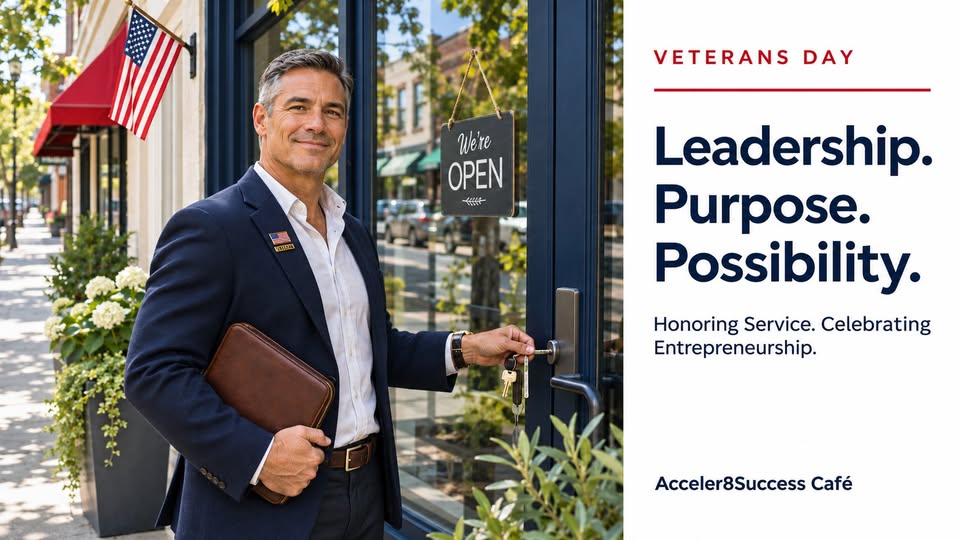
There is something especially fitting about honoring veterans and celebrating entrepreneurship in the same month.
November brings Veterans Day and National Entrepreneurship Month together, giving us an opportunity to reflect on people whose contributions help sustain our country in different ways. Veterans have served through their commitment to defending our nation. Entrepreneurs serve their communities by creating jobs, solving problems, building businesses, and opening doors for others.
Military service carries sacrifices and obligations that deserve their own recognition. And when a veteran chooses entrepreneurship, the connection becomes especially meaningful: experience gained in service can become the foundation for another chapter of leadership and contribution.
To me, that is something worth celebrating.
On Veterans Day, my first message is a simple one: Thank you. Thank you for your service, your sacrifices, and the responsibilities you accepted on behalf of our country. Thank you to the families who stood beside you through deployments, uncertainty, separation, and transition.
For those who have pursued business ownership—or are considering it—there is also an important message: Your experience has value far beyond the uniform.
Skills That Belong in Business
Entrepreneurship requires more than an idea and the willingness to take a chance. It requires preparation, judgment, accountability, and the ability to keep moving when circumstances change.
Many veterans bring substantial experience in precisely those areas.
Consider what it takes to run a business. An owner must establish priorities, allocate resources, communicate expectations, develop people, and make decisions with incomplete information. Plans need to be clear enough to guide action and flexible enough to respond to reality.
Those responsibilities can be familiar to someone who has served.
A veteran who coordinated equipment, transportation, or supplies may have a strong foundation for understanding logistics and operations. Someone who trained others may be well positioned to develop employees and establish consistent practices. Technical experience can provide the starting point for a specialized service business. Responsibility for a team can translate into an understanding that results depend on preparation, trust, and people knowing what is expected of them.
The challenge is sometimes recognizing those connections—and learning how to explain them in the language of business.
A military résumé may describe assignments and responsibilities. An entrepreneurial plan must show how that experience will help solve a customer’s problem, deliver value, and support a viable company.
That translation deserves attention.
Leadership That Shows Up Every Day
In a small business, leadership becomes visible in ordinary moments.
It shows up when an employee makes a mistake. When a customer raises a concern. When a supplier misses a delivery. When the owner has to communicate a difficult decision or acknowledge that something needs to change.
Many veterans understand that leadership includes responsibility for what happens after instructions are given. Were people prepared? Did they have the resources they needed? Were expectations understood? What should be done differently next time?
That approach can help build a business in which employees feel supported and standards mean something.
The ability to work with people from different backgrounds also matters. Businesses depend on cooperation among individuals with different skills, experiences, and perspectives. An owner who can establish a shared purpose and help people contribute toward it brings something valuable to the workplace.
Leadership also requires the humility to listen. Customers, employees, advisers, and business partners will see things the owner misses. Being willing to learn from them can be as consequential as being willing to make a decision.
Preparation, Adaptability, and Accountability
Entrepreneurship involves uncertainty. A carefully developed plan can encounter unexpected costs, a slower sales cycle, staffing challenges, or changes in customer demand.
Military experience can provide useful habits for working through that uncertainty: assess the situation, understand available resources, identify the immediate priority, and adjust.
Preparation matters. So does the ability to recognize when a plan needs revision.
In business, that might mean changing an offering after listening to customers, delaying an expansion because the cash position is too thin, or addressing an operating problem before pursuing additional sales.
Accountability matters just as much. An owner’s decisions affect employees, customers, suppliers, lenders, and family members. Following through, addressing problems promptly, and accepting responsibility help establish the trust on which a business depends.
These qualities do not guarantee success. They do provide a meaningful foundation on which to build.
Entrepreneurship Has Many Doors
When veteran business ownership comes up, franchising often becomes part of the discussion. It can offer an established operating framework, training, and support, and it deserves consideration where the opportunity fits the individual.
The conversation should also extend across the full range of entrepreneurship.
A veteran might launch a home services company, open an independent restaurant, develop a technology solution, establish a consulting practice, build a manufacturing business, or purchase an existing company whose owner is ready to retire.
Some will start with a specialized skill. Others will identify an unmet need in their community. Some will build a business gradually while employed. Others will bring together partners whose experience complements their own.
The right path depends on the person’s interests, financial position, family priorities, capabilities, and goals.
A useful starting question is: What kind of business would allow you to apply your strengths, serve a real market need, and build the life you want?
That question creates room for a thoughtful decision.
Experience Is a Foundation. Business Knowledge Builds on It.
Respecting veterans’ capabilities also means being candid about what business ownership requires.
Leadership experience does not automatically teach someone how to price a service, evaluate an acquisition, manage working capital, or generate profitable sales. Those skills must be learned, practiced, and supported.
A promising concept still needs customers who will pay. A growing company still needs enough cash to meet its obligations. A capable owner still needs people who can challenge assumptions and identify gaps.
Seeking guidance is a practical step toward being prepared.
The SBA’s Veterans Business Outreach Centers and Boots to Business program are among the resources available to help eligible veterans and members of the military community explore entrepreneurship and develop business knowledge.
Experienced business owners, accountants, attorneys, and advisers can also help a prospective owner evaluate an opportunity before making a significant commitment.
Veterans deserve access to sound information, thoughtful guidance, and realistic expectations. Encouragement becomes more useful when it is accompanied by preparation.
Gratitude Can Open Doors
For the broader business community, Veterans Day offers an opportunity to consider how our appreciation carries into everyday decisions.
We can purchase from veteran-owned businesses and recommend them when they deliver good work. We can introduce a veteran entrepreneur to a potential customer, supplier, mentor, or business partner. We can help someone understand how their military experience applies to a business opportunity.
We can also listen before assuming we know what they need.
One veteran may need help evaluating a business purchase. Another may need introductions in a new market. Another may be weighing whether entrepreneurship fits their family’s circumstances at all.
Meaningful support begins with understanding the individual.
And every veteran deserves our gratitude, regardless of the career or path they choose after service.
Honoring Service, Celebrating Possibility
What I appreciate about November is the opportunity to recognize both the people who have served our nation in uniform and the people building opportunity throughout its communities.
Their contributions come from different directions, and each deserves appreciation.
For veterans who become entrepreneurs, those paths meet in a powerful way. The skills they developed, the people they learned to lead, and the responsibilities they carried can help shape businesses that employ others, strengthen communities, and create opportunities for the next generation.
At Acceler8Success Café, we believe those possibilities deserve attention, encouragement, and practical support.
To every veteran reading this: Thank you for your service to our country.
To those building a business, preparing to purchase one, or simply wondering whether entrepreneurship could be your next chapter: Your experience matters. Your skills deserve to be recognized. And your ideas deserve thoughtful consideration.
This Veterans Day, we honor what you have already given—and celebrate the possibilities ahead.
Discover more from Acceler8Success Cafe
Subscribe to get the latest posts sent to your email.

You must be logged in to post a comment.