 A few months ago, there was a discussion in one of the LinkedIn franchise groups about local franchise lead generation. The discussion was initiated by a franchise professional specializing in franchise sales and consulting. As we have done in the past when posting comments from a social network discussion, we will identify the individuals that submitted comments according to their social network profile.
The discussion opened with the following post:
Ideas for Lead Generation Sources. Anybody have suggestions for local lead generation? Looking for ideas from zors, zees, consultants & brokers on how to generate leads local to a specific area.
Here are some of the responses that were posted including my own which just so happened to be the initial response:
“[Name], I usually explore social networking groups specific to the area such as the inHouston LinkedIn group if I’m trying to generate leads in the Houston area. This type of group is realtively easy to target and expand beyond based upon member recommendations and suggestions. Work the crowd as if you were in a room.
In addition, I focus on networking groups that include individuals that best fit my franchise candidate profile. From there I drill down to individuals in the local area. Let’s say teachers fit my candidate profile. I would search out networking groups spefic to teachers, education, etc. I may participate in discussion groups to get a feel for the group and to be recognized within the group. There’s always a spin you could use. Next, I seek out members from the specifc area I’m targeting and communicate what I’m trying to accomplish. It’s been amazing how many times I’ve wound up with a candidate in California that is willing to jump at an opportunity in Texas. It happens.
I also focus on groups that can provide me with referrals such as insurance agents, realtors, financial planners and attorneys. Again, if you’re proactive within networking groups it’s realtively easy to enlist support and gather information.
Lead generation through online networking takes time and effort no doubt. However, once you’re proactive within the groups, you almost windup with a snowball effect as the leads come in bunches. Some leads start out as simple as posting a thought provoking discussion, some back and forth interaction with a responder and the responder saying,”what is it that you do?” Next thing you know, you’re discussing an opportunity and the door is wide open.
Most times it takes considerably more effort but I’ve found people are networking online and participating in discussion groups for a reason. They’re all looking to expand their business, improve their position, seek out opportunities and make money. It sure beats running an ad in the local paper and waiting for the phone to ring.”
An executive of a national franchise concept responded as well.
“Other sources of local lead generation include – classified advertising, seminars, the local business journal, and chambers of commerce. I also use industry specific sources (trade publications, trade associations) depending on the franchise. My favorite is PR. If you can can a story published at a local level – it tends to generate a good deal of buzz.
As you are finding – it is a bit more challenging to put together a local or regional campaign, than it is to promote a national effort.”
A franchise executive of a national foodservice franchise concept posted the following:
“I like to target existing multi-unit operators of non-competing brands in the same industry. For example, if I am selling full-service restaurants, I would seek out multi-unit fastfood operators in the area. Or if I was selling windshield replacement franchises, maybe I’d target muffler or brake franchisees in the area. Get your hands on some UFOC’s that list franchisees by state. It’ll give you the franchisee’s name, address and phone number and you can go down the list contacting the owners. You must size up the target market to your product. For example, you probably wouldn’t have much success targeting Subway franchisees for a TGIFriday’s franchise, as it’s a big leap from a $50,000 investment to a $3 million investment. But maybe the Subway UFOC would provide good leads for someone selling Baskin Robbins franchises. Get the idea? Last thing, by focusing on existing franchisees in someone else’s system, those prospects already understand franchising, know that fees are due and payable weekly, understand they must operate according to the franchisor’s standards, realize they must undergo training, particpate in the marketing co-op, etc. Hope this helps.”
Next, the foodservice executive and I exchanged the following comments:
Me: “[Name], excellent points. I utizilized a similar strategy with great success. Other key factors include the current franchisees’ knowledge of franchising and their lender’s knowledge and experience with the franchisee may be just the edge needed to secure financing in today’s tight credit markets.
Foodservice Exec: “Paul, you mention an important point in today’s economic market. Successful existing franchisees should already have relationships with lenders who have seen them perform over time. A well-funded prospect is worth his weight in gold! Any contracts that are “contingent on financing” may as well be thrown in the trash, as lenders are not willing to take the risk with an unknown, untested, unproven franchisee.
Me: “I absolutely agree with you. Just the mention of a brand new candidate exploring a franchise concept without the candidate having any experience sends a lender running for the hills. It really doesn’t matter how proven the franchise brand is and how long it’s been around. To that end, I see primary growth in franchising coming from current franchisees looking to diversify their business portfolio, adding new revenue streams and streamlining redundant expenses.”
It was an interesting discussion and I believe several good ideas and thoughts were presented. I know the information reached an audience that did not actually participate in the discussion because I received over thirty emails from individuals asking me to expand upon my responses, and those of the other participants. In addition, we shared ideas and thoughts, and discussed our own experiences. I’m proud to say that I also learned a few things myself. Proof again of the benefits of social networking!
 In the franchise development arena, your social media efforts will be considerably different as your objective is different. The franchise sales transaction consists of a substantial upfront fee for an intangible item, franchise rights. The transaction is only the beginning of the additional cash outlay or credit commitment, that’s triggered by the initial fee and signing of the franchise documents. Yet, the relationship is not one that’s just based upon that one single transactional experience. Instead, it’s only a small step in an ongoing relationship where the new franchisee becomes dependent upon the franchisor and the concept. Buyer’s remorse is not an option. The social media efforts must progress and build upon each other with the objectives gradually changing and progressing “as” the relationship builds, and not just “because” the relationship builds.
 As with any popular party, it’s important to have a host or hostess. In your party room, this person is essentially in charge of accepting member requests, posting new information, updating various features and keeping the “conversations” flowing. I think you now fully understand the party analogy so let’s transition to reality and make reference to specifics with respect to your franchise concept.
 On Twitter you’ll post frequent bits and pieces of information about franchising and entrepreneurship in general and along with a few “personal” tweets, yes they call them tweets, you’ll post links to various parts of your concept including the Facebook group page, your website which will have a link to your Facebook page and to your blog, which will also have links back to your Facebook page. So you see, all activity will ultimately be directed back to your concept’s Facebook page because that’s where you can monitor and control the flow of information and interest because it’s interactive. There, that answers the question of why shouldn’t everything be directed to the website? Let me clarify. Facebook is interactive. Websites are not.
  Until recently, commercial real estate was a bright spot in an otherwise dreary economy. While residential investment plummeted 28.9 percent from the start of 2006 through the end of 2007, investment in nonresidential structures grew 24.9 percent over this period. At the same time that residential investment subtracted almost a full percentage point of gross domestic product growth in 2007, investment in nonresidential structures was adding 0.4 percentage point back. And while the delinquencies on residential mortgages have been on the rise since the first quarter of 2006, delinquencies on commercial mortgage bonds reached a record low of just 0.27 percent this January, according to Fitch Ratings.
  1. Not changing your franchise agreement to cover social media. Just like franchisors took control of their Web sites a decade or so ago, now they need to control what’s being said about the brand in social networking sites. In addition, start now to secure your company’s name in conjunction with YouTube, etc., just like you did URLs just a few years ago.
 It’s in this virtual party room that you’ll encourage attendance and participation by interested parties, franchisees, franchisee personnel, franchise customers, franchise company executives and personnel, and the concept’s vendors and suppliers. The goal is to establish a party where conversations about the concept, and its products and services, are happening all over the place. For instance, a discussion is started by a franchise candidate and is addressed by corporate personnel. A question is posted by a franchisee and several answers are submitted by various individuals. A video by the CEO is posted and is viewed and commented on by various individuals with different interests in the group and concept providing distinct perspectives. Positive comments (testimonials) are posted by customers. There are a hundred, two hundred, four hundred or more members of the group. There’s an information section listing the concept’s website, blogsite and other pertinent links. There may even be a media section with recent press releases or news stories about the concept and the franchisees.
  Using LinkedIn or Facebook, you can explore various groups consisting of executives and relating to the financial services industry. You can also explore groups that pertain to startups, entrepreneurship and small busines ownership. Now, you will join a few of these groups and monitor the discussion groups. Again, you’re not networking yet but you are starting to participate in discussions, answering general questions, getting a feel for the “land” and exposing the group to small busines ownership, entrepreneurship and finally, to your concept. Once, members in the group start to request to connect, that’s when the actual networking begins. This is key. The networking only starts when individuals request to connect with you or your company, not the other way around by you asking them.
 Why Are Franchise Sales Lagging?
 So, we’ve already defined “Social Media” in a blog post earlier this week. Let’s take it a step further and see how
  As more and more women explore franchising as a career alternative, choosing to control their own destiny, franchisors must market directly to this rapidly-growing group of opportunity seekers. Joining the force of today’s more sophisticated, educated and technologically advanced transitioning corporate executives, women will use social media to explore and investigate franchise opportunities. Tending to be more diligent and thorough than men in general, women relish relationship building and sharing of information making social media marketing perfect to attract female franchise candidates.
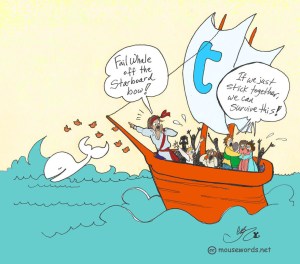 With all the recent discussion on Facebook and Twitter about Social Media guidelines, we have received many inquiries from the franchise community about Social Media training for their employees and franchisees. During these conversations, it was quite evident that many did not understand Social Media and some did not know what it is. So, we thought we’d take it to a basic level and explore the various definitions of Social Media as it is defined by different sources online. Here’s what we found:
 The following article, the first in a series of articles on the subject of Regional Franchise Development as a Growth Strategy, has been submitted by franchisEssentials Guest Author, Dan Durney, Partner and Co-Founder of
  What is Regional Franchise Development? Do we know it by any other name? Oh yes we do – Regional Representative, Area Director, Area Representative and of course Master Franchising. Oh ok, now I’ve heard of those – so what’s the difference? Basically, not much but if the Franchisor shares the Franchise Fees, Royalties and sometimes Distribution income with these Strategic Market “Partners” (legal guys – please don’t sweat the use of “Partner” here – I use it mainly for illustration purposes and not strict legal definition – thanks!) then you have the makings of a Challenging, exciting and VERY rewarding business building opportunity – both for the Franchisor and for the Regional Developer (RD) (we’ll stick with this Acronym for these articles).
 Bubbling up the “Best Practices” from the Regions thru the RDs provides the Franchisor with invaluable “field research” to improve the brand, its offerings and stay better apprised of the competition.
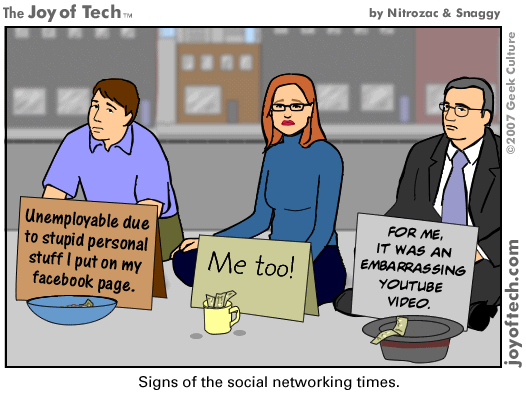 We’ve seen stories in the news and on television about workers being fired for comments and photos they’ve posted on Twitter, Facebook and MySpace. We’ve heard about companies conducting online searches of potential employees in the same social networking sites claiming they want to know how a potential employees acts outside the workplace.
You must be logged in to post a comment.