The following article was written by Guest Author, Linda Daichendt. Linda is Founder, CEO and Managing Consultant at Strategic Growth Concepts, a consulting firm specializing in start-up, small and mid-sized businesses, and a Strategic Partner of franchisEssentials. She is a recognized expert with 20+ years experience in providing Marketing, Operations, HR, and Strategic planning services to start-up, small and mid-sized businesses. Linda can be contacted at linda@strategicgrowthconcepts.com and the company website at www.strategicgrowthconcepts.com.
Top 5 Social Media Tips for Small Business
by Linda Daichendt
as posted on Marketing With New Technology July 16, 2009
(Please Note: some content in this posting is from an article by Mya Frazier for Bankrate.com)
A few years ago, using the Internet to market a small business simply meant to create a presence online with a simple, informational Web site. Then came the demands of search engine optimization to ensure Google and Yahoo searches yielded top-ranked results for your company. Was your business’s Web site chock full of the key search terms that would bring it to the attention of customers?
 Today, social media is transforming the small-business marketing landscape. Social media are Web- or mobile-based tools for sharing and discussing information. It’s not just for seeing who your high school sweetheart married. Businesses can tap into powerful networking sites and other social media to drive customers to their shops or companies.
If done right, small-business owners might even be able to slash their traditional marketing spending to zero. Writing blogs (short for “Web logs”) or on-going online commentary using social-networking sites, such as Facebook, MySpace, LinkedIn, Twitter and YouTube, can provide inexpensive but powerful online marketing.
Because it’s free, people think it’s easy to create a social media presence. But this attitude can lead to missteps. So before you dive headlong into social media, take some time to observe the customs and social norms of these new forms of communications, says David Spark, founder of Spark Media Solutions, a San Francisco-based firm that helps companies tell their story through social media. “Also think about your strategy for effectively utilizing social media before you jump in,” says Linda Daichendt, CEO/Managing Consultant of Strategic Growth Concepts. “It’s easier to avoid costly mistakes before you begin than to correct them after they’ve done damage to your company’s reputation.”
 “Think of social media as a cocktail party,” says, David Meerman Scott, author of “The New Rules of Marketing and PR” and “World Wide Rave,” books about how to create buzz online. “You don’t go into the cocktail party and go into the middle room and scream at the top of your lungs and say, ‘Buy my products.’ … What works is you have some meaningful conversation first. And that’s just how social media works.”
If you decide to take the social-networking plunge, here are five ways to harness social media to help your business.
1. Use free sites. Use free online services, such as the mobile short-message site Twitter, and popular networking sites Facebook and MySpace, to post significant news, specials or events. For example, you run a small Italian restaurant with a loyal following. You could create a Twitter account and upload the lunch or dinner specials via “tweets,” or short messages of up to 140 characters, daily to customers’ smart phones or to other Web sites.
“All you have to do is give a (Twitter) handle and start a conversation. You could put the Twitter handle on the menu or in the restaurant,” says Chris Abraham, Abraham Harrison LLC, a Washington, D.C.-based digital public relations agency. Granted, social networking sites are still for early adopters. “You aren’t going to get Aunt Matilda to tweet about the experience she had at dinner,” Abraham says.
Abraham considers Twitter one of the easiest ways for a newbie to social media to get started. “It’s more challenging to do Facebook,” Abraham says. “You have to create a personal profile, create a page and so on. With Twitter, if you’re Joe Smith with Motorcycle Emporium, you don’t have to create a page. And you can create Twitter updates via a phone or mobile device easily.”
“Don’t try to reinvent the wheel,” he says. “There are lots of people sold on really expensive solutions, but two of the best investments for reaching out to people and engaging with them are free on Twitter and Facebook.”
2. Shift marketing costs to social media. After learning how social networking operates, use social media to free up traditional marketing dollars for your small business by putting it online. You can quickly learn which of your Facebook or MySpace “friends” or online “group” members received and responded to your message.
Stanya Doty has cut her print marketing budget to zero. As owner of Simple Indulgences, a wine and high-end gift shop in Delaware, Ohio, she began using Facebook in December 2008 to communicate with her brother but quickly realized the online marketing possibilities.
“I thought, ‘Oh, my gosh, there are so many people here,’ ” she says. Indeed, Facebook boasts 200 million users worldwide. In April 2009, she began promoting monthly wine tastings via a Facebook page for the shop that quickly attracted 100 members. Combined with an e-newsletter created using the do-it-yourself, e-mail marketing Web site Constant Contact, she keeps enough buzz going about her shop that her advertising budget for local print ads no longer seemed necessary. She usually sends out about 700 e-mails, with the response rate sometimes reaching nearly 50 percent. It sure beats a postal mailing. “If I sent out a postcard with postage and paid for all that, I’d still have no idea who read it and who threw it away,” she says.
Indeed, unlike a print ad, Doty gets instant, measurable results. “On Facebook, you can see who has responded to invites,” she says. “It’s easy, it’s cheap and I’m actually appealing to people that at first know me from the store and then hopefully … pass the word along throughout their networks.”
 3. Do your own social-media optimization project. Learn about the competition in your industry and geographic region that are tapping social networking. Spark recommends starting by researching the competition in the major search engines — Google and Yahoo.
“Type in keywords and phrases that people would use to find you, like ‘plumber’ and ‘San Francisco.’ If you don’t appear in the top percentage of pages, take a look at the Website of those plumbers that do show up,” says Spark. “Look at their pages, and usually they will have a lot of content on their sites.”
To increase a business’s presence on the Internet, Spark advocates companies create blogs, newsletters and other articles on their sites to bolster the number of keywords — terms that search engines recognize — to boost their ranking in all-important Web searches.
“That’s the way people discover you,” he says. “Take that plumber in San Francisco. The right search terms might just be ‘clogged toilet and San Francisco.’” “That tells me I should write … in my blog about how to fix a clogged toilet and mention that I am a plumber in San Francisco,” he says.
4. Take social-network marketing to the next level. Create and post richer content about what your customers would expect from someone in your business. Don’t view social media sites as a place to simply hype your wares. It’s a place for conversation.
“Social media is about earning attention,” says David Meerman Scott, author of “The New Rules of Marketing and PR” and “World Wide Rave,” books about how to create buzz online. “What’s most important is to forget about what your company does. Instead, think about the people who are buying your products. Simply hyping products and services online and in social media sites completely backfires. People are not looking for products but for something fun. They are looking to make connections,” Scott says.
So it’s all about having something interesting to say or show. It could be a blog, or a video on the video-sharing Website YouTube.
For example, if you’re a caterer, instead of talking about your service, create engaging culinary content. Imagine positioning yourself as a gourmet magazine on the Web, complete with links to a video you uploaded to YouTube.
“A caterer could create a blog with information about how to create a fantastic party, and each blog post or YouTube video could be another installment,” Scott says. “On the Web, you are what you publish and being on the Web is about publishing information.”
So back to that plumber faced with the prospect of dropping an expensive Yellow Pages listing but worried about customers not finding him if they have a burst pipe or a misfiring shower head. Scott recommends the plumber post a list of “the 100 home fixes for common plumbing problems.”
“All of a sudden you are going to get indexed very highly in the search engines, and people are going to share that content with their friends,” he says. “When someone puts an update on Facebook asking if anyone knows a good plumber in Boston, a friend might point to your content.”
 5. Use blogging to drive search results and help new customers find you. Lately, blogging has gained greater attention, with the advent of “micro-blogging” on Twitter. But consider the time commitment and strategy before launching an account.
Even with the spread of micro-blogging, Abraham remains a big fan of traditional blogs, which are lengthier and show up on Web sites. In general, no matter what form the blog takes, it should be consistent over time.
“If you can’t keep up one (blog) post a day or 12 tweets a day, do one tweet every Thursday. Consistency in blogging or tweeting will create a relationship of trust with your followers or readers. Do it once a week, but for the next two years,” Abraham says.
And don’t spend extra money on blogging software, technical help, or a ghost writer for your blog. To get started, sign up with WordPress.com or Blogger – both are free blogging platforms which are easy to use for beginners.
Additional opportunities within the social media environment include: online radio shows on platforms such as BlogTalkRadio, social networking sites such as LinkedIN, Plaxo, and FriendFeed, and a wide variety of additional tools as well depending on your type of business.
Following these social media basics for small business will get your company started on the right road to gaining new customers and increased revenue via social media.
 In a franchise environment, franchisees are often involved in the brand’s local cooperatives where economy of scale prevails, making marketing much more cost-effective than for one location. Further, as many franchise organizations have internal marketing departments, or the luxury of a marketing agency, a great deal of professional experience is available to assist franchisees in developing effective marketing strategies and exploring new tools and technology that enhance otherwise mundane marketing efforts. Outside the franchise arena, small business owners must fend for themselves when developing strategies that must be innovative, just to compete. Often, trial and error becomes the norm, rather than the exception.
 Recently, I posted the article
  In his piece, Kuemmerle seeks to outline the various risks and challenges that a prospective entrepreneur will have to take on to truly succeed. Kuemmerle wants to force business-people to look in the mirror and ask themselves: is this really the model I want to follow to achieve my personal business dreams? The converse to his questions are: is franchising a better business model?
 The struggle is rooted in fear – fear of confrontation, consequence, repercussions. The solution is rooted in respect. When you respect yourself, your staff, and your customers, you’ll find accountability easier to achieve.
 As we do quite often, Gini Dietrich, CEO at
  “I would be surprised if any CEO of a publicly-traded company had a social media presence. The reason I say this is because of the SEC and FTC.
 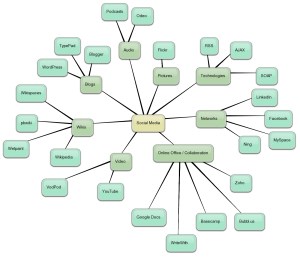 Social media is exciting, and is finally being embraced by franchise organizations. Many are beginning to test the waters, albeit very cautiously. Some have been pleasantly surprised and wonder why they didn’t venture in this direction sooner. Others, have been quite confused but are reluctant to give up. Perhaps if they could quantify and analyze their efforts, they would be more confident in their efforts. But where do they start?
 I believe the most common local marketing challenges in a franchise organization are the typical franchisee’s lack of marketing 101 skills, their inability to develop a defined marketing strategy, and certainly their inability to execute any marketing plan. However, let’s be fair. They may not have learned about marketing and marketing strategies.
  I was recently asked to share my point of view on how a franchise brand can — or even should — wrest control of their brand on social media destinations when franchise holders have been early entrants.
 Recently, in one of the franchise groups on LinkedIn, there was some discussion about the
You must be logged in to post a comment.