Establishing the “Virtual Party Room”

In the recent article, Enter the Fourth Horsemen, published in the April 2009 issue of Franchise Times, Mark Siebert, Chief Executive Officer of the iFranchise Group identified Social Media as the next internet [franchise] lead generation site. In the article, Mark wrote, “The problem is that far too many franchisors view social media like guerilla marketing on steroids – easy opportunities for free publicity that can drive leads. But marketing on social media is neither free nor easy – and the shear number of people using the social media will not dictate the size of the opportunity.”

Let’s see what else has been written about Social Media and Franchising. Actually, in the same issue of Franchise Times, where Mark’s article was published, Nancy Weingartner, Franchise Times Editor wrote about it in her article, Citizen Marketing. At the end of the article, was a text block with the title, “The Top Five Social Media Mistakes” from Nick Powills of No Limit Media Consulting. The mistakes, clearly with franchising in mind, but applicable to other business segments as well, were identified as follows:

Five1. Not changing your franchise agreement to cover social media. Just like franchisors took control of their Web sites a decade or so ago, now they need to control what’s being said about the brand in social networking sites. In addition, start now to secure your company’s name in conjunction with YouTube, etc., just like you did URLs just a few years ago.

2. Not maintaining and updating your Facebook, Twitter, LinkedIn or blogs. Once you train the public to visit your sites for updates or to post a comment, you’re obligated to follow through. Nothing is worse than ticking off the new citizen journalists.

3. Thinking you can do social marketing on your own. While you may have a marketing team in-house, they’re also charged with traditional advertising, PR and marketing. “You need someone to do it daily,” contends Nick Powills. And you also want someone who knows what they’re doing. Social media is not just PR in a trendy wrapper. You need someone who knows franchising and the “social” lingo.

4. Overpaying to outsource this service. Since it’s still fairly new, it’s hard to quantify how much a lead from social media actually is worth. Are you looking for franchisees or long-term customers? Do your due diligence – sound familiar?

5. Thinking Facebook, etc., are just for kids. Facebook may have started as networking for younger people, but take a look at who’s on it now. Some of the original kids’ grandparents are living their lives on their Facebook pages. Powills describes it as “LinkedIn on speed.”

So, does all this have your head spinning yet? Well, it should unless you take the journey of Franchise Development via Social Media one step at a time. You see, the real beauty of social media is the ability to start slow and progress at your own pace. And, there’s opportunity to learn each step of the way. Unlike developing website content, where a mistake glares at you and is difficult to correct, a mistake or error in social media is relatively easy to correct, and usually provides enough time to make the correction. Okay, enough of that but I just wanted to put your minds at ease in case you’re phobic about new technology, and new methods and processes. As for the top five social media mistakes listed above, please keep those in mind and use it as a reference as you progress on the journey of Franchise Development via Social Media.

Franchise Development via Social Media – Part One

Most people believe the first step in social media is to start networking right away. That’s is not the case but is a mistake made by most individuals and companies attemting to use social media as a way to grow a business. The first step is developing the strategy to begin social media marketing of which networking eventually becomes an essential element of the same.

So, the first step is to establish objectives in what you’re attemting to achieve by venturing into social media. The common reason I hear from franchisors is their desire to generate leads so they have candidates in the franchise sales pipeline. Actually, the main goal is to increase franchise sales so let’s call it what it is. Let’s take it a step further and identify the primary goal and objective as “generating qualified franchise leads that ultimately will lead to franchise sales and at a level that makes the social media effort worthwhile.”

Step two then, would be to identify your concept’s ideal franchise candidate profile. Who would be most likely to succeed as a franchisee in your system? If your system already has a relative number of franchisees, a profile of the most successful franchisees would help in this regard. Once, it is fully understood what type of individual you’re looking for as a franchise candidate, we’ll need to explore where to locate these individuals online. Do not shortcut this step as identifying your ideal franchise candidate is critical to the process.

The next step, will find you exploring various social networks and establishing company pages and profiles. Remember, you’re not networking yet. You’re just working on developing your social media infrastructure. Establishing company pages and profiles are key elements to the overall strategy because one of these sites will ultimately be your concept’s “virtual party room.” This party room, or “meeting place” or “landing page”, as I’ve referred to it in the past (“meeting place” is not exciting and “landing page” is too technical), is the place where all your social media efforts will culminate and turn an interested party into a franchise candidate. (For another perspective, may I refer you to another article on this site “Franchise Sales & Space Mountain: An Odd Comparison?”)

Group of peopleIt’s in this virtual party room that you’ll encourage attendance and participation by interested parties, franchisees, franchisee personnel, franchise customers, franchise company executives and personnel, and the concept’s vendors and suppliers. The goal is to establish a party where conversations about the concept, and its products and services, are happening all over the place. For instance, a discussion is started by a franchise candidate and is addressed by corporate personnel. A question is posted by a franchisee and several answers are submitted by various individuals. A video by the CEO is posted and is viewed and commented on by various individuals with different interests in the group and concept providing distinct perspectives. Positive comments (testimonials) are posted by customers. There are a hundred, two hundred, four hundred or more members of the group. There’s an information section listing the concept’s website, blogsite and other pertinent links. There may even be a media section with recent press releases or news stories about the concept and the franchisees.

Imagine now, directing your qualified franchise candidates, one at a time, to this party room. Picture it in-person as opposed to virtual and think about the conversations, the buzz in the room, and the excitement generated. The same is true in this virtual party room. Except, the virtual party continues to grow and grow over time and franchise candidates can visit over and over again, interacting with group members, developing key relationships and sharing information. All key components towards making an informed decision about your franchise concept. Mind you, we’ve jumped ahead and explored what the party would look like down the road a bit. But for now, we’re just establishing the place to hold the party.

The next step is to locate where the ideal franchise candidates are congregating online. For example purposes, let’s identify your ideal franchise candidate as female, with mid to upper level management experience within the financial services industry, and with school-age children. Now, let’s assume a few things. Individuals meeting this criteria may be re-entering the workforce after five or six years as a stay-at-home Mom. She may be exploring entrepreneurship as opposed to working in Corporate America once again. By virtue of her mid to upper level management experience it’s most likely safe to assume this indiviudal is well-educated and may have an advanced degree. Using these assumptions and criteria let’s find your ideal franchise candidates.

facebook_v_linkedinUsing LinkedIn or Facebook, you can explore various groups consisting of executives and relating to the financial services industry. You can also explore groups that pertain to startups, entrepreneurship and small busines ownership. Now, you will join a few of these groups and monitor the discussion groups. Again, you’re not networking yet but you are starting to participate in discussions, answering general questions, getting a feel for the “land” and exposing the group to small busines ownership, entrepreneurship and finally, to your concept. Once, members in the group start to request to connect, that’s when the actual networking begins. This is key. The networking only starts when individuals request to connect with you or your company, not the other way around by you asking them.

As you connect with individuals, you have access to their profile which includes work experience, level of expertise, recommendations, education, hobbies, etc. This host of information will provide you with the missing pieces to the ideal franchise candidate profile. It will also provide you a snapshot of other groups they’re involved in and may even include other social networks. If not, a Google search provides a wealth of additional information that can be explored. (When you have an opportunity, perform a Google search of Paul Segreto and you’ll see 10-12 pages of search results with 8-10 results on each page – you’ll be able to determine how I spend my time, who I’m working with and where I’m involved)

Over a short period of time, you’ll start referring individuals to your virtual party, asking them to invite their connections and so on. Simultaneously, you’ll introduce these individuals to your website and ask them to follow you on Twitter because you’ll already have established a Twitter ID. They’ll see how you promote other people on Twitter interact with you and will be exposed to how you promote yourself and your concept in that social network. At some point, you’ll have established a blog and will be referring individuals to your blogsite, and be able to track their interest and activity.

You’ve now built this multi-level web of social media activity that connects from one point to the other, backtracks to other relevant points and eventually winds up at the party. While enroute to the party, you’re learning a great deal about these people individually and they’re learning a great deal about your concept. As all this is occurring, you’re also increasing your concept’s search engine optimization but that is another story for another day. But it is an added benefit.

Tomorrow we’ll discuss interacting with the individuals within the virtual party and explore various methods of generating further interest in your concept while basically just “holding hands.”

I encourage you to leave any and all comments and questions below. I will respond accordingly prior to posting tomorrow’s segment in this four part series that is scheduled to run through Thursday.

Franchise Development via Social Media: Let the Journey Begin!

This week, a great deal of time will be spent on this site focusing on Franchise Development via Social Media. I’ll address the basics and identify how to integrate Web 2.0 technology and tools with traditional franchise marketing and development methods. The ultimate goal and objective to be achieved by these efforts will be to provide franchisors an effective way to generate franchise sales in today’s economic environment and beyond.

Now, before proceeding on our exciting journey, let’s not lose site of basic sales skills and the fact that franchise candidates must be treated professionally and with a sense of urgency. To that end, as a primer to this week’s journey of Franchise Development via Social Media, I am reposting below, the recent article posted on this site that referred to Franchise Update’s mystery shopping of franchise companies. Let’s keep the results focused in our minds and understand, regardless of what methods generate interest in a franchise concept, it still takes personal attention to detail, extreme professionalism, and diligent follow-up to successfully move any interested party from franchise candidate to franchisee.

Your participation is greatly encouraged and will certainly be appreciated. Please submit all comments and questions in the appropriate section at any time during the journey and I’ll respond as quickly as possible but definitely before the next day’s segment. I anticipate four segments in all, with one each evening through Thursday of this week. That will provide more than enough information to ponder over the upcoming Memorial Day weekend.

Without further delay, let the journey begin!

lagging-salesWhy Are Franchise Sales Lagging?
originally posted on this site March 24, 2009

Besides the obvious factors of economic uncertainty and tight credit, what other factors are contributing to dismal franchise sales across the industry? Are we contributing to the problem? Are we doing a disservice to franchise candidates, the very people exploring options for a better future?

Recently, Franchise Update’s own mystery shopping (posing as a qualified buyer and phoning in and emailing to 148 franchise companies who represented 57,000 units) revealed such fundamental flaws as:

no callback within 48 hours (58%);
not taking a name (24%);
not taking a phone number (45%) or email address (40%); and
not asking for a time frame for buying/opening a franchise (67%).

The ironic thing is that the industry routinely pays out 20-30-40% commission on franchise sales.

In light of recent poor performance and, high expense in actually awarding a franchise, can the franchise industry continue its franchise development efforts in the same manner as it has for the past ten or so years AND expect to grow?

What is Social Media Marketing?

social media marketing cartoonSo, we’ve already defined “Social Media” in a blog post earlier this week. Let’s take it a step further and see how Wikipedia defines “Social Media Marketing.”

According to Wikipedia, Social Media Marketing is an engagement with online communities to generate exposure, opportunity and sales. The number-one advantage is generating exposure for the business, followed by increasing traffic and building new business partnerships.[1]

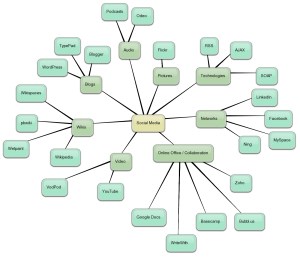
Common social media marketing tools include Twitter, Blogs, LinkedIn, Facebook and YouTube.

In the context of Internet marketing, social media refers to a collective group of web properties whose content is primarily published by users, not direct employees of the property (e.g. the vast majority of video on YouTube is published by non-YouTube employees).

Social media optimization (SMO) is a set of methods for generating publicity through social media, online communities and community websites.

Social media marketing has two important aspects:

(1) Adding links to services such as Digg, Reddit and Del.icio.us so that their pages can be easily ‘saved and submitted’ to and for these services.

(2) Building ways that fans of a brand or company can promote it themselves in multiple online social media venues.

Some social media marketers offer to write content (such as white papers) that are unique and newsworthy. This content can then be marketed by popularizing it or even by creating a “viral” video on YouTube and other video sites, including getting involved in blogs, forums, and niche communities. Others in the social media world consider this form of social media marketing Astroturfing or “fake grass roots”.

According to Lloyd Salmons, first chairman of the Internet Advertising Bureau social media council “Social media isn’t just about big networks like Facebook and MySpace, it’s about brands having conversations.”[2].

Supporting Salmons claim, Jim Tobin and Lisa Braziel liken rules of social media marketing to rules of etiquette commonly practiced at a cocktail party. In their book, Social Media is a Cocktail Party, the authors suggest rules of engagement commonly practiced at a cocktail party are often the same or similar rules for engaging others in social media spaces.

The parameters surrounding social media marketing are arguably elusive today. The trend is still so new many bloggers, public relations, marketing, and social media experts vary in their definition of what social media marketing entails. Nielson published [3] suggesting that blogs and social networks make up an emerging social web. The social web includes social media sites and is a location within which social media marketing might take place.

References

1. Social Media Marketing Industry Report
2. IAB appoints first social media council chair
3. Global Faces and Networked Places

Women, Social Media and Franchising: A Winning Combination?

Women, more than their male counterparts, have embraced social media as an integral part of their typical day. From getting their news online to communicating with family and friends on social networking sites to blogging about their personal and business experiences, women are spending more time than ever before on the internet.

women get it rightAs more and more women explore franchising as a career alternative, choosing to control their own destiny, franchisors must market directly to this rapidly-growing group of opportunity seekers. Joining the force of today’s more sophisticated, educated and technologically advanced transitioning corporate executives, women will use social media to explore and investigate franchise opportunities. Tending to be more diligent and thorough than men in general, women relish relationship building and sharing of information making social media marketing perfect to attract female franchise candidates.

The article below details the continued usage of social media by the female population. Franchisors should pay close attention to the various stats provided by the author and make social media marketing a key component of their franchise marketing and development strategy.

42 Million U.S. Women Use Social Media: Blogs Most Influential
By Anita Campbell on Small Biz Trends May 10, 2009

Is the jury still out in your mind as to whether social media matters in business? If so, a recent survey might make you change your mind. In fact, it may cause you to re-think your entire marketing outreach, especially if you market to women.

The study found that 42 million women in the United States (roughly 53% of the 79 million adult women in the United States who use the Internet) participate in social media at least weekly. As they spend more time with social media, women are spending correspondingly less time with traditional media: 39% less on newspapers, 36% less time reading magazines, and 30% less time watching TV.

That’s according to a recent social media survey by BlogHer, the women’s blog network, along with iVillage and Compass Partners.

Read the entire article here

What is Social Media?

Twitter Cartoon 3With all the recent discussion on Facebook and Twitter about Social Media guidelines, we have received many inquiries from the franchise community about Social Media training for their employees and franchisees. During these conversations, it was quite evident that many did not understand Social Media and some did not know what it is. So, we thought we’d take it to a basic level and explore the various definitions of Social Media as it is defined by different sources online. Here’s what we found:

Social media are primarily Internet-based tools for sharing and discussing information among human beings. …
en.wikipedia.org/wiki/Social_media

A category of sites that is based on user participation and user-generated content. They include social networking sites like LinkedIn, Facebook, or My Space, social bookmarking sites like Del.icio.us, social news sites like Digg or Simpy, and other sites that are centered on user interaction.
www.lazworld.com/glossary.html

Online technologies and practices that people use to share opinions, insights, experiences, and perspectives with each other.
www.tvb.org/multiplatform/Multiplatform_Glossary.aspx

Social media are works of user-created video, audio, text or multimedia that are published and shared in a social environment, such as a blog, wiki or video hosting site.
www.capilanou.ca/help/active-cms/glossary.html

An umbrella term that defines the various activities that integrate technology, social interaction, and the construction of words and pictures. …
www.anvilmediainc.com/search-engine-marketing-glossary.html

Software tools that allow groups to generate content and engage in peer-to-peer conversations and exchange of content (examples are YouTube, Flickr, Facebook, MySpace etc)
www.bottlepr.co.uk/glossary.html

Social Media is the collection of tools and online spaces available to help individuals and businesses to accelerate their information and communication needs. [Axel Schultze]
communitymanagers.pbwiki.com/Glossary-and-Reference

Regional Franchise Development as a Growth Strategy

PowerHouse FranchisingThe following article, the first in a series of articles on the subject of Regional Franchise Development as a Growth Strategy, has been submitted by franchisEssentials Guest Author, Dan Durney, Partner and Co-Founder of PowerHouse Franchising. Dan has a wealth of business and franchise experience including:

•Expert in analyzing business opportunities and clearly explaining the details in a clear and concise manner.
•Thoroughly enjoys the “exploratory” phase of business qualification where the goals, expectations and capabilities of the individuals seeking to be in business for themselves, but not by themselves, are matched up with the individuals who are looking for partners to help launch their concept.
•Directing the development of the current Internet strategy for PowerHouse Franchising, including enhanced pipeline and lead-generation reporting.
•Currently owns multiple Regional Development Concepts in the U.S.
•Experienced (and entertaining) presenter for conferences, training seminars and business opportunity expos.
•Prior experience in sales and support to large Corporate Enterprise customers as well as small “mom and pop” operations allows for comprehensive understanding of today’s business climate.
•Has started and successfully run three separate businesses (Telecom, IT training, & Marketing).

franchisEssentials is pleased to have Dan as a Guest Author and we look forward to posting additional articles in the future from Dan and his excellent team at PowerHouse Franchising.

Regional Franchise Development as a Growth Strategy

It’s not for everyone to be sure. In fact, it’s for very few. Estimates range from 3-5% of all franchisors use this method of growth as a corporate strategy. Maybe, only about 15% even should consider it. However, when the right franchise concept, with a dynamic business model and strong unit economics embrace it… it can be MAGIC and make the brand a “Force” to be reckoned with.

Regional Development SampleWhat is Regional Franchise Development? Do we know it by any other name? Oh yes we do – Regional Representative, Area Director, Area Representative and of course Master Franchising. Oh ok, now I’ve heard of those – so what’s the difference? Basically, not much but if the Franchisor shares the Franchise Fees, Royalties and sometimes Distribution income with these Strategic Market “Partners” (legal guys – please don’t sweat the use of “Partner” here – I use it mainly for illustration purposes and not strict legal definition – thanks!) then you have the makings of a Challenging, exciting and VERY rewarding business building opportunity – both for the Franchisor and for the Regional Developer (RD) (we’ll stick with this Acronym for these articles).

We’ll start off this series by discussing WHY a Franchisor would decide to develop their brand this way and what they can expect to see in terms of growth and infrastructure development. Then we’ll explore what benefits (branding, revenue opportunities, etc.) are in store for the company, the RD and the Franchisees too.

FOUR Reasons for a Franchisor to Consider Regional Development as a Growth Strategy

1) Faster Growth – more sales efforts in each Region.

2) Lower Corporate overhead costs – staff up to support approximately 60 Regional Developers.

3) Greater collective EXPERIENCE of Regional Developers brings more objective input with local experience. No ”Ivory Tower” syndrome.

4) Better ongoing franchisee support with costs pushed out to the Regional Developers.

The RD has an incentive to develop the Region as quickly as possible; therefore the franchise recruiting efforts can begin immediately within the local market. Using Business Brokers, Franchise Consultants, Local Networking, Online Portals, Classic Advertising, Social Media (I won’t even get started on THAT here), etc. are some ways to find the most interested, qualified and “ready to move” candidates. Of course, once the “Pilot Unit” is open, customers of many concepts have become franchisees themselves after experiencing the products / services of the franchise as a consumer.

Imagine the growth curve for the franchisor as the RDs begin to recruit in their local market – face to face – filtering out the unqualified and presenting the ones who are properly vetted to the franchisor for approval. What kind of candidate would an RD be looking for? One with whom they feel they can work well together, who will be a TEAM PLAYER in the market with the other franchisees, and will be receptive to coaching and mentoring that the RD will provide.

What would the Franchisor’s costs be to hire, train, house, and compensate franchise sales people to accomplish the same thing? The Franchisors who “do the math” clearly understand this concept. It can result in strong, controlled, and calculated growth. Who doesn’t want that?

One VERY SUCCESSFUL franchise concept that rolled out exclusively thru Regional Development has over 540 units open (800+ awarded) across the USA and is supported by a staff of only 40 at corporate HQ. Those staff members support the RDs and the RDs support the franchisees in their local markets. It’s a tiered distribution of support. Remember, the RDs are compensated for this with the sharing of the Royalties paid by the franchisees. (More about the revenue streams to the RDs later).

It still needs to be done correctly, having sufficient staff to support initial RD location openings, etc. This company did it right, for the most part, enduring some bumps and bruises along the way, but there are certainly others who haven’t. What caused their downfall? That’s for another installment…

Best PracticesBubbling up the “Best Practices” from the Regions thru the RDs provides the Franchisor with invaluable “field research” to improve the brand, its offerings and stay better apprised of the competition.

If you think about it, it is actually a “selling” feature of a franchise to have local support by someone who has a vested interest in the success of the franchisees in their market. Often the RD is only a short distance away and visits more frequently than head office staffers dispatched quarterly or less frequently.

Branding is better controlled as well since the RD is responsible for monitoring the local co-op advertising activities in their market.

So, we see the benefits for the Franchisor, RD and Franchisee can be substantial. What are we looking for in a Regional Developer? What characteristics should be avoided for an RD? Is it for you? Is this the right time in your life and personal circumstances?

Signs of the Times

signs of the timesWe’ve seen stories in the news and on television about workers being fired for comments and photos they’ve posted on Twitter, Facebook and MySpace. We’ve heard about companies conducting online searches of potential employees in the same social networking sites claiming they want to know how a potential employees acts outside the workplace.

Should it really matter to an employer what workers post on social networking sites, provided they make their posts on their own time? Is it intrusive for employers to cross into workers’ personal lives in this manner? As for potential employees, should it matter how individuals act outside the workplace especially if their work performance is on target?

Have employers just gotten to the point of searching for negatives and reasons to terminate employment? Are employers just looking for reasons not to hire? Have we evolved into a business world where the glass is now half empty as opposed to half full?

Employee Training: The Key to Controlling Workers Compensation Cost

The following article has been submitted by franchisEssentials Guest Author, Margaret Spence, CWC, RMPE – President/CEO of Douglas Claims & Risk Consultants, Inc. and WorkCompSeminars.com. Margaret is a Board Certified Workers’ Compensation Consultant, Speaker and Trainer who ranks among the experts in the field of injury management and return to work implementation. For more than two decades, she has managed workers’ compensation claims for Fortune 500 Corporations, Public Entities and small businesses. She is an expert at showing companies how to slash their workers’ compensation cost by implementing strategies that drastically reduce injury rates, increase productivity and energize employees to work safely. She also is the author of – From Workers’ Comp Claimant to Valued Employee. Margaret pioneered adding National Return to Work Week to the 2009 US calendar – this week highlights the importance of implementing Return-to-Work or Stay-at-Work Programs. To learn more about Margaret please visit her website at www.cdouglasrms.com.

Employee Training: The Key to Controlling Your Workers Compensation Cost

Imagine if you could hire the right candidate, keep them safe and retain them for years to come? As your company grapples with layoffs, budget shortages and declining profits – is this realistic? Can you balance employee retention, injury prevention and economic sustainability? The answer is easy – in tough economic times businesses can not afford to overlook retention and injury prevention. Training is the key to sustaining profits, decreasing workers’ compensation cost and retaining employees.

How would you rate your company’s training program? (a) Exceptional – (b) Great – (c) Adequate – (d) Needs Improvement

Most employers rate their training programs as Great to Adequate; in reality most programs need drastic improvement.

Insurance cartoonThe typical employer describes their training program in the following manner: “Well, we have new employees come in to the HR Department to complete the hire package, then we go over their benefits, we show them a safety video and then we send them to their department for job-specific training.” What the employer is actually saying – new employees are put into a buddy situation, you are asking their co-workers to train them to do the job. Guess what —this is not training! That is passing the torch from Employee A to Employee B.

With this scenario, you are hoping that Employee A, your superstar employee, will pass down all of the requirements for the job. In reality, Employee A is frustrated because she has to train all of the new employees without additional pay, and she passes down her bad habits, her frustrations and what I like to call her accumulated employee baggage to Employee B. Before Employee B has a chance to get her feet wet, she is already forming a negative opinion of your company. Before long, you are totally surprised when Employee B is injured and out on workers’ compensation. What went wrong? You failed to provide the employee with adequate training to prevent the injury – you created a “tribal training program”.

As employers, you have to stop passing the torch – or doing what I call “tribal training”. In the olden days information was passed down from generation to generation using verbal queues, thousands of years later, employers are still doing this every day when they hire new employees. Employers have to recognize that “tribal training” is not training at all – job specific, formal, documented training is what prevents injuries. Like a cookie cutter, every employee in the same job should have the same training – Consistency.

Where should you start?

a. Determine the specifics tasks required to do the job.
b. Determine the essential functions and demands of the jobs.
c. Write a clear job description that addresses the minimum requirements to do the job safely.
d. Determine the safety rules that should apply to the job or work areas.
e. Determine the minimum competency required to do the job safely.

Use this information to create a Training Matrix that charts the job task, minimum competency required to do the job, the safety requirements and a time table for the employee to achieve competency in the position. Then use this information to develop your training classes and start training your employees – Simple.

Do not accept experience for training, even if employees come to your job site with impressive amounts of experience. The previous employer may have done things the right way, but they may not have; the employee may have been adequately trained to perform the job, but he or she may not have been. It is up to you to provide training specific to your work environment and the job tasks you are asking your employees to perform.

Remember training should be an ongoing initiative, not a one shot deal. It should be Simple, Specific and Consistent. As the Employer you must recognize that bad hiring decisions and improper training programs can increase the likelihood that an employee will be injured. Spend the money to train your employees correctly—from the beginning. If you evaluate the overall cost of one workers’ compensation claim—including: the loss of manpower, the administrative cost to manage an injured employee, the workers’ compensation premium cost and the overtime to cover jobs that would have been done by the injured worker—you will see the cost benefits of integrating an effective training program that emphasizes safety into your workplace.

osha messageThe Occupational Safety and Health Administration (OSHA), mandates that you provide training to your employees. In today economic climate, most employers are asking their employees to do more with less staffing, it is imperative that your employees are highly trained and remain injury free. The most cost effective scenario is preventing injuries not managing them. In this economy, you can not afford to continue the training scenarios of the past. Job specific training will ensure that your company moves from one that is trying to survive, to one that is looking for new ways to thrive.

Exploring Twitter Basics

The following is some great information submitted by Guest Author, Gini Dietrich, Chief Executive Officer at Arment Dietrich PR. The information explores Twitter basics and how to get started using this innovative tool in your social networking efforts. Gini fully understands franchisors’ public relations and communications needs and was a keynote speaker at the Franchise Finance and Development Conference recently held in Las Vegas. Arment Dietrich PR is among the country’s fastest growing boutique public relations agencies. Their motivation is a relentless drive to find new and better ways to help clients boost their businesses and bottom-line results.

twitter cartoon 2Getting started on Twitter

As budding experts on social media, believe us when we say Twitter is not dominated by gossiping teenagers and social butterflies (though they are there). Many corporate executives, reporters, and entrepreneurs recognize social media not only as a powerful tool for communication, but also as a resource for networking and attracting new business. And though the excuses people use to avoid social media are plentiful (”I don’t get it,” or “it takes too long,” or “I don’t know how to get started”), it really isn’t painful or difficult, as long as you commit a little time to get started.

So what is Twitter?

Twitter is a social networking site where you can meet new people and exchange ideas and information. You are allowed to say whatever you want, as often as you want (in 140 characters or less), in a message called a “tweet.”

Types of Tweets

DMs, RTs, and @replies. What do all of those mean? A DM is a direct message you send to anyone in your network who is also following you (we’ll get to following later), and is not viewable by anyone else. It is like an email between you and another person. If you find a tweet of particular interest, you can RT or retweet it. All of your followers may not be connected, and retweeting a post shares the information with your network. Lastly, @replies are simply a reply to someone else’s tweet. Your followers may not see the initial message, but they will be able to read your @reply on your Twitter page.

When you’re tweeting, don’t forget that Twitter is just like any other information source, so it’s important to give credit where credit is due and reference your source when sharing other people’s tweets.

Getting started

First create a Twitter handle (also known as a screen name), upload a picture, and write a bio. Use your real name and a current picture so people recognize you. (For some quick tips on how to write an online bio, check out Gini’s recent post on the Geek Girls Guide.)

Start networking

If you want anyone to read what you are writing, you need some followers. When you subscribe to someone else’s Twitter stream, it is called following. The easiest way to build your online community is to search for people you already know using Twitter and start following them. (Follow the Arment Dietrich team here!) You can also search keywords to find like-minded people. And, start tweeting! Use DMs, RTs, and @replies to engage and connect.

Making time for TwitterCheck Twitter morning, noon, and night. Or, at least three times per day at first. Once you get used to checking it and reading your updates, you’ll see you don’t have to make a huge time investment to become involved.

There are many programs out there to make your Twitter experience as easy as possible (such as TweetDeck), and allow you to group your followers and track tweets based on interests or people. Programs like these are a big timesaver.

The Top CMOs And Social Media Marketing On Twitter

the-big-cheeseWhat a great way to learn about social media marketing than by following the best of the best. The top Chief Marketing Officers on Twitter today, are listed below.

5,000+ Followers:

#1: Barry Judge
Chief Marketing Officer at Best Buy
www.Twitter.com/BestBuyCMO

#2: Scott Hoffman
Chief Marketing Officer at Lotame
www.Twitter.com/Lotame

3,000+ Followers:

#3: Jeffrey Hayzlett
Chief Marketing Officer at Kodak
www.Twitter.com/JeffreyHayzlett

#4: Kent Huffman
Chief Marketing Officer at BearCom Wireless
www.Twitter.com/KentHuffman

social-media-cartoon212,000+ Followers:

#5: Joanna Lord
Chief Marketing Officer at The Online Beat
www.Twitter.com/JoannaLord

#6: Sam Decker
Chief Marketing Officer at Bazaarvoice
www.Twitter.com/SamDecker

#7: Jacob Morgan
Chief Marketing Officer at HiRank
www.Twitter.com/JacobM

#8: Nigel Dessau
Chief Marketing Officer at AMD
www.Twitter.com/NigelDessau

#9: Brett Greene
Chief Marketing Officer at Oxstein Design Labs
www.Twitter.com/BrettGreene

#10: Marian Salzman
Chief Marketing Officer at Porter Novelli
www.Twitter.com/MarianSalzman

#11: Sam Mallikarjunan
Chief Marketing Officer at American Health
www.Twitter.com/Mallikarjunan

twitter-cartoon#12: Sonny Ganguly
Chief Marketing Officer at WeddingWire
www.Twitter.com/SonnyG

1,000+ Followers:

#13: Tom O’Brien
Chief Marketing Officer at MotiveQuest
www.Twitter.com/TomOB

#14: Matt Browne
Chief Marketing Officer at MoreFocus
www.Twitter.com/SDMatt

#15: Marc Poirier
Chief Marketing Officer at Acquisio
www.Twitter.com/MarcPoirier

#16: Meg Smith
Chief Marketing Officer at American Booksellers Association
www.Twitter.com/IndieBoundMeg