Tag: entrepreneurship

The Entrepreneurial Transition Inside Franchising

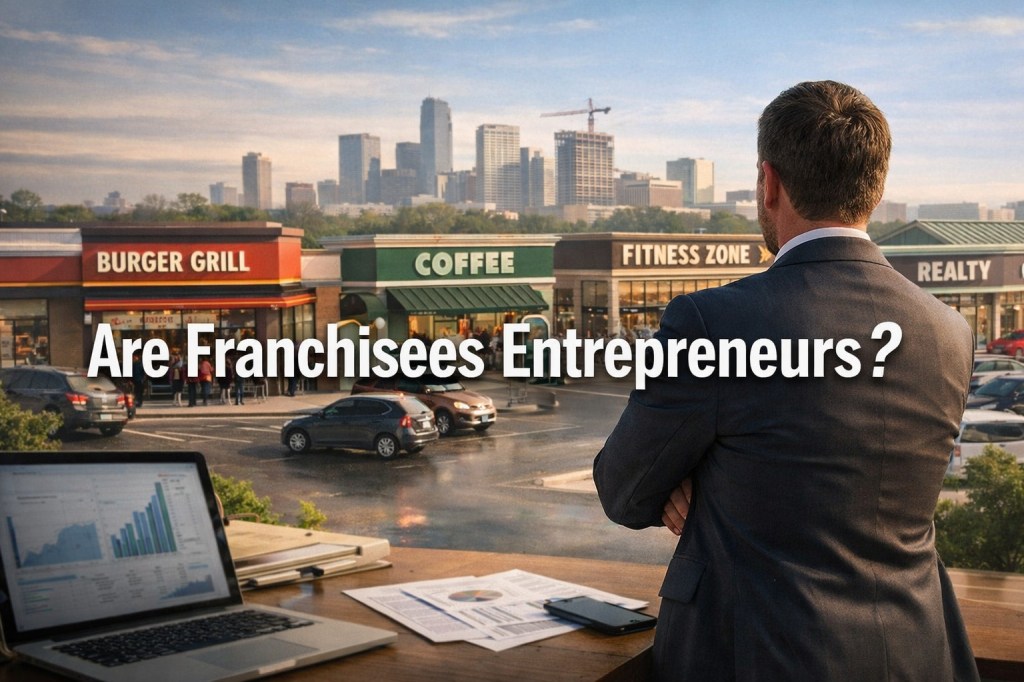
Are franchisees entrepreneurs? If you look only at the black-and-white definitions, the answer feels deceptively simple. A franchisee is a business owner licensed to operate a proven brand, paying fees in exchange for systems, trademarks, and support. An entrepreneur, by definition, creates something new, assumes most of the risk, and enjoys most of the reward. On paper, one appears structured and guided, the other inventive and self-directed. Yet those definitions miss the gray space where real-world ownership lives, especially as a franchisee grows beyond a single location.

At the entry level, a first-time franchisee often looks more like a disciplined operator than a classic entrepreneur. The model is established, the playbook is written, and the expectations are clear. Risk still exists, but it is partially mitigated by brand recognition, operating systems, and collective learning. Vision, at this stage, is often borrowed rather than invented. The goal is execution, not reinvention. Success depends on following systems, hiring well, managing cash flow, and delivering consistency. In that moment, calling the franchisee an entrepreneur may feel like a stretch to some purists.

But that perspective freezes the franchisee at day one and ignores what happens next.

The moment a franchisee begins thinking beyond survival and into growth, the equation changes. Opening a second location introduces new layers of risk that are no longer shared equally with the franchisor. Capital exposure increases. Management complexity expands. The franchisee is no longer simply running a store; they are building an organization. Decisions about people, culture, leadership structure, real estate, and market prioritization become theirs to own. The safety net of “just follow the system” starts to thin.

With each additional location, the franchisee’s role shifts further away from operator and closer to architect. Vision is no longer limited to executing a model; it becomes about designing a portfolio. Strategy enters the conversation. Questions around scale, timing, financing, and long-term exit begin to matter more than daily transactions. At this point, risk is no longer confined to a single unit’s performance. One bad decision can affect an entire multi-unit enterprise.

The entrepreneurial mindset becomes even more pronounced when a franchisee expands across multiple brands. Now the individual is not just scaling within a framework but selecting frameworks themselves. Evaluating concepts, assessing markets, diversifying revenue streams, and balancing brand-specific risks requires the same instincts as launching a new venture. While the brands themselves may not be original creations, the ecosystem being built absolutely is. The entrepreneur is not inventing the product, but they are inventing the business behind the products.

This is where the gray area provides the clearest answer. Entrepreneurship is not solely about creating something from scratch. It is about ownership of outcomes, tolerance for uncertainty, and the ability to allocate resources toward future opportunity. A multi-unit, multi-brand franchisee carries most of the risk tied to growth decisions and enjoys most of the upside if those decisions succeed. That balance of risk and reward aligns far more closely with entrepreneurship than with simple business operation.

There is also a psychological transition that occurs. Early-stage franchisees often think in terms of compliance and performance. Entrepreneurial franchisees think in terms of leverage and possibility. They ask different questions. How do I build a leadership team that can scale without me? How do I create enterprise value beyond cash flow? How do I turn locations into assets rather than jobs? These are not operator questions. They are entrepreneurial ones.

So are franchisees entrepreneurs? Not automatically. Not on day one simply by signing a franchise agreement. But many become entrepreneurs through growth, complexity, and intentional risk-taking. The transition from single-unit operator to multi-unit owner, and from single-brand participant to portfolio builder, strengthens and ultimately demands an entrepreneurial mindset.

In that sense, franchising can be less a shortcut around entrepreneurship and more a pathway into it. For those who choose to stay small and operational, the franchisee role may remain primarily that of a business owner. For those who expand, diversify, and build something larger than themselves, the line fades quickly. At that point, the question answers itself.


About the Author

Paul Segreto brings over forty years of real-world experience in franchising, restaurants, and small business growth. Recognized as one of the Top 100 Global Franchise and Small Business Influencers, Paul is the driving voice behind Acceler8Success Café, a daily content platform that inspires and informs thousands of entrepreneurs nationwide. A passionate advocate for ethical leadership and sustainable growth, Paul has dedicated his career to helping founders, franchise executives, and entrepreneurial families achieve clarity, balance, and lasting success through purpose-driven action.


About Acceler8Success America

Acceler8Success America is a comprehensive business advisory and coaching platform dedicated to helping entrepreneurs, small business owners, and franchise professionals achieve The American Dream Accelerated.

Through a combination of strategic consulting, results-focused coaching, and empowering content, Acceler8Success America provides the tools, insights, and guidance needed to start, grow, and scale successfully in today’s fast-paced world.

With deep expertise in entrepreneurship, franchising, restaurants, and small business development, Acceler8Success America bridges experience and innovation, supporting current and aspiring entrepreneurs as they build sustainable businesses and lasting legacies across America.

Learn more at Acceler8SuccessAmerica.com

20 Reasons Not to Franchise Your Business (Until You’re Ready… Or Not!)

Franchising is often viewed as the ultimate badge of success for business owners. The idea of expanding rapidly with someone else’s capital while gaining brand recognition and market share is understandably attractive. But the truth is, franchising is not a shortcut to growth, nor is it a guaranteed path to fortune. In fact, for many business owners, it can become a burden financially, emotionally, and operationally if pursued prematurely or for the wrong reasons.

Before you take the leap into franchising, it’s essential to understand why you shouldn’t. These aren’t roadblocks meant to discourage ambition but rather reality checks that, when addressed, will either affirm your business is ready to scale or save you from a costly and painful detour. Below are 20 reasons why you should not attempt to franchise your business, at least not yet.

20 Reasons Why You Should Not Franchise Your Business

  1. Your Business Isn’t Profitable Enough
    If you aren’t consistently generating strong profits, there’s no business model to replicate, let alone sell to others.
  2. You Don’t Have Documented Systems
    Without clearly defined and repeatable operational procedures, your business can’t be taught, and franchising is, at its core, a teaching model.
  3. You Are the Business
    If your business relies heavily on your personal involvement, personality, or expertise, it’s not yet ready to be duplicated.
  4. You Don’t Understand Franchising
    Franchising isn’t just growth, it’s legal, operational, marketing, and support infrastructure with very specific responsibilities to franchisees.
  5. You’re Desperate for Capital
    Franchising should never be a Band-Aid for cash flow problems. You’re selling a business model, not just collecting franchise fees.
  6. Your Brand Isn’t Established
    Weak branding makes it hard to market and differentiate your franchise from others, leading to confusion or poor consumer reception.
  7. You Can’t Support Franchisees
    Without the infrastructure to provide training, marketing assistance, and ongoing support, your franchisees will struggle, and so will your brand.
  8. You Don’t Like Managing People
    Franchising involves managing relationships, solving disputes, and leading by influence, not command. If this doesn’t appeal to you, think twice.
  9. You’re Not Ready for Legal Compliance
    Franchise laws are strict, vary by state, and require specialized legal documentation and ongoing disclosures… a major commitment.
  10. You Don’t Have a Unique Selling Proposition
    If your concept isn’t truly different or better, why would someone invest their future into your business instead of starting their own?
  11. You Can’t Let Go
    Franchising requires letting others run your concept their way within your system. Micromanagement doesn’t scale.
  12. Your Current Location Isn’t Strong Enough
    If your flagship store isn’t a well-oiled machine with strong customer reviews and a loyal base, it won’t serve as a convincing model.
  13. You Haven’t Tested in Multiple Markets
    A business that works in one neighborhood may not work in another. Proving adaptability across markets is crucial.
  14. You Lack Marketing & Sales Strategy
    You’ll need a strategy to attract franchisees, sell territories, and market the brand and that takes time, talent, and money.
  15. You Underestimate the Cost
    Franchising costs more than most anticipate. From legal fees to training manuals, marketing, and franchisee support, it adds up fast.
  16. You’re Not Ready to Train Others
    Can you break down every role, process, and nuance into an understandable training program that others can replicate?
  17. You Don’t Have a Clear Vision
    Without a long-term roadmap for growth, brand standards, and expansion, you’ll struggle to lead a network of franchisees effectively.
  18. You Think Franchising Means Less Work
    The reality: franchising is more work, more responsibility, and less control, especially at the beginning.
  19. You Haven’t Considered Alternative Growth Models
    Franchising isn’t the only way to grow. Corporate-owned expansion might be more suitable.
  20. You’re Not Emotionally Ready
    Franchisees will challenge you, markets will shift, and expectations will rise. You must be resilient, strategic, and adaptable.

After the Reality Check: Rethink, Refocus, Rebuild

If several of these reasons resonated with you, that’s not a signal to give up, it’s a wake-up call to double down on strengthening your existing business. Use this pause to refine your systems, train your team, define your brand, test your concept in other locations, and build the infrastructure that can eventually support multiple units, franchised or not.

Going through this process may prove to be one of the best decisions you’ll ever make. Even if you ultimately decide not to franchise, your business will be stronger, more efficient, and better positioned to scale. You may discover that developing company-owned locations is a better fit. Or, after building a rock-solid foundation and developing the right support systems, you might find franchising to be the logical next step… one you’re finally ready for.

Either way, you win because a well-built business is always the best growth strategy.


About the Author

Paul Segreto brings over forty years of real-world experience in franchising, restaurants, and small business growth. Recognized as one of the Top 100 Global Franchise and Small Business Influencers, Paul is the driving voice behind Acceler8Success Café, a daily content platform that inspires and informs thousands of entrepreneurs nationwide. A passionate advocate for ethical leadership and sustainable growth, Paul has dedicated his career to helping founders, franchise executives, and entrepreneurial families achieve clarity, balance, and lasting success through purpose-driven action.


About Acceler8Success America

Acceler8Success America is a comprehensive business advisory and coaching platform dedicated to helping entrepreneurs, small business owners, and franchise professionals achieve The American Dream Accelerated.

Through a combination of strategic consulting, results-focused coaching, and empowering content, Acceler8Success America provides the tools, insights, and guidance needed to start, grow, and scale successfully in today’s fast-paced world.

With deep expertise in entrepreneurship, franchising, restaurants, and small business development, Acceler8Success America bridges experience and innovation, supporting current and aspiring entrepreneurs as they build sustainable businesses and lasting legacies across America.

Learn more at Acceler8SuccessAmerica.com

A 2026 Commitment to Clarity, Accountability, and Action

Happy New Year.
Not as a greeting, but as a promise.

I will not be louder.
I will be clearer.

After a disappointing couple of years and a past year largely defined by personal health challenges, I enter 2026 with perspective I didn’t have before. I’ve learned what truly matters. I’ve learned what drains energy and what deserves it. And I’ve learned that clarity earned through adversity is far more powerful than confidence built on momentum alone.

As 2026 begins, I will stop chasing momentum and start moving with intention.
I will measure progress by alignment, not activity.
I will remember that speed without direction is not progress, and noise is not leadership.

I will bring everything I’ve built into one clear ecosystem.
Coaching, advising, writing, podcasting, community, unified by purpose.
I will not build more for the sake of more.
I will build what belongs together.

In 2026, my laser focus will be this:
I will help others succeed.
I will help them achieve their dreams.
Not mine reflected through them, but theirs, clearly defined, honestly pursued, and responsibly built.

I will be a source of clarity when the noise is overwhelming.
I will offer perspective when shortcuts are tempting.
I will speak truth, even when it’s uncomfortable, because clarity always costs less than confusion.

I will not convince people to become entrepreneurs.
I will stand beside those who already feel the pull.
I will help them pursue ownership wisely, intentionally, and with eyes wide open.

I will ensure everything I stand for is real.
Not hype.
Not slogans.
But the belief that the American Dream is alive,
and that it requires discipline, responsibility, and ownership.

I will speak calmly and deliberately.
I will not rush to comment.
I will speak when it matters.
I will challenge assumptions instead of chasing relevance.

I will meet entrepreneurs where they are,
before the leap, in the chaos, and in the responsibility that follows growth.
I will not rescue them.
I will help them see clearly enough to lead themselves and their businesses forward.

I will choose depth over volume.
I will say no faster.
I will partner with intention.
I will do fewer things, better.

I will build communities rooted in accountability, not applause.
Smaller. Stronger. Serious.
Places where standards matter and progress is earned.

And this matters deeply to me:

For anyone who has ever had a disappointing experience with me,
for anyone whose expectations were not met,
for anyone who, in the past year or in years past,
walked away feeling let down or unresolved,
I will not defend it with explanations.
I will not minimize it with words.

I will work tirelessly to resolve it and to prove otherwise through action,
by creating new value,
by exceeding expectations where I once fell short,
and by ensuring the outcome is meaningfully better than before.

Through consistency.
Through follow-through.
Through showing up fully and intentionally.

Not promises.
Not positioning.
Results.

I will put my long-form thinking into the world, not to teach tactics, but to tell the truth.
The truth about pressure.
The truth about doubt.
The truth about resilience.
And the quiet dignity of building something that lasts.

I will align everything I do.
Strategy will feed content.
Content will feed community.
Community will feed opportunity.

Nothing will be scattered.
Nothing will be forced.

I will not accelerate chaos.
I will accelerate clarity.

Because growth without intention is empty.
And success without direction is fragile.

So as this New Year begins, this is my commitment:
To show up focused.
To serve relentlessly.
To help others win.

And if I ever miss the mark…
tell me.
I will listen.
And together, we’ll determine the shift or pivot needed to get it right.

This is who I will be in 2026.
This is the standard I will hold.
This is the work I will do.

And this is the story I will live.

Happy New Year to you and your family, and to all pursuing the American Dream.

Paul Segreto

From $15/Hour Tasks to Million-Dollar Thinking: Reframing the Franchisee Role

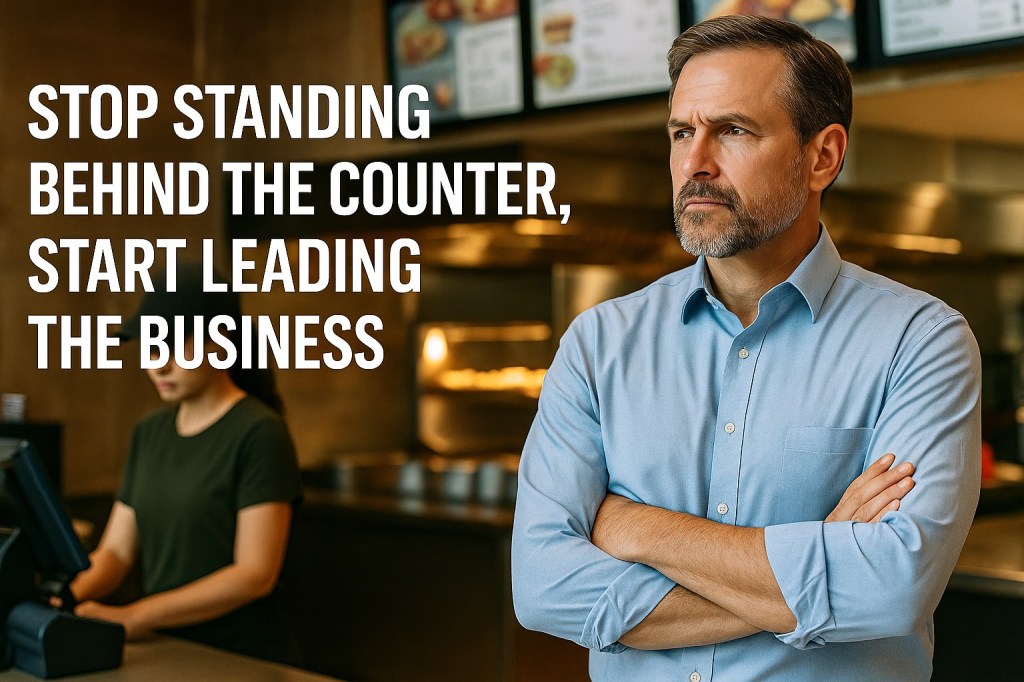
Franchise systems succeed when franchisees succeed, yet one of the most common and costly missteps within franchising is how often owners spend the majority of their time working inside their business instead of on it. Franchisors have an opportunity — and an obligation — to train franchisees to understand the difference. It begins with a simple but powerful question: should a franchisee take on what effectively becomes a $15-per-hour position within the business, or should they lead the business to maximize profitability, growth, scalability, and asset value?

For years, the belief was that franchisees needed to be hands-on, shoulder-to-shoulder with their team, immersed in day-to-day operations to stay connected to challenges. That argument still surfaces today. It is often said that working in the business keeps a franchisee tuned in to what customers expect and what employees need. However, there is a counterargument that cannot be ignored — and it is far more aligned with long-term success. When a franchisee becomes absorbed in daily tasks, they risk losing strategic perspective. They may become excellent at frontline responsibilities, but less effective at leadership, management, marketing, financial oversight, and growth. Essentially, they cannot see the forest for the trees.

This issue often reveals itself early in the franchisor’s training process. Many systems teach franchisees how to run the business but fall short in teaching them how to lead the business. Training is heavily weighted toward operations, checklists, recipes, service steps, or POS procedures. While these are critical, they can inadvertently reinforce the franchisee’s instinct to jump behind the counter, perform tasks, and fill shifts. The outcome is predictable. Franchisees become the highest-paid hourly employees in their own business, stretched thin, exhausted, and unable to make the kinds of decisions that actually grow revenue or profitability.

What franchisors must teach — and reinforce continuously — is the discipline of working smarter. Franchisees must understand that their responsibilities cannot be delegated, while most operational tasks can and should be. Their value lies in building people, tightening systems, driving marketing, analyzing financials, improving culture, and increasing customer lifetime value. When they step back from the front line and step into leadership, the business scales beyond their physical presence. That is where true profitability is found.

The challenge, of course, is mindset. Many franchisees come from corporate roles, operations-heavy backgrounds, or first-time entrepreneurial experiences where doing equals progress. Their instinct is to stay busy, to be seen, to jump in wherever help is needed. If they come from a customer-facing business, they often believe their personal involvement is what drives customer experience. But franchisors must help them see that their real job is not to ring the register but to build a business that rings without them.

This shift begins with training that emphasizes leadership over labor. Scenario-based learning, financial modeling, staffing strategies, task delegation frameworks, and metrics-driven management must take center stage. Franchisees should leave training not only knowing how to operate the business, but knowing how to create an environment where employees can operate the business successfully. Franchisors must explain the opportunity cost: every hour spent on a frontline task is an hour not spent growing the top line, improving margins, strengthening teams, or expanding to additional units.

There is also the matter of visibility. Some franchisees argue that working inside the business keeps them connected to daily challenges, employee morale, and customer behavior. That is valid to a point, but it becomes problematic when it replaces strategic leadership. Franchisors should teach franchisees how to maintain visibility without sacrificing their role. Scheduled floor time, structured observation periods, listening tools, weekly team meetings, and performance dashboards provide insight without trapping the owner inside daily operations.

Ultimately, the franchisee’s highest and best use is leadership. They must set the tone, drive accountability, build a culture of execution, and ensure compliance with brand standards. These responsibilities cannot be outsourced to a $15-per-hour employee. They also cannot be fulfilled effectively when the franchisee is constantly running registers, prepping product, or filling shifts. Leadership requires elevation, and franchisors must help franchisees understand the value of stepping into that role.

Training is the foundation of that shift. When franchisors prioritize teaching franchisees to think like leaders, act like strategists, and operate like business owners, everything changes. The franchisee becomes more profitable. The location becomes better run. The brand becomes stronger. And the system becomes more sustainable. Working on the business is where growth happens, where opportunities are recognized, and where long-term success is built.

Franchisees who embrace this philosophy discover that their business doesn’t depend on their physical presence to succeed — only their leadership. And that is the difference between owning a job and owning a scalable enterprise. For franchisors, the more effectively they train franchisees to work smarter, not harder, the stronger their entire network becomes.


About the Author

Paul Segreto brings over forty years of real-world experience in franchising, restaurants, and small business growth. Recognized as one of the Top 100 Global Franchise and Small Business Influencers, Paul is the driving voice behind Acceler8Success Café, a daily content platform that inspires and informs thousands of entrepreneurs nationwide. A passionate advocate for ethical leadership and sustainable growth, Paul has dedicated his career to helping founders, franchise executives, and entrepreneurial families achieve clarity, balance, and lasting success through purpose-driven action.


About Acceler8Success America

Acceler8Success America is a comprehensive business advisory and coaching platform dedicated to helping entrepreneurs, small business owners, and franchise professionals achieve The American Dream Accelerated.

Through a combination of strategic consulting, results-focused coaching, and empowering content, Acceler8Success America provides the tools, insights, and guidance needed to start, grow, and scale successfully in today’s fast-paced world.

With deep expertise in entrepreneurship, franchising, restaurants, and small business development, Acceler8Success America bridges experience and innovation, supporting current and aspiring entrepreneurs as they build sustainable businesses and lasting legacies across America.

Learn more at Acceler8SuccessAmerica.com

The Journey from Small Business Owner to Franchisor: Is Every Operator an Entrepreneur? Is Every Entrepreneur a Founder?

The question comes up often in conversations with small business owners and restaurant operators who wonder where they actually fit on the entrepreneurial spectrum. They ask if owning a single location automatically makes them an entrepreneur. They ask if franchising their business suddenly elevates them to the status of founder. They ask if moving from startup to brand to franchise system makes them a true franchisor. What they’re really asking is something deeper: What am I becoming on this journey?

The answer is rarely simple because the journey itself is anything but simple. It is not linear. It does not move cleanly from Point A to Point B. It looks much more like the childhood game of Chutes & Ladders. One moment you’re climbing a ladder—hiring a great general manager, landing a strong commercial lease, hitting consistent profitability, earning glowing customer reviews. The next moment you’re staring at a chute—staff turnover, equipment failure, a dip in sales, a bad location choice, a supply chain issue, a lawsuit, or simply burnout from trying to do everything alone. The path forward is full of ups, downs, leaps, stalls, and sudden slides backward. Yet, for those who persist, it’s also full of transformation.

A small business owner or restaurant operator absolutely is an entrepreneur because running a business is one of the purest forms of entrepreneurship. They take risks every day. They solve problems in real time. They innovate out of necessity. They learn to lead, sometimes without even realizing it. They build something that wasn’t there before. Entrepreneurship isn’t measured by scale. It’s measured by intent, courage, and action. Still, many operators hesitate to call themselves entrepreneurs because they associate the term with investors, founders, tech startups, or multi-unit empire builders. In reality, the owner of a neighborhood restaurant or a local service business who hires, fires, markets, budgets, and hustles is doing the work that defines entrepreneurship more authentically than many in the startup world.

When a small business owner decides to franchise their business model, something shifts. They don’t become a founder because they franchise. They become a founder because they created something that others believe is worth replicating. They built a brand with a promise. They built an operating system that can live outside their building. They built intellectual property, a vision, and a blueprint for success. Scaling through franchising means the business owner evolves into a brand steward, a leader of leaders, a teacher, and an architect of systems. They’re no longer simply running a business. They’re building a pathway for others to run businesses too. That’s when the title of founder begins to make sense. It signals the transition from operator to originator.

If the franchising effort succeeds, the next evolution emerges: becoming a franchisor. This is a significant shift because being a franchisor is a completely different business altogether. It is no longer about selling pizzas, tacos, roofing services, home cleaning, or fitness classes. It becomes about franchise development. Training. Support. Culture. Quality assurance. Compliance. Technology platforms. Supply chain. Brand governance. Territory mapping. Strategic growth. Franchise relations. The franchisor journey introduces entirely new ladders—signing your first franchisee, onboarding the first out-of-state operator, launching a national marketing fund, hiring a VP of operations, achieving profitability from franchise royalties. It also introduces new chutes—legal disputes, underperforming franchisees, premature national expansion, growing too fast, growing too slow, running out of capital, losing brand consistency, discovering the business model doesn’t replicate easily.

The road from small business owner to franchisor is not for the faint of heart. It demands reinvention at every step. It chisels away ego and replaces it with resilience. It forces a shift from “me doing everything” to “others depending on me.” It replaces the adrenaline of daily operations with the responsibility of building a scalable ecosystem. It replaces certainty with courage, because scaling a business through franchising is one of the greatest entrepreneurial leaps a founder can take.

The milestones are exhilarating. Opening a first location. Becoming profitable. Developing a second location. Documenting processes. Building manuals. Protecting trademarks. Creating the initial FDD. Selling the very first franchise. Training the very first franchisee. Watching the system grow beyond your city, your state, your imagination. These moments become markers that the ladders are working. You’re climbing. You’re moving. You’re becoming someone new.

Yet the chutes remain. A franchisee fails. A system flaw reveals itself. A new competitor emerges. The cost of capital spikes. A national crisis hits. A supply issue threatens margins. A key employee leaves. A legal review uncovers a misstep. That’s the nature of the game. You slide, regroup, learn, and climb again.

This journey invites reflection. Are you ready to be more than an operator? Are you willing to let go of total control in exchange for scalable impact? Are you prepared to build systems, not just sales? Are you committed to consistency even when creativity feels more natural? Are you comfortable leading people who bought into your vision and now rely on your guidance? Are you willing to shift from doing the work to teaching the work? Are you ready to be accountable for the success or failure of entrepreneurs who bet their future on your brand?

Most importantly, are you prepared for the truth that the journey of entrepreneurship—especially through franchising—never really ends? There is no final square on the board. There’s always another ladder to climb or chute to navigate. There’s always another opportunity to leap forward or a challenge that forces you to pause and rethink. The beauty of the entrepreneurial path is that it changes you. The small business owner learns to be an entrepreneur. The entrepreneur grows into a founder. The founder transforms into a franchisor. Each step reshapes your identity, broadens your vision, and deepens your impact.

In the end, the titles matter far less than the journey itself. What matters is that you keep moving. You keep climbing. You keep choosing the next square with intention. Because somewhere on that board—sometimes ahead of you, sometimes behind you, sometimes directly under your feet—you discover who you’re becoming. And that discovery is the real win in the game of entrepreneurship.


About the Author

Paul Segreto brings over forty years of real-world experience in franchising, restaurants, and small business growth. Recognized as one of the Top 100 Global Franchise and Small Business Influencers, Paul is the driving voice behind Acceler8Success Café, a daily content platform that inspires and informs thousands of entrepreneurs nationwide. A passionate advocate for ethical leadership and sustainable growth, Paul has dedicated his career to helping founders, franchise executives, and entrepreneurial families achieve clarity, balance, and lasting success through purpose-driven action.


About Acceler8Success America

Acceler8Success America is a comprehensive business advisory and coaching platform dedicated to helping entrepreneurs, small business owners, and franchise professionals achieve The American Dream Accelerated.

Through a combination of strategic consulting, results-focused coaching, and empowering content, Acceler8Success America provides the tools, insights, and guidance needed to start, grow, and scale successfully in today’s fast-paced world.

With deep expertise in entrepreneurship, franchising, restaurants, and small business development, Acceler8Success America bridges experience and innovation, supporting current and aspiring entrepreneurs as they build sustainable businesses and lasting legacies across America.

Learn more at Acceler8SuccessAmerica.com

SPECIAL EDITION: Your Second Act, Fresh Start, or Family Legacy Could Begin in Texas

For years, countless individuals and families have dreamed of owning a business — but for many, the dream never felt possible where they lived. Cities and states across the country have made entrepreneurship feel out of reach: high cost of living, sky-high commercial rents, suffocating regulations, limited opportunities, and societal pressures that left little room for risk.

So people postponed the dream, not because they lacked ambition or talent, but because the environment wasn’t supportive of the life they wanted to build.

But what if the dream wasn’t the problem?
What if the location was?

Today, the path to a new beginning — and the freedom that comes with business ownership — is taking millions to one place:

Texas.

The Lone Star State has quietly become the most powerful example of what the American Dream still looks like when affordability, opportunity, and possibility are all aligned. It is where entrepreneurship is not only encouraged — it’s culturally embraced. It is where families rebuild, where professionals reinvent, where retirees begin a second act, and where spouses relocating for a partner’s job find purpose and independence.

Texas isn’t just a state.
It’s a launchpad.


Why Texas Has Become the Epicenter of Modern Entrepreneurship

People are leaving California, Illinois, New York, New Jersey, and other high-cost states in record numbers. But they aren’t just running from something — they’re moving toward something:

Opportunity. Stability. Possibility. Ownership.

Texas offers all four.

Business Advantages

• Significantly lower cost to start and operate a business
• No personal state income tax
• Lower commercial rents and more affordable build-outs
• A regulatory climate designed to support business, not restrict it
• Fast-growing, diverse workforce talent
• Strong infrastructure supporting logistics, distribution, tech, and manufacturing
• A massive consumer base across urban, suburban, and rural markets
• The ability to scale within one state before going national

Lifestyle & Economic Advantages Beyond Business

• Lower overall cost of living compared to coastal states
• Homeownership that is actually achievable
• More space, more comfort, and more value
• Excellent schools and family-friendly communities
• A culture of safety, respect, and personal freedom
• Multiple lifestyle options: city, suburb, rural, lakes, beaches, ranchland
• One of the strongest state economies in the country

Texas offers something rare today:
A place where life is more affordable, and your future feels more controllable.


Entrepreneurship for Every Life Stage — Not Just the Young and Fearless

Unlike popular portrayals, entrepreneurship isn’t just for twenty-something disruptors or seasoned executives. In Texas, it has become a meaningful next chapter for people at every point in life:

For Retirees Wanting a Second Act

You’re too experienced, too energized, and too driven to simply stop. Entrepreneurship can provide income, fulfillment, flexibility, and a new purpose in retirement.

For Professionals Ready for Their Next Logical Career Step

After years in corporate life, many are ready for independence — to build something of their own, to own their time, to decide their destiny.

For Families Seeking Additional Income Streams

Family-owned businesses are resurging. Whether to diversify income, strengthen long-term financial stability, or build generational legacy — Texas is fertile ground.

For Spouses Relocating Due to a Partner’s Job Transfer

New city, new home, new chapter. Many spouses use this moment to pursue entrepreneurship instead of job searching in an unfamiliar market. It’s an empowering way to create stability and identity in a new state.

For Anyone Looking to Build a Legacy Instead of Just a Career

Legacy isn’t accidental. It’s built — through ownership, through opportunity, through choice.

Texas is where those choices are possible.


Three Accessible Paths to Ownership in Texas

1. Start a New Venture From Scratch

Bring an idea to life, build it locally, and scale it statewide.

2. Invest in a Franchise

Leverage proven systems, support, branding, and training — perfect for relocators, families, or retirees.

3. Acquire an Existing Business

Step into immediate cash flow, established customers, and operational structure already in place.

Texas offers pathways for every risk level, every budget, and every stage of life.


Where Acceler8Success America Fits Into Your Journey

Relocating to Texas is not just a move — it’s a transformation.
And no one should navigate that alone.

Acceler8Success America provides a full range of entrepreneurship coaching, consulting, and advisory services and resources to help individuals, families, franchise owners, small business operators, and emerging brands launch, grow, and scale successfully.

With deep experience across franchising, restaurants, small business development, multi-unit growth, and market expansion, we support entrepreneurs through every stage of the journey — from concept to launch, from operational improvement to scaling, and from ownership to exit strategy.

We also provide specialized support for:

• Spouses and significant others relocating due to partner job transfers
• Families launching businesses together to diversify income
• Retirees reinventing themselves with a second-act enterprise
• Professionals ready to break free from corporate life
• Newcomers wanting to plant roots, build wealth, and create legacy in Texas

Our senior leadership team includes long-time transplants from New York and Canada — meaning we understand relocation, reinvention, and the emotional + financial considerations that come with starting over in a new state. We’ve lived it. And we guide our clients with the clarity of people who have done it successfully.

Others advise.
We partner.
We walk alongside you, step by step.


There’s No Better Time — and No Better Place — to Begin

If you’ve ever said, “One day, I’ll own a business,” that day doesn’t need to wait anymore.

If you’ve ever dreamed of independence, a second career, contributing to your family’s future, or building something that lasts — Texas may be the place where it finally becomes real.

You deserve the opportunity to explore what’s possible.
And we’re here to help you do it.

Let’s talk about your next chapter — and why Texas might be the place to start it.

There’s no time like the present. And no place like Texas.


About the Author

Paul Segreto brings over forty years of real-world experience in franchising, restaurants, and small business growth. Recognized as one of the Top 100 Global Franchise and Small Business Influencers, Paul is the driving voice behind Acceler8Success Café, a daily content platform that inspires and informs thousands of entrepreneurs nationwide. A passionate advocate for ethical leadership and sustainable growth, Paul has dedicated his career to helping founders, franchise executives, and entrepreneurial families achieve clarity, balance, and lasting success through purpose-driven action.


About Acceler8Success America

Acceler8Success America is a comprehensive business advisory and coaching platform dedicated to helping entrepreneurs, small business owners, and franchise professionals achieve The American Dream Accelerated.

Through a combination of strategic consulting, results-focused coaching, and empowering content, Acceler8Success America provides the tools, insights, and guidance needed to start, grow, and scale successfully in today’s fast-paced world.

With deep expertise in entrepreneurship, franchising, restaurants, and small business development, Acceler8Success America bridges experience and innovation, supporting current and aspiring entrepreneurs as they build sustainable businesses and lasting legacies across America.

Learn more at Acceler8SuccessAmerica.com

Additional Resources at OwnABizness.com and YourSuccessAccelerated.com

The Referral Multiplier: The Real Engine of Franchise Growth

If your customers buy once, you make a sale. If they come back, you build trust. If they tell others, you build a brand. That progression is not only timeless; it is the blueprint for durable franchising. Every franchise that has built real equity has done so by understanding that scale is earned—not declared. A franchisor may dream of dozens, hundreds, even thousands of units, but the true measure of readiness is whether success can be repeated inside one store, one market, one neighborhood. A brand is a living organism, and its life begins at the unit level. Not in a strategy meeting. Not in a marketing campaign. But in a moment between a team member and a customer—a moment worth repeating, a moment worth sharing.

As we approach a new year, the question for franchisors is not how fast they want to grow, but how solid the foundation truly is. Does the brand consistently inspire customers to return? Are franchisees equipped to perform with excellence even without oversight? Is the culture felt, not just described? Is word-of-mouth organic and strong enough to drive awareness without constant paid promotion? It is easy to say a brand is ready for expansion; it is far harder to know. The answer lives inside the guest experience. When customers return willingly and refer enthusiastically, growth becomes almost inevitable. When they do not, expansion simply stretches weakness across territory lines.

Local success is the litmus test. Every major franchise we admire today started with a single location that customers loved enough to adopt as their own. They told friends. They brought family. They celebrated life inside those four walls. That is how brands become movements. A franchisor who focuses solely on selling more franchises risks building on unstable ground. A franchisor who obsesses over unit-level excellence builds longevity. The difference is profound. One pursues growth. The other attracts it.

Franchising is a business of replication, but it is also a business of belief. Franchisees invest not only in a model, but in the confidence that the model will work for them the way it worked at the start. They want proof. They want history. They want evidence that customers come back again and again—and bring others with them. A franchisor must ask: Are we giving them that confidence? Are we demonstrating consistency from open to close, day after day, through every transaction and every challenge? Is the culture of the original location strong enough to survive distance, change, and scale?

The coming year will belong to the brands that answer those questions honestly. It will belong to franchisors who choose depth over speed, discipline over excitement, systems over assumptions. It will belong to leaders who understand that culture is not a slogan, nor a promise—it is a practice. It is what happens when new employees are trained, when a customer complains, when sales dip, when a franchisee struggles. Culture is revealed in stress, not comfort. And growth exposes truth quickly.

For emerging franchisors, this next year will be defining. The decisions made today—about systems, support, leadership, and expectations—will determine whether the brand thrives or merely expands. Are the franchisees being developed into advocates rather than just operators? Are new locations opening with clarity instead of confusion? Is the support system proactive instead of reactive? Can the customer experience be duplicated without dilution? Growth is not simply opening new units; growth is opening successful ones.

This is the philosophy that drives Acceler8Success America in our work with franchisors, especially those just beginning their expansion journey. We focus on strengthening the core so growth is not just possible, but sustainable. We push brands to ask the hard questions, refine the weak points, and build a culture that scales instead of strains. We know that when customers return, trust is built. When they refer, brands accelerate. When franchisees succeed, systems expand naturally, without force, without fragility.

So as the new year stands a few weeks away, the reflection becomes vital.

What will define your brand in the year ahead?
Will your focus be on selling franchises or creating successful franchisees?
Will your growth be measured by how many units open—or how many thrive?
Will customers remember your product or the way they felt interacting with your team?
Will your brand be one people try once—or one they tell others about?

Those answers will shape everything that follows. A sale is only the beginning. A returning customer is momentum. A referral is multiplication. The brands that win in the coming year will be the ones built from repeatable excellence outward—from community, to region, to nation—not by ambition alone, but by proof.

If they buy once, you win today.
If they buy again, you win tomorrow.
But if they bring others—you’ve built something powerful enough to last.


About the Author

Paul Segreto brings over forty years of real-world experience in franchising, restaurants, and small business growth. Recognized as one of the Top 100 Global Franchise and Small Business Influencers, Paul is the driving voice behind Acceler8Success Café, a daily content platform that inspires and informs thousands of entrepreneurs nationwide. A passionate advocate for ethical leadership and sustainable growth, Paul has dedicated his career to helping founders, franchise executives, and entrepreneurial families achieve clarity, balance, and lasting success through purpose-driven action.


About Acceler8Success America

Acceler8Success America is a comprehensive business advisory and coaching platform dedicated to helping entrepreneurs, small business owners, and franchise professionals achieve The American Dream Accelerated.

Through a combination of strategic consulting, results-focused coaching, and empowering content, Acceler8Success America provides the tools, insights, and guidance needed to start, grow, and scale successfully in today’s fast-paced world.

With deep expertise in entrepreneurship, franchising, restaurants, and small business development, Acceler8Success America bridges experience and innovation, supporting current and aspiring entrepreneurs as they build sustainable businesses and lasting legacies across America.

Learn more at Acceler8SuccessAmerica.com

Compartmentalization: A New Framework for Managing the Franchise Relationship

Compartmentalization is a concept we often hear in relation to stress management, time allocation, and emotional control. It’s a tool individuals use to keep balance, avoid overwhelm, and maintain clarity by separating thoughts, emotions, and responsibilities. In business, the idea is just as powerful: separate competing priorities into defined spaces so each receives the attention it deserves without letting one spill into or overshadow the other. When applied deliberately, compartmentalization becomes more than organization — it becomes a method for thinking, processing, and responding with focus and fairness. For franchisors, this discipline goes beyond productivity. It becomes a framework for relationship management.

Franchising is a structure built on interdependence — two parties relying on one another for success. With that comes shared risk, shared reward, and a set of mutual expectations that must coexist in balance to sustain the relationship. Yet balance in franchising is fragile. Systems grow, people change, challenges emerge, and pressure rises. One conversation can influence perception. One operational breakdown can color the tone of every future interaction. Franchise relationships are layered with legal frameworks, operational systems, marketing initiatives, brand standards, royalty structures, compliance requirements, and the deeply human elements of ambition, stress, personality, and emotion. All of these layers interact. All of them matter. And without structure, they easily tangle. One issue in one department can influence morale in another. Frustration in the field can bleed into perception of the entire support team. A strained conversation can distort trust across the relationship instead of remaining where it began. This is where compartmentalization stops being just a personal wellness tactic and becomes a leadership strategy — a way to protect and preserve the partnership.

Imagine approaching franchise management with defined compartments. Results in one. Communication in another. Standards enforcement in one. Innovation and opportunity in another. Support separate from accountability. Strategic vision separate from operational correction. Not to detach — but to clarify. When franchise leaders consciously choose which compartment a situation belongs in, they set the tone for fairness, understanding, and scalable problem solving. If a franchisee is underperforming, it is a performance conversation — not a character assessment. If compliance issues arise, they are addressed as procedural — not personal. If a new initiative struggles, it belongs in the box of strategy refinement — not relationship failure. And when emotions surface, they are acknowledged with respect while being kept contained enough not to dictate the narrative. Compartmentalization gives leaders space: space to assess before reacting, to understand before correcting, and to separate data from emotion. It prevents one misstep from becoming the defining story of the partnership.

When practiced purposefully, compartmentalization strengthens more than communication — it strengthens culture. It changes how feedback is delivered and received. Support feels empowering rather than controlling. Accountability feels like partnership rather than punishment. Franchisees feel seen for their whole effort, not just their shortcomings. Wins do not disappear under the weight of challenges. Conversations become clearer, solutions more focused, and respect more mutual. Systems grow stronger because problems are solved where they exist, not where they are assumed to exist. Even conflict, inevitable in any franchise network, becomes less explosive. Issues remain grounded instead of global. Franchisors and franchisees can disagree without damaging the relationship because the disagreement is contained — one box, one moment, one topic.

Compartmentalization is not cold. It is not distant. It is focus with purpose. It is the ability to separate the business from the emotional surge long enough to choose a better response. It is disciplined thinking in service of long-term stability. When franchisors embrace compartmentalization as a leadership practice, they create environments where relationships are durable, communication is fair, and decision-making is clear. They strengthen not only operational outcomes but human connection, trust, and confidence. They manage challenges without letting them define the partnership. And in doing so, they reinforce the foundations of their brand — one issue, one conversation, one compartment at a time.


About the Author

Paul Segreto brings over forty years of real-world experience in franchising, restaurants, and small business growth. Recognized as one of the Top 100 Global Franchise and Small Business Influencers, Paul is the driving voice behind Acceler8Success Café, a daily content platform that inspires and informs thousands of entrepreneurs nationwide. A passionate advocate for ethical leadership and sustainable growth, Paul has dedicated his career to helping founders, franchise executives, and entrepreneurial families achieve clarity, balance, and lasting success through purpose-driven action.


About Acceler8Success America

Acceler8Success America is a comprehensive business advisory and coaching platform dedicated to helping entrepreneurs, small business owners, and franchise professionals achieve The American Dream Accelerated.

Through a combination of strategic consulting, results-focused coaching, and empowering content, Acceler8Success America provides the tools, insights, and guidance needed to start, grow, and scale successfully in today’s fast-paced world.

With deep expertise in entrepreneurship, franchising, restaurants, and small business development, Acceler8Success America bridges experience and innovation, supporting current and aspiring entrepreneurs as they build sustainable businesses and lasting legacies across America.

When Franchisees Are Afraid—Leadership Becomes More Important Than Operations

Fear shows up quietly first. A nervous voice on a discovery day. A spouse asking are we sure about this? A new franchisee calling support three times a week—not because they don’t understand the system, but because they need reassurance the system will hold. Later it shows up differently: a once-confident operator suddenly avoiding calls, slipping into silence, pulling back from collaboration with peers. Fear is not always loud. Often it whispers. And if leadership isn’t listening, it goes unheard until it becomes something harder to fix: disengagement, resentment, burnout, or failure.

Understanding this is where true franchisor leadership begins.

Franchisees step into ownership full of hope. They invest time, money, identity—sometimes everything. But hope alone isn’t armor. Hope must be reinforced with guidance, with clarity, with trust. Too often franchisors focus only on the business mechanics: unit economics, marketing programs, compliance, labor models, food costs, margins. Necessary, absolutely. But these alone cannot carry a franchisee through the emotional turbulence of entrepreneurship.

Because franchising isn’t just business. It’s personal.

A franchisee’s fear is tied to livelihood, to family, to ego, to the story they’ve told themselves about who they wish to become. Fear shows up strongest when dreams feel fragile. A good franchisor teaches systems. A great franchisor strengthens belief.

This is where expansion matters most.

Fear is a leadership responsibility
Franchise leaders often want to fix. It’s natural. Show them processes. Give them tools. Point to the roadmap. But fear doesn’t respond to correction—it responds to connection. Franchisees need to feel seen, heard, understood. They need leadership that recognizes the emotional reality of ownership: the 2 a.m. cashflow panic, the silent dining room during slow hours, the weight of payroll, the fear of disappointing family and self.

Leadership here is not about eliminating fear. It’s about normalizing it and guiding through it.

What if franchisors treated fear like data?
A signal that communication needs strengthening.
A sign training must go deeper, not wider.
A cue that mentorship and peer-to-peer communities need attention.
A reminder that culture is either strengthening or cracking.

When fear becomes visible, it becomes manageable.

Culture is the true operating system
You can have the greatest playbook in franchising—but if the culture doesn’t reinforce courage, collaboration, and vulnerability, the playbook becomes nothing more than laminated paper.

Culture makes franchisees raise their hand before they’re in trouble.
Culture makes high performers share what’s working, and struggling operators listen without shame.
Culture makes franchisees say, I’m scared but I’m not alone.
That belief is worth more than any marketing fund or training module.

Support isn’t soft; it’s strategic
Franchisees who feel supported don’t fight the system—they engage with it. They ask questions instead of hiding mistakes. They lean into improvement instead of resisting change. They innovate responsibly instead of improvising dangerously. A franchisee who trusts leadership can take coaching. A franchisee who feels judged will retreat.

Fear-informed leadership develops:

✓ Field support that coaches instead of polices
✓ Training that reinforces competency and confidence
✓ Communication that is honest about challenges, not just celebrations
✓ A leadership tone that is steady even in uncertainty
✓ Peer networks where franchisees learn to lift each other

Empathy becomes operational advantage.

When uncertainty hits—economic shifts, rising costs, new competition—franchisees look not just for answers, but for anchors. They look to leadership for tone, for steadiness, for belief. The franchisor’s emotional posture during turbulence often matters more than the technical solution. Franchisees follow the energy before they follow the strategy.

Survival isn’t just about numbers
Units don’t close because of lack of marketing alone. They close when an owner loses belief. Declining metrics often begin weeks or months after hope starts to weaken. A franchise system survives long-term only if the people inside it feel worthy of survival.

When franchisors address fear at its root, they achieve more than compliance—they unlock commitment. Fear becomes motivation, not paralysis. Doubt becomes inquiry, not quiet withdrawal. Franchisees who feel emotionally supported push through slow seasons, adapt to new initiatives, and lead with resilience. And resilient franchisees build resilient brands.

Franchisors must become more than architects of systems—they must become architects of belief. The future of franchising will not belong to brands with the best operations alone, but to those who build a culture where franchisees feel safe enough to grow beyond their fear.

Because franchising is human.
Because leadership is emotional.
Because culture is the backbone.
Because belief is survival.

Fear is not a flaw in the franchise system.
Fear is an invitation—
for deeper leadership,
for stronger relationships,
for a culture that doesn’t just scale performance,
but scales courage.

And the franchisors who embrace this reality will not simply build businesses.
They will build legacy.


About the Author

Paul Segreto brings over forty years of real-world experience in franchising, restaurants, and small business growth. Recognized as one of the Top 100 Global Franchise and Small Business Influencers, Paul is the driving voice behind Acceler8Success Café, a daily content platform that inspires and informs thousands of entrepreneurs nationwide. A passionate advocate for ethical leadership and sustainable growth, Paul has dedicated his career to helping founders, franchise executives, and entrepreneurial families achieve clarity, balance, and lasting success through purpose-driven action.


About Acceler8Success America

Acceler8Success America is a comprehensive business advisory and coaching platform dedicated to helping entrepreneurs, small business owners, and franchise professionals achieve The American Dream Accelerated.

Through a combination of strategic consulting, results-focused coaching, and empowering content, Acceler8Success America provides the tools, insights, and guidance needed to start, grow, and scale successfully in today’s fast-paced world.

With deep expertise in entrepreneurship, franchising, restaurants, and small business development, Acceler8Success America bridges experience and innovation, supporting current and aspiring entrepreneurs as they build sustainable businesses and lasting legacies across America.

From Trade School to Business Owner: A Smart Path to Entrepreneurship & Franchising

Debate continues across kitchen tables, classrooms, and boardrooms about whether a college degree still holds the same value it once did. Tuition climbs, student debt rises, and many graduates enter the workforce lacking practical skills that convert to income immediately. Meanwhile, the demand for skilled labor continues to surge. Electricians, plumbers, HVAC technicians, welders, mechanics, heavy equipment operators — even culinary professionals — remain in short supply. The contrast is striking. While society questions the worth of traditional higher education, the trades quietly offer a pathway that is more direct, more affordable, and often more lucrative.

Here’s the opportunity too many overlook: a trade is not merely a job. It can be the first step toward business ownership. A trade builds skill, skill builds confidence, and confidence paired with knowledge builds companies. The problem is not capability — tradespeople solve problems daily — the problem is that technical training rarely continues into business training. Apprentices learn wiring diagrams, gas lines, freon recovery, food safety, or blade sharpening, but few learn cash flow, pricing, branding, customer acquisition, or leadership. Yet those are the skills required to turn a talent into a business.

Imagine a system where both paths merge.

Trade school equips the individual with a certifiable skill. Business education teaches them how to monetize it. Together, they create a blueprint for entrepreneurship. The journey becomes logical: learn the craft, master the work, understand the numbers, create a brand, and eventually hire and scale. A welding student could graduate with not only a certification but a business plan. An apprentice plumber could understand profit margins as well as pipe sizing. An HVAC tech could diagnose compressors and price seasonal maintenance programs profitably.

And the culinary world may be the best example of this needed shift.

Many chefs dream of owning a restaurant, but passion and plate presentation alone do not guarantee success. The restaurant failure rate remains one of the highest in small business. Not because of lack of talent in the kitchen — but because business fundamentals are often missing. With the right business education integrated into culinary programs, chef-to-owner transitions would be smoother, smarter, and far more sustainable. Understanding labor percentages, menu engineering, food cost controls, licensing, marketing, and customer retention could turn thousands of talented chefs into long-term operators rather than short-lived dreamers. The difference between a great cook and a successful restaurateur is rarely flavor — it is financial literacy and business discipline.

Technical mastery paired with entrepreneurial readiness could reshape entire industries. It not only fills workforce shortages but builds new enterprises, creates jobs, strengthens local economies — and opens a new opportunity for franchising. If aspiring business owners enter the workforce with both trade competence and business fluency, franchise brands suddenly gain access to a highly qualified pool of future operators. People who already know the work, understand service delivery, and can manage people, financials, and customer relationships. Franchise organizations thrive on strong operators, and a talent pool of trades-based entrepreneurs could become one of the greatest assets for franchise development. Instead of training franchisees from scratch, brands would onboard individuals already equipped with technical mastery, business fundamentals, and the mindset to scale — accelerating growth systemwide.

A student who chooses a trade should see a future far beyond hourly work. They should see a path to owning the truck, the crew, the fleet, the brand. They should see themselves not just repairing air conditioners, building fences, or crafting plates — but hiring teams, designing logos on vans, expanding locations, and eventually franchising themselves.

Not everyone thrives in lecture halls. Many learn best by doing — and those who build, fix, cook, weld, wire, and restore are often the most creative problem-solvers in the workforce. When given business knowledge alongside technical training, they become something even more powerful.

They become entrepreneurs.

The next generation of business owners may not be found in classrooms. They may be in garages, commercial kitchens, job sites, fabrication labs, and boiler rooms — waiting not just for opportunity but for direction. A blended path from trade mastery to business ownership could very well be the most practical, accessible, and impactful educational model of the future — not just for workers and communities, but for franchise systems hungry for capable operators who can grow with strength and scale.

Hands can build careers. Business skills can build empires. Together, they build the American Dream.


About the Author

Paul Segreto brings over forty years of real-world experience in franchising, restaurants, and small business growth. Recognized as one of the Top 100 Global Franchise and Small Business Influencers, Paul is the driving voice behind Acceler8Success Café, a daily content platform that inspires and informs thousands of entrepreneurs nationwide. A passionate advocate for ethical leadership and sustainable growth, Paul has dedicated his career to helping founders, franchise executives, and entrepreneurial families achieve clarity, balance, and lasting success through purpose-driven action.


About Acceler8Success America

Acceler8Success America is a comprehensive business advisory and coaching platform dedicated to helping entrepreneurs, small business owners, and franchise professionals achieve The American Dream Accelerated.

Through a combination of strategic consulting, results-focused coaching, and empowering content, Acceler8Success America provides the tools, insights, and guidance needed to start, grow, and scale successfully in today’s fast-paced world.

With deep expertise in entrepreneurship, franchising, restaurants, and small business development, Acceler8Success America bridges experience and innovation, supporting current and aspiring entrepreneurs as they build sustainable businesses and lasting legacies across America.