Tag: franchise relationships

Chasing Perfect: What Great Franchisors Actually Get Right

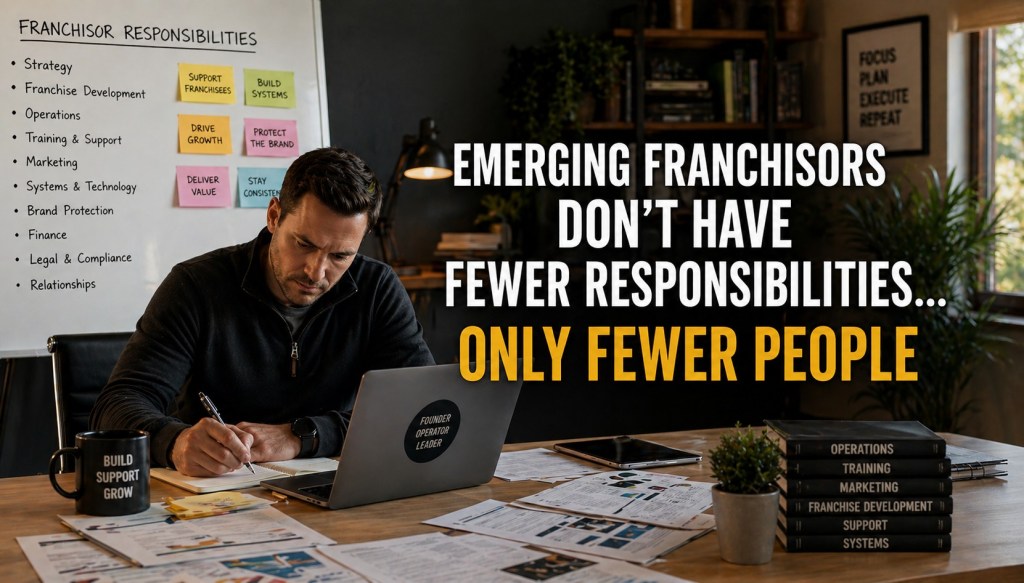
Perfection is a dangerous word in franchising. It implies a finish line that doesn’t exist. Franchising is not static. It evolves with markets, with people, with consumer expectations, with economics. So no, there is no such thing as a perfect franchisor. But there is something far more meaningful and far more attainable… a franchisor in constant pursuit of getting it right.

And that pursuit is what defines excellence.

A perfect franchisor is not one that never makes mistakes. It is one that builds a system designed to recognize, respond, and improve continuously. It is structured, disciplined, and intentional. It understands that franchising is not about selling units, it is about building a brand through other people’s capital, effort, and belief.

At its core, a franchisor’s responsibility is stewardship.

Stewardship of the brand. Stewardship of the system. Stewardship of the people who have trusted that system with their livelihoods.

That’s where the conversation begins.

A “perfect” franchisor has absolute clarity on unit economics. Not assumptions. Not projections built on best-case scenarios. Real, validated, repeatable performance. They know what it costs to open, what it costs to operate, what it takes to break even, and what it takes to generate sustainable profitability. And more importantly, they are honest about it. Transparency here is not optional. It is foundational.

They don’t franchise to fix a broken model. They franchise to replicate a proven one.

A “perfect” franchisor is operationally obsessed. They understand that brand standards are not suggestions. They are the very thing that protects the integrity of the system. But this is where many get it wrong. Enforcement without support creates friction. Support without accountability creates inconsistency. The balance between the two is where great franchisors live.

They build systems that are teachable, transferable, and executable. Not dependent on extraordinary operators, but designed for capable, committed ones.

A “perfect” franchisor invests heavily in onboarding and ongoing training. Not just at the beginning, but throughout the lifecycle of the franchisee. Because the reality is this, people don’t fail because they don’t care. They fail because they don’t know, or they drift from what they once knew.

Training is not an event. It is a culture.

A “perfect” franchisor knows their franchisees beyond the surface. Not just as unit numbers or royalty checks, but as operators, leaders, and individuals. They understand performance metrics, yes, but they also understand behaviors. Engagement. Participation. Attendance at conferences. Willingness to collaborate with peers. Openness to coaching.

They recognize early signs of struggle long before they show up in declining sales.

A “perfect” franchisor communicates consistently and with purpose. Not just when there is a problem. Not just through one-way updates. Real communication is dialogue. It invites feedback, even when that feedback is uncomfortable.

Because the best systems are not built in boardrooms alone. They are refined in the field.

A “perfect” franchisor protects the brand at all costs, but not at the expense of the franchisee. That balance is delicate. Every decision, marketing, pricing, vendors, technology, must be evaluated through both lenses. What strengthens the brand long-term while still allowing franchisees to win?

If franchisees are not profitable, the system is broken. Period.

A “perfect” franchisor is disciplined in growth. They understand that expansion is not validation. Too many brands chase unit count as a measure of success, only to realize later that they’ve built a wide but fragile system.

The right franchisor grows deliberately. They protect territories. They select the right operators. They say no more often than they say yes.

Because every bad franchisee is not just a failed unit. It’s a crack in the system.

A “perfect” franchisor builds culture intentionally. Culture is not a tagline. It is what happens when leadership is not in the room. It is how franchisees treat their teams, how they treat customers, and how they treat each other.

And culture, more than anything else, determines whether a brand scales with strength or with tension.

So again, is there such a thing as a perfect franchisor?

No.

But there are franchisors who commit to the disciplines that move them closer to that ideal every day. They are self-aware. They are accountable. They are relentless in improvement. They are willing to challenge their own assumptions.

And perhaps most importantly, they never forget what franchising really is.

It is not a growth strategy.

It is a responsibility.

If you’re building a franchise brand, or already operating one, and you’re questioning whether your system is truly built for sustainable success, that’s the right question to be asking.

Reach out to me at paul@acceler8success.com and let’s have that conversation.

Are You Leading a Franchise System… or Just Monitoring One?

In franchising, we often hear the phrase “we’re like family.” It’s comforting. It’s marketable. It builds trust during discovery days and fuels long-term brand narratives. But it also raises a serious and often unspoken question… does the franchisor truly know each franchisee’s business, or are they simply managing it from a distance through reports, dashboards, and periodic check-ins?

For large legacy brands with hundreds or thousands of units, the answer is complicated. At that scale, true intimacy with each operation becomes nearly impossible at the corporate level. Responsibility shifts to regional leadership, field consultants, and layered structures designed to maintain standards. The intent may still be there, but the execution becomes diluted.

For emerging brands, particularly those with 50 units or fewer, there is a different opportunity. Not just to manage franchisees, but to deeply understand them. Not just to monitor performance, but to engage with the realities behind that performance. This is where franchising can either become transactional… or transformational.

Understanding a franchisee’s business starts with the obvious, but it cannot end there.

Financials are the first window. Revenue trends, cost structures, margins, and profitability tell a story, but only part of it. A franchisor reviewing P&Ls should not simply confirm submission or glance at top-line sales. They should be asking deeper questions. Why is food cost higher here than in a comparable market? Why is labor fluctuating beyond expected thresholds? Are marketing dollars translating into measurable growth? Are royalty payments timely because the business is healthy, or because the franchisee is stretching elsewhere to stay current?

Operational proficiency is the next layer. Standards matter in franchising, but standards without context are dangerous. A location may score well on an operational audit, yet struggle with customer retention. Another may have minor inconsistencies but deliver exceptional guest experiences. A franchisor who truly understands the business doesn’t just check boxes. They connect operational execution to outcomes.

Customer reviews add another dimension. Today’s digital landscape offers unfiltered insight into what guests are experiencing in real time. Patterns emerge quickly. Service delays, cleanliness issues, product inconsistencies, or on the positive side, standout team members and exceptional experiences. These reviews should not be treated as background noise. They are frontline intelligence.

Sales growth, or lack thereof, must also be viewed through a lens of relativity. Growth in one market may not equate to growth in another. A 5% increase in a mature suburban market may outperform a 10% increase in a rapidly developing urban corridor. Context matters. Always.

This is where true understanding requires a more disciplined approach… comparison.

Not comparison for the sake of ranking, but for the purpose of clarity.

A franchisor must look at similar locations through a meaningful lens. Comparable demographics. Similar trade areas. Similar business age. Similar physical footprints. Similar rent structures, including base rent and triple net expenses. Only then can you begin to compare performance in a way that resembles “apples to apples.”

Without this level of discipline, benchmarking becomes misleading. And worse, it can lead to misguided decisions, unnecessary pressure on franchisees, or missed opportunities for improvement.

But even with all of this… financials, operations, reviews, growth, and comparisons… something critical is still missing if we stop here.

The human element.

Franchise businesses are not run by spreadsheets. They are run by people.

Does the franchisor understand whether the franchisee is an owner-operator or an absentee investor? Do they know who is actually running the day-to-day business? Is there a strong general manager in place, or is leadership inconsistent?

And just as important… how connected is that franchisee to the brand itself?

When was the last time they attended a training session? Have they shown up at the annual conference, or have they been absent for years? Do they actively engage in regional meetings, peer groups, or brand initiatives? When they are in the room with other franchisees, do they collaborate, share ideas, and contribute… or do they remain isolated?

These are not soft observations. They are leading indicators.

Engaged franchisees tend to perform differently than disengaged ones. They are closer to best practices. They adopt new initiatives faster. They build relationships that allow for shared learning. They feel part of something bigger than their individual unit.

Disengagement, on the other hand, often shows up quietly before it shows up financially.

Missed conferences become missed updates. Missed updates become inconsistent execution. Inconsistent execution eventually becomes declining performance.

Understanding a franchisee’s level of participation within the brand ecosystem is just as important as understanding their P&L.

And then there is the layer that many franchisors either avoid or underestimate… life outside the business.

A divorce. A separation. A strained partnership. A family illness. The loss of a loved one. These are not “business metrics,” but they have a direct and often profound impact on performance, focus, decision-making, and leadership within the business.

If franchising is truly “like family,” then the level of awareness and empathy should reflect that.

This doesn’t mean overstepping boundaries. It means being present. It means creating an environment where franchisees feel comfortable sharing challenges. It means recognizing when performance issues are not purely operational, but deeply personal.

Culture plays a defining role here.

A franchisor culture that values transparency, communication, and genuine care will naturally foster deeper understanding. Franchisees in this environment are more likely to share real challenges, not just polished updates. They are more open to feedback because they trust the intent behind it.

It also creates a culture of participation. Franchisees want to attend conferences. They want to be part of training. They want to engage with peers. Not because they are required to… but because they see value in it.

On the other hand, a culture driven solely by metrics and compliance will produce surface-level interactions. Reports will be submitted. Calls will be held. But the real story of the business will remain hidden.

And that is where franchising breaks down.

The benefit of truly understanding each franchisee’s business is not just better oversight. It is better outcomes.

Stronger unit economics because issues are identified early and addressed with precision.

Improved operational consistency because best practices are shared among truly comparable locations.

Higher franchisee satisfaction because they feel seen, heard, and supported.

Greater engagement across the system, leading to stronger collaboration, better idea sharing, and more consistent execution of brand initiatives.

Reduced turnover and conflict because challenges are addressed proactively rather than reactively.

And perhaps most importantly, a brand that actually lives up to the promise of partnership.

For emerging brands, this is a defining opportunity. The ability to build systems, processes, and culture around genuine understanding before scale makes it difficult. To institutionalize not just data collection, but data interpretation. Not just communication, but meaningful connection.

For larger brands, the challenge is different but no less important. It becomes about empowering regional leadership to operate with this same mindset. To go beyond checklists and truly know the businesses they are responsible for supporting… including how connected those franchisees are to the brand and to each other.

So, does a franchisor truly know each franchisee’s business?

The honest answer is… it depends on how intentional they are about wanting to know.

Because the tools exist. The data exists. The access exists.

What separates great franchisors from the rest is not information.

It is commitment.

And ultimately, it is culture.

A culture where franchisees are not just monitored, but understood. Not just measured, but supported. Not just part of a system, but part of something meaningful.

That kind of culture does not happen by accident. It is designed. It is reinforced. And it is led from the top.

If you are evaluating your brand and questioning whether you truly understand your franchisees… or whether your culture is driving engagement, performance, and alignment across your system… now is the time to take a closer look.

Reach out and let’s start a conversation about how to strengthen the culture of your brand, deepen franchisee engagement, and build a system where performance and partnership go hand in hand.

When Franchise Partners Divorce: Protecting the Business, the Brand, and the Customer

Franchise systems are built on structure, standards, and agreements. Yet behind every agreement is a human story. When a husband and wife who jointly own and operate a franchise decide to divorce, the franchisor is suddenly faced with a challenge that no operations manual can fully anticipate. This is not simply a legal matter between two individuals. It is a business continuity issue, a brand protection issue, and ultimately, a customer experience issue.

For franchisors, managing through this situation requires calm leadership, clarity of expectations, and a delicate balance between empathy and firm enforcement of standards.

The Franchise Agreement Provides the Framework, but Leadership Provides the Solution

The franchise agreement will outline ownership rights, transfer provisions, and operational requirements. It may specify that ownership changes require franchisor approval. It may address guarantors, training requirements, and operating obligations. These provisions are essential, but they do not resolve the day-to-day reality of two individuals who may no longer communicate effectively yet still share responsibility for the same business.

When conflict begins affecting operations, the franchisor must shift from being merely a contractual counterparty to becoming an active steward of the brand. This does not mean taking sides in the divorce. It means reinforcing that regardless of personal circumstances, the business must continue to operate in full compliance with brand standards.

A direct and candid conversation is often necessary. Both parties must understand that the franchise is not only their livelihood but also part of a larger system that serves customers and represents the brand in the community. The stakes extend beyond their personal dispute.

Acting as an Intermediary Without Becoming a Mediator

Franchisors are not marriage counselors or legal mediators. However, they often become the practical intermediary between partners whose communication has broken down.

This intermediary role is focused on operational clarity. Communication should be documented and structured. Rather than allowing conflicting instructions or inconsistent decisions, the franchisor should require a single point of operational contact, even if ownership remains shared during divorce proceedings. This ensures consistent communication regarding compliance, reporting, marketing initiatives, and operational directives.

It may be necessary to require both parties to confirm in writing who has authority over daily operations during the interim period. This protects the franchisor from conflicting directives and protects the business from operational paralysis.

Protecting the Customer Experience Is the Highest Priority

Customers should never be aware that a personal dispute exists behind the scenes. The moment customers experience inconsistent service, reduced quality, staff confusion, or operational instability, the brand itself is compromised.

Franchisors should increase operational oversight during this period. This may include more frequent field visits, additional operational check-ins, and closer monitoring of customer feedback, reviews, and performance metrics. These actions are not punitive. They are protective.

Employees often sense instability quickly. Staff uncertainty can lead to turnover, inconsistent service, and declining morale. The franchisor should encourage the franchisees to maintain leadership stability and reassure staff. In some cases, the franchisor may need to provide additional operational support or guidance to ensure continuity.

Determining Who Will Ultimately Operate the Business

One of the most critical issues arises when determining which spouse will retain ownership and operational control. This decision may be made by the couple, their attorneys, or the court, but the franchisor has approval rights under most franchise agreements. This approval is not a formality. It is essential to protecting the brand.

Operational capability must be evaluated objectively. If one spouse completed franchisor training and has been actively managing the business while the other has had limited operational involvement, this distinction matters. The franchisor has a responsibility to ensure that the remaining operator has the skills, commitment, and capability to operate the business successfully.

If the spouse who will remain did not complete formal training, the franchisor should require full training as a condition of continued operation. This is not punitive. It is necessary to protect the business and give the operator the best opportunity to succeed.

Addressing the Operational Gap Created by the Departure of One Partner

In many husband-and-wife franchise operations, responsibilities are divided informally. One partner may handle staffing, scheduling, and daily operations, while the other manages finances, marketing, or vendor relationships. When one partner exits, these responsibilities do not disappear. They become gaps that must be filled immediately.

The franchisor should work closely with the remaining operator to assess these gaps and develop a plan to address them. This may include hiring an experienced manager, increasing the owner’s operational involvement, or bringing in temporary support.

Left unaddressed, these gaps can quickly erode performance. A once-successful location can decline rapidly without the leadership structure that previously sustained it.

Maintaining Compliance While Demonstrating Professional Empathy

Franchisors must demonstrate professionalism and empathy without compromising standards. This is a difficult balance. While personal circumstances may explain operational challenges, they cannot excuse ongoing non-compliance.

Consistency is essential. The franchisor should continue to enforce brand standards, operational requirements, and compliance expectations just as they would under normal circumstances. Doing so protects not only the brand but also the long-term viability of the franchise location.

At the same time, franchisors who handle these situations with professionalism and respect strengthen their credibility within the system. Other franchisees observe how leadership responds during difficult situations.

Preparing for the Transition and Protecting Long-Term Success

Once ownership is resolved, the franchisor’s role continues. The transition period requires close monitoring and support. Even when the remaining operator is capable, the emotional and operational disruption of divorce can affect performance.

The franchisor should ensure the operator is properly trained, adequately staffed, and positioned for stability. Additional operational guidance during the transition can help restore consistency and confidence.

The objective is not merely to survive the transition. It is to return the business to stability and continued success.

Leadership Defines the Outcome

Divorce between franchise partners is one of the most challenging situations a franchisor will face. It introduces emotional complexity into a system designed for operational clarity. Yet it also reveals the strength of the franchisor’s leadership.

By acting decisively, maintaining clear expectations, protecting the customer experience, and ensuring operational continuity, the franchisor fulfills its ultimate responsibility as steward of the brand.

The franchise agreement provides the foundation. Leadership provides the stability.

And through steady leadership, what could become a destabilizing event can instead become a managed transition that protects the business, the brand, and the customer experience.

Beyond the Franchise Agreement: Operational Succession Planning Every Franchisor Must Address


About the Author

Paul Segreto brings over forty years of real-world experience in franchising, restaurants, and small business growth. Recognized as one of the Top 100 Global Franchise and Small Business Influencers, Paul is the driving voice behind Acceler8Success Café, a daily content platform that inspires and informs thousands of entrepreneurs nationwide. A passionate advocate for ethical leadership and sustainable growth, Paul has dedicated his career to helping founders, franchise executives, and entrepreneurial families achieve clarity, balance, and lasting success through purpose-driven action.


About Acceler8Success America

Acceler8Success America is a comprehensive business advisory and coaching platform dedicated to helping entrepreneurs, small business owners, and franchise professionals achieve The American Dream Accelerated.

Through a combination of strategic consulting, results-focused coaching, and empowering content, Acceler8Success America provides the tools, insights, and guidance needed to start, grow, and scale successfully in today’s fast-paced world.

With deep expertise in entrepreneurship, franchising, restaurants, and small business development, Acceler8Success America bridges experience and innovation, supporting current and aspiring entrepreneurs as they build sustainable businesses and lasting legacies across America.

Learn more at Acceler8SuccessAmerica.com

Beyond the Franchise Agreement: Operational Succession Planning Every Franchisor Must Address

Franchise systems are built on growth, replication, and brand consistency. Yet one of the most overlooked realities in franchising is succession. Franchisees age. Health changes. Families evolve. Partnerships dissolve. Life interrupts business. And when those moments arrive, the franchisor is often pulled into a reactive posture when a proactive strategy should already be in place.

Succession is not just a legal matter governed by transfer clauses in a franchise agreement. It is an operational, cultural, and brand continuity issue. It is about protecting the system, the employees at the unit level, the customers who rely on the brand, and the long-term value of the franchise network itself.

Franchising is often described as a family. That word is used frequently at conferences, in marketing materials, and in franchisee testimonials. If a system refers to itself as a family, then there is also an obligation that comes with that language. Families show up during transitions. Families plan for the future. Families protect one another during times of uncertainty. A franchisor that embraces the “family” identity must be prepared to act like one when a franchisee faces retirement, illness, incapacity, or death.

A franchisee who opened 15 or 20 years ago may now be nearing retirement. A multi-unit operator may face a sudden illness. A spouse who was never active in the business may inherit ownership. Adult children may express interest in taking over without ever having worked a shift. In each of these scenarios, the franchisor’s response can either stabilize the brand or expose vulnerabilities that ripple across the system.

Proactive franchisors build succession planning into the culture of the brand.

That begins with acknowledging the topic openly. Franchisee succession should not be a quiet, uncomfortable conversation reserved for emergencies. It should be addressed at annual conferences, regional meetings, and webinars. It should be part of franchisee advisory council discussions and multi-unit growth planning. When franchisors normalize the subject, franchisees are more likely to plan rather than postpone.

Training is central to any meaningful succession strategy.

If a family member intends to step into ownership or operational leadership, the standard initial training program may not be enough. A second-generation operator often faces unique challenges. They must earn credibility with employees who have worked for the original franchisee for years. They must understand financial management, local marketing, labor controls, vendor relationships, and brand standards beyond the surface level.

A structured Next Generation Operator Program can address this gap. This program might include advanced financial training, shadowing of high-performing operators, mentoring relationships within the system, and phased operational responsibility before full transfer. It should be clear that family status does not replace competency. Protecting the brand requires that successors meet the same or higher standards as any new franchisee entering the system.

For spouses or heirs who have never been involved in the business, the situation is even more delicate. In the event of a sudden death or long-term illness, ownership may transfer by operation of law, but operational capability does not automatically follow. Franchisors should establish policies that require interim management plans, approved operating partners, or accelerated training pathways. Having these policies defined in advance prevents confusion and conflict during emotionally charged circumstances.

As a family, the system also has an obligation to support the people behind the units. That does not mean ignoring standards or waiving requirements. It means providing clarity, compassion, and structure. It means offering guidance on valuation, connecting heirs with trusted advisors, and helping navigate difficult decisions. The brand protects itself best when it also protects the people who have built it.

Beyond training, transition support must be deliberate and visible.

A succession event can unsettle employees, customers, and neighboring franchisees. The franchisor should consider deploying field support teams more frequently during the transition period. Temporary operational oversight, enhanced coaching, and targeted marketing support can help stabilize performance. In multi-unit environments, transitions should be managed with a system-wide lens to ensure brand standards do not slip during leadership changes.

A formal Legacy or Continuity Program can elevate this effort. Such a program signals that the brand values long-term stewardship. It can include structured succession planning templates, valuation guidance, access to approved lenders, and introductions to potential internal buyers. It can also provide recognition for franchisees who successfully transition to second-generation ownership, reinforcing the idea that franchise ownership can be multigenerational.

Not all transitions are planned.

Urgent situations require a different level of readiness. A sudden illness, incapacitation, or death can leave a unit leaderless overnight. Franchisors should evaluate whether they have the internal capacity to step in operationally on a temporary basis. Will the brand deploy an operations specialist to oversee management? Is there a bench of qualified managers within the system who could be seconded temporarily? Are there regional operators willing to provide short-term oversight under defined agreements?

These contingency plans should be mapped before they are needed.

Equally important is the process for selling a franchise location under time pressure. Franchisors should maintain a network of qualified prospects, brokers, and multi-unit operators who understand the brand and could move quickly if an opportunity arises. Clear valuation frameworks, due diligence checklists, and streamlined approval processes can significantly reduce the disruption caused by an urgent sale. When the franchisor can facilitate a swift, compliant transfer, the brand is protected and employees retain stability.

Operational continuity must also be balanced with legal compliance. Transfer requirements, approval rights, and financial qualifications remain critical. However, rigid enforcement without operational empathy can damage relationships. A thoughtful approach recognizes both the contractual framework and the human reality behind it.

The conversation about succession should also align with responsible and deliberate franchising. Sustainable growth is not only about awarding new territories. It is about ensuring that existing locations remain strong across decades and leadership changes. A franchise network that ignores succession risks erosion from within, even while adding new units externally.

Franchisors should ask themselves difficult questions.

How many franchisees in the system are over a certain age without a documented succession plan? How many multi-unit operators rely heavily on one individual for day-to-day leadership? What happens tomorrow if that individual cannot return to work? Does the brand have a written, rehearsed contingency protocol? Has succession been discussed openly at the last conference?

The strength of a franchise system is measured not only by its ability to expand, but by its ability to endure.

If franchising is truly a family, then succession planning is not optional. It is an obligation. It is a responsibility to the brand, to the employees, to the customers, and to the people who invested their lives into building each location.

Franchisees will age. Life will intervene. Change is inevitable.

Preparedness is a choice.


About the Author

Paul Segreto brings over forty years of real-world experience in franchising, restaurants, and small business growth. Recognized as one of the Top 100 Global Franchise and Small Business Influencers, Paul is the driving voice behind Acceler8Success Café, a daily content platform that inspires and informs thousands of entrepreneurs nationwide. A passionate advocate for ethical leadership and sustainable growth, Paul has dedicated his career to helping founders, franchise executives, and entrepreneurial families achieve clarity, balance, and lasting success through purpose-driven action.


About Acceler8Success America

Acceler8Success America is a comprehensive business advisory and coaching platform dedicated to helping entrepreneurs, small business owners, and franchise professionals achieve The American Dream Accelerated.

Through a combination of strategic consulting, results-focused coaching, and empowering content, Acceler8Success America provides the tools, insights, and guidance needed to start, grow, and scale successfully in today’s fast-paced world.

With deep expertise in entrepreneurship, franchising, restaurants, and small business development, Acceler8Success America bridges experience and innovation, supporting current and aspiring entrepreneurs as they build sustainable businesses and lasting legacies across America.

Learn more at Acceler8SuccessAmerica.com

From IFA to Summer: How Franchisors Can Win the Franchise Event Season Without Burning Out

For franchisors, the calendar shifts almost without warning. One moment the start of the year feels open and manageable, and the next the inbox fills with invitations, travel confirmations, meeting requests, and follow-ups from conversations that may have gone quiet months earlier. February through June has become the industry’s unofficial “franchise season,” anchored by cornerstone events like the IFA Annual Convention, Franchise Update’s Multi-Unit Franchising Conference, and a steady rhythm of regional and national franchise and related events. This period brings energy, momentum, and opportunity, but it also introduces pressure. Handled well, franchise season can materially advance a brand’s growth, visibility, and relationships. Handled poorly, it can exhaust leadership teams, pull focus away from operations, and create activity without meaningful progress.

The most important work happens long before the first badge is printed or the first flight is booked. Franchise season should begin with clarity around goals and well-defined objectives. Too many brands show up simply “to be visible,” without first deciding what success actually looks like. Visibility alone is not a strategy, and being busy is not the same as being effective. Franchisors need to determine what they are truly trying to accomplish during this season. That may include developing strategic partnerships, strengthening broker relationships, evaluating vendors, advancing conversations with multi-unit or area developers, or establishing and reinforcing brand credibility within influential circles. For some leadership teams, the objective may also include gathering insights from breakout sessions and peer discussions that can be brought back to the organization to strengthen franchisee training, operational consistency, and ongoing support. Each objective demands a different approach, influencing who attends, how conversations are framed, and how follow-up is handled once everyone returns home.

With clear objectives in place, relationships should take center stage. Franchise events are rarely “won” in the main conference room or on the trade show floor alone. They are often won in advance through intentional outreach and afterward through disciplined, thoughtful follow-up. Franchise season creates space to deepen relationships internally with team members traveling together, to reconnect with suppliers and advisors who support the system, and to spend meaningful time with peers who understand the realities and pressures of franchising. For emerging brands in particular, credibility is often built through consistency and association—who you are seen with, how often you show up, and the quality of conversations you engage in—rather than booth size, signage, or promotional materials. For many attendees, these events also offer something simpler but no less valuable: the opportunity to finally put faces to names and shake hands with people they may have only known through phone calls or Zoom for months.

Scheduling during franchise season becomes both an art and a discipline. Travel can quickly turn relentless, especially for founders and executives already carrying significant responsibility. It is tempting to pack every hour with meetings, dinners, and introductions, but overcommitment often leads to shallow conversations and missed opportunities. Being realistic about what can be accomplished at each event allows for better preparation and stronger engagement. Back-to-back conferences, late-night dinners, and early-morning meetings take a cumulative toll. Thoughtfully blocking time for preparation, reflection, and even unscheduled conversations can be just as valuable as filling the calendar with formal appointments. A packed schedule may look impressive on paper, but productivity is measured by outcomes, not activity.

Amid the focus on growth and visibility, downtime deserves intentional planning. Franchise season has a way of blending together, with weeks passing before leaders realize they have not truly paused. Short, deliberate breaks during travel—a morning walk, a quiet meal, a workout, a spa treatment, and even a nap—can help preserve clarity and energy. Burnout rarely announces itself loudly. More often, it shows up in subtle ways: diminished focus, rushed conversations, impatience, and opportunities that slip by unnoticed. Protecting energy is not indulgent; it is essential to showing up well.

Balancing home and family life also becomes more challenging during these months, particularly for leaders who serve as the public face of the brand. Extended travel can strain personal relationships if not managed with care. Being on the road does not have to mean being disconnected. Setting expectations at home, staying present during calls, and protecting time with family when travel allows can ease the emotional toll of a demanding schedule. Franchise season should not come at the expense of the relationships that matter most, especially when those relationships provide the stability and support that allow leaders to perform at a high level.

At the same time, the business back at the office does not pause simply because leadership is traveling. Franchise development may take center stage during this season, but operations, franchisee support, marketing, compliance, and financial oversight continue uninterrupted. Strong internal communication, clear delegation, and trust in the team are critical. This is where systems and processes either support growth or expose gaps. Brands with solid infrastructure can travel confidently, knowing the business continues to operate effectively. Brands without it often feel pulled in two directions, never fully present at events and never fully focused on the organization itself.

Franchise season is not just a collection of dates on a calendar. It is a test of discipline, alignment, and leadership. When approached strategically, it can accelerate growth, strengthen relationships, and sharpen a brand’s positioning in the marketplace. When approached reactively, it becomes exhausting, expensive, and unfocused, producing activity without lasting impact. The franchisors who benefit most are those who view this season as a deliberate, well-paced campaign rather than a sprint, aligning people, priorities, and resources with intention.

As the season gains momentum, the real question for franchisors is not how many events they attend, but how intentionally they show up, what outcomes they are driving toward, and how deliberately they protect both their people and the business. When franchise season is treated as a strategic investment line—one that demands focus, accountability, and a clear return—it becomes not just busy season, but a meaningful catalyst for long-term growth.

Check out Social Geek website for this year’s calendar of franchise and related events through June. Thank you, Jack Monson.


About the Author

Paul Segreto brings over forty years of real-world experience in franchising, restaurants, and small business growth. Recognized as one of the Top 100 Global Franchise and Small Business Influencers, Paul is the driving voice behind Acceler8Success Café, a daily content platform that inspires and informs thousands of entrepreneurs nationwide. A passionate advocate for ethical leadership and sustainable growth, Paul has dedicated his career to helping founders, franchise executives, and entrepreneurial families achieve clarity, balance, and lasting success through purpose-driven action.


About Acceler8Success America

Acceler8Success America is a comprehensive business advisory and coaching platform dedicated to helping entrepreneurs, small business owners, and franchise professionals achieve The American Dream Accelerated.

Through a combination of strategic consulting, results-focused coaching, and empowering content, Acceler8Success America provides the tools, insights, and guidance needed to start, grow, and scale successfully in today’s fast-paced world.

With deep expertise in entrepreneurship, franchising, restaurants, and small business development, Acceler8Success America bridges experience and innovation, supporting current and aspiring entrepreneurs as they build sustainable businesses and lasting legacies across America.

Learn more at Acceler8SuccessAmerica.com

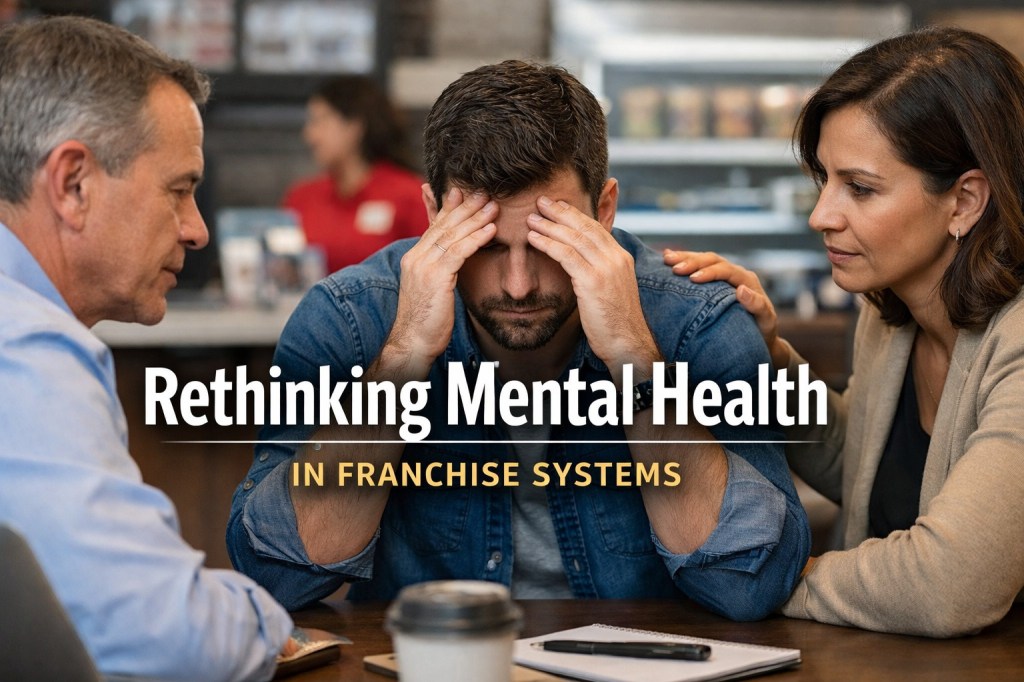
What Happens When Franchisee Mental Health Is Treated as “Not Our Problem”

Mental health is no longer a peripheral issue in franchising. It sits at the intersection of brand performance, franchisee sustainability, and the long-term health of the system itself. Franchisors often pride themselves on culture, community, and being “one big family,” yet mental health remains an uncomfortable topic… acknowledged quietly, if at all. The reality is unavoidable: a struggling franchisee does not operate in isolation. Emotional distress, burnout, anxiety, or depression can ripple through operations, employee morale, customer experience, and ultimately brand reputation. The question is no longer whether franchisors should care, but how far their responsibility reasonably extends.

Franchisees live in a unique pressure chamber. They shoulder personal financial risk, long hours, staffing challenges, compliance obligations, customer expectations, and the emotional weight of being both owner and operator. Unlike corporate executives, many franchisees do not have layers of support beneath them. When they struggle mentally, the symptoms often surface operationally—missed standards, poor communication, irritability with staff, inconsistent execution, withdrawal from the system, or resistance to guidance. These are frequently treated as performance or compliance issues when, in reality, they may be warning signs of something deeper.

From a purely business standpoint, ignoring mental health is risky. A franchisee in distress can destabilize a unit, create employee turnover, generate customer complaints, and damage the brand image in a local market. Their stress can spread to neighboring franchisees through peer groups, advisory councils, and informal conversations, quietly eroding confidence in the system. From a human standpoint, the issue is even more profound. Many franchisors speak about franchisees as partners and family members. If that language is more than marketing, it carries ethical weight. Families do not look away when one member is clearly struggling.

That said, franchisors are not therapists, doctors, or counselors. There are legal, practical, and ethical boundaries that must be respected. The goal is not to diagnose or treat mental health conditions, nor to intrude into franchisees’ private lives. The appropriate role is awareness, preparedness, and compassionate response. Franchisors should ask themselves whether their systems are designed only to enforce standards or also to support the people responsible for executing them. Is the culture one where franchisees feel safe admitting they are overwhelmed, or one where vulnerability is seen as weakness and failure?

Operations support teams sit on the front line of this issue. They interact with franchisees regularly and are often the first to notice changes in behavior, tone, or engagement. Yet most are trained exclusively on metrics, standards, and corrective action, not on recognizing human distress. Thoughtful training can change this without crossing professional boundaries. Support teams should be educated to recognize common red flags such as sudden disengagement, uncharacteristic hostility, persistent fatigue, missed deadlines, emotional volatility, or expressions of hopelessness. Just as importantly, they should be trained on what not to do—avoid assumptions, diagnoses, or judgment, and never position themselves as mental health experts.

Clear guidelines matter. Teams should know when and how to escalate concerns internally, who within the organization is responsible for sensitive conversations, and what resources can be offered. This might include access to confidential counseling resources, peer support groups, crisis hotlines, or third-party employee assistance programs that extend to franchisees. Even simply normalizing conversations around stress and mental health in system meetings can reduce stigma. The message should be consistent: seeking support is a sign of responsibility, not failure.

There is also a leadership question franchisors must confront. Does the system’s structure unintentionally contribute to burnout? Are expectations realistic, communication clear, and support accessible? Are franchisees given space to breathe, or are they perpetually reacting to initiatives, mandates, and compliance pressures without regard to human capacity? Mental health awareness is not only about intervention; it is about prevention. Strong onboarding, realistic ramp-up periods, clear financial expectations, and honest conversations about the emotional demands of ownership all play a role.

Ultimately, franchisors must wrestle with difficult questions. If a franchisee is visibly struggling, is it responsible leadership to treat it solely as a performance problem? At what point does protecting the brand require protecting the person behind the unit? Can a system truly claim to be “family” if it only engages when numbers are strong and distances itself when someone is faltering? Conversely, how does a franchisor balance compassion with accountability without creating dependency or legal exposure?

Mental health in franchise systems is not a soft issue. It is a leadership issue, a risk management issue, and a culture issue. The strongest brands of the future will not be those that ignore human strain in pursuit of short-term compliance, but those that understand sustainable performance is inseparable from the well-being of the people who carry the brand into their communities every day. The real question is not how much franchisors should concern themselves with franchisees’ mental health, but whether they can afford not to.


About the Author

Paul Segreto brings over forty years of real-world experience in franchising, restaurants, and small business growth. Recognized as one of the Top 100 Global Franchise and Small Business Influencers, Paul is the driving voice behind Acceler8Success Café, a daily content platform that inspires and informs thousands of entrepreneurs nationwide. A passionate advocate for ethical leadership and sustainable growth, Paul has dedicated his career to helping founders, franchise executives, and entrepreneurial families achieve clarity, balance, and lasting success through purpose-driven action.


About Acceler8Success America

Acceler8Success America is a comprehensive business advisory and coaching platform dedicated to helping entrepreneurs, small business owners, and franchise professionals achieve The American Dream Accelerated.

Through a combination of strategic consulting, results-focused coaching, and empowering content, Acceler8Success America provides the tools, insights, and guidance needed to start, grow, and scale successfully in today’s fast-paced world.

With deep expertise in entrepreneurship, franchising, restaurants, and small business development, Acceler8Success America bridges experience and innovation, supporting current and aspiring entrepreneurs as they build sustainable businesses and lasting legacies across America.

Learn more at Acceler8SuccessAmerica.com

Developing and Cultivating the Right Culture

Recently, in a discussion about organizational culture, the exchange was quite robust and included the following statement from a CEO participant who stated, “The challenge becomes determining where and when things might be out of alignment. So, developing the methodology about how to realign must be developed and committed to early on.”

To the CEO’s point, the development and management of organizational culture is much like that of developing and cultivating a brand…

It must be planned.

It must be nurtured.

It must be allowed to grow.

It must be invested in.

It must be protected.

It must be promoted.

It must be cherished.

It must be the center of the universe.

I believe it’s relatively easy to determine when and where things are out of alignment in a franchise organization – disgruntled franchisees, refusal of franchisees to develop additional locations and instead are investing in other brands, frequent franchisor employee turnover… just to name a few that would be very apparent. Obviously, these are the results of, but not the root of the problem that may have caused things to move out of alignment. Mostly the problems occur (and fester) due to poor communications and lack of transparency between franchisor and franchisees. Inconsistent messaging adds fuel to the fire. Basically, similar problems to a marriage or other types of relationships that fail.

As for methodology to realign, that takes full commitment and focus from all parties to the relationship. However, in a franchise relationship it takes the franchisor to take the bull by the horns and lead the charge. The franchisor must spearhead the initiative to create open, honest, transparent communications, and especially through difficult scenarios. Franchisees have made a significant investment in the brand, and they must be kept aware of the good, bad AND ugly. Two precarious points include: How much is too much? Do franchisees need to know everything? Getting back to square one, a benchmark of sorts is critical as emotions running high will dictate more rather than less. Actions must speak louder than words!

At workshops and seminars, as well as within coaching and consulting projects, I talk a great deal about creating and delivering positively memorable experiences at all times. I believe it applies to the franchise relationship as much as it applies to customers & clients. I won’t get too deep here as this past week I shared my thoughts on the topic in this newsletter and in the past in the IFA’s Franchising World magazine. Instead, I will share my thoughts on a guideline that will help monitor the experience factor in any transaction or relationship. This guideline is what I refer to as, “The Emotion Circle”.

The Emotion Circle

There are seven key steps within the circle. Think in terms of a clock with the top being the starting point. This is where the relationship begins. Once something occurs that doesn’t meet expectations the first reaction is surprise. From there, emotions may escalate to the next steps of disappointment and doubt. Or it may not escalate but another “incident” will definitely move the needle along. Sometimes, even an unaddressed issue will move it.

Of course, it is inevitable things happen, and expectations aren’t met or even understood. This is why proactive, open, transparent communications are paramount. If the issues are discussed openly and frankly in a respectful way, the needle can be moved back to the 12 o’clock position with minimal or no chance of fueling a fire. We must keep the emotions within the blue section of the circle. This is key!

However, if issues are not addressed in a timely and respectful manner the fire burns rapidly and on occasion to the point where it flares up and / or quickly burns out of control. And, just like wildfires in the forest, these fires can and will jump across roads from house to house and community to community with devastating results.

If not brought under control in a swift manner, the next emotions are often expressed in rapid order through the pink sections and into the red circle. These include frustration, anger, hostility and yes, remorse (think “buyer’s remorse). Ultimately, the end result is broken trust and as we know, trust is the backbone of ANY relationship. Moving back from the pink section is extremely difficult, but not impossible. However, once emotions escalate into the red section, the possibility of salvaging the relationship is almost impossible. Trust will need to be earned back without any assumption on the part of the offending party that it will.

In order for realignment to occur throughout the emotion circle, issues must be addressed expeditiously. It’s paramount that trust be rebuilt before further escalation of emotions. It’s certainly not easy – but it can and must be done. However, it does take huge, ongoing commitment to be established, to remain in place, and to be built upon.

An important question to ask yourself or of an organization’s leadership – Are we truly committed to our relationships? If the answer is not a resounding yes, rest assured trouble is on the horizon. As such, it’s essential to find out the reason(s) and immediately take action to correct. The foundation of developing and curating the right culture depends on it.

6 Key Points to Strong Franchise Relationships

Building Solid RelationshipsValidation and multi-unit ownership are strong indicators that positively memorable experiences exist within your franchise system. Another way to confirm the existence of these experiences is simply to ask your franchisees: would you do it all over again? However, as a franchisor you must first earn the right to even be taken seriously if you ask this question.

As you head down the path of creating positively memorable experiences with each and every franchisee, be sure to consider ALL touch points – even those beyond the obvious mediums of in-person, by phone and via email. Think digitally!

How do you interact with franchisees on Facebook? How do you come across to your franchisees in LinkedIn discussion groups? Is there common courtesy? Are you proud of each other’s actions within these platforms?

Many will refer to all of this as being great in theory, and not really practical. But just think what could happen if every touch point were seen as another opportunity to create or enhance a positively memorable experiences. How would that change the culture of your system? How would that lend towards growing your brand? Think of the ripple effect.

Here are six key points to creating positively memorable experiences in a franchise organization:

  1. Understanding the true meaning AND spirit of interdependent franchise relationships. This must be shared and exemplified at every point of contact with franchisees.
  2. Developing the right culture at all levels. Be careful- culture is also defined as bacteria! This takes time and commitment, and is a reflection of how people, whether franchisees, employees, suppliers or others, are treated at all times.
  3. Creating an environment of truth, trust and transparency based upon open, two-way communications – the cornerstone of creating the right culture. Think of a three-legged stool that could hold a great deal of weight when fully intact, yet would immediately fall under its own weight if one leg was compromised.
  4. Establishing your franchise system as family. Treat them as such but understand that this is not the typical type of family of yesteryear with subservience to the head of the household. Mutual respect is paramount!
  5. Building an environment of bottom-up profitability and growth with ALL parties to the franchise agreement and other related agreements focused on mutual goals and objectives. All must sing out of the same hymnal, and not just for dress rehearsal – so be sure to give them the hymn book.
  6. Positively Memorable Experiences – Live it and breathe it every day for optimum results!

The Changing Franchise Relationship

PAC14_Brochure_cover_small_view“…the summer of 2014 saw two major judgments that underscored the changing times. While these two rulings address different parts of franchise operation, they both serve as actions seeking to level the balance of power between the franchisor and the franchisee.” – Franchise Direct

The quote above was from the beginning of a recent article on FranchiseDirect.com, The Changing Franchisor-Franchisee Relationship. It was for this article that I was asked to be interviewed. I’d like to thank the team at Franchise Direct for the opportunity to share insight and perspective about the upcoming International Franchise Association Public Affairs Conference in Washington DC. As well, I’d like to express my gratitude to IFA Staff for their assistance in preparing responses to interview questions. I believe it’s very important to deliver the correct message on all issues so their assistance and guidance was greatly appreciated. Their professionalism is second to none!

The complete article may be read HERE, but I’ll share my interview below…

Commentary from an Industry Expert

A noted franchise industry expert and speaker, Paul R. Segreto, CFE, was nice enough to answer some questions for Franchise Direct about the legal fight the franchising industry is enduring. Paul is a current member of the IFA Franchise Relations Committee. In addition, Paul is currently the CEO of Franchise Foundry, a franchise development company, as well as the host of Franchise Today on Blog Talk Radio. You can find out more about Paul here.

What will be the main points of discussion at the IFA Public Affairs Conference (September 15-18 in Washington, D.C.)?

The Public Affairs Conference is the best opportunity for IFA members to advocate for their business and communicate to lawmakers the challenges we are facing. In July, the National Labor Relations Board (NLRB) Division of Advice announced that a franchisor could be designated as a joint employer of its franchisees employees. The IFA is fighting this dangerous assertion because it is unlawful and will harm job growth, the economy and locally-owned franchise small businesses in every state. Franchisees have invested their capital in the business and stand to lose equity in their businesses if their franchisors are deemed joint employers. During the Conference, IFA members will take this message to Capitol Hill to fight for franchising and educate those on the success of the franchise business model and the growth that it continues to provide to our economy.

What is the risk to the industry from some of these judgments that have been handed down?

If franchisors are joint employers with their franchisees, these thousands of small business owners would lose control of the operations and equity they worked so hard to build. The jobs of millions of workers would be placed in jeopardy and the value of the businesses that employ them would be deflated.

This recommendation is a drastic and overreaching solution. Ample federal, state and local remedies are available – and are regularly used to enforce current law, including more limited NLRB action, state attorneys, general action and private rights of action – to deal with labor violations of various kinds. Destroying the fundamental tenets of the franchise model would eviscerate the most successful business model in existence.

Why do you believe so many cities and states are reviewing their franchising policies?

The Service Employees International Union (SEIU) is leading organized attacks against franchising and these jobs they create. The labor unions multi-pronged attack at the local, state and national levels, including having the federal government declare entire franchise systems as a single unit rather than the collection of separate, small business owners they actually are. The SEIU wants to undermine the franchise business model so they can more easily unionize entire franchise systems, as it is much more difficult for unions to organize thousands of independent small businesses under the current regulatory system.

What specific actions are the IFA taking, or considering, to protect the rights of both franchisors and franchisees?

With our continued fight to defend the franchise business model, the IFA is ensuring that franchise small business owners are well informed of policies that could alter the way they do business so they are armed with the tools necessary to educate lawmakers. The IFA’s Franchise Action Network is a new strategic initiative that mobilizes franchisors, franchisees and suppliers at the grassroots level. A coalition of the franchise owners, all promoting a single mission, is the best way to protect our industry from an increasingly hostile legislative and regulatory environment at the federal, state and municipal levels.

How does Aziz Hashim’s ascension to chairman underscore the changing relationship climate between franchisors and franchisees?

Aziz Hashim is going to elevate the role of franchisees in everything IFA does. The nature of the game has changed. There has been no more important time for franchisees to be engaged with the IFA on public policy issues. Legislators need to hear the concerns these business owners have about policies that impact their relationship with their franchisor.

Franchisee Disaster Recovery Kit

Yesterday, I heard from Franchise Relationship Expert, Greg Nathan, as he reached out to me to help him share information to assist franchisors and franchisees affected by Hurricane Sandy. Greg wrote, “In 2011 Australia and New Zealand were hit by unprecedented floods, earthquakes and fires. To assist franchisors provide relevant and useful business and personal support for their franchisees we developed a Franchisee Disaster Recovery Kit. Franchisors told us they found the kit enormously helpful. Given recent events on the USA East Coast we would like to make the Kit available to franchisors in the USA.”

Here’s the information Greg would like to share…

Stepping Up In Times Of Need

One of a franchisors most important responsibilities is to deliver useful and relevant support to their franchisees. Great franchisors understand that in difficult times they need to be out there, standing by their franchisees and their families.

Similarly in times of trouble, franchise systems with healthy cultures will quickly mobilize themselves into action with franchisees providing practical and moral support to their colleagues.

With any crisis, it is only natural that franchisors and franchisees will want to reach out to people who have suffered loss or trauma. With this in mind we have put together this Franchisee Disaster Recovery Kit, in downloadable PDF format, to assist franchisors and others wanting to help franchisees and families who have been affected.

Read more here or go right to the Disaster Recovery Kit below…

Click Here to download Disaster Recovery Kit PDF

Well, Greg, it’s not only my pleasure to help you share this great information, but it’s my honor to know someone as caring as you. It’s no wonder that you and your organization, Franchise Relationship Institute are true leaders in understanding and strengthening franchise relationships. It all does come down to caring. Thank you for doing so!


Bookmark and Share