Ahead of IFA’s 2026 Emerging Franchisor Conference in Nashville, a closer look at the hours, relationships, and costs behind a founder’s profitable first location.
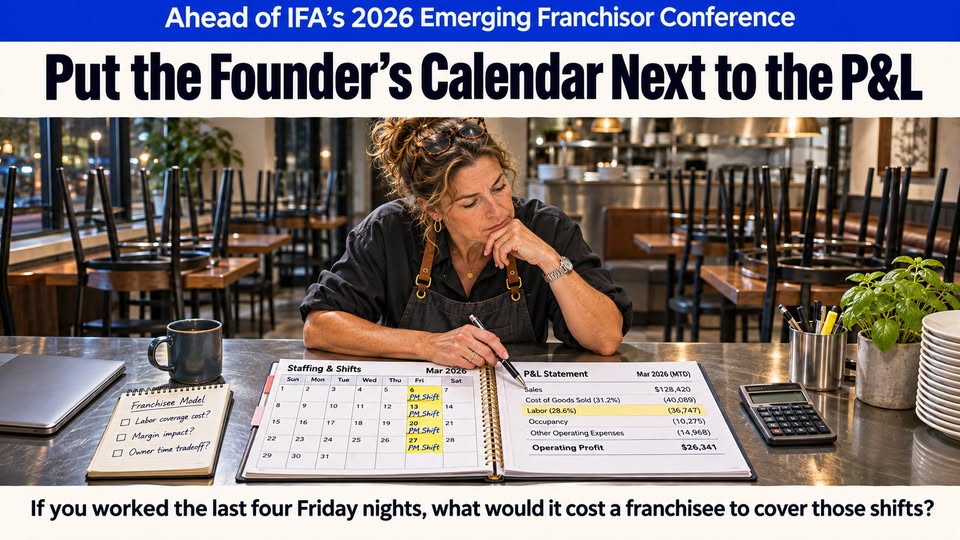
Yesterday, I opened this series by asking founders whether they’d invest in their own franchise. A reader’s observation about the hours founders work for free got me thinking about where I’d start that conversation. I’d ask the founder to bring two things to the table: last month’s profit and loss statement and last month’s calendar.
The P&L tells us what the business paid for labor. The calendar might remind you that you closed the restaurant four Friday nights, handled the food order every Monday morning, and spent part of a Sunday calling around for a refrigeration repair. At the end of the month, the restaurant showed a profit. Now someone wants to open one just like it.
Here’s the question for today, the second in our week of questions leading up to IFA’s Emerging Franchisor Conference in Nashville. Could another owner earn a living running the business you built, on the terms available to them today?
Put the Founder on the Schedule
Let’s stay with those four Friday nights. Suppose you covered six hours each night. That’s 24 hours of management the restaurant needed that month. Maybe the prospective franchisee is an experienced operator who intends to work those shifts personally. That may be exactly the right arrangement. I’d still want that person to know what the job pays.
If the owner works a full week, draws a reasonable salary for that work, and has money left over, we can begin to talk about the return on the cash they invested. If taking a Friday off means paying someone else out of the money they expected to take home, that’s worth understanding while they’re still deciding whether the opportunity fits their life.
It also raises a question for the founder. Who are you recruiting? A hands-on operator who enjoys running a Friday dinner service and an investor who plans to hire a general manager are looking at two different payrolls. Which arrangement have you actually seen work at the sales volume a new location can reasonably expect?
What Would It Cost to Open Your Doors Today?
Imagine walking a prospective franchisee through your original restaurant. You point out the oven that’s served you well for years. They ask what you paid for it. You remember the amount and the circumstances. A restaurant nearby was closing, you knew the owner, and you bought it at a good price. You also signed your lease years ago, before the neighborhood became the destination it is today.
Those were good business decisions. They’re part of how you built a profitable restaurant. The prospective owner still needs to know what an oven will cost to buy and install now, and what a landlord is asking for a comparable space in the market they’re considering.
I’d put the two locations side by side. Start with the actual results from the original. For the proposed location, use a current rent quote, wages for the people who will run it, and the royalties and marketing contributions the franchisee will pay. Then look at the cash the owner will need for loan payments and the early months of operation. How much room is there if sales take longer to build than you originally calculated?
That last question brings us to something a spreadsheet can easily miss. Where did the original location’s sales come from?
The Catering Order That Took Ten Years to Win
Suppose a local company orders lunch from you every Thursday. The person who places the order has your cell number. You know which entrance to use, when their lunch break starts, and who needs the gluten-free meal. That account shows up in your sales every week. For a new franchisee across town, winning an account like it is still work ahead.
This is where a founder has something valuable to teach. How did you get the first order? Who followed up afterward? What did you change when a delivery went wrong? Walk the new owner through those details and help them identify employers in their own neighborhood. Then build their opening budget around the time and effort it may take to earn that business.
The same thinking applies to the regular who always asks for you. What has that customer learned they can count on? Once you can answer that, you have something specific to teach the next owner about how your brand earns trust.
If You’re Already Franchising, Ask the People Paying the Bills
If you have franchisees operating today, sit down with one who opened recently. Bring the assumptions you used when that location was being planned. Ask, “Which number would you change if you were opening again tomorrow?”
Then give them time to explain. Maybe the buildout came in close to budget, but hiring and training the crew began three weeks sooner than expected. Maybe sales reached the level you anticipated, but the owner had to work six days a week to keep payroll within budget. Or maybe one of your franchisees found a way to run a profitable lunch shift with a smaller crew, and nobody at the home office has asked how.
For an emerging brand falling short of its growth expectations, that conversation could change the next decision. If several owners tell you the economics work only when they cover most management shifts themselves, take a fresh look at the candidates you’re pursuing and the role you’re describing to them.
Final Thoughts
Before Nashville, I’d set aside an hour with the people who know your business best. Put the schedule, the P&L, and the opening budget for a new location on the same table. Then ask one question and let everyone take a turn answering it. If we were opening this business today with our own savings, which assumption would we want to test first?
Tomorrow at the Café, we’ll look at a different page in the founder’s notebook: the growth plan. If you expected to have 20 locations open by now and you have six, where do you begin?
Whether you’re attending the 2026 Emerging Franchisor Conference or following the series from home, I’d welcome a conversation. If you’re preparing to franchise, which part of your original location’s success do you think will be hardest for another owner to reproduce? If you’re already franchising, what did your first owners teach you about the numbers?
DM me or email me at Paul@Acceler8Success.com.
Discover more from Acceler8Success Cafe
Subscribe to get the latest posts sent to your email.

You must be logged in to post a comment.