
Category: Social Media/Digital Marketing

Franchise Sales & Development Challenges [Revisited]

This was originally posted in March 2010. However, based upon recent discussions on LinkedIn regarding franchise sales, I feel it’s prudent to post this once again.

I believe last year was the perfect storm with respect to challenges the franchise industry faced in its franchise sales and development efforts. There were three key components that equally contributed to lackluster performance. One was a “cause”. Another was “uncertainty” and the other was “unknown.”

The “cause” was the abrupt cessation of funding. Even franchise sales that were actually made fell by the wayside when financing options dried up almost overnight. It also curtailed many existing franchisees’ efforts into expanding their portfolios with new locations and compounded the problem by having to tap their capital reserves to offset the decline in sales.

The “uncertainty” was the indecisiveness of franchise candidates on whether it was the right time to take the entrepreneurial plunge or not. Many were exploring franchising as a career alternative, and out of necessity, but were unwilling to “put it all on the line.” The risk factor won out and was justified, maybe rationalized, by the tight credit markets.

The “unknown” was social media. As today’s franchise candidates quickly evolved into more sophisticated, technologically advanced and educated candidates, most franchise organizations weren’t prepared for the influx of these individuals within social media networks, exploring opportunities differently than ever before. Thus, the franchise candidates that may have been qualified and well-informed were missed in many cases and either chose a different career path or are actually still searching social media sites for the information that will lead them to the right opportunity.

Now, as the public is seeing some positive trends, like gradual decline in new unemployment claims, we should begin to see more and more individuals searching for information about career alternatives. I believe many will continue to visit social media sites, participating in discussions and sharing information. All the while, they’ll be more cautious than ever, and will insist upon absolute trust in the individuals presenting the information, and the information itself, before taking the entrepreneurial plunge.

Social media is ripe for today’s candidate to explore, identify and act upon a franchise opportunity. Franchisors are highly advised to capitalize on social media and be sure to integrate the same with their traditional franchise marketing and development strategies because social media is here to stay and is truly effective at creating and/or improving brand awareness.


Bookmark and Share

Utilizing Social Media for Franchise Success

I believe anything a franchisor does should be done to benefit the franchise relationship, and social media plays perfectly into this philosophy as it affords interactivity at all stages of the franchise relationship. From prospecting for qualified franchise candidates to supporting current franchisees, the utilization of social media tools and technology creates environments that strengthen relationships, shares information, provides two-way communications, and provides points of reference for follow up. It creates a multi-tiered platform of information that benefits both franchise development and customer generation efforts alike. Often, simultaneously.
For franchise startups, the founder’s vision of the concept is paramount to future success. They are perceived as the concept. They are essentially the brand. At least until a significant number of franchises are awarded and brand awareness is established across multiple markets, they are the inspiration for franchise candidates. The benefit to spreading this message through social media outlets such as social networking, video sharing, blogs, etc. is that these tools and associated strategies will generate direct excitement about the business model while generating subliminal, subtle interest in the franchise concept. This establishes a perfect foundation for growth. It also defines a very worthwhile, visible support mechanism for franchisees. Of course, it’s imperative to have a well-defined support system in place for training and assisting franchisees.

For established franchise brands, it’s a matter of improving brand awareness in current markets while creating brand awareness in new markets, and markets that are on the horizon for expansion. Again, as with startup franchise concepts, the interactivity created by social media makes it a viable option in driving customers to franchise locations and generating interest in the franchise concept. But, what’s important in a mature system, and a complement to its franchise development efforts, is the improvement of communications throughout the franchise system that is created by social media activity and ultimately lends itself to validation of the franchise concept by the franchisees. For once, franchisees are feeling part of the franchise development process as it’s visible in the organization’s social media efforts. Something that many franchisees have not been a part of in the past.


Bookmark and Share

Optimizing Your Social Networking Presence

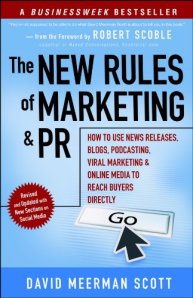
Whether you’re establishing your presence on Facebook, LinkedIn or any of the other social networking sites, it’s important to get the most out of your experience for it to be effective in your marketing efforts. Basically, it’s important to optimize your social networking presence. In the book, The New Rules of Marketing & PR, the author, David Meerman Scott, detailed how to get the most out of social networking sites for marketing with the following suggestions:

Target a Specific Audience – Create a page that reaches an audience that is important to your organization. It is important to be thinking about a small niche market.

Be a Thought Leader – Provide valuable and interesting information that people want to check out. It is better to show your expertise or at solving problems than to blabber on about your product or company.

Be Authentic and Transparent – Don’t try to impersonate someone else. It is sleazy and could do irreparable harm to your company and to your reputation.

Create Lots of Links – Link up to your own sites and blogs, and those of others in your industry and network!

Encourage People to Contact You – Make it easy for people to reach you online, and be sure to follow up personally on your fan mail.

Participate – Create groups and participate in online discussions. Become an online leader and organizer.

Make it Easy to Find You – Tag your pages and add your pages into the subject directories. Encourage others to bookmark your pages.

Experiment
– These sites are great because you can try new things. If it isn’t working, tweak it, or try something new.


Bookmark and Share

Making the Case for Social Media Policies in Franchising

Yesterday, within the IFA Group on LinkedIn, a discussion entitled Why You Don’t Need A Social Media Policy was started regarding social media policies within franchising. Of course, I was compelled to chime in…

It is my position that franchisors would be negligent and irresponsible not to have a social media policy in place. At the very least, they should be working towards one. I could go on about protecting the trademark, system development, etc but with everyone’s experience and understanding of franchise best practices in this group, I’ll just focus on social media for now.

While I do agree “local” is where it’s at, it is still communications, marketing, pr, messages that are being put out there on socail media and just as franchises have established policies, procedures, guidelines, processes, etc for operations, marketing, advertising, etc, it is imperative the same be done for social media.

I’ve spent most of the morning trying to find any article, blog, comment taking the position of not having a social media policy within franchising. I have not found one. But, I have found many franchise professionals that have written and posted about the necessity of having social media polciies within franchising. So, if you don’t agree with my position, allow me to direct you to links from several franchise professionals that feel it is best practice to develop social media policies for franchise brands.

http://blog.wsidigitalmarketing.com/index.php/social-media/do-we-need-a-social-media-policy/

http://www.allbusiness.com/company-activities-management/company-structures/14292073-1.html

http://www.franchise.org/Franchise-Industry-News-Detail.aspx?id=50532

http://www.expansionexperts.com/blog/tag/social-media/

By the way, I don’t believe social media policies should be one-size-fits-all just as I believe a social media program should not be cookie-cutter. To arbitrarily state that all franchisees should have a facebook account and / or a twitter account is not a good or well-thought out recommendation. Determining what social media to effectively use within a franchise system is a process in and of itself. The key word here is “effectively.”

Being effective within social media takes planning. It takes identifying targets and where they congregate and communicate online. It takes determining financial and human resources to engage, monitor and manage the chosen social media platforms. It takes an understanding of the objectives to utilize social media and to have clear, concise expectations. In essence, it takes a strategy to develop, a plan to execute and results to analyze.

Once this phase is complete, a social media toolkit should be developed, franchisees (and franchisor personnel) should be trained, and the program launched. Anything less, in my opinion and from my perspective is less than best practices within franchising.

Franchising is all about uniformity and consistency from one location to another. It’s about systems that provide the foundation to uniformity and consistency. And, it’s about the policies and procedures that ensure that uniformity and consistency that makes franchising successful… And, I don’t believe that’s just my opinion!


Bookmark and Share

Integrated Franchise Marketing For Franchise Success At All Levels

Integrated Franchise Marketing (IFM) is a term we use at franchisEssentials to describe a comprehensive approach to achieving multiple goals and objectives within start-up, emerging and mature franchise organizations. IFM directs its focus on creating or improving brand awareness for the franchise organization at local, regional and national levels, driving revenue for franchisees, and generating genuine interest in the franchise concept itself.

The key to IFM is the development of a comprehensive marketing strategy that benefits the entire franchise organization, and is in line with the goals and objectives of all parties to the franchise agreement. It includes coordination at all levels to deliver concise, consistent messages that ultimately ensures positive results at franchisee and franchisor levels including:

Franchisee Level

* Local brand awareness
* Increased sales
* Improved communications with corporate office
* Improved communications with fellow franchisees
* Improved profitability
* Increased business value

Franchisor Level

* Regional & National brand awareness
* Increased royalty revenue
* Improved communications with franchisees
* Improved franchisee validation
* Increased interest in franchise concept
* Improved profitability

IFM works within traditional marketing methods and processes through and in conjunction with a very wide spectrum of non-traditional marketing and today’s unique, innovative tools and technology including the many aspects of social media, mobile, and email marketing. In addition, IFM encourages a cohesive, team effort at all levels of the franchise organization through information sharing and process awareness, enhanced by a solid educational approach.

As we are at the halfway point in 2010, and understanding that making things happen in the third quarter is crucial to overall success for the year, there’s no time like the present to develop and implement a plan that will help all within your franchise organization achieve their goals and objectives.

For more information about utilizing Integrated Franchise Marketing (IFM) within your franchise organization please contact Paul Segreto by email or by phone at 832.838.4822.


Bookmark and Share

What is Your Social Media Marketing Strategy?

The following was my response to a business executive that posted the following discussion on LinkedIn in a non-franchise group:

How are you and your business using social media to drive business and gain awareness? With the social media landscape becoming increasingly fragmented and complicated, how are you managing to gain the most from this medium?

“All of my clients are within the franchise industry which is a more difficult environment in which to effectively utilize social media because there are different elements to the relationship between franchisor, franchisee and customer as opposed to just B2B or B2C. That being said, it can and is being done quite effectively. However, it takes a very concentrated focus, or as I fondly describe as [E-IDEA], the acronym for franchisEssentials five step process to social media success:

social media types1. Exploring different aspects of Social Media, including Social Networking and key Web 2.0 technology that creates excitement and brand awareness within your industry segment.
2. Identifying primary and secondary targets – Who will be targeted to purchase and/or visit your franchise locations? How deep do the target groups go and are there collateral groups that can be tapped?
3. Developing a Strategy and Plan of Action – Customized to specific targets in accordance with franchise development goals and objectives?
4. Executing the Plan – Putting the plan in motion including monitoring, managing the process including new content and updates. Keep it fresh!
5. Analyzing & Quantifying the Results – Is it working? Do you continue straight ahead or repeat the process from the beginning? What are actual results in franchise sales and system revenue?

Yes, there are many aspects of social media and more being added every day. That doesn’t mean it’s being fragmented. Instead, it’s providing more tools in which to cross-reference and link together. Unlike traditional marketing that is more or less a straight line, social media marketing, used most effectively, is a cross-platform, multi-tiered strategy that uses multiple Web 2.0 tools to cross in front of the targeted audience multiple times and from different directions.

It’s akin to the businesses with limited marketing budgets that only advertise on TV once or twice a month, at one specific time but on multiple channels simultaneously. Then, when the consumer changes the channel upon seeing the commercial, again and again, the perception is “this business is everywhere and must be spending a fortune on advertising. Therefore, it must be good.”

Unfortunately, social media marketing is not a one-size-fits-all strategy. The strategy must conform to the organization’s goals and objectives and must target the appropriate audience by the appropriate means (Web 2.0 tools). For instance, if the target is young adults age 15-18, MySpace would be an essential component of your strategy. Couple that with a lot of video and audio, as this age group gets bored very easily.

On the other hand, if the targets are businesses in the insurance industry, your strategy might include developing a blog for industry professionals and then linking the same through LinkedIn to insurance groups. Simultaneously, you may develop a Facebook page to refer interested parties to visit and/or join.

A key factor in an effective social media strategy is to be sure to integrate the same with your traditional marketing. As an example, if your company frequently uses direct mail, be sure to include the company’s various social network links, blog links, etc. In a B2B environment, do the same with your blast email campaigns. And, in a corporate environment where you may be attempting to attract a consulting client, personalize your traditional strategy with social network interaction and enhance it with video and audio messages.”

Now that you have read this article, I’ll ask you straight up, “What is your social media marketing strategy?”


Bookmark and Share

Rules of Engagement within the Social Web

Recently, I posted, With Social Media Comes Great Responsibility, which included text from Brian Solis‘ new book, Engage! Solis talks about establishing guidelines before jumping blindly into social media. In essence, a plan of action must be developed before taking the plunge.

Today, I will take establishing guidelines a step further, and refer to Solis’ Rules of Engagement. In the We Are Champions section of Engage!, Brian lists 23 suggested rules of engagement that when defined, and in conjunction with establishing policies and procedures, will “help shape proactive and reactive dialogues to benefit the business, brand, customer, peers, and prospects.” But, so as not to cause any confusion, he does puts a fine point on this in stating that these rules are “not the same as implementing and managing rules of conduct.”

Rules of Engagement
from Engage! by Brian Solis
Chapter 17 – Pgs 201-202

1. Unveil the communities of influence and discover their choices, challenges, impressions, and wants.

2. Participate where your presence is advantageous and mandatory; don’t just participate everywhere and anywhere.

3. Consistently create, contribute to, and reinforce service and value.

4. Concentrate participation where it will offer the greatest rewards for both sides.

5. Assess pain points, frustrations, and also expressions of contentment to establish emotional connections.

6. Determine the brand identity, character, and personality you wish to portray – and match to the individual persona who’s in front of it when online.

7. Adapt predefined personalities with the voice of the community in which you engage.

8. Observe the behavioral cultures within each network and adjust your outreach accordingly.

9. Become a true participant in each community you wish to galvanize.

10. Don’t speak at audiences through messages.

11. Dig deeper to connect what transpires in the Social Web to your business objectives.

12. Learn from each engagement.

13. Ensure that any external activities are supported by a comprehensive infrastructure to address situations and adapt to market conditions and demands.

14. Establish a point of contact who is ultimately responsible for identifying, trafficking, or responding to all things that can affect brand perception.

15. Act, don’t just listen and placate – do something.

16. Earn connections through collaboration.

17. Empower advocacy.

18. Embody the attributes you wish to portray and instill.

19. Don’t get lost in conversation or translation; ensure your involvement strategically maps to objectives specifically created for the Social web.

20. Establish and nurture beneficial relationships online and in the real world as long as public perception and action is important to your business.

21. “Un-” campaign programs and ensure they’re part of a day-to-day cause.

22. “Unmarket” by offering solutions and becoming a resource to your communities.

23. Give back, reciprocate, acknowledge, add value, and contribute where it makes sense.


Bookmark and Share
l

Is The Internet Super Highway Destined to Become a Toll Road?

Could the the flow of traffic on the internet frequently slow down or come to a stop like traffic on I-95 during rush hour? Will the internet continue to be a free digital highway or will it turn into a turnpike of sorts, complete with tolls and speed limits? What’s next, internet troopers giving out speeding tickets? To learn more I suggest you read the following article and keep an eye on the mighty Federal Trade Commission Board, consisting of only five people, that is the ultimate decision-maker. However, I cringe at the thought that just three decision-makers (majority vote) can control the future of internet traffic. God, I hope they value the internet as much as I do…

FCC at Crossroads of Internet’s Future
By David Hendricks, San Antonio Express-News

When a federal appeals court in Washington ruled last month that the Federal Communications Commission lacked the authority to regulate Internet networks, many operators thought at first it was great news.

The networks could continue to grow in size, flexibility and applications as fast as they had the past 15 years or so without government interference.

Then the networks realized the court ruling could backfire. The FCC has the option to reclassify Internet networks. The agency could declare the networks a public utility and then regulate them with rules similar to landline telephone services.

All it would take is a majority decision of the five-member FCC board.

If you care about the future of Internet speeds and accessibility, then you should watch what the FCC does next.

The FCC wants to stick to a good, but ultimately harmful, goal called net neutrality. Net neutrality calls for equal access to all websites, which restricts network operators, such as AT&T Inc. and cable companies, from favoring some website traffic over others with better access.

Large-traffic websites such as Google, eBay and YouTube favor net neutrality. They pay the same low rate for Internet network access as the smallest users.

The FCC tried to stick to the net neutrality concept with a hands-off approach. The agency two years ago, however, slapped sanctions on Comcast after the cable giant slowed traffic to BitTorrent, a file-sharing site that used a vast amount of broadband capacity at the expense of other Internet users.

The federal appeals court said March 6 the FCC never gave itself the authority to issue sanctions.

Now the network operators fear the FCC will give itself the authority. They have a solid concern.

READ MORE HERE


Bookmark and Share
l

Squeezing ROI From Social Media Marketing

Recently, Christopher Petix, President at Clash-Media US wrote an article about the changing world of Digital Marketing and how it would evolve in 2010. The article, The World of Digital Marketing 2.0, touches upon how brands utilizing social media marketing must establish baselines and understand metrics as part of their social media marketing strategy Doing so is paramount to their marketing success.

The past couple of years have been all about squeezing as much Return on Investment as possible from every marketing effort. As a result, advertisers and marketers have a new set of parameters and broad goals for establishing a campaign. The good news for these groups is that there are a number of tools and techniques available to help them achieve these goals.

He goes on to talk about how brands are partnering up with digital marketers and focusing efforts on evaluating their campaigns. Doing so helps them achieve optimum efficiency as they can turn on a dime if they’re need achieving their goals and objectives. Sure, conversion rates will fluctuate during a campaign, but quick reactions can improve the campaign’s performance.

Another point Petix makes is about niche websites and networks. As today’s consumer (and franchise candidates) are more technologically advanced and social media savy, more time is being spent outside the realm of typical social media circles of Facebook, LinkedIn and Twitter. Instead, being more diligent is more the norm rather than the exception. Diligence that takes marketing targets to industry sites, brand-specific social networks and blogs to gather even more information. More importantly, it takes them to places of interaction and information sharing between and among others with similar goals and objectives.

Using Social Media as written by Christopher Petix

Burger King’s “Sacrifice Whopper” was one of the most infamous campaigns of 2009 to have created a social media buzz. One of the biggest on-going hot spots for 2010 will be how can more companies tap into the vast resource of social media.

Social media accurately gauges consumer brand perception and sentiment, though the avenue for more direct marketing and advertising opportunities is harder to navigate. The key to using social media for marketing and customer acquisition is targeting, which helps ensure that the highly coveted user experience is not affected.

Individual organizations can use several approaches to identify customers through social media, they include: post-registration offers, banner advertising, Facebook CPC or social media apps. All of these ensure consumer exposure, but which ones deliver measurable and effective results is individual to every organization. Those advertisers that have learned what they need to look for in a campaign should be a step ahead as they explore new avenues of customer engagement – so by the end of 2010, most will have a coherent social media strategy producing bottom line dollars.

Christopher Petix serves as the President of Clash-Media working in the US office. With over 15 years of online experience he brings a wide variety of knowledge working at company’s including Double-Click Media in the start-up, founding his own tri-lingual travel site, heading up Vendare Media’s team on the East coast, as well as CoregMedia. His emphasis on client services and retention have allowed him to cultivate numerous longstanding business relationships in the online advertising industry.


Bookmark and Share