The discussion about a 4-day work week continues to heat up. Hardly a day goes by that I don’t see an article debating the pros and cons, as well as the “necessity” of having an additional day off from what has been the typical 5-day work week for years. It’s interesting to read different perspectives on the topic. From business owners to executives to salaried staff to hourly employees, all seem to be making strong points whether for or against the movement.
I first became aware of a 4-day work week back in 1978 when I moved to a small town just outside San Antonio. USAA, one of the world’s largest employers in San Antonio at the time and still today, was on a 4-day work week. I thought, what a great idea. Of course, at the time I was only thinking about it from the perspective of an hourly employee.
Oh my God, 3-day weekends, every weekend!
As someone who has mostly worked in a home office for the past twenty-plus years, I really don’t have a set work schedule. Actually, I do but what I don’t have is a set schedule to end my workday, or for that matter, even to start the workday. Sure, we could debate the premise of entrepreneurs working 16-hour days, 6-7 days a week as being ridiculous and unnecessary, and essentially being nothing more than a foolish badge of achievement but let’s keep that for another day. I promise we will address it here very soon.
Today, let’s look at the 4-day work week from the small business owner’s perspective. Is it feasible to operate the typical small business only 4 days? For the most part, the answer is no. After all, the business will need to be open 6, if not 7 days a week. It’s certainly a different situation than that of an office setting for a major corporation that could essentially close an extra day like a weekend day. Or schedule overlapping shifts and remain open 5 days a week.
Yes, there are options and probably some very creative options to make it work. Or are we really talking about moving to a 4-day work week but keeping daily schedules at 8 hours, at the same wage as for a 40-hour work week? With already slim margins at the typical small business, that seems impossible to even consider. For restaurants, I don’t see any way it would be possible.
That all said, I am an advocate for a 4-day work week at 8 hours per day. In certain work environments, I can see how it could actually increase productivity as some of the case studies have proven. A 4-day work week could go a long way to improving employee wellbeing and mental health. Yes, I could see the benefits, but I can also see the pitfalls.
Personally, I envision the 4-day work week as an option. For some companies it could work. I just don’t believe it can be something that would work effectively across all industry segments and especially, in a society that is driven by instant gratification and convenience. Therein is the key.
I believe the 4-day work week would have had more of a chance of being successful across the board back in the day, when weekends were days of leisure, family and worship.
Many businesses were closed on Sundays and workers had the day off. Saturdays were for errands and chores and dealing with things that weren’t done during the week. People stayed close to home washing their cars, mowing their yards and grabbing a few things at the local grocery store.
Customer-facing businesses were open, typically until 5-6 PM but banks, offices, etc. were closed on Saturday. So, it was mostly small businesses that were open. For businesses that were open on Sunday such as bakeries and restaurants, they closed early on Sunday and all-day Monday, as well.
Of course, that is not the case today as we are accustomed to being able to do what we want to do and at any time during the day. We’ve even grown accustomed to stores being open on major holidays, late hours and 7 days a week. Do we really need to shop at 6AM the day after Thanksgiving or shop for furniture at 10PM or for anything on Sunday? Certainly not, but it is what we want. It’s what we command.
If off from work an extra day per week, what would we do that day? Would that extra day be like the typical weekend is today with us running from store to store, almost at a frantic pace? If work schedules revert to a 4-day work week, will extra workers be necessary to man the stores and restaurants? Will some people look to take on an extra job with an extra day off, thus killing the notion of the extra day being necessary for one’s wellbeing and mental health?
I really don’t believe there is a one-size-fits-all solution. Yes, the 40-hour week should be an option, but it cannot be the rule of thumb across the board. That is, unless our mindset as a society reverts to the way it was back in the 1950’s. I just don’t see that we can revert back to living an Ozzie & Harriett life again. I, for one will not be wearing a tie for dinner while sitting at my dining table? I look forward to your thoughts, so please don’t be shy!
Have a great day (and weekend). Make it happen. Make it count!
If there was one benefit for small business owners and entrepreneurs from the pandemic, it was learning how to pivot, shift, and survive. Lean and mean was the order of the day, driven by watching numbers – cost of goods, payroll, and accounts payable & receivable.
To that end, I believe CPA’s, accountants and financial advisors did a remarkable job helping businesses survive in what was a 2-year business-threatening Sunami. Today, I’d like to give a shout-out to all who worked diligently behind the scenes to keep small business afloat and now are being asked to do it again in light of the current level of economic uncertainty.
With the financial side of the business continuing to be addressed from lessons learned during the pandemic, it must be realized these efforts alone will not be enough to survive the recession that is barreling our way or may already be here as we speak. After all, there’s only so much a business owner can do on the financial end of the business. I refer to this as being reactive – reacting to the times… monitoring, controlling and actions are just a few steps that come to mind.
Sure, it takes being proactive to jumpstart these efforts but from there it’s all about being reactive like a hockey goalie protecting the net, blocking shot after shot but it’s not the goalie alone that wins games. If a goalie is spot-on and does not allow a goal, the best the team can hope for is a tie. The offense must do their job for a different outcome. Even more so from the perspective of an errant deflection that may sneak the puck past the goalie. In that scenario, if the offense is flat, the team loses 1-0 despite the stellar performance of its goalie.
The same is the case with our finance professionals. They could do the best job imaginable on all fronts. However, if revenue isn’t generated, there will be nothing to manage and the business ultimately loses because in business, there are just too many errant deflections. It’s as if the goalie is trying to protect the net when several opposing players are each shooting pucks at him – at the same time! Unless the goalie is an octopus, it’s just not feasible to stop every shot, more less the errant deflections.
Please understand, the proactive measures must complement the reactive ones just as they do in hockey and in any professional sport. It just doesn’t make sense, let’s say to be entirely proactive and leave the rest to fend for itself. Conversely, the same is true. Action plans to battle an economic downturn and ultimately, a recession must include BOTH approaches at the same time. They must be interdependent!
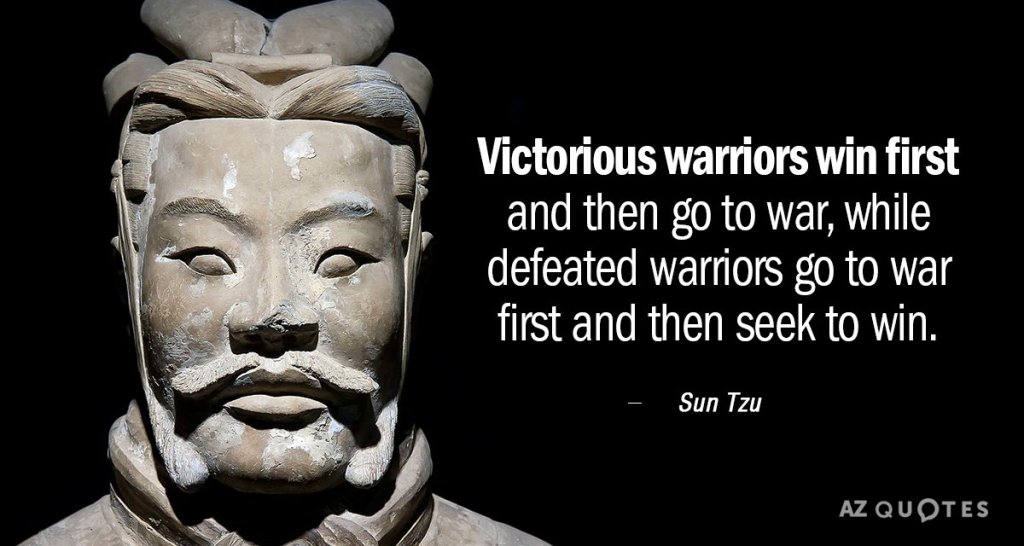
And, as in any sport, the action plan sets the stage before the action starts. It reminds me of a quote from Sun Tzu’s Art of War. It is all about planning, strategic planning.
First on the proactive side must be the development of goals. Not just from the standpoint of a sales figure as a goal but from the various things from which sales are generated. The bottom line… it’s an understanding of what makes up a sale, and how to get to the actual sale.
Questions that must be asked and answered include how many leads it takes to result in an appointment, how many appointments will result in a presentation, how many presentations will result in a sale, etc. Of course, this part of the process must be tailored to your sales process. If addressed honestly, it may actually be determined that the sales process needs tweaking, or even an overhaul. Do not procrastinate at this point. If it needs fixing, it must be fixed!
When addressing the sales process, it must also be determined what it will take to generate the leads necessary to keep the sales funnel full and to the extent goals can be met. This is where some education is imperative. It’s alarming how many business leaders really don’t understand the difference between marketing, advertising, public relations, and branding, often tangling them together. Many also don’t understand how they all work together and/or complements each other. In order to develop an effective plan, the differences must be understood, as well as the complementing benefits.
So, as we look back at goals, they must be established based upon data, analysis, and projections. Informed decisions are always best. The same is true for goalsetting. A key point in this process is to be sure all stakeholders and staff are involved each step of the way. Doing so will go a long way to ensuring they’re committed to the goals, and to the plan. If they’re part of the process, they will believe in the plan. Teamwork works!
The financial side of the business is just one cornerstone of the action plan. Another one is sales & marketing, although I still find it interesting that we always say, ‘sales & marketing’ when nothing happens without a sale. Should it really be ‘marketing & sales’? I only bring this up as I believe there really isn’t one before the other because they’re interdependent upon each other in order to achieve defined goals. You see, one doesn’t work without the other just as defense doesn’t work without an offense, and how being reactive must be complemented with being proactive.
When we resume the series next week, we’ll discuss another cornerstone, ‘customer or client experience’. Does anyone know the fourth cornerstone? Well, I won’t leave you in suspense. It’s ‘culture’. We’ll also pull together all four cornerstones as we set them all in place for a solid foundation. We will take a deeper dive into each and how effectively working together will be key to an effective action plan.
I’m committed to providing as many resources as possible to help small business owners survive, and thrive including current (and aspiring) entrepreneurs, franchisees, restaurant operators, solopreneurs, freelancers and all who essentially ‘eat what they kill’. Meaning, they rely on the money they earn, not a paycheck.
As always, your input and perspective are greatly appreciated.
Have a great day. Make it happen. Make it count!
Help is just a message, call, email or text away!
The future may be a bit bumpy for some, more so for others. Knowing who to turn to and when to turn to for guidance and help is important. Having resources at your disposal is also important. So, if you hit a wall, for whatever reason, please feel free to reach out to me for assistance or even if you just need someone to talk to. Please do not hesitate. You can reach me right here on LinkedIn, by email to Paul@Acceler8Success.com, and by phone or text at (832) 797-9851. Learn more about Acceler8Success Group at Acceler8Success.com and also at Entrepreneurship411.com.
Over the next week or so, I will focus this newsletter on helping individuals prepare for the looming war against recession. I’m addressing recession as war because it will be a series of battles, it will take varying strategies including when to be on the defensive and when to be on the offensive, and it will mean fighting for small victories in order to survive when the fight is over.
I address recession as war because we’ll never know what’s going to hit us next, we won’t know where and when the next battle will occur, and we will not know the casualties until the dust settles on a particular battle or possibly, on multiple battles at one time. And, just like a war where allied forces may be fighting right alongside, it will be necessary to be aware and cognizant of how the war will be affecting them.
In order to win each battle, and ultimately, the war itself, we will need to minimize our losses. We’ll need to protect our position and territory. We will need to be prepared!
Looking ahead, now is the time to fortify our arsenal, assessing what must be repaired or replaced. We must evaluate our skills, improving as necessary and learning new skills, as well. We must rally our troops and ensure all who will be helping us are properly trained and have the necessary firepower for combat. Essentially, we must plan for the inevitable fight ahead.
Today, we will address personal branding. As the leader of your company or brand, and of your efforts to generate revenue and achieve profitability, your personal brand must be rock-solid. Maintaining a strong personal brand will mean those around you and those you’re trying to attract to do business with (clients, prospective clients, vendors & suppliers, bankers, stakeholders, etc.) will have or will start building confidence in taking the next steps with you.
A fortified personal brand will help establish and showcase your values, mission and vision – the reasons for fighting to not only survive, but to thrive. It will help you stand out from competitors. It will help attract others that will want to work with you, for you and alongside you – strengthening you network, one that will be full of resources!
Recently, I published a series of articles about personal branding, so let’s start there. Below please find links to the various articles. Moving forward, we will progressively build our arsenal. We are in this fight together with a common goal of ensuring we have survived (and possibly even have thrived) when the dust settles.
Economic uncertainty. Recession. Failing business. All would certainly depict challenging times, if not devastating times. For most, these are unchartered waters. Certainly, giving up is not the answer. Or, at the very least, it shouldn’t be the only option. So, how can personal branding help navigate through rough seas until the waters calm down again?
The process of personal branding involves finding your uniqueness, building a reputation on the things you want to be known for, and then allowing yourself to be known for them. Ultimately, the goal is to create something that conveys a message and that can be monetized.
For this article, my thoughts wandered back to 2012 when I presented at the Franchise Brokers Association Conference & Expo. My presentation was appropriately titled, Personal Branding for Franchise Brokers. I recall many questions that essentially asked the same thing – What is personal branding and why is it important to me as a franchise broker or franchise salesperson (or business development professional)?
“Your personal brand is a promise to your clients… a promise of quality, consistency, competency, and reliability.” – Jason Hartman
The future may be a bit bumpy for some, more so for others. Knowing who to turn to and when to turn to for guidance and help is important. Having resources at your disposal is also important. So, if you hit a wall, for whatever reason, please feel free to reach out to me for assistance or even if you just need someone to talk to. Please do not hesitate. You can reach me right here on LinkedIn, by email to Paul@Acceler8Success.com, and by phone or text at (832) 797-9851. Learn more about Acceler8Success Group at Acceler8Success.com and also at Entrepreneurship411.com.
I think I hit a nerve yesterday, or maybe just poked a sleeping bear as I’ve had a number of people reach out to me, anxious to share their perspective on what it would take to work through current economic uncertainty, and most likely, through a recession. What really encouraged me was their positivity – across the board!
All have already begun developing strategies and deploying action plans; ones that are already seeing positive results from staff involvement to a slight sales increase. They were all quite optimistic that, we can do this, we got this. I certainly did not anticipate such optimism when I published yesterday’s article, but I’m definitely encouraged by the responses. More so, I’m intrigued by their desire to share their experiences.
You see, it wasn’t a nerve that I hit, or a bear that I poked. Instead, it was providing a vehicle, a platform where ideas and results could be shared in a positive manner. It felt almost contagious. Interestingly, the interaction was for the most part, directly with me by LinkedIn message, email and in one case, by text. Mostly, the remarks shared through the newsletter’s comments section were niceties – nice share, good stuff, great questions. A few did mention that it was good reminder to be an eagle rather than a duck.
But why contact me directly? Why not just post comments in the section provided at the bottom of the article?
Personally, it was due to what I believe is wrong with social media. Well, one of the things. If comments are shared in social media, and yes, LinkedIn is part of social media, those posting, and commenting run the risk of having to defend their position. Or possibly, just get bombarded by naysayers who could care less about hearing any defense or clarification.
I strongly believe those that contacted me directly wanted more than to just share their thoughts. They wanted interaction. They also wanted validation their actions were correct. As well, I believe a few wanted a pat on the back and an attaboy! But I felt there was even more to it – they were all excited to share their experience. That, in and of itself, made me proud of the effort I’m putting forward with the Acceler8Success Cafe platform.
There’s a long way to go to achieving my goals for the Acceler8Success Cafe newsletter on LinkedIn, as well as for other Acceler8Success Cafe projects, but I’m excited to be making progress. Good progress. And especially since I’ve committed to sharing articles and other information each day.
Just like an experience at your local cafe, my long-term goal for Acceler8Success Cafe is to be your virtual cafe. A place of community. A place where you may frequently visit to enjoy a few minutes to yourself to be conveniently located when you desire or need to relax, enjoy a cup of coffee, and catch up on some reading.
And a place where you can turn to others going through similar challenges. A place where you will not be judged or intimidated. A place where you can learn from the experience of others that have been there and done that. A place where you can also help others!
I’d like the experience to be memorable by providing learning opportunities, by presenting a different perspective & insight, by spurring thought & reflection, by encouraging interaction, and by spotlighting topics that, frankly, may not be as front and center as they should or need to be.
You’re making it worth the effort, and I appreciate that. I also appreciate how the newsletter is being shared and the number of subscribers increases every day. For that, I’m honored and proud to keep moving forward, knowing that I may be helping someone or making a difference in someone’s life by continuing to build Acceler8Success Cafe.
To that end, I look forward to your comments, ideas and perspective as together, we strive to succeed. Thank you!
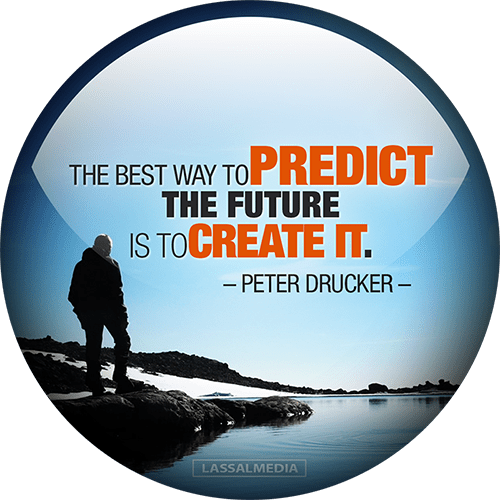
Such a powerful quote consisting of only eleven words. “The best way to predict the future is to create it.” as quoted by Peter Drucker pops up often, and most likely more so if you’re a small business owner, franchisee, restaurateur or entrepreneur.
It’s a take charge, take control quote that can be interpreted as being both inspirational and motivational. But from a practical standpoint, is it easier said than done? Is it possible? Feasible? Realistic? And during a period of economic uncertainty? Dare I mention, recession?
In order to come out alive on the back end of these challenging times, an action plan must be developed and deployed as quickly as possible. Essentially, if we’re to create the future, we must determine the vison for the desired outcome, along with the timeframe needed to get there.
What will it take? Who will be instrumental in executing the plan? What benchmarks will be established to gauge whether on the right path, or not? Will there be a contingency plan in place to shift as may be necessary? At what point will it be time to make hard decisions? Very difficult decisions? What will determine when drastic action must be taken, and potentially, what will that look like? What can be anticipated? What can be projected? What is practical, and what is not?
Yes, definitely a lot of questions to be answered. It’s going to take a great deal of effort, a lot of work, long hours, diligence, and honest evaluation. Of course, if we choose to do so. It is about making the choice whether to change, or to sit idle and ride out the storm. Choices. Such a simple concept, yet so much riding on whether the right choices are made, or not. At times, just making a choice, right or wrong is better than remaining undecided.
Nevertheless, change can only be implemented if the choice is made to do so. Choices. It has me reflecting on a story that has been bouncing around Facebook for quite some time. I don’t know the author, but the message is quite clear. As you’re faced with making the choice to take the action necessary to survive these challenging times, maybe even thrive, remember this very inspiring story. Refer to it often. I hope it motivates you to create your future!
I was waiting in line for a ride at the airport. When a cab pulled up, the first thing I noticed was the taxi was polished to a bright shine. Smartly dressed in white shirt, black tie, and freshly pressed black slacks, the cab driver jumped out and rounded the car to open the back passenger door for me.
He handed me a laminated card and said, ‘I’m Wasu, your driver. While I’m loading your bags in the trunk, I’d like you to read my mission statement.’
Taken aback, I read the card. It said, ‘Wasu’s Mission Statement: To get my customers to their destination in the quickest, safest, and cheapest way possible in a friendly environment.’ This blew me away. Especially when I noticed the inside of the cab matched the outside. Spotlessly clean!
As he slid behind the wheel, Wasu said, ‘Would you like a cup of coffee? I have a thermos of regular and one of decaf.’
I said jokingly, ‘No, I’d prefer a soft drink.’
Wasu smiled and said, ‘No problem. I have a cooler up front with regular and Diet Coke, lassi, water, and orange juice.’
Almost stuttering, I said, ‘I’ll take a lassi since I’ve never had one before.’
Handing me my drink, Wasu said, ‘If you’d like something to read, I have Good Housekeeping magazine, Reader’s Digest, The Bible, and a Travel + Leisure magazine.’
As we were pulling away, Wasu handed me another laminated card, ‘These are the stations I get and the music they play, if you’d like to listen to the radio.’
And as if that weren’t enough, Wasu told me he had the heater on and asked if the temperature was comfortable for me.
Then he advised me of the best route to my destination for that time of day. He also let me know he’d be happy to chat and tell me about some of the sights or, if I preferred, to leave me with my own thoughts.
‘Tell me, Wasu,’ I was amazed and asked him, ‘have you always served customers like this?’ Wasu smiled into the rear-view mirror. ‘No, not always. In fact, it’s only been in the last two years. My first five years driving, I spent most of my time complaining like all the rest of the cabbies do. Then I heard about power of choice one day.’
‘Power of choice is that you can be a duck or an eagle. If you get up in the morning expecting to have a bad day, you’ll rarely disappoint yourself. Stop complaining! Don’t be a duck. Be an eagle. Ducks quack and complain. Eagles soar above the crowd.’
‘That hit me right,’ said Wasu. He continued and said, ‘It is about me. I was always quacking and complaining, so I decided to change my attitude and become an eagle. I looked around at the other cabs and their drivers. The cabs were dirty, the drivers were unfriendly, and the customers were unhappy. So, I decided to make some changes. I put in a few at a time. When my customers responded well, I did more.’
‘I take it that has paid off for you,’ I said.
‘It sure has,’ Wasu replied. ‘My first year as an eagle, I doubled my income from the previous year. This year, I’ll probably quadruple it. My customers call me for appointments on my cell phone or leave a message on it.’
Wasu made a different choice. He decided to stop quacking like ducks and start soaring like eagles. I hope we all decide to soar like an eagle and not quack like a duck.
At this point, I’m reflecting upon our mantra at Acceler8Success Group. One that we must do better at doing within our own organization. Yes, a change is necessary and I’m making the firm choice to do so beginning today, the first business day of Q3 2022.
“Act swiftly. Act decisively. Make it happen. Make it count.”
It is the way to survive AND accelerate success. Have a great day.
Last week I heard about what I believe to be extremely disheartening results to a recent Gallup poll: Fewer than 4 in 10 – 38% – of adults said they were “extremely” proud to be Americans. The 38% of proud Americans is well below the average of 55% since the question has been asked. In fact, prior to 2015, Gallup had never found those expressing “extreme” pride lower than 55%.
I’ve been speechless since first learning of these results. Certainly, I do not want to be political in trying to share my thoughts. Maybe what I’m missing is a clear understanding of what it means to be American? No, that’s not it. I believe I know it all too well. But possibly I’m just thinking of my own beliefs, and my own interpretation of being American. One that is based upon tradition and what has been reinforced in my mind from my early years.
I reflect upon the many conversations I’ve had with individuals that have become U.S. citizens after immigrating to the U.S. All had expressed their love for America and the opportunities that have been repeatedly put before them. Opportunities that they’ve made sure to capitalize on.
Many of them own their own homes. Several own multiple homes. Many own their own businesses with a few owning a number of locations. Their children have gone on to complete college or have established businesses themselves. I have found most are community leaders – community being within a residential area, within a business group, within a church, within their extended family, and within their ever-expanding network of friends and acquaintances.
Regardless of their ethnicity, I have found them to have similar thoughts, and similar thoughts about being American. That got me thinking… What is the consensus across our country? Not from a poll or survey but from a pointed question about what it means to “be American”. So, I researched it using Google Search with the question, “What does it mean to be American?” Here are some of the results:
What Does It Mean to “Be American”?
In 2014, New York Times reporter Damien Cave traveled the length of highway I-35, which runs south to north through the middle of the United States, for his “The Way North” project. Along the way, he asked 35 people, “What does it mean to be American?”
Becoming American means following the rules. It means respecting your neighbors, in your own neighborhood. —Francine Sharp, 73, retired teacher in Kansas (born in Kansas)
If you work hard, you get good things in life. —José, college student/roofer; immigrant without legal status in Tulsa, Oklahoma (born in Mexico)
Being American is making a change and making good changes. Being American is being welcoming, being caring about other people, being proud of the country. And it’s forgiveness. It’s not holding grudges on anything—I mean, where’s that going to get you? —Natalie Villafranca, 14, in Texas (born in Dallas)
Being American means protection by the law. Anyone can say whatever they want and, even if I don’t agree with them, they’re still protected by the law it’s my job to enforce. That’s their freedom. That’s their right. —Sean Larkin, 40, sergeant with Tulsa Police Department’s gang unit in Tulsa, Oklahoma (born in Virginia)
Being American is red, white and blue and being free. It doesn’t matter what language you speak; if you’re born in America, you’re still American. No matter what you look like, no matter what. —Sebastien de la Cruz, 12, student who gained attention, and backlash, when he sang the national anthem during the 2013 NBA finals in a mariachi outfit (born and lives in San Antonio)
I want all girls, especially girls of color, to know that they can be a part of science. And more than that, they can be leaders in science. I want them to know that, because I know that I am America. That I am science. I’m just the part that people refuse to recognize. —Taylor R., 13, speaking about her ambitions at the March for Science in April 2017
Writing about the relationship of ethnicity and American identity, the historian Philip Gleason put it this way:
To be or to become an American, a person did not have to be any particular national, linguistic, religious, or ethnic background. All he had to do was to commit himself to the political ideology centered on the abstract ideals of liberty, equality, and republicanism. Thus, the universalist ideological character of American nationality meant that it was open to anyone who willed to become an American.
A high school student shared:
To me, being American is much more than just being an American citizen or living in American. It seems people in America have a responsibility, and an obligation to be the best person they can be. It’s part of being an American, and another part is doing your part to keep society running properly. One of the best things about this place we call home, is that the country is basically run completely by the people inside it. Another great thing about being an American is the ability to have the American dream. In an American Creed article by Forbes, the American dream is described as “anyone, through gumption and hard work, can achieve any degree of financial success.”
America was built on the idea that all men are created equal, and that there shall be liberty and justice for all. However, today our country is split into multiple sections, from our politics, races, and lifestyles. In the past, we still had close to the same diversity, but we were closer as a nation, and didn’t let problems split us apart, rather bring us closer together. Junger, in Tribe, also says, “intact communities are more likely to survive than fragmented ones.” Our nation needs to get back to how people lived community wise, at the beginning of time, where there were tight knit communities.
Being American means to be free and have equal opportunity. Also, to have the ability to do what you want, how you want, and where you want. The amendments are what give us those freedoms, like the freedom of speech, and the freedom of religion. We’ve strayed from our ideals created by the founding fathers, and became more individualistic, and selfish. America needs to get back to the idea that everyone is created equal.
As outlined on USVisaGroup.com:
The Merriam-Webster dictionary defines “American” as “of or relating to America” or “of or relating to the U.S. or its possessions or original territory. A web search for “the definition of American” reveals similar results – “relating to or characteristic of the United States or its inhabitants.” Or “a native or citizen of the United States.”
Defining what it means to be an American isn’t limited to a birthplace but rather a shared set of cultural values and responsibilities. In contrast, an American citizen refers to the legal status that entitles Americans to specific governmental rights and privileges.
Regardless of if you are an American or an American citizen, there are no official definitions that define an American as someone who looks a certain way, practices a particular religion, or speaks one specific language. As a result of shifts in society viewpoints, evolving international relationships, and economic developments, what it means to be American has continued to evolve since the first reference in 1568.
The American Dream
What often draws millions of immigrants to the United States and drives Americans’ ambition is the belief in the American Dream. The American Dream is the idea that everyone has the same opportunity to achieve their goals if they work hard. This idea captures the guiding beliefs or ideals that characterize the United States and creates an attractive society for those aspiring to a better life.
Collectively, Americans believe in a standard set of ideals – democracy, rights, liberty, opportunity, and equality that guide the possibility of achieving the American Dream. According to Wikipedia, the American Dream represents “the freedom and the opportunity for prosperity and success, as well as upward social mobility for the family and children, achieved through hard work in a society with few barriers.”
In the definition of the American Dream by James Truslow Adams in 1931, “life should be better and richer and fuller for everyone, with opportunity for each according to ability or achievement” regardless of social class or circumstances of birth.” This belief reflects the shared set of cultural values that define what it means to be an American.
A Shared Set of Values
The belief in the American Dream and living by a shared set of values are deeply embedded in the United States culture. Commonly held values help drive what it means to be an American, set a standard of what’s good and fair in society, and are critical to upholding a culture’s shared beliefs.
While not all Americans share the same views, most Americans share a common set of values. L. Robert Kohls, a renowned author dedicated to research on cultural values, developed a list of 13 commonly held American values:
Personal control over the environment: Americans believe that they are responsible for taking control of what happens to them. Fate or destiny does not play a part in how their lives turn out but rather hard work and initiative to pursue a better life.
Change is seen as natural and positive: Change is good and often associated with progress and improvement. To Americans, it’s essential to development and growth.
Time and its control: Time is considered an important commodity and needs to be used wisely. This philosophy has enabled Americans to be highly productive, and productivity is highly valued in the United States.
Equality and fairness: Americans believe that all people are “created equal” and should all have the equal opportunity to succeed. People are important as individuals, not from which family they come from.
Individualism and independence: Americans view themselves as highly individualistic in their thoughts and actions. They believe in the right to express their opinions anywhere at any time. Each person is a unique individual, and a high value is placed on personal style and action.
Self-help/initiative: Americans take pride in what they can accomplish as individuals, not a part of a collective or as a right of birth. Getting ahead requires individual effort.
Competition: Competition is seen as bringing out the best in an individual, and free enterprise leads to progress and produces success.
Future orientation: The past is devalued, and Americans believe that the future will be better and happier. They believe that “the best is yet to come.”
Action/work orientation: Americans emphasize “doing” and regard what one does for a living as part of their identity. Active engagement and planning are seen as valuable. “Don’t just stand there, do something” is a basic American attitude.
Informality: High emphasis is placed on a casual approach to many things, including social interactions, clothes, and communication styles.
Directness/openness/honesty: A preferred approach to negative information is directness, and Americans consider anything other than openness as dishonest and insincere. Honesty is equated with being blunt, and “telling it like it is” is often admired.
Practicality/efficiency: Practicality is given the highest priority when making important decisions. Americans try to avoid being “too sentimental” when making decisions.
Materialism/greed: Higher priority is given to obtaining, maintaining, and protecting material objects than developing and enjoying relationships with others. Material objects are viewed as benefits of hard work.
How Americans define “real Americans”
According to a poll by Grinnell College, when asked what it means to be a “real American,” most of those surveyed defined it as the belief in treating people equally and taking responsibility for one’s actions. Accepting people of different racial and religious backgrounds also ranked high, while only 23% of the respondents believed that “real” Americans are those born in the United States.
According to the U.S. Census Bureau, by 2044, more than half of all Americans will belong to a group other than non-Hispanic White alone. By 2060, one in five people in the United States will be foreign-born. As time goes on, inclusion will play a key part in what it means to be an American. It no longer makes sense to define “American” as someone born in the United States. As President Franklin Roosevelt said in 1943 and still holds true today, “Americanism is not and never was, a matter of race or ancestry.”
The River Reporter, a newspaper based in New York, once asked its readers to define what it means to be an American. Charles A. Rubin, from New York, perfectly captured the ideals of the American Dream, core American values, and the benefits of the immigrant experience in his response,
“To be an American, you need to believe in change. To be a successful American, you must believe that you can be part of that change. America is about debate and differences. It’s new ideas and retaining old traditions. America is the story of immigrant success and hard work. It is sacrifice and building on dreams. America is an experiment still in its early stages that people all over the world are eager to participate in. To me, the appreciation of being an American can only be fully realized by living somewhere else first.”
Is being American the same as being an American?
I’m sure this question can be debated for years to come. Essentially, it comes down to what each of us believes AND how we are committed to making it true. Talking the talk is definitely different than walking the walk.
To me, Lee Greenwood defines it best in his great song, “Proud to be an American” which I believe could just as easily be titled, “Proud to be American” and have similar meaning.
And I’m proud to be an American, where at least I know I’m free. And I won’t forget the men who died, who gave that right to me. And I’d gladly stand up next to you and defend Her still today. ‘Cause there ain’t no doubt, I love this land. God Bless the U.S.A.
Independence Day is all about the U.S, but it’s also about US… for you, me and for US, for all of US.
Have a great day. Make it happen. Make it count. And please stay safe!
Sundays are a time for review at Acceler8Success Cafe. With so much going on at Acceler8Success Cafe I know it’s easy to miss a newsletter or two. Possibly the week flew by without you noticing one our daily newsletter that seemingly got lost amongst the busy news feed.
Just like an experience at your local cafe, I really want Acceler8Success Cafe to be conveniently located when you desire or need to relax, enjoy a cup of coffee, and catch up on some reading. My goal is for Acceler8Success Cafe to be your virtual cafe. A place where you may frequently visit to enjoy a few minutes to yourself.
I’d like the experience to be memorable by providing learning opportunities, by presenting a different perspective & insight, by spurring thought & reflection, by encouraging interaction, and by spotlighting topics that, frankly, may not be as front and center as they should or need to be.
Acceler8Success Cafe is open for business seven days a week. For the benefit of current & aspiring entrepreneurs, this daily newsletter is delivered each morning. As a way to jumpstart the week ahead, a weekly review is delivered each Sunday morning listing and linking to the articles you might have missed during the previous week. My objective is to provide an opportunity for you to begin the new week informed and with ideas that possibly could accelerate your success.
Welcome to the Sunday ‘Weekly Review Edition’ of Acceler8Success Cafe!
Networking is your lifeblood for a long-term success. It’s often been said that one’s net worth is their network. Yet, many give it a half-assed attempt. Why do you think that is the case when effective, diligent networking produces positive results? If not immediately, then at some point, for sure.
From the late-60s and through the 70s it was a different time for sure, but not really much different than today. War, drugs protests & riots, and recession made the headlines then as they do now. Is it a cycle, or is just a plethora of unsettled business that has lingered on for the past 50 years, a beast raising its ugly head now and again to keep our attention?
Do your goals have due dates? Firm due dates similar to utility bills complete with a termination date, late fees, and disconnection notices? Could doing so create a sense of urgency? How about accountability?
I’ve developed Acceler8Success Cafe to help current and aspiring entrepreneurs succeed. I’m dedicated to entrepreneurial success at all levels. Whether to help others achieve work/life balance or to just be there to help someone pull out of a tailspin, my goal for Acceler8Success Cafe remains… to be a resource, on LinkedIn and across various social media to share information, to educate, and to provide an opportunity for interaction.
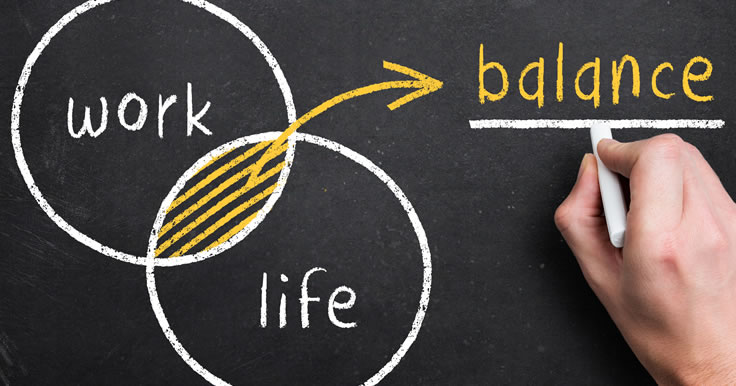
A long weekend is the perfect time to reset the clock on work/life balance. It’s a perfect time for some mental health maintenance. It really is a perfect time for new beginnings.
If you’re thinking about business ownership and considering whether franchising is right for you, the information shared at Acceler8Success Cafe will help you make an informed decision and provide clarity on your entrepreneurial journey.
Are you thinking of business ownership for yourself and learning how the choice of a franchise, startup or acquisition can “jump-start” the process and your earning potential?
Well, Acceler8Success Group can help. Working with in-house small business professionals you will work one-on-one in determining if you’re right for buying a franchise, starting a new business, or acquiring an established business, and whether business ownership is right for you.
If you determine that it is a path to consider, you will be introduced to various industry segments and ultimately, brands & companies that could be a “right-fit” option . . . all to help ensure your future success!
If you’re thinking about business ownership and considering whether franchising is right for you, the following articles, previously shared at Acceler8Success Cafe will help you make an informed decision and provide clarity on your entrepreneurial journey.
With the Great Resignation still in full swing, a lot of people are choosing to take control of their personal and professional future by exploring entrepreneurship.
Of those who realize their entrepreneurial potential many choose owning a franchiseas the vehicle to take them from employment to entrepreneurship due to the already proven business model and built-in, ongoing support system, among other benefits.
If becoming a franchisee seems like the right path for you, follow the tips in this article to find the perfect opportunity.
Potential franchise buyers know before making a final decision, they need to obtain information from other franchisees and also, their possible franchisors. But what information do they need to get?
Generally, I recommend using the Franchise Disclosure Document (FDD) as a guide. Read through it and ask a potential franchisor very specific questions about each item listed. It’s a can’t miss road map. This article outlines the various FDD items that every candidate should ask questions about in order they have complete understanding of the brand and its business model.
The dream of owning your own business is alive and well for most Americans. The only problem is that many people don’t know where to start on the journey to becoming self-sufficient. There are a million different options, but first and foremost each potential entrepreneur must decide if he or she wants to become a franchisee or start a business independently.
Each route has its benefits; therefore, it’s critical to take the time to consider both options before making a decision. What it initially comes down to is asking yourself the questions listed within this article.
Too often than not, franchisees are of the mindset that they’ve bought into a franchise system and just need to sit back and wait for the business to flow through their doors. Sometimes, it’s ignorance and perception that clouds their thoughts. Thinking that the brand name they invested in should be enough for instant business success at their location. But most of the time, it’s just plain old arrogance that gets in the way.
It’s the arrogance of having committed hundreds of thousands of dollars to buy a franchise as being the sole reason for success. It’s also the basis of feeling that with this level of financial commitment, the franchisor should be solely responsible for making sure franchisees succeed. Almost demanding a guarantee of success!
Well, it is not the franchisor’s sole responsibility, under any circumstances, for making sure that franchisees succeed. Read this article to gain a better understanding of personal responsibility and accountability when owning a franchise business.
With a new wave of brands, candidates are faced with questions beyond the norm. Instead of just focusing on investment level, industry segment and competition they will ask about the difference between legacy and emerging brands and advantage of one over the other. They’ll also ask specifically about an emerging brand head-to-head with a competing legacy brand that may clearly be the leader in that industry segment. They’ll wonder, isn’t it safer to invest in a recognized brand with a proven system as opposed to investing in something new and relatively unknown? This article identifies some of the obvious differences.
The Great American Franchise Expo connects hundreds of franchise businesses with potential owners. They provide education through seminars from industry experts on topics including franchise law, financing, and other critical business concepts. Attending these expos will provide potential franchisees with the opportunity to network with leading industry executives and franchise developers.
Recommended Books on Franchising
Listed below are several books on franchising that I highly recommend. I firmly believe these books must be read BEFORE signing a franchise agreement and remitting a franchise fee. They should be considered essential components of your due diligence. Know before you invest!
The definitive A-to-Z guide to researching, selecting, and starting a viable franchise business
With more and more professionals looking for alternatives to traditional corporate employment, Become a Franchise Owner! informs would-be franchise owners of the joys and perils of purchasing a franchise. Authored by a trusted, feisty, tell-it-how-it-is independent franchise industry insider, this book offers straightforward, step-by-step tips and advice on how to properly (and carefully) research and select a franchise business.
Get tips on how to locate information about franchises, current industry trends, interviews with franchisors, and hot franchise opportunities.
Offers a self-evaluation to discover if you are “franchise material”
Describes how to choose the right franchise for your specific situation
Lists the 40 crucial questions to ask current franchise owners
Owning a franchise isn’t for everyone; in fact, as Joel Libava says, “it’s really not for most people.” But if it is for you, this book can guide you in starting your own successful franchise business.
This comprehensively researched and deftly written franchise guide brings together experience and fact to give you the tools you need to understand which franchise is right for you. With insights from respected franchise leaders and a thorough understand of franchising, this book will help you understand and master the 4 Critical Steps to finding the Ideal Franchise: 1. The Introspective Self 2. The Franchisor 3. The Franchisees 4. The Legal and Financial
The Insider’s Guide to Buying a Franchise or Franchising Your Business
In this easy-to-read guide, franchise expert Rick Grossmann and franchise attorney Michael J. Katz impart decades-worth of insight and advice on what it takes to make your franchise operation successful. Grossmann and Katz share expert tutorials, tricks of the trade, and access to sample franchise documents, checklists, and questionnaires designed to get you organized, support you through the process and get your new franchise off the ground.
If you’re thinking of buying a franchise, you’ll learn how to:
Determine if running a franchise is right for you
Navigate franchise disclosure documents and agreements
Identify the signs of a good franchise opportunity
If you’re thinking of franchising your existing business, you’ll learn how to:
Pick the best method for expanding your business
Understand the keys to establishing a successful franchise system
Evaluate potential franchisees and grow your franchise Whether you want to buy a franchise or franchise your own business you’ll learn what to expect, how to move forward, and how to avoid costly mistakes–making Franchise Bible required reading.
Get fast, economical, custom funding and realize your small business or startup dreams with help from Benetrends Financial. Their experts provide an innovative approach to help you achieve the ideal funding you need to get your ideas off the ground for long-term entrepreneurial success!
Long holiday weekends are a great opportunity to relax, unwind, visit with friends & family, get away for a couple of days, catch up on a few things around the house, maybe catch a movie or essentially from whatever is a break from the daily grind. As well, an extra day added to a weekend can help with business planning, setting the stage for a productive period ahead. For the Independence Day Weekend, it’s even more the case as we’re entering a new quarter and the second half of the year.
A long weekend is the perfect time to reset the clock on work/life balance. It’s a perfect time for some mental health maintenance. It really is a perfect time for new beginnings. Whether an early morning walk or bike ride, without a specific time to get to the office or for a scheduled call or anything work related, the time to focus on a physical activity is open-ended. Better stated, there’s no pressure to rush! A morning or two of the same would help to start a regular routine.
Mental health maintenance is extremely important, and with physical activity added to the mix, increased benefit should be realized. Feeling better about ourselves would go a long way toward maintaining good mental health. (I know, I need to practice what I preach and will commit to making it happen this weekend.) More importantly, a clear, calm mind coupled with a strong sense of accomplishment further fortifies our mental health.
Of course, it would be very difficult to leave our smart phones at home, but if we do bring them, we should only do so to be able to listen to music, podcasts, etc. We should plan on having developed a few play lists, making sure to diversify our music so we may listen to what may be most appropriate for the moment. It is imperative that voice mail and texts be ignored while focusing on this personal time. Distractions must be avoided, or at the very least, minimized.
Mixing in “productive” relaxation would add the work component to work life balance. Reading about our favorite business topics, motivational & inspirational quotes, and ways to succeed are relaxing. So is reflecting about the same. Mostly positive thoughts come to mind. It is very calming. A clear mind would definitely help provide a different perspective or insight. Meaning – we’ll most likely see things differently with a clear mind.
Thoughts about work are going to occur. There’s no doubt. However, these thoughts typically become foundational components of planning. We must make note of our thoughts – writing them down, recording them. These thoughts should be reflected upon as we shift our focus – from life balance to work balance, and ultimately to work/life balance.
When shifting to work mode, it’s imperative we do so in small blocks of time. As it’s the weekend, we have the luxury of working without the interruptions of email and text messages. We must take advantage of that but must do so without being overwhelmed by the work itself. Breaking up our time into small sessions will help ensure we won’t be overwhelmed while also ensuring we get things done while still having time for rest and relaxation – the life balance part of the yin-yang of work/life balance.
Look, there’s no right or wrong way to achieve and maintain work/life balance, and especially on weekends. So, it will take us to plan for the same. Ahead of the weekend, write down what you’d like to achieve on both sides – work & life. I don’t suggest actually scheduling to accomplish each thing on your list. I do, however recommend writing things down as our goals for the weekend. Don’t forget to include Monday evening as preparation for the week ahead.
Best-selling author and motivational speaker, Harvey Mackay shared an article yesterday (The Best Time to Start Anew is Now) that I thought was very timely. I’ve shared the same with my thoughts as follows:
“Despite the start of a long holiday weekend, tomorrow is the start of a new quarter. Can you afford to wait until returning from the holiday weekend on Tuesday before starting to think about your efforts for Q3? I’d suggest taking some time over the next few days to re-evaluate your prior efforts, revenues, profitability, and changes that are needed to make for a successful Q3. Develop an action plan so you can hit the ground running while others take a few more days to even begin to move forward.”
I’m very passionate about work/life balance and as such, I’m always seeking out information and articles on the subject. Yesterday, in addition to the article referenced above, I also found this quote by Jack Welch of GE fame. I’ve read his book, Jack: Straight from the Gut, which I had found to be very interesting and informative. I believe his philosophies to be somewhat out of the norm at times – definitely different from other leaders of the day. So, it was no surprise to read his thoughts on work/life balance. I’d love to learn what you think of his quote below!
I’d like to leave you with one more thought… If you’re struggling to achieve work-life balance, you’re not alone. Understand how to better manage your time, detach from work and care for yourself. Learn more in this article from the Mayo Clinic, Work-life balance: Tips to reclaim control
Have a great day and holiday weekend. Make it happen. Make it count.
As we prepare for a long holiday weekend, we’re faced with the reality that the second quarter of 2022 ends today. Some will take the next 3-4 days off to relax, enjoy time with friends & family, and celebrate our Nation’s birthday. Others will take the time to reflect on this past quarter and the past six months. Have goals been met? Have plans been put into place for a successful third quarter and to wrap up the year on a high note? What needs to change moving forward?
I’ve developed Acceler8Success Cafe to help current and aspiring entrepreneurs succeed. I’m dedicated to entrepreneurial success at all levels. Whether to help others achieve work/life balance or to just be there to help someone pull out of a tailspin, my goal for Acceler8Success Cafe remains… to be a resource, on LinkedIn and across various social media to share information, to educate, and to provide an opportunity for interaction. Since launching Acceler8Success Cafe, significant progress has been made toward this goal. The number of subscribers is up. Interaction is increasing. And the number of views for each article continues to rise. Thank you for helping to make it so!
At the time I wrote this article, the Multi-unit Franchising Conference was right around the corner (3/29-4/1 in Las Vegas). Individuals planning to attend were already involved in franchising as single-unit operators while others were already operating as multi-unit franchise owners or area developers. They would be attending to explore (or continue to explore) the world of multi-unit ownership. But how would they know if multi-unit ownership was [really] right for them.?
The article listed questions that would be of interest to multi-unit candidates (and current multi-unit operators) and that should be answered before taking the plunge or next steps. I believe these are the same questions franchisors should insist individuals know the answers before awarding them a multi-unit package to current franchisees desiring to open additional locations, and the same questions for multi-unit operators desiring an additional multi-unit or area development deal. I firmly believe this to be true for those interested in multi-branding… but with a plethora of additional questions, as well.
Interestingly, this article came made it into the top 5 of articles viewed. I believe this to be a testament to the spiritual sense many need and desire. I strongly feel it also indicated it was a feel-good time and a break from the day-to-day grind.
I wished everyone a beautiful Easter Sunday filled with happiness, love, and faith. I expressed my hope and wishes readers would feel the love of God on that blessed day.
Definitely an article to cause people to pause, and reflect upon, this article generated more personal messages to me of thanks for sharing this article once again. After all, it was back in 2009 while in the midst of an uncertain economy, and a few times thereafter, that I have shared this article and inspirational video. Almost every time that I’ve done so, I’ve heard from individuals thanking me and letting me know that it had helped them cope with difficult times.
I went on to share how I had recently heard from someone who reminded me of the original post and how much it meant to him back then and how he often refers to it when facing a current challenge. It made me think about how it might help others today as we’re once again experiencing economic uncertainty. I expressed my thoughts about sharing it once again with hope that it may help a few more that may need some inspiration and hope that tomorrow will be better than yesterday.
In this article, I addressed the age-old question of, what is an entrepreneur? I shared some of the questions I had asked over the years in various LinkedIn groups and podcast interviews, and also in impromptu interactions. As such, I shared some of the insights and perspective from a wide cross-section of individuals (entrepreneurs, corporate executives, small business owners, and even a number of restaurant servers, retail clerks, construction workers, and high school & college students).
This article generated more interactivity than most other articles. I believe it’s proof there’s a great deal of interest in entrepreneurship and also, that entrepreneurship is still a mystery to some (or possibly, to most).
By a wide margin, this article garnered the number one spot of the most viewed articles at Acceler8Success Cafe. But why?
I posed the question (and scenario) that despite being financially qualified and with a proven track record of success, was it possible for franchise candidates to be rejected for not being a “right fit” for a brand? But that was within the article itself, not the title.
So, was the extreme interest in this article driven by the negative statement about an application being rejected? I do think that was the case. It may be a case of what I refer to as “social rubber-necking,” a need-to-know situation akin to slowing down to see the wreck on the other side of the highway.
Here’s to a strong Q3. Make it happen. Make it count!


















You must be logged in to post a comment.