The following is an updated article that was originally posted on several sites online including Franchising.com and in-part right here in this blog. As social media continues to be a significant component of a franchise brand’s digital footprint and an essential element in direct or complementary franchise development efforts, I thought it prudent to update and re-post accordingly.
What is Franchise Social Media?
 Basically, Franchise Social Media is more than just social media. It’s the application and utilization of social media within a franchise system. Sure, many of the same principles apply, but franchising is different than most small business models. It’s unique in many ways beyond the typical B2B or B2C model. There are specific disclosure laws that are a major part of the franchise candidate recruitment process. Even from a consumer proposition standpoint, the integrity of the entire franchise organization must be considered. And, one cannot discuss social media in a franchise environment without touching upon guidelines, policies and procedures, and brand uniformity.
So, Franchise Social Media is how social media is utilized to not only fit within the various levels of franchising, messaging and content must be considered. It must be integrated within processes and methods across and within all franchise marketing and development efforts. Certainly, utilizing social media within franchising is more than just asking an administrative assistant to set up Facebook, Twitter and Google+ accounts and post and tweet away; especially, without a purpose or specific objective, and definitely not without a well-defined plan of action.
Despite what many marketing professionals believe, Franchise Social Media must be more than what is defined and implemented across most small business segments. The interdependency of the franchise relationship, the franchise dynamic, if you will, must be considered and focused upon as a social media plan is put into action. At all times, the question, “How does today’s activity affect others within the organization?” must be on the forefront of administrators’ minds as they post, tweet, connect, and engage every day! A simple mistake can send a ripple effect throughout an organization. A major error, which could include a slow reaction to a potential crisis (remember Dominos employees’ You Tube video?), could be akin to a tsunami racing ashore at 500 miles an hour, with little or no warning to the people (franchisees) along the coast, and possibly inland as well.
Are you afraid or frightened yet? Are your thoughts circling around the decision to just continue to leave social media alone? Or, if you’re already entrenched within social media, are you now considering slowing down, pulling back on your efforts, or maybe even bailing out altogether? Well, you shouldn’t be afraid or frightened, and certainly, you should not bail out. Actually, there truly needs be more focus beyond the basics of social media, with a very detailed, comprehensive plan to direct efforts specifically to Franchise Social Media.
At Franchise Foundry we still utilize a basic acronym of e-IDEA (originated back to our earlier company, FranchisEssentials) as a guideline when developing franchise social media strategies for clients. The acronym translates to Explore, Identify, Develop, Execute and Analyze. Five easy steps to keep in mind and remember to remain focused and stay on track in your efforts.
EXPLORE
In the initial stages of a developing a Franchise Social Media plan, it is essential to review current levels of general social media proficiency throughout the organization. This includes the franchisee base as well. Determine not only who within the organization is proficient, but within which social media platforms they excel. Be sure not forget the enjoyment factor!
For instance, if franchisees are utilizing videos and photos effectively within their efforts, it’s safe to say that video and photo sharing should be integral components of the franchise social media strategy. Explore further for individuals within the organization that enjoy photography and video production. Having these individuals interact with marketing professionals bring new perspective to the process, especially as they will also bring practical perspective of working within the franchise organization at different levels.
 The same holds true for individuals within the organization who are most proficient and passionate about training, and are fully versed on internal training processes and procedures. It lends to being able to bring other aspects of social media to the table – webinars being the most obvious. The less obvious, but very effective includes internet radio for podcast replays or on-demand access, and video again, for sharing simple or more complex information.
Upon exploring various types of social media and the increasing number of tools available including social media management software along with determining the proficiency and enjoyment/passion levels within the franchise organization, it is then the correct time to step into the Identify stage.
IDENTIFY
Here’s where Franchise Social Media really starts to make practical sense as this stage fosters thought about the ultimate objectives of the franchise organization. Most believe this stage is entirely focused on identifying targets. However, identifying targets is only a portion of this stage.
Identifying objectives within a franchise organization is where Franchise Social Media separates itself from basic social media as there are typically many objectives to define, including increasing business at the franchisee level, improving brand awareness, creating interest in the franchise opportunity, and developing or strengthening communications throughout the system. Much of this process is unique to franchising as franchise law and the franchise relationship both need to be taken into consideration. Proceeding ahead without these considerations could result in significant consequences at various levels.
In identifying objectives, it’s most likely apparent there are multiple targets to attract. Within the consumer proposition the targets will be customers, but are they retail customers, business customers, or both? For franchise lead generation, there may be multiple targets that could be attracted in different ways. For example, attracting a transitioning executive may take a different approach than attempting to attract a transitioning executive from a specific industry segment.
Next, in this stage is identifying where all these targets communicate and congregate online. This is often an ignored component of a social media strategy, and one that would specifically lead to the strategy being non-effective. After all, what use is it to broadcast a message if it is not known where to broadcast the message so it will be heard by the target audience? Identifying the online locale of the target audience is critical to the success of the program, but it’s also critical to identify if the target audience is communicating within that locale.
DEVELOP
The results of the two previous stages provide the foundation for which the Franchise Social Media strategy should be built. Without the proper foundation, the strategy structure would be flat, lineal and two-dimensional. With a firm, well-defined foundation, the strategy will rise to a cross-platform, multi-tiered structure with communications lines running across the structure, to and from different points.
 Essentially, it can be looked at as the difference between a simple tic-tac-toe diagram drawn on a piece of paper, to a Rubik’s Cube that has many sides and angles, and is three-dimensional. Taking it a step further, when attempting to solve the tic-tac-toe challenge, there are only a handful of options before success or failure is imminent. Not so with a Rubik’s Cube as there are many, many options to succeed. In fact, the only way to fail at solving the Rubik’s Cube challenge is to give up and stop trying.
The Develop stage must address key components to the program including resources available AND dedicated to the effort. Resources include both human and financial resources. As social media has no time limitation or barrier, it can be considered a 24/7 plan of managing and monitoring. The various defined objectives must overlap for the three-dimensional structure to remain upright. The strategy must resemble blueprints similar to those developed when building an office building complete with common infrastructure and utilities, but where various floors will be designed for different tasks, and will be occupied by different people.
An effective Franchise Social Media strategy has some commonality built into it through the use of the basic social media channels. However, it should never be considered a one-size-fits-all solution as there are just too many variables from one franchise organization to another. These variables must be individually addressed and include, but are not limited to franchisees already using social media, percentage of effort to be dedicated to consumer proposition and lead development, coordination of timed events, content development for daily activity, responsibility for response both at the franchisee and franchisor levels and timeliness of the same, and transition from the virtual to the real world whether it be at the unit level face-to-face with customers, or within the franchise sales process with a candidate.
Development of the Franchise Social Media strategy is not much different than the development of an operations manual for a franchise system. It must be thought-out and planned for every aspect of the business at-hand. It must be comprehensive to handle the “what ifs?” It must be well-defined to work seamlessly from one individual to another. From 30,000 feet it could look not much different than a franchise system.
EXECUTE
Now, the fun part kicks in and execution of plan is put into action. If the strategy is well-developed and communicated throughout the organization, including to and with franchisees, execution of plan should run smoothly, and should actually be an enjoyable experience. The strategy, defined in a living document, must be in the hands of all involved in the effort. Guidelines must be followed for optimum results. Policies and procedures must be in place for reference as needed.
 The key to executing the plan lies within engagement and monitoring. It’s imperative to share content and information that is pertinent and relevant to the target audience. That does not, and should not mean the constant regurgitation of brand messages. The opposite is actually more effective and will actually attract and retain individuals within the online community. Many will return again and again seeking new information. If done effectively, an online community develops and becomes a portal of sorts with followers returning almost daily for new information they may be able use that day.
From a lead generation standpoint it’s imperative to share information beyond the brand message and certainly of the franchise opportunity itself. Information pertaining to entrepreneurship and small business ownership along with links to articles about transitioning executives, establishing goals and objectives, family role in business ownership, and small business finance are popular topics. Sharing this type of information with occasional posts about the brand and franchise ownership will keep this target audience returning day after day, looking forward to new information that will assist them in achieving their goals and objectives. As a valuable resource, a relationship begins to form; a key component of the franchise sales process.
Monitoring the activity is vital to further developing the relationship regardless of whether it’s with consumers or candidates. Timely responses to questions and comments go a long way in common courtesy. More importantly, interacting when the consumer or candidate is “hot” typically spurs conversation. It’s that conversation that establishes the personal interaction that potentially moves the process along. It’s the backbone of the “people buy from people” theory. It’s also at this point where the virtual to in-person transition begins to happen. It’s also where the relationship is most prone to unravel.
It is essential that front-line staff and franchise sales personnel fully understand and are aware of the information being shared with consumers and candidates alike. They should also be aware of online activity, especially the activity leading towards “buying” activity. As the transition to the in-person setting, which includes a visit to a franchise location and a telephone call with a franchise sales representative, the professionalism established online must continue. The online message must be consistent and continue to be conveyed.
ANALYZE
Certainly, metrics are important in gauging the effectiveness of any online strategy. And, it’s vitally important to analyze and quantify results on a regular basis. However, the key metrics are actually simpler than that of algorithms, click-through rates, and impressions. It’s what I refer to as a Social Media P&L.
This P&L takes the objectives, expectations and desired results, as established in earlier planning stages, and quantifies them into hard numbers. Then, these numbers are analyzed against actual results. This should be done weekly, monthly and quarterly in order to view development and progression of trends which then creates the opportunity to tweak and revise the plan much like turning a ship at sea. As you know, turning a ship at sea is done in a very slow, deliberate manner as a quick turn could easily capsize the vessel.
Ultimately, the results achieved within the plan must line up with the initial objectives of getting involved in social media in the first place. Therefore, it’s imperative the initial planning stages include specifying desired results and defined numbers. It’s not enough to just say, “We want to increase business and franchise sales.” Well, how much of sales increase? And, where? What particular market(s)? Over what period of time? And, for franchise sales purposes the same holds true but from its’ own unique perspective.
Keep in mind the operational aspect that needs to be considered in the process, and in evaluating plan effectiveness. It’s not uncommon to drive leads to franchise locations and to franchise sales departments, only to result in poor conversion rates. Obviously, the poor results in this situation are not the result of a poor social media plan as much as it stems from a poor sales effort. It is essential to take into consideration all aspects of daily operations, at the appropriate levels of the organization. It’s imperative the information pulled from these various levels be accurate and timely to accurately evaluate potential issues, and to be able to quickly resolve problems.
Erik Qualman, Author of Socialnomics and the person behind the infamous Social Media Revolution videos states that Social Media ROI is still being in business five years from now. A powerful statement, indeed! But one that I highly value and believe in as social media continues to gain momentum and becomes even more valuable, and essential, than it is today.
Expanding social media beyond its basic elements and utilizing it with specific intent and purpose can prove quite effective in generating multiple benefits at all levels of a franchise organization including increasing traffic at the unit level, creating brand awareness, generating interest in franchise opportunity and improving communications throughout the system. Understanding how social media need to operate in a franchise environment is critical to future success, and a primary reason for referring to it as Franchise Social Media, complete with functionality unique to franchising.
 This year the hit ABC reality television show Shark Tank aired its 100th episode, making it the highest rated show on Friday night. Shark Tank, now in its sixth season, is amongst the top most watched reality shows on television. The shows panel usually consists of it’s recurring millionaire and billionaire venture capitalists: Kevin O’Leary, Robert Herjavec, Daymond John, Barbara Corcoran, Lori Greiner and Mark Cuban.
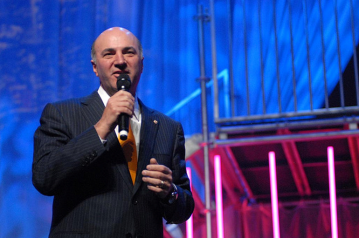 Kevin O’Leary earned his way to fame and fortune by building his educational software company SoftKey, right out of college. As his empire grew, he eventually acquired The Learning Company for over $600 million—taking the name as well. Eventually, O’Leary sold his business to a company called Mattel for $3.8 billion in a stock swap. In 2003, O’Leary moved on to his next venture, Storage Now, which was later acquired for $110 million.
 Robert Herjavec got his start by building up his Internet security empire, BRAK Systems, until he eventually sold it to AT&T Canada in 2000. After an early retirement, Herjavec found his way back to the Internet security world when he founded The Herjavec Group in 2003, where he currently operates as the CEO. Herjavec also started out on Dragon’s Den with O’Leary and now holds a recurring spot on Shark Tank. Herjavec appears to be more optimistic than the other “Sharks”, with more of a sensitive side. Maybe it’s the fact that his working-class father immigrated to America in pursuit of the “American Dream” and taught him that hard work pays off—which he’s used as the model for his success.
 Daymond John, who is most famously known for his start-up company FUBU, which he grew with the help of celebrity endorsement and a mortgage from his Mother’s house. John built FUBU into the global empire it is today, with global sales at over six billion to date. Although he is known to be a more reserved “Shark,” taking careful consideration before jumping on a deal, John is known to have a compassionate side and one that has been seen before on Shark Tank.
 Barbara Corcoran built her empire with nothing more than a mere $1,000 loan that she used to start her real estate company The Corcoran Group—which she co-founded. In 2001, Corcoran sold her company to NRT Incorporated for $66 million. Corcoran is responsible for pioneering many revolutionary techniques that changed the real estate market. Corcoran is a wild one—the fun-loving “Shark,” who astounds the others with her business decisions but somehow always proves that she still has her business swagger.
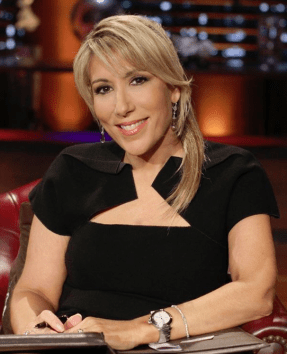 Lori Greiner began her career with the invention of a revolutionary jewelry box that was capable of holding over 100 earrings. Greiner is now known as the “Queen of QVC”, since she has helped launch over 400 products via the network and holds over 120 U.S. and international patents. She is also the president and CEO of the company For Your Ease Only. Greiner is a savvy investor who has helped grow hundreds of companies. She is a force to be reckoned with—despite her physical appearance she is not to be underestimated.
 Mark Cuban, the richest of the “Sharks”, made his billions despite some claims that were ultimately defeated in court, with the start of his company MicroSolutions in the 1980’s. In 1990, Cuban sold his company for $6 million. After that, Cuban moved on to his next venture AudioNet, which became Broadcast.com and eventually sold to Yahoo! for $5.7 billion. Cuban is probably the deadliest of the “Sharks,” with the biggest bite. He’s known for his ruthless execution and ability to swoop in at any moment and steal a deal right from another “Shark’s” mouth. Although this is true, Cuban has been known to drop out of the race if he feels he can’t contribute more than another “Shark.”









You must be logged in to post a comment.