Tag: Paul Segreto

Social Media Etiquette

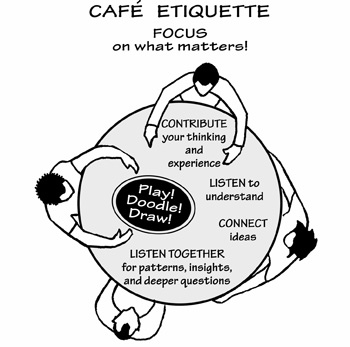
Acting and behaving correctly within social media networks is key to effective interaction and building mutually beneficial relationships. Treat others as you would at in-person events. Maintain a high level of ethics, as well as your dignity. Blend into the discussion, earning the right to be noticed. Share, share, share, your thoughts, information, videos and photos. And, don’t do or say anything you wouldn’t do or say in front of your Mother or Grandmother!

The following post by Eric Branter on DigitalLabs.com is a great guideline on how to act within social media networks. Follow them on your road to social media success.

11 Rules of Social Media Etiquette
Post by Eric Brantner on DigitalLabz.com

Since social media is, well, a social medium, it’s important that users understand the proper ways to behave online. No, just because you’re behind a computer monitor in your mom’s basement doesn’t mean all social etiquette goes out the window. It’s quite the opposite—following proper social media etiquette is a key to being successful online (and to making sure you don’t make a complete idiot out of yourself.)

1. Give More than You Receive- If you want to receive attention from others online, you have to be willing to give it first. It’s the old “I’ll scratch your back if you scratch mine” routine. You can’t bust onto a social media site with a sense of entitlement thinking you should be a top user immediately. You have to earn respect from others. How do you do this? By giving more than you receive.

2. Don’t be a Keyboard Gangsta- Probably the worst thing about the Internet is the keyboard gangstas. You’ve surely run across at least one of these in your lifetime. They sit at their keyboard talking trash to everyone they encounter. They say things online that they would never have the nerve to say to a real person’s face. Don’t try to ruin everyone else’s online experience because you don’t have any friends in real life.

3. Add Value to the Site- At the end of the day, the thing that will earn you great connections with others is if you add value to the community. This means not submitting content that nobody cares about and not constantly promoting your brand. Before you ever submit anything to a social media site, ask yourself “Does this article really add value to the community?” If not, reconsider submitting it.

4. Don’t Sabotage Other’s Efforts- This is self-explanatory. Drop all of your e-beefs and hatred. Don’t try to bury others just for the sake of getting ahead. Making enemies on social media sites will get you nowhere fast, and you really do reap what you sow.

5. Remember that Cheaters Never Win- Instead of trying to game the system, why don’t you focus on building a successful social media presence the right way. Sure, you might be able to get some amazing results by cheating, but eventually, you will get caught. And once everyone sees you for the cheater you are, you can’t un-ring that bell.

6. Build Quality Relationships- People are more willing to help those who they really know. By building quality relationships with other users, you’ll always have someone in your corner to back you up. Remember, relationships require the participation of both parties; so, always be a good participant in your social media relationship.

7. Stop Pushing the Envelope- One of the fastest ways to alienate people online is to constantly flood them with requests for helping you out. Whether you’re constantly shouting your content or always Tweeting asking people to comment on your blog, eventually, everyone will lose their patience with you. It’s like the boy who cried wolf. People will tune you out if you’re constantly pushing the envelope.

8. Respect the Community- This might be the most important rule of social media etiquette. Show respect to the community. It’s not that hard to do. Just make sure you don’t step out of line, and always treat everyone the way you want to be treated. These are simple social skills you should already be following in real life; now, you just have to follow them online too.

9. Listen to Others- Your first reaction whenever someone disagrees with you online is probably to tell them how wrong they are. Instead of constantly fighting back, take the time to listen to what they’re really saying. Listen to the people commenting on your blog or Tweeting at you. Understand where they’re coming from. You don’t know everything, and you can learn from others if you take the time to listen.

10. Be Accountable for Your Actions- Because of the anonymity the Internet allows, there is little to no accountability online. People say and do whatever they please without facing any repercussions. Don’t be that guy. Instead, try to be honorable by taking responsibility your actions online. By being accountable, people will respect you, whether they agree with you or not.

11. Be Nice- All of these points add up to one thing—just be nice. Is it really too much to ask for people to be kind to one another? Call me old-fashioned if you like, but there’s nothing wrong with being nice to others online.

What rules of social media etiquette would you add to the list? Share them below!


Bookmark and Share

Discussion About IFA’s 50th Anniversary Exemplifies What Franchising is Really About!

Recently, on the International Franchise Association group on LinkedIn, I posted the following discussion, “The 50th Annual IFA Convention in San Antonio is less than three weeks away. Will you be attending? If so, what do you hope to bring back to your organization? If not, is there a specific reason?”

Many franchise professionals responded and explained why they would be attending the event. Most of the responses centered around sharing ideas and building relationships. Sure, some mentioned exploring new opportunities with potential and existing clients, but we are all in business to make money, right? But in addition to generating new business, almost all that responded were looking to interact with fellow franchise professionals. Hopefully, long-term relationships will be established over time and the franchise community will continue to evolve and strengthen.

One of the responses was from franchise veteran, Michael Seid. He stated that he had been going to IFA conventions for 25 years. I really admired the fact that he had attended these events for over a quarter of a century! Think about all that has changed in 25 years. Just think about the technological changes that have occurred during this period of time. I mean no one was walking around the IFA event in 1985 with a cell phone, right? How about a laptop? Could anyone have even imagined the internet and email? Heck, fax machines were barely around in 1985, albeit the ones that were used that ridiculous paper that always seemed to roll onto to the floor and under a desk… just out of reach.

Yes, times sure have changed, but the love and passion for franchising apparently has not. It’s just been passed onto people like Michael Seid. By virtue of his responses to my original discussion, and subsequent question, “I’m curious, what was the convention like back in, what, 1985?”, Michael takes us down memory lane and does so in such a dignified manner and with genuine sincerity, that he really seemed to pay it forward. For the benefit of all within the franchise community, I am honored to share his response below.

“1985 was in Miami if I recall and that was not my first so it may be longer than [25 years]. If I recall the attendance at my first convention was measured in the hundreds – not like we have now in the thousands. It was a much different association – we have come a long way with programming and content and member services. A lot of the founders were still around. I just got a great biography of Joe Francis from The Barbers who was very active years ago. If you did not know Joe you missed a great man – really a fine individual who went out of his way to give guidance to anyone who asked for his help. His son is still very active in the IFA. It’s a great quick read if you have not seen the book. Joe is gone 15 or more years.

The culture of the IFA has not changed. You can still corner an experienced member as a new comer and they seem always to be thrilled to mentor and give advice. I remember asking Fred DeLuca a question when I was new in the association and he spent two or more hours giving me his advice. That has not changed at all as most members today will do the same for a new comer.

Looking back at what has changed – No franchisees back then. That was a major difference Steve Lynn and Jim Bugg made that happen). No PAC to speak of (Sid Feltenstein changed that). No franchise appreciation day (Bernie Browning‘s idea). No Education Foundation only an education committee (I think Sid Feltenstein is also responsible for that). No thought of diversity or minorities in franchising (Ron Harrison). No VetFran (Don Dwyer‘s idea during the first gulf war). No Second Tuesdays (if it was not Lane Fisher and Scott Lehr then they were responsible for making it grow as it has). Who would have thought we would be looking at using franchising to provide products and services to the poor in the emerging markets and yet today we have the Social Sector Franchising task force. No CFE (John Reynolds). No one would have thought of a franchisee ever being chairman (Steve Siegel was the first and Doc Cohen the second). No franchisees or suppliers forum leadership on the board (Joyce Mazero if I recall was the first Counsel of Suppliers chair on the board and Jeff Kolton was the second – although we had no vote then. Supplier membership on the Executive Committee did not exist (I had that privilege when I was supplier chair to be the first because of Gary Charlwood).

I remember the IFA chair years ago saying that he would never let a mattress salesman (his word for suppliers) ever being on the board. Suppliers got a board vote when Gary Charlwood was chairman). No suppliers elected to the board in their own name for six years (I was privileged to be the first and Lane Fisher the second). No women as chairman (Joanne Shaw was the first and Dina Dwyer the second). No major investment in research (Mike Isakson). I think Jim Amos when he was chair actually creating the first IFA long range strategic plan. When Don DeBolt became president of the IFA we were near bankrupt and look at the great financial condition we are in now (Russ Frith as Treasurer did an amazing job). We did a lousy job in lobbying years ago and now we have a huge public affairs team. We dealt with Coble and LaFalce holding hearings on relationship laws in Congress and those days are gone.

Yes a lot has changed over the years. We owe a debt to a lot of some very smart folks who were in the leadership back then who kept adding great elements to make the association better. Along the way we had some who were less than stellar also but for the most part, we have been fortunate by those who chose to be in the leadership. Lets not forget the amazing job Debbie Moss has done in growing and professionalizing the convention supported by a really professional team of staff.

Still with all of the change, growth and the better financial condition of the association, the culture of the IFA has not really changed. I expect that many of the members/leaders from years ago who have not been active in the IFA will be at the 50th anniversary. Some of them will be surprised and pleased how far we have come.”


Bookmark and Share

A Few LinkedIn Tips

Let me help make your LinkedIn experience more satisfying and effective.

When posting a url to a discussion, be sure to post it in the “Additional Details” box below the “Enter a Topic or Question” box. By doing so, your link will be active and all a reader has to do is click on the link. If the link is placed in the “Enter a Topic or Question” box, the link will not be active. Therefore, in order to access the link, the reader must copy and paste the url into the browser before being able to access your site.

My own research, okay, trial and error, has shown that active links are four times more likely to be accessed than links that have to be cut and pasted. Be sure to include “http://” to make the link complete. The same is true when posting within responses to discussions as well.

Hope this helps, even just a little bit.

Just starting out with LinkedIn? Watch the video below.


Bookmark and Share

Franchising in the USA – Facts and Figures

Franchise Statistics

* The Franchising industry employs over 8 million people in the US.
* The annual payroll for franchises is more than $229 billion.
* A new franchise is 2.5 times more likely to succeed than a non-franchised business.
* Franchising generated more than 18 million jobs for Americans , one out of every seven jobs in the private sector.
* Franchising produces $1.53 trillion in total economic output
* Franchising consists of over 760,000 establishments
* Did you also know that more than 50% of retail and service revenue in the United States come from franchised businesses?
* The franchise industry is a huge part of our national and local economy.
* One out of every 12 businesses is a franchised business.
* In 2000, the median gross annual income, before taxes, of franchisees was in the $75,000 to $124,000 range, with over 30% of franchisees earning over $150,000 per year.
* One new franchised business is opened every 8 minutes of every business day.
* The newest IFA study says that franchising is responsible for 760,000 businesses, 18 million jobs, 14 percent of the private sector employment, over $500 billion in payroll!!
* Franchise businesses account for almost 50% of all retail sales in the United States and Canada.
* Franchise businesses employ more than 8.6 million Americans
* A 1999 study by The U.S. Chamber of Commerce found that 86% of franchises opened within the last five years were still under the same ownership and 97% of them were still open for business.
* A United States department of commerce study conducted from 1971 to 1997 showed that during that time less than 5% franchise businesses were shut down each year.
* Compare that to a U.S. Small Business Administration study conducted from 1978 to 1998, which found that 62% of non franchised businesses closed within the first 6 years of their existence due to failure or bankruptcy.
* Total sales by franchised businesses are expected to reach over $2 trillion, this year.
* 1 out of every 12 business is a franchise operation.
* A new franchise business is opened every 8 minutes of every business day.
* In 2000, the median gross annual income, before taxes, of franchisees was in the $74,000 to $125,000 range, with over 30% of franchisees earning over $149,000 per year.

As reported on Franchiseek.com


Bookmark and Share

Forrester Research Projects Increase in Social Media Marketing Budgets

Social Media Marketing Spending to Hit $3.1 Billion by 2014
As originally posted on Mashable.com

We already knew that social media marketing budgets were on the rise, but now we know by how much. Forrester Research is out with their Interactive Marketing Forecast for the next five years, and estimates social media marketing to grow at an annual rate of 34 percent – faster than any other form of online marketing and double the average growth rate of 17 percent for all online mediums.

Of course, social media is starting from a smaller base. Forrester estimates that $716 million will be spent on the medium this year, growing to $3.1 billion in 2014. At that point, social media will be a bigger marketing channel than both email and mobile, but still just a fraction of the size of search or display advertising ($31.6B and $16.9B, respectively).

Not surprisingly, some of this growth comes at the expense of offline advertising. Forrester estimates that online advertising will grow from 12 percent of total marketing spend this year to 21 percent by 2014, meaning that offline ad spend will fall. In fact, Forrester concludes that “overall advertising budgets will decline,” meaning efficiencies are being had by shifting money to the Web.

In any event, it’s hard to argue that the numbers don’t paint a fairly rosy picture for the future of social media marketing.


Bookmark and Share

Social Media Activity Adds to Real-Time Search Results

Google Adds a Real-Time Wrinkle
As reported in Website Magazine

Beginning in early December 2009, Google took another giant leap by releasing Real-Time Search Now, for some queries, the first page of results shows a scrolling box with real-time search results – many of which come from users’ social updates and content. Real-Time Search has major implications and further alters the SEO landscape.

Read more about this important news and how it affects SEO at Website Magazine.

Check out this Google YouTube Video


Bookmark and Share

50th Annual IFA Convention – Do You Plan on Attending?

The 50th Annual IFA Convention in San Antonio is less than three weeks away. Will you be attending? If so, what do you hope to bring back to your organization? If not, is there a specific reason?

This year’s historic convention promises to be the best ever. Join the largest gathering of franchise business professionals at the premier franchise industry conference dedicated to excellence, education and relationship building. For 50 years, the International Franchise Association has worked to protect, promote and enhance franchising by advocating on behalf of the industry and hosting exceptional educational programming and networking opportunities. This year’s event will be no exception.

The 50th Annual IFA Convention, this year in San Antonio, Texas (February 5-8), promises to honor those who have made the industry what it is today and showcase the growth of franchising over the past half century. You will leave inspired, optimistic and ready to face the challenges that lay ahead.

Click HERE for more information!


Bookmark and Share

How do you define Social Media?

Here are some definitions of Social Media by different sources online.

Social media are primarily Internet-based tools for sharing and discussing information among human beings. …
http://en.wikipedia.org/wiki/Social_media

A category of sites that is based on user participation and user-generated content. They include social networking sites like LinkedIn, Facebook, or My Space, social bookmarking sites like Del.icio.us, social news sites like Digg or Simpy, and other sites that are centered on user interaction.
http://www.lazworld.com/glossary.html

Online technologies and practices that people use to share opinions, insights, experiences, and perspectives with each other.
http://www.tvb.org/multiplatform/Multiplatform_Glossary.aspx

Social media are works of user-created video, audio, text or multimedia that are published and shared in a social environment, such as a blog, wiki or video hosting site.
http://www.capilanou.ca/help/active-cms/glossary.html

An umbrella term that defines the various activities that integrate technology, social interaction, and the construction of words and pictures. …
http://www.anvilmediainc.com/search-engine-marketing-glossary.html

Software tools that allow groups to generate content and engage in peer-to-peer conversations and exchange of content (examples are YouTube, Flickr, Facebook, MySpace etc)
http://www.bottlepr.co.uk/glossary.html


Bookmark and Share

Are New Franchisees Ready to be Successful?

Last week on Franchise Today, Joel Libava (aka The Franchise King) and I discussed an except from Lizette Pirtle’s recent book, Franchise Success: The New Formula. The discussion pertained to whether or not franchisees are ready to be successful and whether or not it’s actually an assumption that is incorrectly made when a new franchisee signs on the dotted line. Further, the excerpt included a passage about an unemployed individual that entered into a franchise agreement, and his subsequent failure as a franchisee. In an attempt to jump-start discussion on this and other factors relating to franchise success and failure, I have posted the excerpt below and encourage all comments and opinions.

Franchise Success: The New Formula
By: Lizette Pirtle
Chapter 3: Readiness (Pgs 59-60)

We can’t assume that when people invest in a franchise they are ready to be successful. We can’t even assume that they were ready to make the investment in the first place. But we do make these assumptions. Yet, action does not necessarily equal readiness. There is much more to the investment decision and the success of franchisees than we have traditionally considered.

William was laid off from a job he enjoyed as the vice president of operations for a manufacturing company. He had unemployed for 6 months and was getting desperate. He had applied for every job available. He had lost self confidence and was becoming increasingly frustrated. He felt pressure from his parents, his wife and his friends who recommended he consider starting a business.

William never considered self-employment before, but the thought of working again and owning his own business became very appealing. The more he thought about owning a business, the more excited he got. He decided to acquire a franchise, and by the time he made this decision he was eager to start and his excitement was almost overpowering.

William was extremely intelligent and had been very successful in his career, but during training he experienced difficulty. He labored through many portions of the program and questioned new concepts with mistrust. Many of the exercises seemed difficult to him.

While his classmates joyfully excelled, William’s mood became somber as the training progressed. Sometimes he became hostile and withdrawn, while at other times he would engage and be open. The franchisor called him aside and offered him the option to leave the training and recoup his investment. William declined.

When he opened his business, William could not make the business go. He fought and resisted many of the marketing activities and, although he was always busy and worked hard, his efforts were fruitless. In spite of his qualifications and the full support of the franchisor, within 6 months of attending training, William closed his business.

Okay, franchise professionals, tell us what you think. How would you have handled this situation? What would you have done differently? How can we prevent these situations from actually happening within franchising?


Bookmark and Share

Facts, not Fiction, Lead to Franchise Success

The following is an article submitted by Guest Author, Katryn Harris. Katryn is the CEO of Open Box, a company focused on helping franchisors use technology to build their franchises. She brings her background in management, business strategy and communication as well as her team of technical experts to work with franchisors, ensuring that their technology fits their business strategy and moves their franchises forward. Be sure to check out Katryn’s blog.

Feedback Loops and Franchise Success
By Katryn Harris

A few days ago, I was talking with Greg Nathan from the Franchise Relationships Institute about his software product that helps franchisors select franchisees who are the most likely to succeed.

In brief, the Franchise Relationship Institute does this by benchmarking characteristics & traits of past successful franchisees and then providing a system that compares new applicants with those traits and characteristics.

Greg is a trained psychologist and works strong in the scientific tradition; hypothesize, measure, analyze and then compare results with hypotheses. One of his current projects is the validation of the exact extent to which is product is successful in predicting new franchisee success and, not surprisingly, his results will be fact based & very precise.

Listening to Greg talk about the validation project, I was struck again by how vital these feedback loops are to franchise growth.

Successful franchises implement the best programs and systems they can come up with, but then they measure, analyze and adjust based on the numbers and results (rather than what they ‘think’ is happening). And the faster they can complete this cycle (and then start it up again), the more likely they are to be successful in the long term.

From 1-800-GOT-JUNK?’s Net Promoter measurement tool to calculation tools for attrition rates to sales performance indicators, business growth is fueled by knowing exactly what is actually happen so the best actions can be taken. One of our customers ties client satisfaction records into payroll bonuses for their employees, which is a great motivator to get everyone in the company on board in trying their hardest to keep the clients happy – you can imagine what that has done for their referral and return customer rates.

What are your best scientific tools to create feedback loops and do more of what is working & change what isn’t?


Bookmark and Share