An emerging franchise brand’s expansion strategy should begin with the markets it can develop and support responsibly.
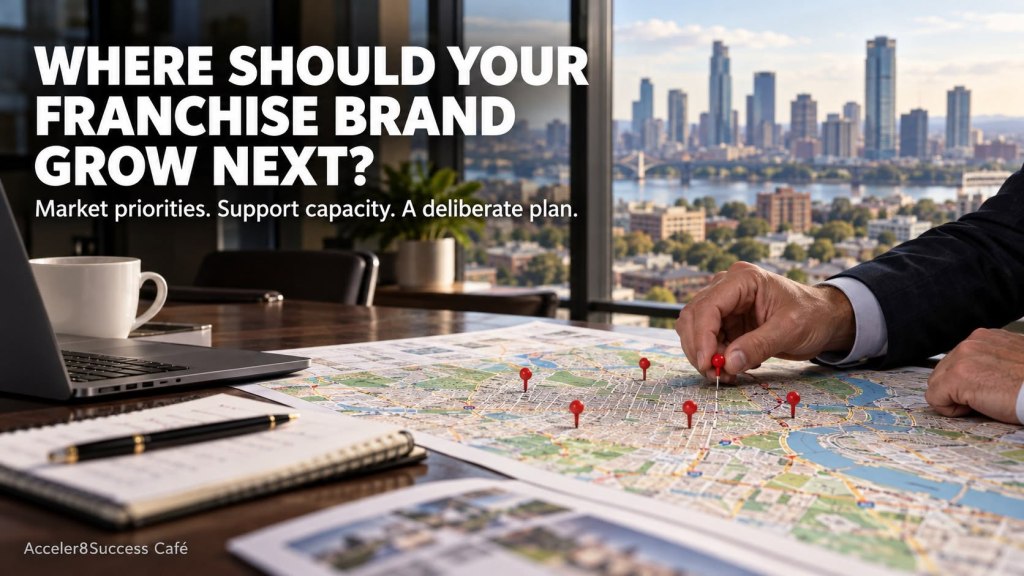
There is a moment in the life of an emerging franchise brand when interest from a prospective franchisee can feel like confirmation that everything is finally coming together. The business has been prepared for franchising. The investment has been made. The opportunity has been introduced to the marketplace. Someone sees the potential and wants to become part of the vision.
Then comes the question: Where would you like to open?
For too many emerging brands, that question arrives before leadership has sufficiently answered a more consequential one: Where should we be growing?
In my recent op-ed, “What Is Your Franchise Sales & Development Company Really Doing for Your Emerging Franchise Brand?,” I challenged founders to examine how their development efforts connect franchise recruitment with building a stronger system. Market selection deserves particular attention because every award creates obligations that extend well beyond the sales process.
The location of your next franchise will influence how you train, support, supervise, supply, and communicate with its owner. It will affect the demands on your leadership team and the resources available for the franchisees who follow.
Before celebrating the next award, you should understand what its geography will require of your organization.
National Ambition Requires a Practical Starting Point
Most founders do not enter franchising with a modest vision. They see opportunities in other cities, other states, and eventually across the country. That ambition can provide the energy needed to move through the difficult work of building a franchise organization.
But ambition needs a sequence.
A brand can aspire to national recognition while concentrating its next stage of development in one metropolitan area or a manageable region. That focus gives leadership an opportunity to learn how the concept performs under different owners, strengthen training, refine support, and establish the relationships needed for continued expansion.
Think about a founder who has operated two successful restaurants in one market. Those restaurants may benefit from the founder’s personal relationships, daily involvement, reputation, and ability to solve problems quickly. Moving into franchising changes the operating arrangement. Moving into a distant market adds another layer of complexity.
The founder’s familiarity with the original business does not automatically establish the organization’s ability to support a franchisee several states away.
The practical question is what the brand must demonstrate, build, and resource before taking that step.
A Map of Signed Agreements Can Conceal a Support Problem
Imagine two emerging franchise brands, each with six newly awarded locations.
One has concentrated those awards within a region its leadership team can visit regularly. The other has awarded locations across six distant markets. Viewed through a sales report, the brands may appear to have made similar progress.
Viewed through the work ahead, they face different demands.
The dispersed brand may need to coordinate separate real estate relationships, supplier arrangements, training trips, local marketing efforts, and opening schedules. A problem in one market can compete for attention with an opening in another. Leadership may spend substantial time traveling while the home-office team tries to keep development moving.
The concentrated brand still faces significant challenges. Proximity does not fix inadequate training, weak unit economics, or poor franchisee selection. However, it may make hands-on support more practical and allow the organization to develop deeper familiarity with the markets it serves.
Geographic concentration also has limits. Too many locations in a poorly understood trade area can create competition within the system. Concentration must be supported by demand analysis, appropriate spacing, and thoughtful opening schedules.
A development map should show more than where agreements have been signed. It should help leadership understand whether the resulting businesses can form a viable, supportable system.
Support Capacity Belongs in the Market-Selection Discussion
Founders often evaluate new markets by looking at population, household income, competition, and the apparent appeal of the concept. Those considerations matter. So does the organization’s ability to deliver what franchisees will need.
Who will conduct initial training? Who will assist with opening preparation? Who will visit when an operator struggles? Who will help adapt approved marketing to local conditions? What happens when two franchisees need intensive assistance at the same time?
These questions should influence market priorities before candidates receive enthusiastic assurances about territory availability.
An organization with a small leadership team and limited field support may need a different geographic approach than one with experienced regional personnel. A restaurant concept with complex opening requirements may need a different rollout sequence than a business with a simpler launch process.
Support capacity can grow. It should grow deliberately, with responsibilities, staffing, and funding connected to the development plan.
If the strategy assumes that resources will somehow become available after agreements are signed, leadership should examine that assumption carefully. Franchisees will be preparing to invest, hire, and open on their own timelines. They need an organization prepared to meet its commitments.
Market Planning Should Begin Before Lead Generation
When franchise recruitment begins without defined market priorities, candidate interest can gradually become the expansion strategy.
An inquiry arrives from one state. Another prospect asks about a distant metropolitan area. A broker introduces someone interested in a territory leadership has never seriously evaluated. Each conversation seems worth pursuing, especially when the brand needs its first awards.
Over time, the organization may find itself considering a collection of opportunities with little connection to one another.
Preliminary market planning gives those conversations a clearer purpose.
For a restaurant brand, that work may include examining residential growth, employment centers, customer demand, traffic patterns, competitive concepts, labor availability, and occupancy costs. It should consider the brand’s format, customer profile, investment requirements, and operating needs.
A market with substantial population growth may still present challenges if suitable sites are scarce, rents undermine the model, or the labor requirements are difficult to meet. A smaller market may merit attention if the customer fit and operating conditions are stronger.
Preliminary planning cannot establish the suitability of every site or guarantee performance. It provides a reasoned basis for determining where to focus further work.
With that foundation, recruitment can pursue candidates capable of executing a defined plan in approved markets.
A Territory Is a Commitment to an Operating Environment
A territory discussion often centers on boundaries, availability, and how much room exists for future units. Those issues matter, but the underlying operating environment deserves equal attention.
Two territories of similar size may offer very different opportunities. One may contain growing residential communities, accessible retail space, and customer patterns suited to the concept. Another may have fragmented demand, difficult access, or development costs that challenge the economics.
Leadership should understand the assumptions behind the territory’s appeal.
For multi-unit development, the analysis becomes more demanding. A candidate’s willingness to commit to several locations does not establish that appropriate sites can be secured or that openings can be completed on the proposed schedule.
Real estate availability, construction timelines, management recruitment, and phased capital needs should inform the commitment.
The market plan, the candidate’s capabilities, and the development schedule must be considered together. Each affects the feasibility of the others.
Recruit Broadly While Developing Deliberately
A focused geographic strategy does not require a narrowly geographic recruitment strategy.
The right candidate for a priority market may live elsewhere. An experienced franchise operator may already have businesses and management resources in that region. A development group may be seeking a complementary concept. An entrepreneur may be planning a relocation and have a credible path to local operating involvement.
Where a candidate lives and where the brand should develop are separate questions.
A development partner should be able to explain the market priorities clearly while reaching candidates whose experience and resources fit the assignment. That requires understanding who will operate the business, how the ownership group will establish a local presence, and what responsibilities must be fulfilled before opening.
Candidates interested in future markets can remain part of a longer-term pipeline. However, expectations should be clear. Interest should not be allowed to create the impression that a territory is approved or that expansion timing has been established.
Broad recruitment is useful when it helps the brand execute its strategy.
Sequence Openings Around What the System Can Absorb
Even within an approved market, the pace of development matters.
Several signed agreements may create an encouraging pipeline. Several simultaneous openings may overwhelm the same organization.
Training teams have limits. Opening support has limits. Leadership attention has limits. New franchisees may need assistance at precisely the moment another location requires an intensive launch effort.
A practical rollout plan considers these competing demands.
For example, an early opening may provide lessons that improve training or launch preparation for subsequent locations. Leadership may discover that a supplier arrangement needs refinement or that a marketing approach requires adjustment. A thoughtful sequence creates room to incorporate those lessons.
That does not mean every brand should adopt the same opening schedule. It means the schedule should reflect the work required, the people available, and the readiness of each operator.
An award creates a development obligation. An opening puts the operating model to the test. The strategy needs to account for both.
Establish Conditions for the Next Stage of Expansion
Geographic focus becomes more useful when leadership also defines what would justify expanding beyond it.
Those conditions might include evidence that franchisees can operate effectively using the established systems, that support responsibilities are being fulfilled consistently, and that the organization has the personnel and resources needed for additional markets.
Leadership should also consider what it has learned from the first development cluster. Were site assumptions sound? Did openings follow realistic timelines? What assistance did franchisees need beyond what had been anticipated? Which parts of the model depended too heavily on the founder?
The answers can guide the next stage.
Performance in one region does not guarantee performance in another. It can, however, provide a more informed basis for deciding what needs to be evaluated or adapted before expansion proceeds.
The decision to enter a new market should follow a readiness discussion, supported by operating experience and a clear plan for additional obligations.
Your Development Partner Should Be Able to Explain the Geography
If your franchise sales and development company recommends a market, ask for the reasoning.
Why does this market fit the concept? How does it connect with existing operations? What work has been completed to understand demand and development conditions? What would the award require from your team? How does the candidate’s operating plan fit those requirements?
The answers should be specific enough to support a decision.
At Acceler8Success America, we believe market priorities, candidate targeting, development structure, and support readiness should be considered together. The recruitment effort should reflect the business the franchisor is building and the responsibilities that growth will create.
Founders should expect their development partner to help make those connections visible.
Leadership retains responsibility for approving the strategy and making award decisions. A capable partner provides the analysis, coordination, and candid discussion that help leadership exercise that responsibility thoughtfully.
Final Thoughts
The next franchise award can feel like a milestone because it is one. Someone has chosen to invest in your brand and participate in its future.
That decision deserves a development strategy worthy of the commitment.
Before you sell the next franchise, decide where your brand should grow. Understand why that market fits, what the operator will need, how the opening will be supported, and how the location contributes to the system you intend to build.
You may discover that the strongest next move is closer to home than expected. You may identify a compelling opportunity farther away. Either conclusion should emerge from a deliberate evaluation of the market, the candidate, and your organization’s readiness.
National growth can remain the vision. Every next step should have a practical reason behind it.
When a prospective franchisee asks whether a territory is available, your answer should reflect more than an open space on a map. It should reflect a plan.
Let’s examine what your franchise development effort is building.
Acceler8Success America offers a complimentary consultation for emerging franchise brands to discuss market priorities, candidate targeting, development readiness, and the work needed to support their next stage of growth.
As part of that consultation, you can receive an actual proposed scope of work, redacted to protect the brand’s identity and confidential information, so you can review the level of planning, execution, and accountability a focused franchise sales and development engagement can include.
Email paul@acceler8success.com with the subject line “Emerging Franchise Brand Consultation,” or call or text (832) 797-9851.
Bring your growth goals, current development challenges, and questions. Let’s discuss a practical path forward for your brand.
This is the first article in a four-part Acceler8Success Café series expanding on “What Is Your Franchise Sales & Development Company Really Doing for Your Emerging Franchise Brand?.”
Discover more from Acceler8Success Cafe
Subscribe to get the latest posts sent to your email.

One thought on “Before You Sell the Next Franchise, Decide Where Your Brand Should Grow”
Comments are closed.