Tag: Restaurants

The 30-Second Brand Test: Could Your Team Explain Your Brand?

Walk into almost any franchise, restaurant, or independent business and start the conversation with:

“Please, tell me about your brand.”

Not what products you sell.
Not what services you offer.
Not your slogan.
Not your menu.

Tell me about your brand.

In many cases, the answer becomes uncertain, overly complicated, inconsistent, or completely different depending on who you ask.

That’s a problem.

Because if the people inside your organization cannot clearly articulate who you are in 30 seconds, how can customers, clients, suppliers, bankers, vendors, investors, or future employees truly understand what your business stands for?

Every person in an organization should be able to explain the brand quickly, clearly, and confidently.

Not memorized like a robotic script.
Not sounding like a corporate commercial.

But with genuine understanding and belief.

That 30-second explanation is more than a pitch.
It’s culture in motion.

A strong brand explanation creates alignment throughout an organization. It creates consistency in communication, decision-making, customer experience, hiring, leadership, and growth. Most importantly, it helps people understand the bigger purpose behind what they do every day.

Think about the different perspectives inside a business.

A franchisor may describe the brand as a proven system designed to help entrepreneurs succeed while delivering consistency to customers across multiple markets.

A franchisee may describe the same brand as an opportunity to build equity, support their family, create jobs, and become part of something larger than themselves.

A restaurant operator may explain the brand through hospitality, food quality, community connection, and operational discipline.

A manager may focus on leadership, culture, teamwork, and creating memorable customer experiences.

An employee may simply say:
“We genuinely care about people and work hard to make every guest feel welcome.”

Different perspectives.
Same brand.

That’s the goal.

The strongest organizations are not built because everyone says the exact same words. They are built because everyone understands the same mission, values, identity, and purpose.

That understanding becomes visible everywhere.

Customers feel it.
Clients recognize it.
Suppliers respect it.
Bankers gain confidence in it.
Future employees are attracted to it.
Communities connect with it.

And perhaps most importantly, internal culture becomes stronger because people stop feeling like they are simply performing tasks and start feeling like they are contributing to something meaningful.

This becomes especially important in franchising and hospitality where customer experience is everything.

A franchise system may spend millions on marketing, branding, operations manuals, and technology. Yet one confused or disconnected employee interaction can weaken the entire customer perception of the brand.

Why?

Because brands are not built by logos alone.
Brands are built by people.

Every conversation matters.
Every interaction matters.
Every explanation matters.

That includes conversations outside the business as well.

Imagine a banker asking a franchisee:
“So tell me about your business.”

Imagine a supplier asking a restaurant manager:
“What makes your company different?”

Imagine a customer asking an employee:
“What are you guys really about here?”

Those moments matter far more than many organizations realize.

The businesses that grow strongest over time are often the ones where clarity exists throughout the organization, not just at the executive level.

The beauty of a strong 30-second brand explanation is that it creates simplicity.

And simplicity creates confidence.

When people clearly understand the brand, they communicate more effectively.
They represent the organization better.
They become more engaged.
They make stronger decisions.
They carry themselves differently.

That confidence spreads externally as well.

Customers feel reassured.
Partners feel aligned.
Communities feel connected.

This is one of the earliest and most important foundations of culture building.

Not forced culture.
Not motivational posters on walls.
Not corporate buzzwords.

Real culture.

Culture built through understanding.
Culture built through clarity.
Culture built through shared purpose.

If your organization struggles to articulate its identity in 30 seconds, it may be time to step back and redefine how the brand is communicated internally.

Because if your people cannot explain who you are, chances are the market may not fully understand either.

The good news is this can be developed, refined, strengthened, and taught throughout an organization.

And when it is, the impact can be transformative.

If you’d like to discuss developing your organization’s 30-second brand pitch and strengthening alignment throughout your company, franchise system, or restaurant organization, reach out to me via a direct message or by email to Paul@Acceler8Success.com. Visit our website at Acceler8Success.com.

Profits Follow Customers, Not the Other Way Around

Many of today’s brands are investing heavily in marketing, social media, technology, analytics, automation, and growth strategies. They are measuring impressions, engagement, market share, profitability, and shareholder returns. Yet as I observe the marketplace, I often find myself asking a simple question:

Have some brands lost sight of the very people who made them successful in the first place?

Their customers.

Of course, profitability matters. Every business must generate profits to survive, grow, invest, and reward stakeholders. No brand can exist without financial success. The challenge occurs when profitability becomes the primary objective rather than the natural outcome of creating value for customers.

It becomes a bit of a chicken-or-egg debate.

Do successful brands generate loyal customers because they are profitable, or do profitable brands exist because they have loyal customers?

My belief is straightforward.

The strongest brands are customer-centric brands.

Customers do not fall in love with balance sheets. They do not become loyal because a company exceeded quarterly earnings expectations. They do not advocate for a brand because executives successfully reduced operating expenses.

Customers become loyal because a brand consistently delivers on its promise.

That promise may be quality, convenience, value, service, innovation, hospitality, trust, or any combination thereof. Whatever the promise, customers expect brands to deliver it repeatedly.

The moment a brand begins placing profits ahead of that promise, customers notice.

Brands are built over years and often decades. They are built through thousands of interactions, experiences, and impressions. They are built through trust. Unfortunately, trust can be eroded much faster than it is built.

When brands focus too heavily on short-term profitability, subtle shifts begin to occur.

Product quality may decline.

Customer service may become less responsive.

Pricing may increase without corresponding value.

Policies may become more restrictive.

Customer concerns may become secondary to operational efficiencies.

The brand may still look the same on the outside. The logo remains. The marketing remains. The messaging remains.

But customers begin sensing that something has changed.

They feel less valued.

Less appreciated.

Less important.

And eventually, less loyal.

This is where many brands unknowingly enter a dangerous cycle. In an effort to increase profitability, decisions are made that negatively impact the customer experience. Customer satisfaction declines. Loyalty weakens. Customer acquisition costs rise. Marketing spend increases to replace lost customers. Profitability comes under pressure again, leading to even more cost-cutting measures.

The cycle repeats itself.

Meanwhile, truly customer-centric brands often move in the opposite direction.

They view every decision through the lens of the customer experience.

They understand that the brand does not belong solely to the company. The brand also belongs to the customer. It lives in the minds of consumers. It is reflected in every interaction, every purchase, every review, and every recommendation.

The most admired brands understand something many organizations forget.

Their brand is not their logo.

Their brand is not their slogan.

Their brand is not their advertising.

Their brand is the sum of every promise made and every promise kept.

That requires discipline. It requires leadership. It requires resisting the temptation to sacrifice long-term brand equity for short-term financial gains.

The strongest brands recognize that profitability and customer focus are not opposing forces. In fact, they are deeply connected. Customer loyalty creates recurring revenue. Recurring revenue creates stability. Stability creates profitability. Profitability creates opportunities for reinvestment and growth.

Everything begins with the customer.

Particularly in today’s marketplace, where consumers have endless choices and unprecedented access to information, brand loyalty must be earned continuously. Customers can compare alternatives instantly. They can share their experiences publicly. They can leave just as quickly as they arrived.

This places tremendous responsibility on brand leaders.

Whether you are leading a franchise brand, restaurant concept, retail chain, service business, startup, or legacy company, every strategic decision should begin with a simple question:

“How does this strengthen or weaken our relationship with the customer?”

The answer often reveals whether the decision is enhancing the brand or merely improving a financial metric.

The brands that will thrive in the years ahead will not necessarily be those with the largest budgets or the most sophisticated technology. They will be the brands that remain relentlessly committed to serving customers better than their competitors.

Because at the end of the day, customers are not simply part of the brand.

They are the reason the brand exists.

If you’re questioning whether your brand has drifted away from its customer-centric roots, or if you’re looking to strengthen customer loyalty, brand relevance, and long-term growth, I invite you to reach out to me via a direct message or by email to paul@acceler8success.com. Let’s discuss how customer-centric brand thinking may be impacting your business, restaurant, franchise, or brand, and explore strategies to build stronger customer relationships while achieving sustainable profitability.

Refranchising as a Growth Strategy for Restaurant Operators and Investors… Not Just for Franchisors

The restaurant industry continues to evolve at a rapid, almost frantic pace. Rising labor costs, operational complexity, shifting consumer behaviors, technology integration, delivery platforms, real estate pressures, and changing franchise economics are reshaping the landscape across virtually every segment of foodservice. At the same time, many franchise brands are quietly entering strategic periods of refranchising and experienced restaurant operators and investors should be paying close attention.

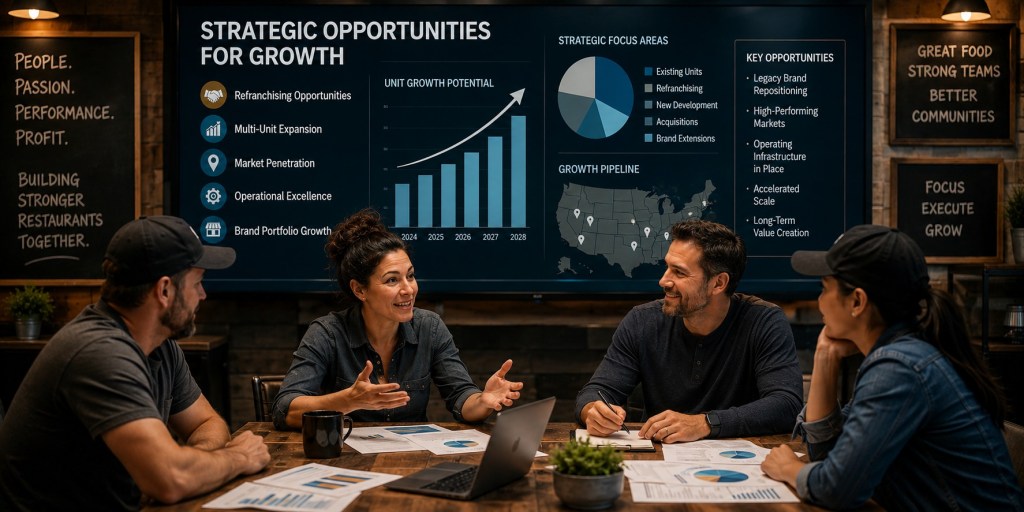
Strategic Entry: Why Refranchising May Outperform New Development

Much of the discussion surrounding refranchising is typically framed from the franchisor’s perspective. It is often discussed as a corporate strategy to reduce operational burdens, streamline company structures, improve balance sheets, focus on brand development, or accelerate growth through franchise expansion. While those factors are certainly important, there is another side of the equation that deserves far more attention.

For experienced operators, hospitality groups, multi-unit franchisees, and restaurant investors, refranchising can represent one of the most strategic pathways toward meaningful long-term growth.

Unlike traditional franchise development where operators start with a single new unit and gradually expand over time, refranchising opportunities frequently involve existing operating restaurants with infrastructure already in place. These restaurants often include trained staff, operating systems, established customer bases, brand awareness, vendor relationships, existing sales history, and immediate market presence. For sophisticated operators, this creates the opportunity to accelerate growth from day one rather than spending years building from scratch.

That distinction matters.

The restaurant industry has become increasingly difficult for inexperienced operators entering independently. The cost of startup development, combined with permitting delays, construction expenses, labor shortages, and competitive saturation, can significantly extend the runway before profitability. Refranchising offers a different entry point. It allows experienced operators to focus less on creating operational foundations and more on improving performance, strengthening culture, increasing efficiencies, enhancing guest experience, and strategically scaling.

In many ways, refranchising rewards operational excellence.

Strong operators often see opportunities where others see challenges. An underperforming restaurant may simply require better leadership, improved systems, more disciplined cost controls, stronger local marketing, or enhanced community engagement. Experienced restaurant groups understand that restaurant success is rarely determined solely by the brand itself. Unit-level execution remains one of the greatest differentiators in the industry.

This is especially important in today’s environment where sophisticated operators are increasingly building portfolios rather than simply owning restaurants.

The rise of Multi-Unit Multi-Brand Operators, commonly referred to as MUMBOs, has dramatically reshaped the franchise restaurant landscape over the past decade. These operators are not approaching growth one restaurant at a time. They are building diversified operating platforms designed around scalability, infrastructure, leadership development, market density, and long-term enterprise value creation.

For MUMBOs, refranchising opportunities can be exceptionally attractive.

The Emerging MUMBO: Building a Portfolio Before the Spotlight

Acquiring existing operating restaurants within established brands allows sophisticated operators to integrate new units into existing infrastructures far more efficiently than startup development. Shared leadership teams, regional management structures, centralized recruiting, training systems, accounting departments, technology platforms, marketing support, supply chain leverage, and operational oversight can often be expanded across newly acquired units with significant efficiency gains.

This creates operational leverage.

Rather than building entirely new infrastructures for each growth initiative, experienced MUMBO groups can strategically layer additional brands and locations into existing operational ecosystems. In many cases, the addition of complementary brands can improve utilization of leadership talent, commissary operations, distribution networks, marketing capabilities, and administrative support systems.

MUMBO operators also understand the value of diversification.

Different brands can offset varying economic cycles, dayparts, demographics, consumer preferences, and real estate profiles. A diversified portfolio may include fast casual, QSR, polished casual, beverage concepts, breakfast brands, or specialty dining segments operating within the same geographic markets. Refranchising often provides access to established legacy brands with strong historical consumer awareness, creating additional opportunities for operational turnaround, modernization, repositioning, and renewed growth.

For many sophisticated operators, refranchising is no longer simply an acquisition strategy.

It is an enterprise-building strategy.

The most successful restaurant groups are thinking strategically about density, infrastructure, logistics, leadership development, and market saturation. They understand the advantages of clustering units within geographic regions to improve operational oversight, reduce distribution inefficiencies, strengthen recruiting efforts, enhance training systems, and maximize marketing effectiveness. Refranchising opportunities can fit exceptionally well within these long-term development strategies because they often allow operators to acquire multiple locations simultaneously within established markets.

That creates scale much faster.

Scale matters in restaurants. Purchasing power improves. Shared management becomes more effective. Technology integration becomes more efficient. Marketing becomes more impactful. Talent development strengthens. Vendor negotiations improve. Regional brand awareness expands. Unit economics often improve as operational systems mature across multiple locations.

For investors entering the restaurant space, refranchising can also provide a more measured and strategic path toward growth compared to speculative startup concepts. Existing operating units offer real operational history, real consumer behavior patterns, and real financial performance metrics that can be evaluated during due diligence. While every acquisition still carries risk, refranchising opportunities frequently provide far greater visibility into operational realities than brand-new development projects.

Equally important, refranchising can become a cornerstone of a much broader long-term development strategy.

Many experienced operators use refranchising as the initial foundation for future expansion. Acquiring existing restaurants creates immediate operational infrastructure that can later support additional new development. Leadership teams are built. Training systems are refined. Market knowledge deepens. Supply chain efficiencies emerge. Once a solid operational base is established, operators are often in a far stronger position to strategically add new units within surrounding trade areas.

In essence, refranchising can become the bridge between acquisition and long-term expansion.

This is particularly relevant today as many legacy restaurant brands continue reevaluating corporate ownership structures while simultaneously seeking experienced operators capable of elevating market performance. Brands increasingly understand that the right franchisee is often more important than maintaining company ownership of restaurants. Sophisticated operators who possess strong operational disciplines, hospitality culture, financial resources, and long-term vision are becoming highly valuable strategic partners within franchise systems.

The most successful refranchising groups are not simply buying restaurants.

They are building regional operating platforms.

They are creating scalable infrastructures capable of supporting continued growth for years to come. They are approaching acquisitions with long-term vision rather than short-term transactional thinking. They are identifying brands, markets, and operational opportunities that align with broader strategic objectives.

And perhaps most importantly, they understand that restaurants remain a people business.

Operational systems matter. Technology matters. Financial discipline matters. But culture, leadership, hospitality, consistency, and execution continue to separate average operators from exceptional ones.

Refranchising is not for everyone. It requires experience, capital, operational sophistication, patience, and strategic discipline. But for the right operators, investors, and MUMBO groups, refranchising can represent far more than simply acquiring restaurants.

It can become one of the most effective long-term growth strategies in modern restaurant franchising.

As more brands continue restructuring and optimizing their systems over the next several years, experienced operators who position themselves strategically today may find themselves at the center of some of the industry’s most compelling growth opportunities tomorrow.

Acceler8Success America is currently representing a number of refranchising and strategic restaurant growth opportunities involving established legacy brands in multiple markets across the United States. These opportunities may include existing operating restaurants, multi-unit packages, development opportunities, and strategic market expansion initiatives designed for experienced operators, hospitality groups, franchisees, and qualified investors seeking long-term growth.

For more information regarding current refranchising opportunities, strategic partnerships, or confidential discussions regarding restaurant acquisitions and expansion opportunities, visit Acceler8Success America or connect directly with me via a direct message or by email to paul@acceler8success.com.

Updated Advertisement:

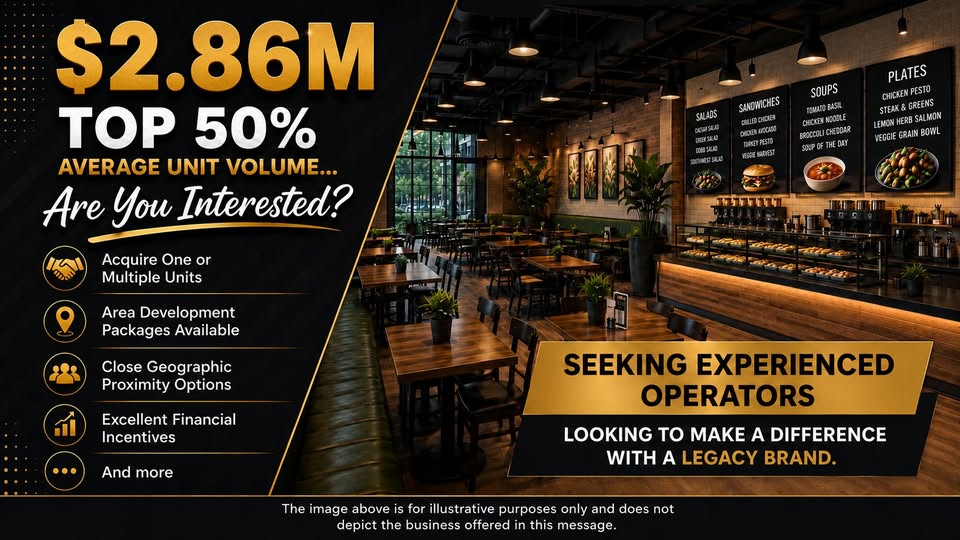
Acceler8Success America is representing a legacy fast casual restaurant brand in connection with a rare multi-unit acquisition and growth opportunity for experienced operators, hospitality groups, and qualified investors seeking strategic expansion.

This opportunity includes established operating restaurants in major U.S. markets with strong brand awareness, loyal customer bases, existing infrastructure, and immediate operational presence, allowing qualified groups to accelerate growth from day one rather than build from scratch.

The opportunity also presents the ability to strategically add multiple locations to existing portfolios while positioning for future market expansion and long-term scalability.

We are seeking serious discussions with qualified groups that possess the operational expertise, financial capability, and strategic vision to capitalize on this unique growth opportunity.

Confidential inquiries are welcome via direct message or by email to paul@acceler8success.com.

The Reality Behind Today’s Restaurant Closures

Over the past few weeks, I learned about several more local restaurants closing their doors. At the same time, I came across reports of additional closures happening throughout the country; seemingly every week, another independent operator, another franchisee, another family-owned establishment quietly disappears.

After more than 40 years in franchising and the restaurant business, these stories affect me differently than they once did.

Perhaps it comes with experience. Perhaps it comes from having lived through economic cycles, operational challenges, labor shortages, changing consumer behavior, inflationary pressures, industry disruption, and the emotional highs and lows that come with entrepreneurship itself. Or perhaps it simply comes from understanding what most people never truly see behind the walls of a restaurant.

Because when a restaurant closes, it is rarely just about food.

It is about people.

It is about years of sacrifice. Long days. Sleepless nights. Missed family moments. Financial risk. Personal guarantees. Emotional investment. It is about owners who often carried the weight of dozens of employees and their families on their shoulders while simultaneously trying to protect their own.

What many customers experience as a meal, a gathering place, or a convenient stop during their day, restaurant owners experience as responsibility.

Constant responsibility.

And for many operators today, that responsibility has become overwhelming.

I often find myself thinking about what happens during those final months leading up to a closure. The conversations owners have behind closed doors. The difficult decisions delayed as long as possible. The internal battles between pride, perseverance, exhaustion, and reality.

How many owners continued smiling in front of guests while privately wondering how payroll would be met?

How many delayed paying themselves to protect employees?

How many refinanced homes, depleted savings, borrowed from retirement accounts, or sacrificed personal stability simply trying to buy more time?

And perhaps the most difficult question of all:
At what point does resilience quietly become survival?

The restaurant industry has always been demanding, but the past several years have changed the emotional landscape of ownership entirely. For many, the struggle never truly ended after Covid. Operators adapted, pivoted, survived, rebuilt menus, changed labor models, embraced technology, renegotiated leases, adjusted hours, and found creative ways to continue moving forward.

But survival comes at a cost.

And eventually, even the strongest operators begin asking themselves difficult questions.

How much more can I give?

How much more uncertainty can my family absorb?

Is continuing to fight still strategic… or simply emotional?

There is a misconception that restaurant owners simply “walk away” when a business closes. In my experience, that is almost never the case. Most owners fight far longer than they should. They hold on because they believe in the business, their employees, their customers, and the responsibility they feel to everyone connected to it.

Until eventually, time runs out.
Or capital runs out.
Or energy runs out.
Or perhaps most quietly and painfully… the fight itself runs out.

And honestly, after decades in this business, I can tell you this with certainty:
That reality never becomes easier to witness.

What concerns me most today is not simply the number of closures. It is what these closures may be telling us about the broader state of entrepreneurship, small business ownership, franchising, commercial real estate, labor economics, and the emotional sustainability of ownership itself.

Are we reaching a point where too many operators are carrying too much alone?

Have we created an environment where independent operators and franchisees are expected to continuously absorb rising costs, operational complexity, staffing instability, and economic pressure without enough meaningful support?

And perhaps most importantly:
How many owners are silently struggling right now while outwardly appearing “fine”?

These are not easy conversations, but they are necessary ones.

Because behind every closure is a story few people will ever fully understand.

A family affected.
An entrepreneur exhausted.
A dream interrupted.
A chapter closed.

Let’s Talk About It

If you are an independent restaurant owner or franchisee currently facing challenges, please know that asking for perspective, guidance, or simply a confidential conversation is not weakness. In many cases, it may be the most important business decision you make.

Sometimes clarity comes not from having all the answers, but from finally having an honest conversation about the questions.

What are your real options?
What can still be saved?
What needs to change?
What are you holding onto emotionally versus strategically?
And what would a healthier path forward actually look like?

If you need someone to discuss next steps with, please feel free to reach out to me directly via direct message or by email at paul@acceler8success.com. All conversations and information will remain completely confidential.

Please don’t hesitate.

The Emerging MUMBO: Building a Portfolio Before the Spotlight

The acronym sounds big. It feels institutional. It carries the weight of scale, sophistication, and capital. The rise of the MUMBO. The Multi-Unit, Multi-Brand Operator has quickly become one of the most talked-about shifts in franchising and restaurant growth strategy.

We’re seeing portfolios come together in ways that would have been rare just a decade ago. Private equity firms are actively acquiring and assembling these platforms, creating diversified brand holdings with dozens, sometimes hundreds of units across concepts. Nine-figure deals are no longer outliers. In some cases, billion-dollar transactions are entering the conversation with surprising regularity.

But here’s the question worth asking. Is MUMBO only for the big players, or is there a version of this strategy that exists at the emerging level?

Because beneath the headlines and the capital raises, there is a quieter opportunity forming. One that may be far more accessible, and in some ways, more strategic for the right kind of entrepreneur.

Before going further, let me be clear. This is my perspective. My opinion, shaped by decades of experience in franchising, restaurants, and working alongside entrepreneurs at every stage. There are many ways to approach growth. This is one I believe deserves serious consideration.

The Emerging MUMBO

An emerging MUMBO doesn’t look like a private equity-backed platform with 200 locations. It may look like an operator with four or five brands, each with three to five units. It’s smaller, more hands-on, less institutional. But that doesn’t make it less meaningful. In fact, it may be one of the most practical paths to building a diversified and resilient portfolio in today’s market.

While not a Multi-Unit Multi-Brand Operator, the closest high-profile example is Gregg Majewski and his success developing Craveworthy Brands. While the scale at this multi-brand franchisor exceeds what we’d call “emerging,” the philosophy is similar. Multiple brands. Shared infrastructure. Strategic growth. Portfolio thinking.

The difference is that emerging operators don’t start with capital. They start with discipline.

Why This Model Matters Now

Single-brand, single-unit ownership has always carried risk. Market shifts, operational challenges, brand stagnation, or simple saturation can limit growth or create vulnerability. At the same time, going “all in” on a single brand with aggressive multi-unit development can expose an operator to concentrated risk.

An emerging MUMBO approach introduces diversification early. Not as a luxury, but as a deliberate strategy.

Different brands serve different dayparts. Different customer segments. Different real estate profiles. One brand may thrive in dense urban corridors. Another in suburban retail strips. One may be highly operationally intensive. Another more streamlined.

When done right, the portfolio begins to balance itself.

But that only works if it’s built with intention.

What It Actually Takes

There’s a tendency to think in terms of “adding brands.” That’s the wrong starting point. The real work is building a platform that can support multiple brands without collapsing under complexity.

The operator has to think like a portfolio manager, not just a franchisee.

It starts with infrastructure. Shared services become critical; accounting, HR, marketing, supply chain coordination, technology platforms. Without this foundation, managing even two brands can feel chaotic. With it, five brands can begin to operate with cohesion.

Then comes leadership. You cannot run every unit. You cannot be the operating system. An emerging MUMBO must invest early in people; general managers, district leaders, and eventually brand-level oversight. The bench has to be built before it feels comfortable to do so.

Capital discipline becomes non-negotiable. Growth cannot be driven by excitement. It must be driven by unit economics. Each brand, each location, has to stand on its own merits. If a concept isn’t working, it has to be addressed quickly. Portfolio thinking does not mean carrying underperforming assets indefinitely.

Brand selection may be the most overlooked piece. Not all brands belong in the same portfolio. Some compete for the same customer. Others require entirely different operational DNA. The emerging MUMBO has to be selective… choosing brands that complement rather than conflict.

And then there is patience.

This is not a sprint to ten brands. It is a disciplined progression from one brand to two, from two to three, with each addition strengthening, not weakening the overall structure.

Not So Different After All

There’s an important point that often gets overlooked in this conversation. This model is not much different than a seasoned restaurateur opening or acquiring five or six independent restaurants over time.

For decades, successful operators have built small portfolios of independent concepts, sometimes different cuisines, different service styles, different locations, all under one umbrella. They didn’t call it MUMBO. They called it building a restaurant group.

The difference today is largely structural. Franchising provides brand systems, operating frameworks, and scalability. But the core principle remains the same.

Build multiple revenue streams. Diversify thoughtfully. Operate each unit with precision.

And most importantly, do not confuse access to capital with a strategy.

Too many ventures, large and small, fall into the trap of believing growth can be bought. That capital alone will solve operational challenges. My belief is the opposite.

Capital can accelerate a well-run operation.

It cannot fix a poorly run one.

Operational Excellence… Bar None

If there is one belief I hold above all else, it’s this: operational excellence is non-negotiable. Bar none.

Without it, a multi-brand portfolio doesn’t diversify risk… it multiplies it.

An emerging MUMBO cannot hide behind brand names, marketing, or even strong locations. Execution at the unit level is everything. Consistency. Cleanliness. Speed. Hospitality. Food quality. Team engagement. These are not “nice to haves.” They are the foundation.

And this is where I believe we can take a page from the playbook of Tilman Fertitta, the sole owner and CEO of Fertitta Entertainment, Inc., which owns the restaurant giant Landry’s, Inc., the Houston Rockets, and the Golden Nugget Hotel and Casinos. He is a reality TV star, New York Times Best-selling author, speaker, frequent guest on popular TV business networks and is recognized as a world leader in the dining, hospitality, entertainment, and gaming industries.

Fertitta has built the Landry’s empire not just by acquiring strong assets, but by identifying underperforming ones and turning them around through disciplined operations and a relentless focus on the guest experience. He understands that value is often created not in what you buy, but in how you operate what you own. Learn more in his best-seller, Shut Up and Listen!: Hard Business Truths that Will Help You Succeed

For an emerging MUMBO, this mindset is powerful.

There will be opportunities to acquire struggling units or underperforming locations within good brands. The instinct may be to avoid them. My belief is that, with the right operational discipline, those can become some of the most valuable assets in the portfolio.

But only if you can deliver consistently positive, memorable experiences.

That’s the standard.

The Strategic Advantage

An emerging MUMBO who builds correctly creates optionality.

They are not dependent on a single franchisor. They are not locked into one growth path. They can allocate capital where returns are strongest. They can shift focus based on market conditions. They can become attractive to larger platforms or private equity groups looking for well-structured, diversified operators.

In time, they may become the very portfolios that are being acquired today.

But more importantly, they build something durable.

Because the goal is not just scale. It’s sustainability.

A Different Way to Think About Growth

For decades, the conversation in franchising has centered around “more units.” More locations within a brand. More territory. More buildouts.

The MUMBO model challenges that thinking. It introduces a new question.

Not just how many units, but of what mix, under what structure, and toward what long-term objective.

For the emerging entrepreneur, this is an invitation. Not to chase scale prematurely, but to build intelligently. To think beyond a single brand. To approach growth as a portfolio from the very beginning.

It requires a shift in mindset. From operator to architect.

From unit growth to enterprise design.

That shift may very well define the next generation of successful franchise operators.

And the ones who get it right at the emerging level won’t just participate in the MUMBO conversation.

They’ll shape where it goes next.

Final Thought and Invitation

As MUMBO continues to emerge as a major trend and increasingly popular topic within franchising and restaurant growth, I genuinely look forward to hearing your insight and perspective.

Of course, if you’re thinking about growth, whether that means your second unit, your second brand, or something more ambitious, I’d welcome that conversation, as well. After all, there is no one-size-fits-all path here. But there is a right path for you, your goals, and your vision.

Please feel free to reach out directly via direct message or by email at paul@acceler8success.com.

The Revolving Door in Restaurants Often Has Nothing to Do With Pay

I recently came across a question in a restaurant operator group on Facebook from an owner frustrated over constant turnover, particularly among line cooks. It’s a conversation happening everywhere in the restaurant industry right now.

Operators are exhausted.

Applications are inconsistent. Employees leave without notice. Kitchens become unstable. Management grows frustrated. Owners begin believing that “nobody wants to work anymore.”

But perhaps the better question is this:

Why don’t people want to work there?

My response to the operator was simple:

“I’d suggest taking a long, hard look at the culture of your business. Does your entire staff truly feel like they’re part of the business? Do their opinions matter? Are their concerns heard and addressed? Are they encouraged to express creativity and take pride in what they do?

If not, you’ll likely continue dealing with a revolving door of employees.

Yes, we may be talking about line cooks, but they’re human beings with a strong sense of pride and purpose. That pride has to be nurtured, respected, and fed.”

The reality is this:

Most restaurant operators dramatically underestimate the importance of culture at the hourly employee level.

Too often, culture is discussed only in terms of management teams, executive leadership, or corporate vision statements framed on walls nobody reads.

Meanwhile, the line cook working six nights a week in extreme heat feels invisible.

The prep cook who has a better system for improving efficiency is never asked for input.

The dishwasher who never misses a shift feels nobody notices.

And eventually, they leave.

Not always because of money.

Not always because of hours.

Not always because of the workload.

They leave because people want to feel valued.

Especially in restaurants.

Restaurant work is hard. It’s physical. It’s emotional. It’s stressful. It demands teamwork, urgency, accountability, and consistency every single shift. Yet many operators unintentionally create environments where employees feel more like replaceable labor than valued contributors.

That becomes dangerous.

Because once employees emotionally disconnect from the business, turnover becomes inevitable.

Culture is not free meals.

It’s not motivational posters.

It’s not an employee-of-the-month plaque.

Culture is how people feel when they walk into your building every day.

Do they feel respected?

Do they feel heard?

Do they feel leadership cares about them as individuals?

Do they feel they can grow?

Do they feel trusted?

Do they feel pride in where they work?

Those questions matter more than most operators realize.

Particularly with kitchen employees.

Great line cooks often carry enormous pride in their craft. They care about timing, consistency, presentation, execution, and teamwork. Many genuinely love the intensity and rhythm of a kitchen. But if leadership creates an environment where they are constantly criticized, ignored, overworked, or treated as disposable, that pride eventually disappears.

Once pride disappears, performance usually follows.

Then turnover follows shortly after that.

Ironically, many operators spend more time trying to recruit new employees than investing in retaining the ones they already have.

Retention starts with leadership.

Owners and managers must create environments where employees feel connected to something bigger than simply punching a clock.

That does not mean lowering standards.

In fact, strong culture and high standards often go hand in hand.

People generally rise to expectations when they feel respected, supported, and included.

The strongest restaurant cultures are usually built around a few simple realities:

Leadership is visible and engaged.

Communication is consistent.

Recognition is genuine.

Accountability applies to everyone.

Employees are treated with dignity.

Ideas and feedback are welcomed.

Pride is reinforced daily.

None of this guarantees perfection.

Restaurants will always experience turnover.

But there is a major difference between normal turnover and constant instability.

One is operational reality.

The other is often cultural failure.

Restaurant operators today are competing for more than customers.

They’re competing for people.

And the businesses that win long term will not necessarily be the ones paying the most.

They’ll be the ones building environments where people genuinely want to stay.

Because when employees feel valued, respected, challenged, appreciated, and connected to the mission of the business, they stop feeling like “workers.”

They begin feeling like part of a team.

And that changes everything.

If you’re a restaurant operator, franchisee, founder, or leadership team member struggling with turnover, culture challenges, operational inconsistency, or team engagement, perhaps it’s time for a different conversation.

Not just about labor.

But about leadership.

Not just about staffing.

But about culture.

Sometimes the issues facing a restaurant business are not operational at all. Sometimes they stem from deeper disconnects within the organization that leadership has either overlooked or simply become too close to see clearly.

I welcome the opportunity to have a direct conversation about your restaurant business, franchise organization, or brand.

Sometimes an outside perspective can help identify what’s really happening beneath the surface.

Feel free to reach out to me directly by email at paul@acceler8success.com to start a conversation.

What Happens When Restaurant Brands Stop Focusing on Experience

There comes a point in the life of some restaurant brands where the logo becomes more powerful than the actual experience.

The name is recognizable. The signage is familiar. The social media following is large. New locations continue to open. Remodels are announced with polished renderings and upgraded décor packages. Limited-time menu items generate headlines. Nostalgia campaigns bring back products people once loved years ago.

And yet…

Customers leave saying the food was “okay.”

Or worse:

“It’s not what it used to be.”

What makes this particularly fascinating is that many customers continue to visit these brands anyway. The parking lots are still busy. The drive-thru lines reamin steady. The app promotions continue to drive traffic. The brand itself has become a habit, a default option, or simply part of the cultural landscape.

But popularity and customer satisfaction are not always the same thing.

That distinction matters more than many restaurant companies may want to admit.

There are brands today operating on decades of accumulated awareness, historical relevance, convenience, and marketing momentum rather than consistently delivering memorable customer experiences. The logo carries the business further than the operations do.

That can work for a while.

But eventually, the gap between perception and reality becomes difficult to ignore.

You can often see the warning signs in plain sight.

A company announces a remodeled prototype with upgraded seating, digital menu boards, and modern lighting. Another launches a celebrity collaboration or introduces a seasonal menu item designed to create social buzz. Another leans heavily into value messaging because traffic has softened.

But what you rarely hear discussed publicly is this:

What specific operational improvements are being made to create a better customer experience?

Are food quality scores improving?

Is hospitality improving?

Are speed-of-service metrics improving without sacrificing quality?

Are online reviews becoming more positive?

Are customers becoming emotionally connected to the experience again?

Or are companies simply attempting to stimulate traffic while leaving the underlying operational issues untouched?

Because if the customer experience remains average, or inconsistent, then eventually the marketing begins functioning like a temporary stimulant rather than a long-term solution.

The challenge for many large restaurant brands is that awareness can disguise operational erosion for years.

A newer or smaller restaurant concept has no such luxury. If the experience is poor, customers disappear quickly. But legacy brands often continue surviving because familiarity itself carries value. Consumers know what the brand is. They grew up with it. They understand the menu. The locations are convenient.

In many cases, customers continue visiting despite disappointment rather than because of enthusiasm.

That is a dangerous position for any brand.

Especially in an era where consumers have more choices than ever before.

What makes the situation even more revealing is how often entirely new competitors seem to emerge almost out of nowhere and suddenly become more culturally relevant, more talked about, and ultimately more financially productive than long-established segment leaders.

A once-dominant restaurant chain may still possess thousands of locations, decades of history, and one of the most recognizable logos in America, yet newer brands begin climbing the rankings in average unit volumes while the former category leader quietly slips downward year after year.

And that decline rarely happens because consumers suddenly stopped recognizing the legacy brand.

It happens because consumers stopped being excited by it.

The newer competitor often delivers something the larger brand lost along the way:

Energy. Focus. Consistency. Experience.

Sometimes the food is simply better. Sometimes the hospitality feels more authentic. Sometimes the operations are tighter. Sometimes the restaurants feel cleaner, more current, or more emotionally connected to today’s consumer expectations.

The irony is that many of these emerging brands are operating with a fraction of the resources, locations, marketing budgets, and infrastructure of the legacy chains they are overtaking.

Yet they outperform them where it matters most.

Customer enthusiasm. And eventually, unit economics.

That is why average unit volume rankings can become such an important measure of true brand strength. They often reveal what marketing campaigns and traffic counts attempt to conceal.

Because consumers may visit a legacy brand out of habit once in a while…

…but they consistently spend money with brands they genuinely enjoy.

That distinction changes everything.

When newer restaurant concepts begin generating higher per-store revenues, stronger customer advocacy, better digital engagement, and greater cultural momentum, it signals that emotional relevance is shifting elsewhere.

The segment leader may still dominate in total locations or overall systemwide sales due to sheer scale, but the marketplace has already started voting differently.

And once consumer momentum shifts, it becomes incredibly difficult to reclaim.

Especially when emerging competitors are relentlessly improving while legacy brands remain overly focused on promotions, remodels, and short-term traffic drivers instead of rebuilding the operational and experiential foundation that created their success in the first place.

The restaurant industry has entered a period where experience matters as much as product. In some cases, even more. Customers are no longer simply buying food. They are buying convenience, consistency, emotional comfort, hospitality, speed, cleanliness, digital ease, atmosphere, and perceived value all at once.

When one or more of those components consistently breaks down, customers notice.

Even if they continue showing up.

The bigger problem emerges when management teams begin confusing traffic with brand health.

A busy restaurant is not always a beloved restaurant.

Strong sales generated through discounting, loyalty rewards, heavy advertising, or sheer market saturation can create the illusion of strength while underlying customer sentiment continues deteriorating.

And customer sentiment matters.

Because eventually consumer behavior changes subtly before it changes dramatically.

Customers visit less often.

They stop recommending the brand.

They choose competitors for certain occasions.

They no longer get excited.

The restaurant becomes transactional instead of emotional.

Once that happens, the brand slowly loses something extremely difficult to recover: relevance.

Ironically, many of the solutions are not always revolutionary.

Sometimes customers simply want hotter food, friendlier service, cleaner dining rooms, better-trained employees, fresher ingredients, or greater consistency from one location to another.

Sometimes they want leadership to spend less time creating the next promotional campaign and more time fixing operational fundamentals.

That may not generate flashy headlines, but it creates something much more valuable: trust.

And trust produces repeat business.

Trust produces stronger reviews.

Trust produces organic advocacy.

Trust produces pricing power.

Trust produces long-term brand equity.

Most importantly, trust creates memorable experiences that customers actually want to repeat.

Imagine the financial impact if a major restaurant chain that already possesses national awareness dramatically improved operational consistency and customer satisfaction across its system.

Not marginally.

Dramatically.

How many existing customers would visit more often?

How many former customers would return?

How many negative reviews would disappear?

How much additional revenue could be generated without relying so heavily on discounts and promotions?

How much stronger would franchisee profitability become?

How much more valuable would the brand become over the next decade?

Those are the questions that deserve more attention.

Because while logos may attract traffic, customer experience determines longevity.

And eventually, every restaurant brand reaches a moment where consumers decide whether they still love the experience… or merely recognize the sign.

The difference between those two realities can determine the future of an entire brand.

I’m curious how you see it as there are restaurant brands today with incredible histories, powerful recognition, prime real estate, and enormous resources that still have every opportunity to reclaim emotional connection with consumers. But doing so requires more than marketing. It requires operational honesty, leadership discipline, and a willingness to confront the real customer experience occurring every single day inside the restaurants.

Not the experience shown in the commercial.

The real one.

Because in the end, customers rarely build loyalty to logos.

They build loyalty to how a brand consistently makes them feel.

Again, how do you see it? What are your thoughts?

If you are a restaurant operator, franchisor, franchisee, investor, or entrepreneur who recognizes these challenges within your own organization, or simply wants to discuss how customer experience, operational consistency, and brand relevance impact long-term growth and unit economics, I welcome the conversation.

Reach out directly at paul@acceler8success.com.

The 1960s Restaurant Playbook: Timeless Lessons for Today’s Operators

There’s a tendency in today’s restaurant industry to believe that the challenges we face are new. Rising costs. Labor instability. Customer expectations that seem to shift by the day. Technology demanding constant attention. Margins tightening while competition expands.

Yet if you look back to the restaurants of the 1960s, you’ll find something striking. Many of the pressures existed in different forms, but the response from operators was fundamentally different. And in that difference lies a set of lessons that may be more relevant today than ever before.

In the 1960s, the restaurant operator was not hidden behind systems, reports, or layers of management. The owner was present. If he was the chef, he was often visible from the dining room. If not in the kitchen, he was on the floor, greeting guests, shaking hands, asking about meals, and building relationships. Customers didn’t just visit a restaurant. They knew who they were supporting.

Today, operators often find themselves buried in the back office or behind a screen, managing numbers instead of experiences. The lesson is simple, but not easy: visibility matters. Presence matters. The operator sets the tone not from a distance, but from within the experience itself.

Service, too, carried a different weight. Waiting tables was not seen as a temporary job or a stepping stone. It was a career. Many servers stayed at the same restaurant for decades. They knew the menu inside and out. They knew the regulars by name, their preferences, their families, their routines. There was pride in the role, and that pride translated directly into the guest experience.

And perhaps most importantly, waitstaff treated their positions like their own businesses. Their customers. Their tables. Their reputation. There was a sense of ownership that went far beyond taking orders and delivering food. Servers built personal followings. It wasn’t uncommon to hear someone say, “We’re going to see Tony tonight,” rather than referring to the restaurant itself. The relationship was personal, direct, and earned over time.

Contrast that with today’s environment, where turnover is high and consistency is often difficult to maintain. The takeaway is not that we can magically return to a 30-year server tenure, but that we can elevate the perception of the role. Training, respect, compensation structures, and culture must reinforce that working in a restaurant is meaningful work, not just transitional work. More importantly, operators should encourage that sense of ownership within the team. When a server feels like they are building something of their own within your business, everything changes.

Another overlooked aspect of that era was simplicity. Menus were often more focused. Operations were tighter. Execution was consistent because complexity was controlled. Restaurants didn’t try to be everything to everyone. They were known for something, and they delivered it well, day in and day out.

Today, in an effort to capture more customers, many operators expand menus, layer on options, and complicate execution. The result is often the opposite of what was intended. Slower service, inconsistent quality, and increased costs. There’s a lesson here in restraint. In discipline. In knowing what you do best and building around it.

Customer relationships were built over time, not transactions. There were no loyalty apps, no push notifications, no automated campaigns. Loyalty was earned face-to-face, meal after meal. A handshake. A conversation. A remembered name. A favorite dish prepared just right without being asked.

Technology today offers incredible advantages, but it should not replace the human connection that defined the industry decades ago. The opportunity is to use technology to support the experience, not become the experience.

There was also a strong sense of community. Restaurants were gathering places. Regulars didn’t just come for the food. They came for familiarity, for connection, for belonging. The operator understood this and nurtured it intentionally.

Today’s operators can still create that same sense of belonging, but it requires deliberate effort. It requires consistency in service, authenticity in interactions, and an environment that feels personal rather than transactional. Encouraging team members to build their own guest relationships, just as servers once did, is a powerful way to bring that feeling back.

Discipline extended beyond the dining room. Costs were watched closely. Waste was minimized out of necessity, not just strategy. Purchasing was thoughtful. Inventory mattered. There was a respect for the business side of the operation that matched the passion for hospitality.

While today’s operators have more sophisticated tools, the principle remains unchanged. Discipline in operations is not optional. It is foundational.

So what does this mean in practical terms for today’s restaurant operator?

Be present. Not occasionally, but consistently. Your team and your guests should feel your presence in the operation.

Elevate the role of your team. Invest in training, create pride in the work, and build an environment where people want to stay longer.

Encourage ownership at every level. Let your team feel like they are building their own business within your business.

Simplify where possible. Focus your menu. Tighten your execution. Do fewer things better.

Build real relationships. Technology can support this, but it cannot replace it.

Create a sense of community. Give customers a reason to return beyond the product itself.

Operate with discipline. Watch costs, manage inventory, and respect the fundamentals of the business.

None of this is revolutionary. In fact, that’s the point.

The fundamentals that defined successful restaurants in the 1960s are still the fundamentals today. What has changed is not what works, but how often it is overlooked.

The operators who recognize this, who reconnect with these principles while intelligently leveraging today’s tools, are the ones who will not just survive, but build something lasting.

Because while the industry evolves, the essence of hospitality never has.

If this resonates, take a step back and ask yourself a simple question. Where has your operation drifted from these fundamentals, and what would it look like to bring them back with intention? If you’re ready to explore that conversation, I invite you to reach out to me directly. Let’s talk about how to reintroduce these principles into your business in a way that drives both culture and performance.

Reactive vs. Proactive: The Restaurant Operator’s Choice on Slow Days

There’s a question every restaurant operator should ask themselves, especially on those slower-than-expected days…

If you feel like you can’t afford a bad sales day… why do you just stand around and let it happen?

It’s a tough question. But it’s a fair one.

Too often, operators accept a slow day as if it’s out of their control. Weather, timing, competition, the economy, foot traffic… the list of excuses is long and familiar. And while many of those factors are real, the response to them is what separates reactive operators from proactive ones.

A slow day doesn’t have to stay slow.

The difference is action. Immediate, intentional action.

A restaurant is one of the most dynamic businesses in existence. You have a product that can be promoted, positioned, bundled, discounted, enhanced, or reintroduced in real time. Yet many operators wait for business to come to them rather than going out and creating it.

Culture Is the Strategy: How Restaurants Win Before the First Order

Let’s talk about what creating it actually looks like.

Start with your database. If you have customer phone numbers, emails, or app users, you have a direct line to revenue. A simple flash offer sent via text can change the trajectory of your day. “Today only: Buy One, Get One Free from 2–5 PM.” Or “Free appetizer with any entrée before 6 PM.” These aren’t long-term margin plays, they’re immediate traffic drivers. The goal is to create urgency and give people a reason to act now, not later.

If you’re not using text marketing, you’re missing one of the most effective real-time tools available. Open rates are high. Response time is immediate. And when done correctly, it feels personal, not promotional.

But don’t stop there.

Your social media channels are not just for branding, they’re for activation. A quick post, a story, or even a short video from the kitchen can create energy. Show the product. Show the people. Show the moment. “We’re slow right now, and we won’t be for long… come see us.” Authenticity wins. Urgency wins.

Look inside your four walls as well. What can you do for the guests already in the building? A surprise bounce-back offer. A limited-time add-on. A server suggesting a shareable item or dessert with confidence and enthusiasm. Immediate revenue doesn’t always come from new guests, it often comes from maximizing the ones you already have.

Then there’s your team. Are they waiting for guests… or are they engaging them? Hospitality is not passive. It’s active. Train your team to recognize slow periods as opportunities, not downtime. Suggestive selling should never feel forced, but it should always be present. Energy in the dining room is contagious. If your team looks like they’re waiting for something to happen, your guests will feel it.

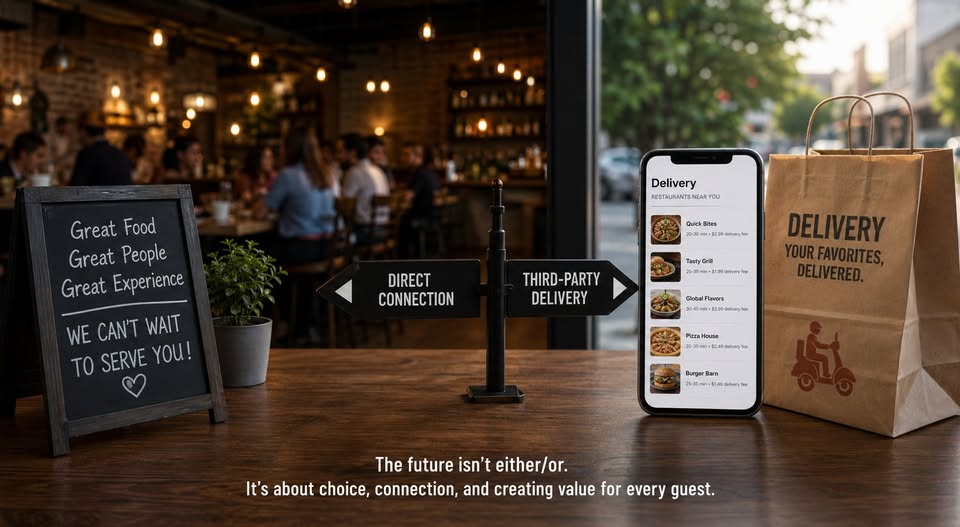
Think beyond the dining room, too. Third-party delivery platforms, your own online ordering system, catering outreach… all of these can be activated quickly. A targeted email or a quick call to local offices can generate same-day catering orders, especially if positioned as a limited-time opportunity.

And here’s one that’s often overlooked… partnerships. What nearby businesses can you tap into right now? A gym, a retail shop, an office building? A quick call or visit with a simple offer can drive immediate traffic. “Show your receipt from next door and get 10% off today.” It’s simple, but it works.

The common thread in all of this is urgency and intention.

You are not at the mercy of the day. You are a participant in it.

Yes, not every effort will turn a slow day into a record-breaking one. But doing nothing guarantees the outcome. Taking action, even imperfect action, creates possibility.

And over time, that mindset becomes culture.

A culture that doesn’t accept slow days… it challenges them.

So the next time you look at the clock, the empty tables, or the soft sales report and think, “We can’t afford this today,” ask yourself the question again…

If you can’t afford a bad sales day… why are you letting it happen?

Then do something about it.

If you’d like to discuss how to build systems, tools, and a proactive culture that drives consistent traffic and revenue in your restaurant, reach out. Let’s put a plan in place so that no day is left to chance.

Culture Is the Strategy: How Restaurants Win Before the First Order

Culture in a restaurant does not sit on a shelf waiting to be implemented. It shows up in the tone of a greeting, in how pressure is handled during a rush, in how a mistake is owned, and in how people treat one another when no one is watching. It is present in every interaction, every shift, every decision.

The question is not whether culture matters. The question is whether it can truly be taught and trained across an environment that is often fast-paced, high-pressure, and unpredictable.

It can. But only when culture is treated as something that is lived, coached, and reinforced continuously.

Culture begins with clarity. Not broad statements, but specific expectations. What does a positive attitude look like at 8:00 a.m. during prep versus 12:30 p.m. during a packed lunch rush? What does it mean to stay composed when a guest is unhappy? What does accountability look like when something goes wrong?

A positive attitude is not simply being upbeat. It is professionalism under pressure. It is choosing composure over frustration, solutions over excuses, and consistency over mood. This must be demonstrated, coached, and expected. Team members take their cues from what is tolerated. If negativity is ignored, it spreads. If positivity is reinforced, it becomes the standard.

Why Some Restaurants Thrive While Others Struggle in the Same Market

Open communication is another cornerstone. In too many restaurant environments, communication becomes reactive and transactional. Orders are called, problems are pointed out, and corrections are made. But true cultural alignment requires something deeper. It requires an environment where team members feel comfortable speaking up, asking questions, sharing concerns, and even challenging ideas respectfully.

When communication flows only one way, culture becomes rigid. When communication flows both ways, culture becomes resilient.

Encouraging interaction is equally important. Restaurants are built on human connection, yet many operations unintentionally limit it. Employees stay in their lanes. Departments become siloed. Front of house and back of house operate as separate worlds.

A strong culture breaks those barriers. It encourages interaction between team members, between management and staff, and between the restaurant and its guests. It creates moments where people feel seen, heard, and valued. That could be as simple as a manager checking in during a shift, a cook stepping out to connect with a guest, or a team member supporting another without being asked.

These interactions build trust. And trust is the foundation of any meaningful culture.

The role of the restaurant operator in all of this cannot be overstated. Culture does not belong to HR. It does not belong to a training manual. It belongs to leadership.

Operators set the tone, whether intentionally or not. Every reaction, every conversation, every decision communicates what truly matters. If an operator prioritizes speed over respect, the team will follow. If they tolerate poor behavior because someone is “good at their job,” the culture will adjust accordingly.

On the other hand, when an operator models calm under pressure, communicates openly, reinforces positive behavior, and holds the line on standards, the team aligns. Not perfectly, but progressively.

Operators must also create structure around culture. That means integrating it into onboarding, daily pre-shift meetings, ongoing training, and performance conversations. It means role-playing real scenarios, not just reviewing procedures. It means addressing misalignment immediately and recognizing alignment just as quickly.

Culture cannot be an afterthought. It must be operationalized.

And in today’s environment, culture does not stop at the front door.

The right culture is also reflected in how the business is perceived online. Your website, your social media presence, and your visibility across customer review platforms are extensions of your culture. They tell a story long before a guest ever walks in.

If your internal culture is built on respect, responsiveness, and attention to detail, that should be evident online. Are guest comments acknowledged thoughtfully? Are concerns addressed with professionalism and ownership? Does your social media reflect the energy, pride, and personality of your team? Does your website feel current, clear, and aligned with the experience you promise?

Online perception is not marketing. It is culture on display.

Every digital touchpoint becomes a first impression. And often, a deciding factor.

Customers feel culture without ever seeing a handbook. They experience it in the way they are greeted, the way issues are handled, and the consistency of their visits. A strong internal culture translates into a reliable and welcoming external experience.

Vendors and partners feel it as well. The way they are communicated with, respected, and included in the broader ecosystem of the business influences everything from reliability to long-term relationships. A restaurant that treats its vendors as partners creates stability that others struggle to achieve.

Hiring plays a critical role in sustaining culture. Skills can be taught. Attitude and alignment are far more difficult to change. Bringing in individuals who naturally align with the desired environment accelerates cultural development. Bringing in those who don’t creates friction that can ripple across the team.

Recognition reinforces everything. When positive attitudes, open communication, strong interactions, and attention to detail are acknowledged, they multiply. When only results are recognized, culture begins to erode beneath the surface.

And this is where culture moves from philosophy to performance.

The right culture drives volume.

Not through promotions. Not through discounting. But through consistency, trust, and experience.

The top-performing restaurants in the country, regardless of segment, share a common thread. They deliver a consistently strong experience that guests can rely on. That reliability builds frequency. Frequency builds loyalty. Loyalty builds volume.

Guests return because they know what to expect. They recommend because they feel confident doing so. They bring others because the experience reflects well on them.

That is culture at work.

You see it in brands like Chick-fil-A, where hospitality is not a tagline but a trained behavior. You see it in In-N-Out Burger, where simplicity, consistency, and employee engagement translate into extraordinary throughput. You see it in Texas Roadhouse, where energy, interaction, and team culture create an experience that keeps dining rooms full.

These brands are not just operationally sound. They are culturally disciplined.

Their teams are aligned. Their expectations are clear. Their behaviors are consistent. And as a result, their volumes reflect it.

Culture reduces friction. It minimizes mistakes. It improves speed without sacrificing experience. It increases employee retention, which in turn improves execution. It strengthens relationships with vendors, ensuring reliability behind the scenes.

All of this compounds into performance.

The restaurants that struggle are often not lacking effort. They are lacking alignment. Inconsistent culture leads to inconsistent execution. And inconsistent execution leads to inconsistent volume.

The goal is not just a good experience. It is a positively memorable experience for everyone who comes in contact with the restaurant. Guests remember how they were treated. Employees remember how they were supported. Vendors remember how they were respected. And online audiences remember how the brand shows up when no one is prompting it to respond.

So, is it possible to teach and train for the right fit culture in a restaurant?

Yes. But it requires intention, discipline, and consistency. It requires leadership that understands culture is not separate from operations. It is operations. It is the environment in which everything else happens.

It requires attention to detail at every stage. It requires a commitment to positive attitudes, open communication, and meaningful interaction. And it requires an understanding that culture is not just about how things feel internally, but how they perform externally.

Because when culture is right, volume follows.

If you are thinking about your restaurant, your team, and the culture you are building or refining, I welcome the conversation. Reach out to me directly at Paul@Acceler8Success.com. Sometimes the right perspective is the first step toward the right culture.